 Where to Eat Near Penn Station That Isn't a Chain
US Open 2026
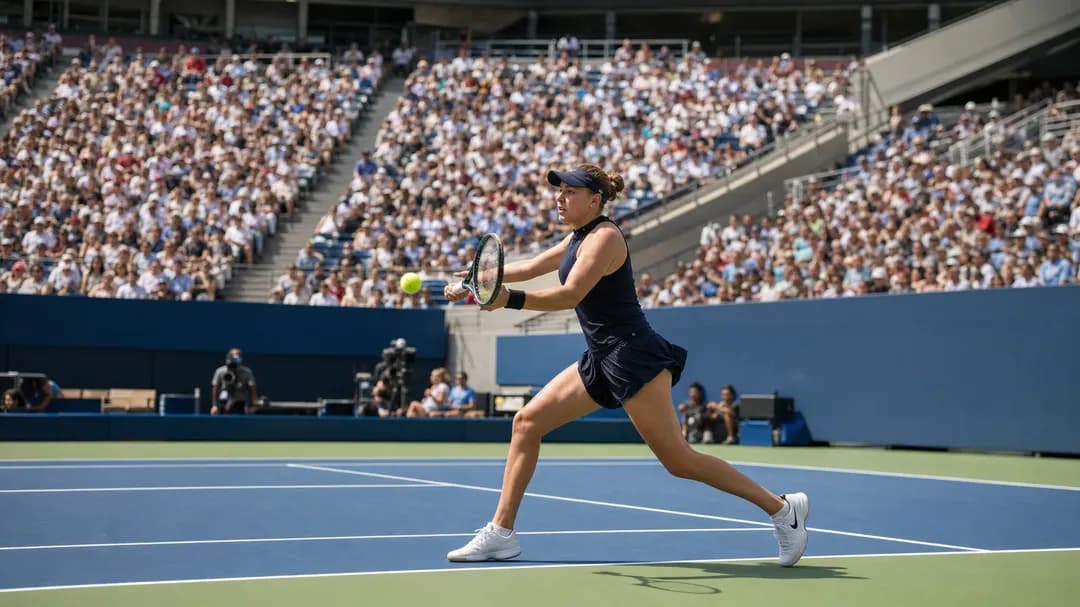
Amanda Anisimova’s Power Game Could Thrive in New York
If Amanda Anisimova is part of the New York field, her early-strike power and backhand timing would give fans a clear tactical story to follow.
Amanda Anisimova’s game is easy for a casual fan to recognize and rewarding for a serious fan to study: she wants to take the ball early, redirect pace, and use a powerful backhand to shorten points before rallies become a test of patience alone. That does not mean every match would be played on her terms, and it does not assume she will appear in any particular New York draw. It simply frames what could matter if she is part of the hard-court field. New York often rewards players who can claim court position quickly, especially when the ball comes through the surface cleanly and the crowd’s energy raises the emotional temperature of a match. For Anisimova, the central tactical question would be whether her first-strike instincts can stay organized under pressure: serve to earn the next ball, return with purpose, move well enough to keep contact points in front, and choose bold targets only when the point has been prepared.
Text Karpo Now: Tell us what matters most for Amanda Anisimova s Power Game Could, and Karpo can turn current US Open updates into a practical plan before you go.
Why Early Contact Matters
Early contact is not just a style note. It changes the geometry of a point. When a player meets the ball sooner, the opponent has less recovery time, the open court arrives faster, and a neutral rally can turn into an attacking pattern within one or two swings. Anisimova is known as an aggressive ball-striker, and her backhand can function as either a finishing shot or a controlling shot. On a hard court, that combination can be valuable because timing-based players can often set their feet, take the ball on the rise, and drive through the line.
For fans watching from the stands or on television, the key is not only whether a winner lands. Watch where she is positioned when she hits. If she is on or inside the baseline, taking the backhand before it climbs too high, she is probably dictating. If she is several feet behind the baseline and using bigger swings just to stay in the rally, the same power becomes harder to manage. The difference can be subtle, but it often decides whether an aggressive player is building points or reacting to them.
Serve and Return Patterns
The serve would matter less as a standalone weapon than as a way to earn the first attacking ball. A wide serve from the deuce court can pull an opponent away from the center, creating space for a backhand into the open court or a forehand behind the recovering player. A body serve can jam a clean returner and produce a shorter reply. Without assuming specific speeds or percentages, the tactical goal is clear: use the serve to stop opponents from beginning the rally with depth, rhythm, and balance.
On return, Anisimova’s early contact can be even more noticeable. Against second serves, an aggressive return position can pressure the server immediately, particularly if she drives the backhand crosscourt deep or redirects down the line. The risk is that taking the ball early narrows the margin for timing errors. If the return lands short, opponents can attack first. If it lands deep through the middle, it can still be effective because it reduces angles and lets the returner step into the next ball.
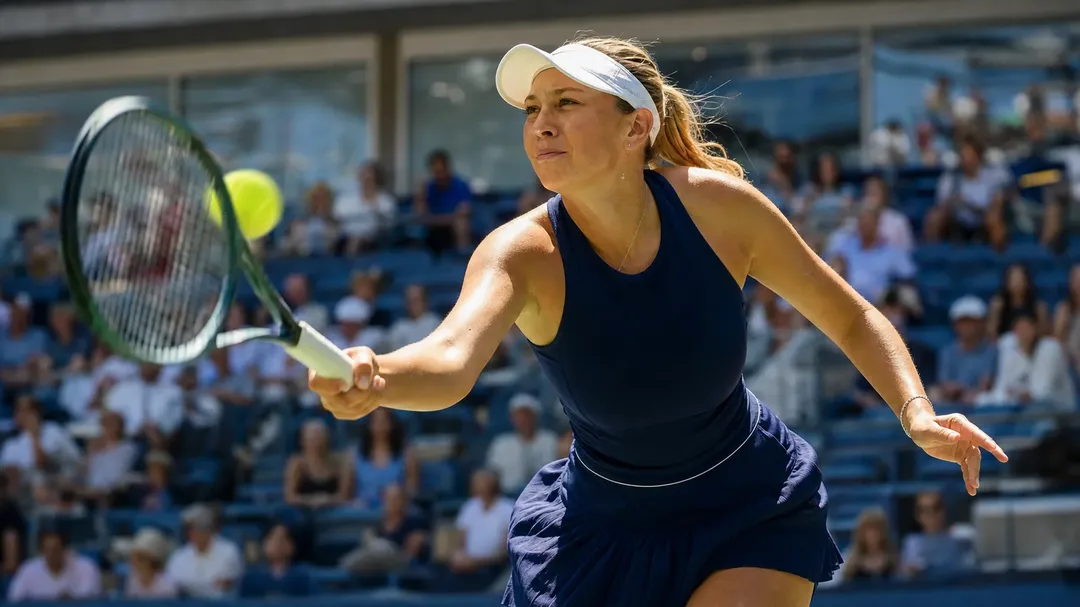
- Notice whether she returns from near the baseline or gives herself extra space.
- Track whether the first shot after serve targets the opponent’s movement rather than simply aiming for a line.
- Watch for backhand returns that land deep through the center, not only highlight winners.
- Look for body serves that set up a simpler second ball rather than chasing an immediate ace.
Movement Under Pressure
Aggressive tennis depends on movement, even when the strokes look like the main attraction. To hit early, a player has to arrive early. That makes the first step after the opponent’s contact critical, as well as the small adjustment steps before the swing. In a loud, high-attention setting, clean spacing becomes even more important because rushed decisions can turn attacking intent into mistimed contact. If Anisimova is balanced, her compact timing can make the court look small for the opponent. If she is hurried, the same attacking idea can produce errors before the pattern has fully developed.
One pattern to watch is how she handles wide balls to her forehand side before recovering for the backhand exchange. Opponents may try to move her first, then test whether she can reset her court position. Another pattern is the short ball. Power players are often judged by baseline winners, but forward movement can be just as important. When an early ball-striker recognizes a short reply quickly, steps inside the court, and finishes without overhitting, it shows that the aggression is connected to court sense rather than only swing speed.
Pressure and Court Geometry
New York pressure is not only about scoreboards. It is about noise between points, momentum swings that feel larger than they are, and the temptation to answer a big moment with an even bigger shot. For an attacking player, pressure management often means choosing the right level of aggression. The best version is not reckless. It is selective: take time away when the ball is available, aim bigger when court position is strong, and accept a neutral rally when the opponent has created a difficult defensive situation.
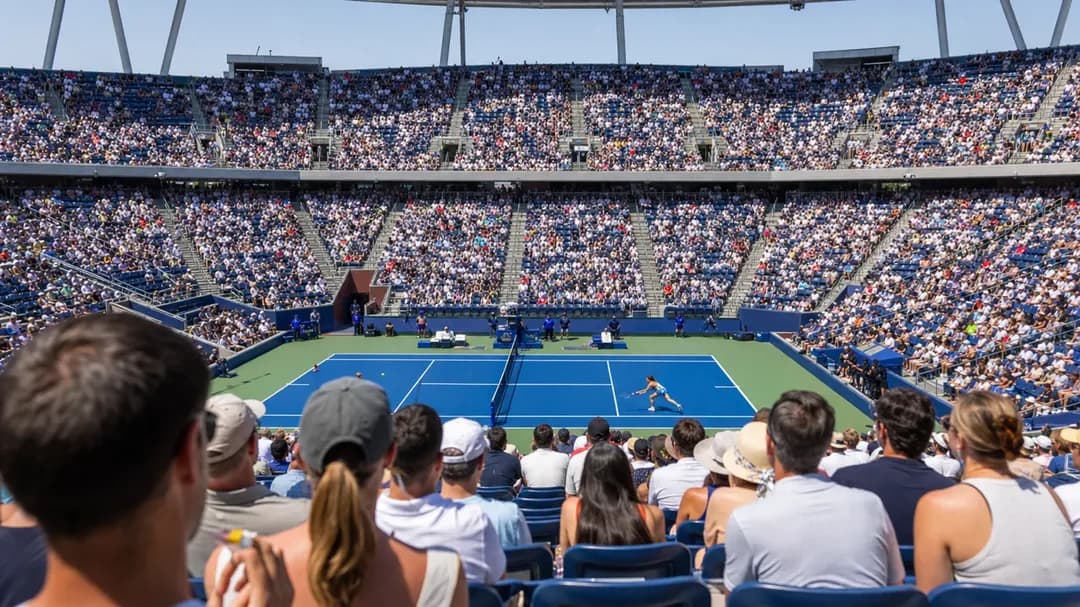
That balance is especially visible at 30-all, break point, or late in a set. A fan can learn a lot by watching the target, not just the outcome. A backhand driven deep crosscourt may be the right play even if it does not end the point immediately, because it pins the opponent and protects against a low-percentage miss. A sudden down-the-line strike can be devastating if the setup is right, but it carries more risk if attempted from a stretched position. The question is whether the pattern creates pressure before the finishing shot is attempted.
Hard-court geometry also shapes those choices. Crosscourt shots travel over the lower part of the net and offer more court length, which makes them safer for building advantage. Down-the-line shots change direction and can open the court dramatically, but they usually demand better balance and cleaner timing. Because Anisimova’s backhand is a major strength, fans should watch how often she uses crosscourt depth to earn a later chance down the line. That sequence can be more revealing than a single spectacular winner.
Practical Notes
For anyone planning a New York tennis day, this should be treated as a tactical viewing guide rather than a participation notice. Official tournament player information and the event schedule are the places for confirmed details before making plans around any player. If Anisimova is on court, the warmup can offer useful clues: return position, serving targets, contact height, and how cleanly she is timing the ball. From a lower sideline seat, depth and footwork become easier to read. From behind the baseline, patterns and angles stand out. The most interesting moments may not be winners at all. They may be a deep return, a balanced recovery step, or a patient crosscourt backhand that earns the next strike.
Tags: #USOpen2026 #Tennis #GrandSlam #NewYorkTennis #ArthurAsheStadium #FlushingMeadows #USOpenGuide #TennisFans #SportsTravel #HardCourt #NewYork #KarpoFinds
Sources consulted: wtatennis.com — Official reference · usopen.org — Official reference · usopen.org — Official reference
All trademarks are the property of their respective owners.
Ask Karpo first
Want to know what is confirmed, when to show up, and how to make amanda anisimova s power game could work for your day? Ask Karpo for current US Open updates, a respectful fan plan, and a live route around Flushing Meadows.
Ask Karpo for more information.
Keep reading
- Where to Eat Near Penn Station That Isn't a Chain
 Andytown Coffee in the Outer Sunset: The Snowy Plover Explained
- Best Things to Do in Chicago: What the City Gives Away