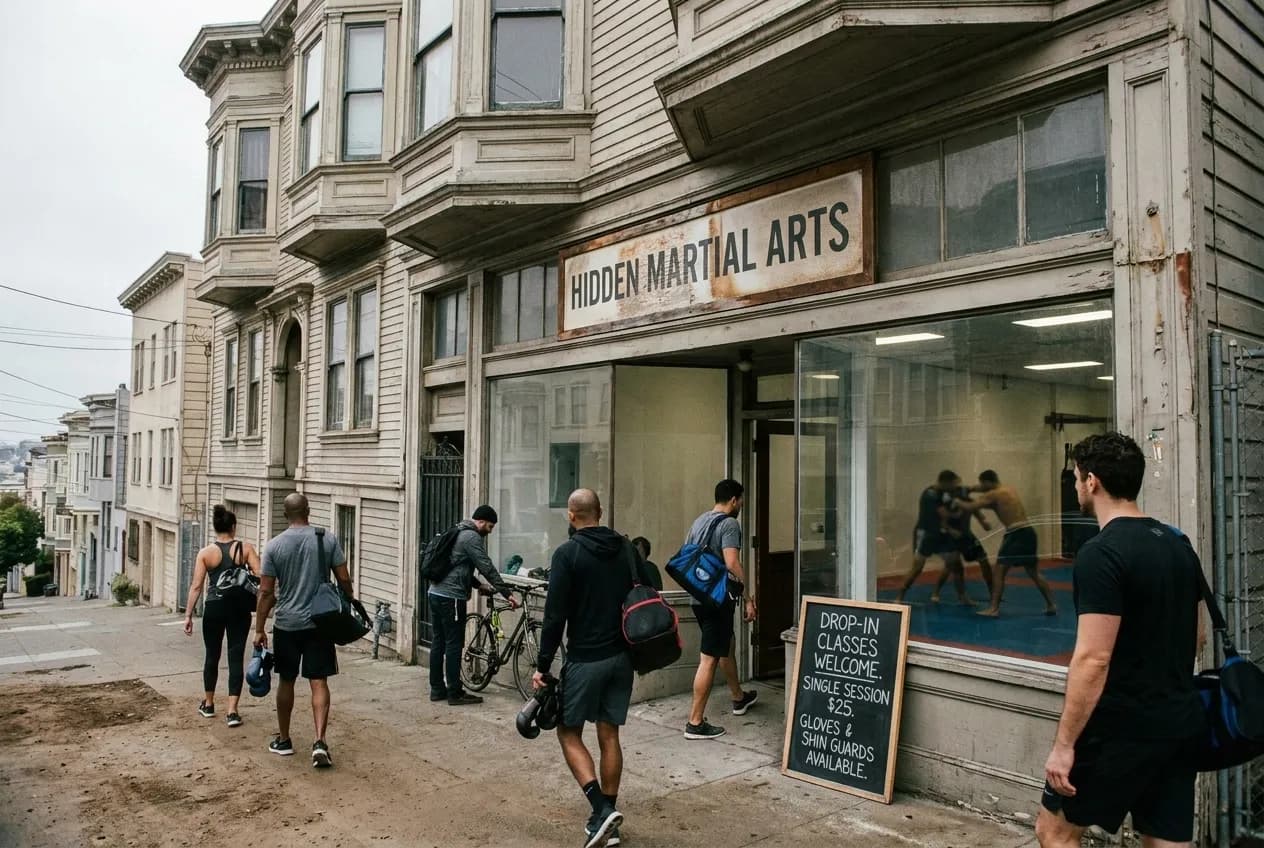
When professional fighters like allen nascimento capture headlines with their training routines, many fitness experimenters feel a pull toward martial arts—yet the idea of signing a year-long gym contract can feel overwhelming. San Francisco shelters a handful of lesser-known martial arts facilities that allow single-session drop-ins, giving you the chance to test striking drills, grappling fundamentals, or conditioning circuits on a Saturday morning without membership paperwork. The challenge lies in confirming which spaces truly permit walk-in participation, what protective equipment the facility supplies versus what you must carry in your own gym bag, and whether the intensity matches your current fitness base. This guide walks through the decision tradeoffs and verification steps that turn curiosity into a concrete weekend plan, helping you and a workout partner navigate San Francisco's transit network to reach these hidden training gems.
Text Karpo your starting point, timing, group size, and priorities for a San Francisco plan tailored to this exact situation, with one realistic backup before you leave.

Why Drop-In Access Matters for the Fitness Experimenter
Committing to a multi-month membership before you understand a gym's teaching style, class culture, or physical demands often leads to buyer's remorse and unused contracts. Drop-in policies let you sample an instructor's coaching cues, gauge whether the other students welcome newcomers or form insular cliques, and assess whether the facility's ventilation and equipment maintenance meet your standards. For someone inspired by athlete training regimens but unsure whether Brazilian jiu-jitsu, Muay Thai, or traditional Korean martial arts resonates more, paying for a single session at three different gyms over three weekends costs less than one month's dues at a premium chain.
The tradeoff is availability: many small martial arts schools reserve weekday evenings for members-only sparring and open weekend mornings to drop-ins seeking introductory fundamentals. That scheduling quirk aligns well with a Saturday or Sunday trial class, but it also means you may not witness advanced techniques or full-contact rounds during your first visit. Accepting that limitation keeps expectations realistic while still giving you enough information to decide whether a particular discipline and coaching approach deserve deeper exploration.

Verifying Single-Session Policies and Protective Gear Requirements
Before you board Muni with a workout partner in tow, call or email the facility to confirm three details: whether they accept walk-ins on your chosen date, what the single-session fee structure looks like, and which protective items—hand wraps, shin guards, mouthguards, headgear—are provided versus required from your own collection. Some gyms lend communal gloves and pads for beginners, while others maintain strict hygiene rules that mandate personal gear. Knowing this in advance prevents the frustration of arriving ready to train only to discover you need to purchase sixteen-ounce gloves on the spot or reschedule entirely.
Ask whether the drop-in class assumes any prior experience or if it genuinely welcomes absolute beginners. A 'moderate intensity' label can mean different things: one gym's moderate might involve continuous pad work that leaves your shoulders burning, while another's might focus on stance drills and footwork with built-in rest intervals. Clarifying the instructor's typical warm-up length, the ratio of technique demonstration to live drilling, and whether students are expected to spar gives you a clearer picture of what 'moderate' truly entails in that specific environment.
Navigating San Francisco Transit to Reach Hidden Training Spaces
San Francisco's public transportation network—managed by the SFMTA—offers Muni buses, light rail, and historic cable cars that connect neighborhoods citywide. If a martial arts gym sits in the Mission, Potrero, or Bayview districts, checking the Trip Planner at SFMTA.com/Go helps you map the fastest route from your starting point and identify which lines run on weekend schedules. The T Third line, for instance, benefits from upgraded traffic signals that reduce delays, making it a reliable option if your destination lies along that corridor. Bringing a workout partner means you can split any ride-share costs if a particular gym requires a bus transfer that adds thirty minutes each way, turning transit logistics into a shared decision rather than a solo headache.
Biking remains another practical choice for fitness experimenters who want a warm-up ride before class; San Francisco ranks among the most bike-friendly cities in the United States, and many martial arts facilities provide indoor bike racks or nearby street parking with sturdy locks. Weighing the convenience of cycling against the fatigue of arriving already sweaty depends on the class format—if the session begins with a intense conditioning circuit, a leisurely Muni ride might leave you fresher, whereas a technique-focused seminar tolerates pre-fatigued legs more gracefully.
Matching Gym Culture to Your Companion and Curiosity Style
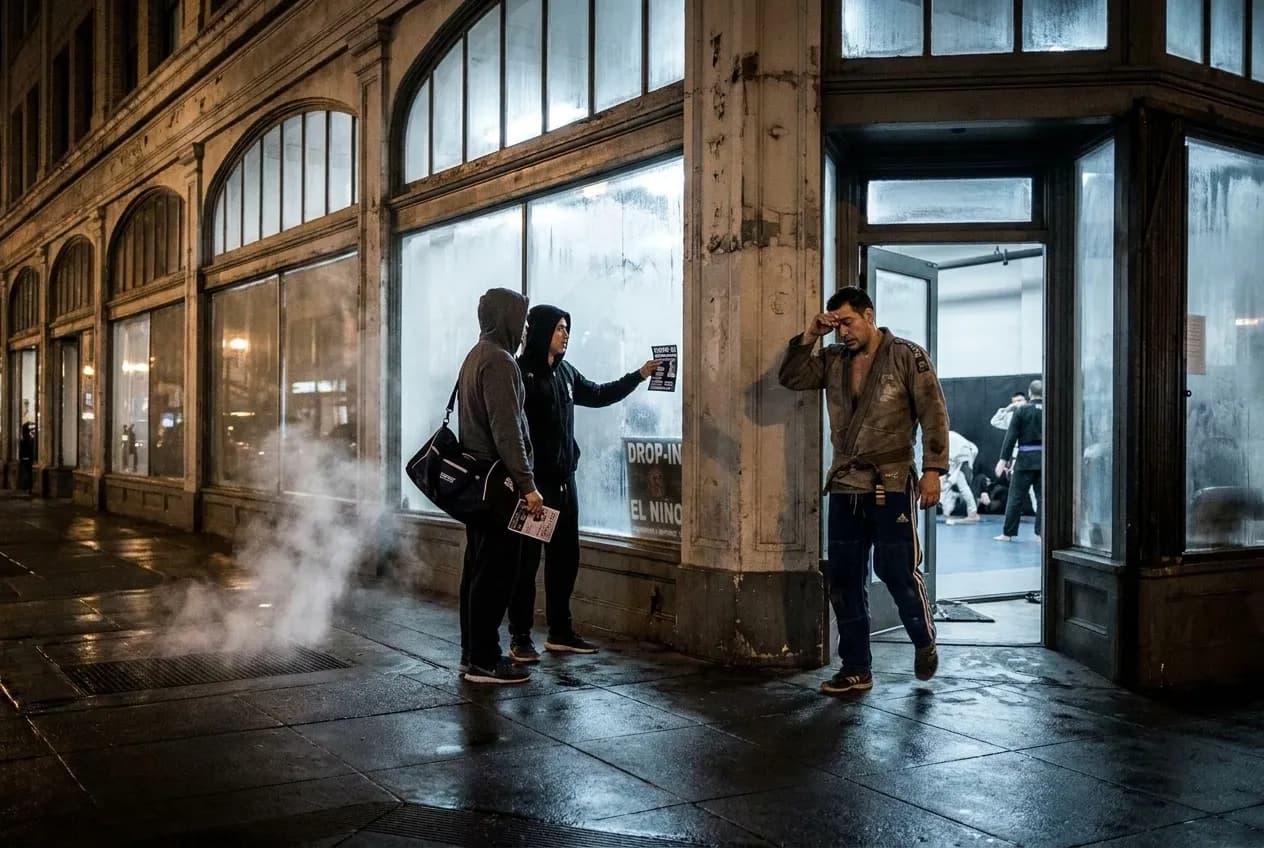
Training alongside a workout partner amplifies accountability and provides a familiar face during partner drills, but it also requires finding a gym culture that welcomes pairs without assuming you will only work with each other. Some schools rotate partners every round to build community and expose students to different body types and skill levels; others let friends stay together, which can feel comforting but may limit your exposure to varied techniques. Discussing this preference with the front desk when you verify drop-in availability ensures you and your companion enter the space with aligned expectations.
Physically curious individuals often thrive in environments that encourage questions and offer modifications, rather than rigid hierarchies where beginners stay silent and mimic advanced students. Observing how an instructor corrects form—whether they demonstrate on a volunteer, use verbal cues, or offer hands-on adjustments—gives insight into teaching style. If the gym's website or social media showcases athlete training regimens and competition footage but lacks beginner testimonials, that marketing choice may signal a competitive focus that doesn't prioritize the experimenter's learning curve. Recognizing these cultural signals helps you decide whether a second visit makes sense or whether another hidden gem deserves your next weekend trial.
Balancing Inspiration from Athlete Regimens with Personal Readiness
Watching a professional fighter's training montage can spark motivation, yet those athletes typically build their conditioning over years of progressive overload, injury management, and tailored nutrition. Translating that inspiration into your own first drop-in class means accepting that you will not replicate their volume or intensity on day one—and that attempting to do so risks strain or discouragement. A smarter approach involves setting a modest goal for your trial session: learn three new techniques, complete the warm-up without stopping, or simply stay present for the full hour. Achieving that smaller milestone builds confidence and provides a honest baseline for deciding whether to return.
Moderate intensity, in the context of a weekend trial class, should leave you challenged but not depleted. If you finish a session unable to lift your arms or so dizzy that navigating Muni feels unsafe, the programming may not match your current fitness level—or the gym may prioritize toughness over sustainable skill development. Conversely, if the class feels too easy and you spend most of the hour watching demonstrations, you might seek a facility that offers tiered drop-in options or explicitly labels its beginner, intermediate, and advanced tracks. Honest self-assessment after each trial helps you refine your search and invest your energy in the hidden training space that truly fits your curiosity and physical readiness.
Tags: #SanFranciscomartialarts #dropingymfinder #weekendtrialclasses #fitnessexperimenter #hiddengymsSF #Munitransit #workoutpartner #moderateintensitytraining #martialartsgear #SFhiddengems
Sources consulted: Source 1: sf.gov · Source 3: sfmta.com · Source 4: sfpl.org
All trademarks are the property of their respective owners.
Ask Karpo first
Ask Karpo to turn this San Francisco idea into a current plan for your date, budget, companion, transit preference, and energy level. Karpo can narrow the route and flag what to verify before you go.


