 Where to Eat Near Penn Station That Isn't a Chain
US Open 2026
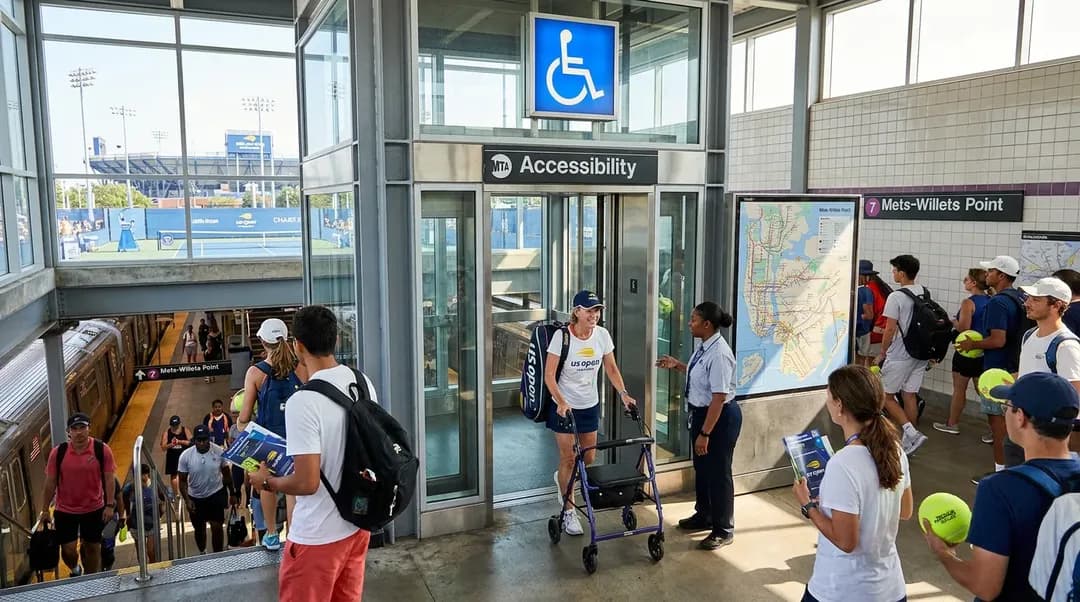
Accessible Transit Tips Around the US Open
Plan an accessible public-transit trip to the US Open with elevator checks, realistic station timing, bag awareness, and backup routes before traveling to Queens.
A smoother US Open trip starts before you enter the transit system. For the 2026 tournament, the US Open runs August 23 through September 13, with the singles main draw beginning August 30, so your travel plan should fit the date and session you are attending. A fan who can use stairs, move quickly through a transfer, and stand comfortably in a crowd can choose a different route from someone traveling with a mobility device, cane, stroller, service animal, or companion who needs extra time. Treat the official transportation page, gate-opening information, and event schedule as separate planning tools: one helps you choose how to get to the tournament area, one helps you time arrival, and one helps you understand the kind of tennis day you are building around.
Text Karpo for a current, low-friction plan for accessible transit tips around the us open—including timing, route checks, and practical options that fit your day.
Choose Rail Before Roads
The official US Open transportation and directions information points fans toward public transit serving the tournament area, including service to the Mets-Willets Point area. For many visitors, that makes rail or subway service the best first plan, with driving, taxi, or car service held as a fallback rather than the default. Event traffic and concentrated arrivals can make the last short distance slower than it appears on a map, especially before popular sessions and after late finishes.
Compare routes by effort, not only by estimated minutes. A route with one transfer and a verified accessible path may be better than a faster-looking option that depends on stairs, a tight platform change, or a long walk through a station. If you are staying in Manhattan, Brooklyn, Queens, or near a commuter rail connection, write down the station name, line or service, direction of travel, and exit you expect to use. If you are coming from outside New York City, consider whether rail can reduce the amount of time you spend near venue-area traffic.
- Choose a primary route you could still manage if cars or platforms are crowded.
- Save the official tournament transportation page for same-day reference.
- Identify the exact stop where you plan to exit and the direction you are riding.
- Prepare a second route that uses a different transfer point or service.
Map Elevators Like Transfers
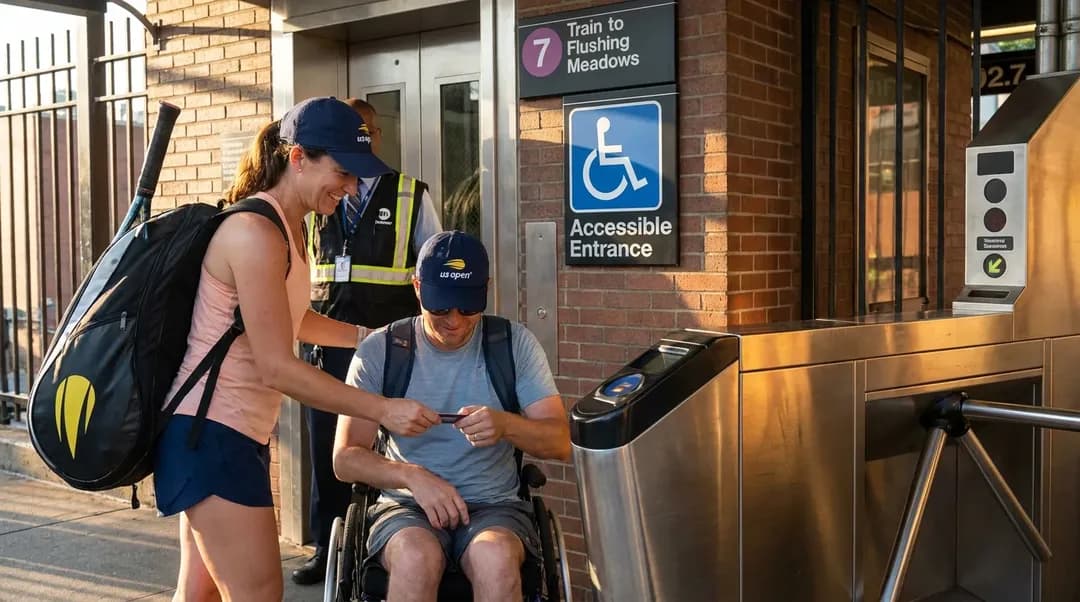
For accessible transit planning, elevators are part of the route, not an optional convenience. If a transfer depends on an elevator, that elevator is as important as the train itself. Check each segment separately: street to mezzanine, mezzanine to platform, platform to exit, and the reverse trip after the session. A station that works well in one direction can be harder in another if the accessible entrance, transfer passage, or exit pattern changes.
The return trip deserves the same attention as arrival. After a long day or night session, the crowd may move in one strong current, phones may be low on battery, and small decisions can feel harder. Advice: take screenshots of the accessible route, elevator information, and return directions before leaving your hotel or home. If you are traveling with another person, agree on what you will do if an elevator is unavailable or the line for it is too long. The better choice may be waiting for the crowd to thin, using another transfer, or taking a less direct route that remains step-free.
Time Gates Against Trains
Gate timing and train timing should be planned together. The event schedule helps you understand what kind of session or tournament day you are attending, while the gate-opening page helps you decide whether arriving earlier will be useful. Because “Accessible Transit Tips Around the US Open” depends on live operations, verify the specific schedules, gates, transit conditions, local hours, inventory, and venue rules that affect this plan.
Work backward from the gate window you want to use. Add time for the train ride, transfers, elevator waits, platform-to-street movement, walking from the station area, and security screening. If your route requires elevators or slower walking, make the buffer meaningful. Ten extra minutes can disappear quickly in a crowded station. Twenty to thirty minutes may be more comfortable if you want to avoid rushing, confirm the correct entrance flow, and settle in before the tennis you most want to see.
Bag planning also affects transit. Before acting on “Accessible Transit Tips Around the US Open,” recheck the official security page; its current limit is one searchable bag per guest, no larger than 12 by 12 by 16 inches. Even a permitted bag can be awkward in a packed train car or elevator. Advice: pack for movement first. Keep tickets, payment, identification, medication, weather essentials, and a charged phone accessible, and avoid carrying items that make transfers or inspection slower.
Build Backup Routes
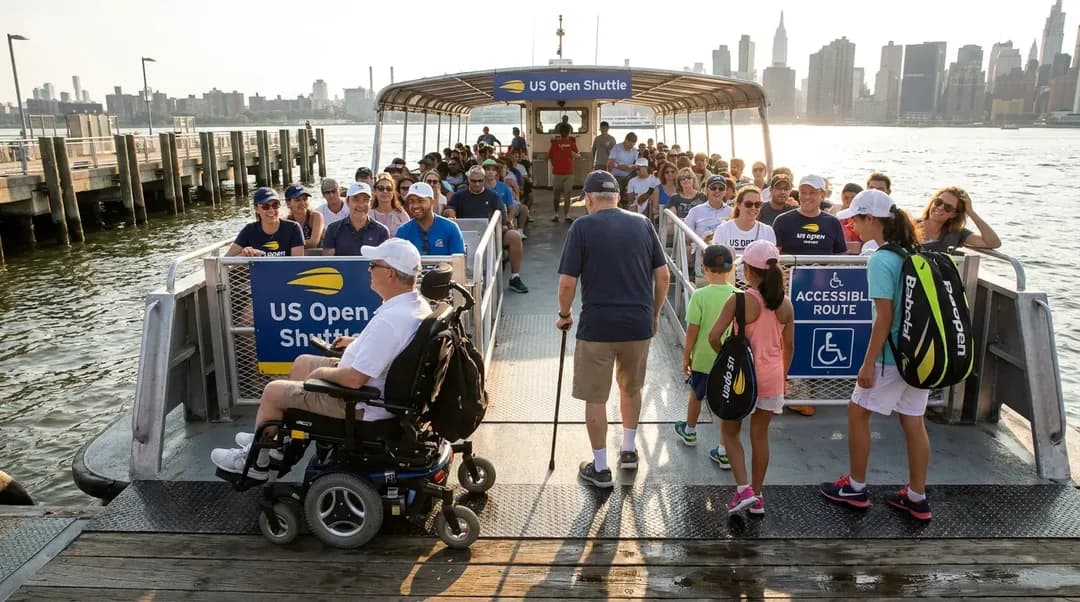
A good transit plan includes more than one way out of trouble. Your first backup can be another public-transit route: a different transfer, a different terminal, or a plan to ride away from the heaviest crowd before connecting back. Your second backup is timing: waiting after a match, leaving before the largest exit wave when your ticket and preferences allow, or choosing a less compressed travel window. A third backup may be taxi or car service, but traffic, pickup locations, weather, demand, and accessibility needs can make that option unreliable.
Visitors should also guard against the simplest transit mistake: boarding the correct line in the wrong direction. Before match day, know the borough direction, the endpoint shown on the train or platform, and the stop where you exit. Around a major event, following the crowd can help near the tournament area, but it is not a navigation plan. Some people may be heading to a different transfer, parking area, restaurant, or hotel route.
- Save your hotel or home address offline, along with the tournament-area station name.
- Carry a small charger if your phone is your ticket, map, and payment tool.
- Set a meeting point away from the tightest station flow if your group separates.
- Decide in advance what problem will trigger a switch to your backup route.
Weather belongs in the backup plan too. Heat, rain, or humidity can make a short walk feel longer, and crowds can slow access to shade or indoor pauses. Advice: choose the route with the clearest accessible chain rather than one that depends on unconfirmed shortcuts or amenities. If step-free movement matters, every extra block and every uncertain entrance should count in your decision.
Practical Notes
On the day you travel, compare the official US Open transportation and directions page, gate-opening page, and event schedule with live information from the transit operator you plan to use. Confirm elevator status for every station where you enter, transfer, exit, and return. Keep your bag within the current stated limit and check the security page before leaving. Arrive with your ticket ready, your phone charged, and your backup route saved. If accessibility is central to your day, avoid unnecessary transfers, leave more room than a stair-using fan might need, and wait out the densest crowd if that is safer than being pushed into a rushed connection.
Tags: #USOpen2026 #Tennis #NewYork #Queens #FlushingMeadows #USOpenGuide #TennisFans #SportsTravel #NYCEvents #HardCourt #KarpoFinds #Karpo
Sources consulted: usopen.org — Official reference · usopen.org — Official reference · usopen.org — Official reference
All trademarks are the property of their respective owners.
Ask Karpo first
Want to know what is confirmed, when to show up, and what is actually open to the public? Ask Karpo for the latest US Open updates and a practical New York plan for accessible transit tips around the us open.
Ask Karpo for more information.
Keep reading
- Where to Eat Near Penn Station That Isn't a Chain
 Andytown Coffee in the Outer Sunset: The Snowy Plover Explained
- Best Things to Do in Chicago: What the City Gives Away