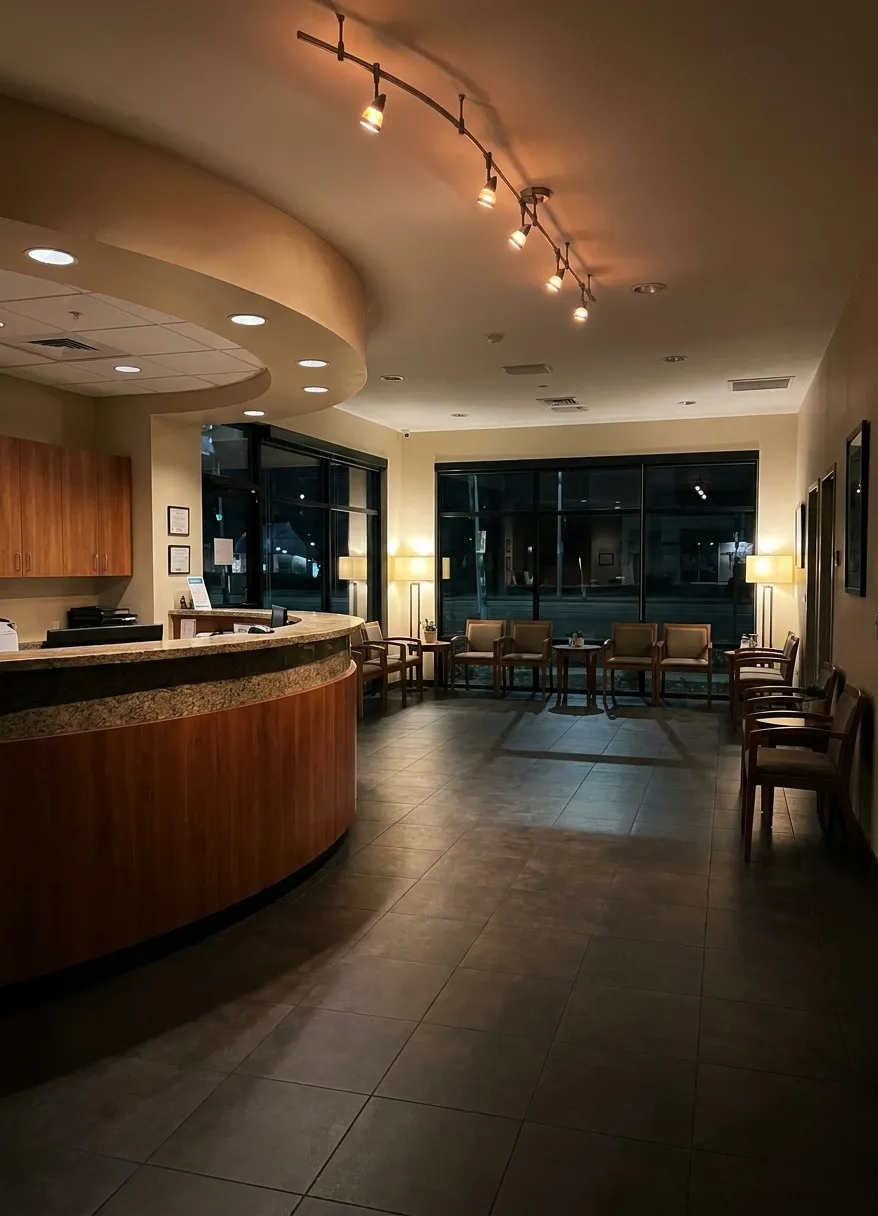
The emergency vet you need at three in the morning isn't the one with the friendliest website or the clinic closest to your house. It's the hospital with a critical-care specialist on the floor, an MRI that's already warmed up, and a lab that can run bloodwork while you're still filling out intake forms. ACCESS Specialty Animal Hospitals in Culver City is that place for the Westside—and it's the only 24/7 facility in LA that treats rabbits, birds, and reptiles with the same intensity it brings to dogs and cats. The hospital also tracks live pet food recalls, including Fromm and Oma's Pride alerts, so the emergency team knows which batch numbers to flag when a sick animal walks through the door.
Karpo tracks ACCESS Culver City's current wait estimates, on-duty specialists, and live pet food recall bulletins so you know what to expect before you leave home.
Why ACCESS handles the emergencies other clinics can't
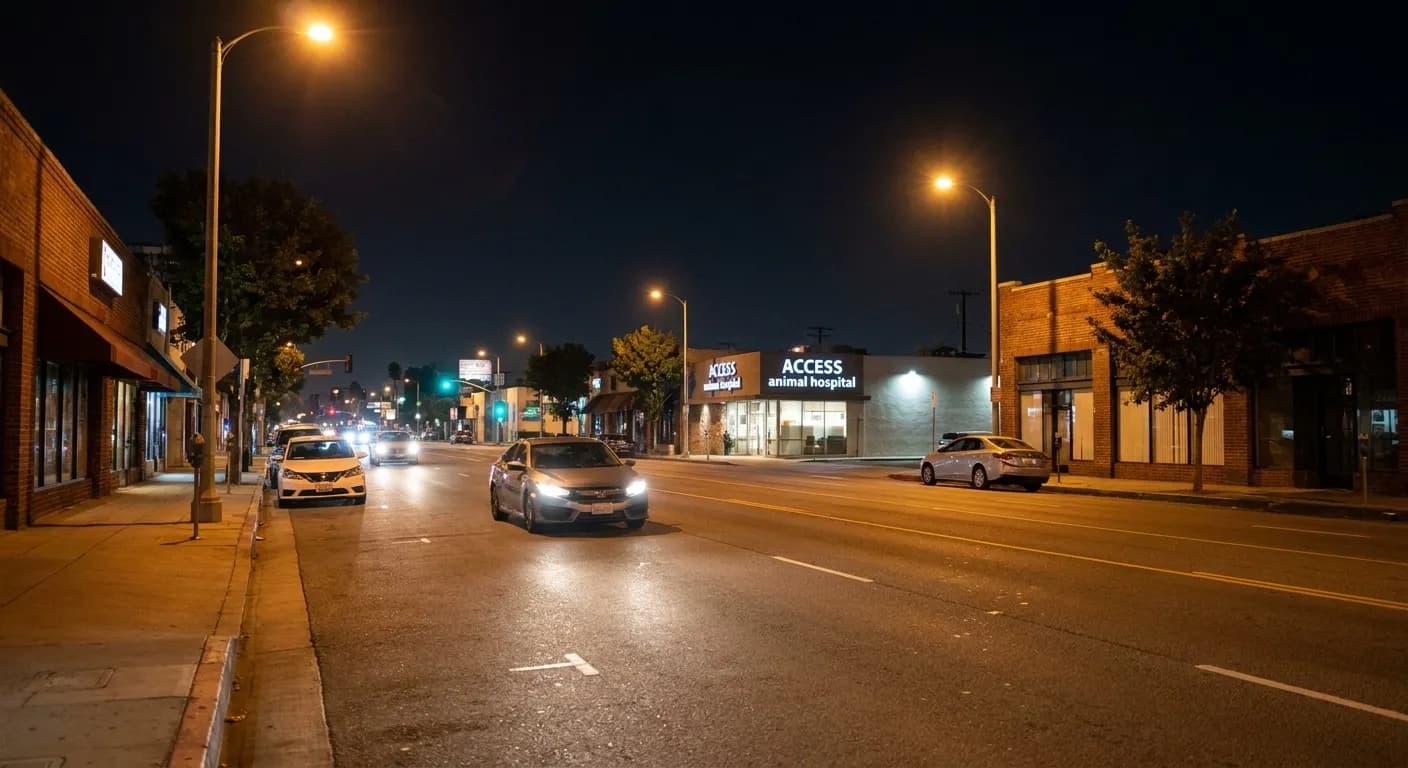
Most neighborhood vet offices close by seven and hand you a printout with three emergency numbers when something goes wrong after dinner. ACCESS Specialty Animal Hospitals in Culver City is the number that picks up every time—and the facility that keeps an MRI machine, fluoroscopy suite, and board-certified critical-care team on the floor around the clock. The hospital sits at 9599 Jefferson Boulevard, a ten-minute drive from downtown Culver City and twenty minutes from Santa Monica if the 10 is moving. Parking is free, the front doors unlock at any hour, and the staff expects you to walk in without an appointment.
The building runs four specialty departments during business hours—cardiology, neurology, internal medicine, and surgery—but the emergency and critical-care service never closes. That means a veterinarian trained in trauma stabilization, toxicology, and acute disease is always in the building, backed by technicians who can place central lines, run ventilators, and monitor sedated patients through the night. If your dog ate a bottle of ibuprofen at midnight or your cat stops breathing Sunday morning, ACCESS has the equipment and the specialists to start treatment immediately instead of stabilizing and referring you somewhere else.
The hospital also runs one of the few 24/7 zoological medicine programs in Los Angeles. Dr. Karen Schachterle and Dr. Molly Gleeson staff the exotic service, which treats rabbits, birds, reptiles, amphibians, and small mammals with the same intensity ACCESS applies to dogs and cats. Most emergency vets in LA will tell you to wait until morning or drive to a specialty practice in Orange County when a rabbit develops head tilt or a parrot breaks a blood feather. ACCESS keeps avian anesthesia protocols, rabbit-safe analgesics, and reptile warming equipment ready at all times, and the team collaborates with the hospital's internal medicine and surgery departments when an exotic case needs advanced imaging or an operating room.
The stat lab and same-day imaging that change outcomes
ACCESS runs a full in-house laboratory that processes bloodwork, urinalysis, and cytology samples 24/7. That's the difference between getting chemistry panels back in forty-five minutes and waiting until the next business day when an outside lab opens. For a dog in kidney failure or a cat with uncontrolled diabetes, those hours matter. The same principle applies to imaging: ACCESS has digital radiography, ultrasound, CT, and MRI on-site, all available at three in the morning if the case demands it. The radiology team can identify a gastric foreign body, confirm a spinal lesion, or map a heart defect without transferring your pet to another facility.
The hospital's Bone and Joint Center adds another layer of capability. Orthopedic cases—torn cruciate ligaments, fractured limbs, luxating patellas—get evaluated by a surgery team that performs TPLO repairs, fracture stabilization, and joint reconstruction in the same building where the emergency exam happened. If your dog tears an ACL on a Saturday hike and you bring him to ACCESS that night, the surgeon can review the radiographs, discuss a surgical plan, and schedule the procedure for early the following week without you coordinating between multiple practices.
The nephrology and urology service also runs through ACCESS, which is unusual for an emergency hospital. Dogs and cats with chronic kidney disease, bladder stones, or urinary obstructions get managed by internists who specialize in renal medicine, and the hospital offers hemodialysis for toxin ingestion cases—grape poisoning, ethylene glycol exposure—where kidneys shut down and need mechanical support to recover. That equipment exists at fewer than a dozen veterinary hospitals in California.
How ACCESS monitors Fromm and Oma's Pride recalls in real time
Pet food recalls move fast, and most owners find out days after the FDA posts an alert. ACCESS tracks recall notices from the FDA, manufacturers, and industry watchdog groups, then cross-references batch numbers and distribution dates against the foods clients report feeding. When Fromm Family Foods or Oma's Pride issues a voluntary recall—whether it's for Salmonella contamination, elevated vitamin D, or potential Listeria exposure—the hospital's emergency team knows which lots are affected and can advise you during triage if your pet's symptoms align with a known recall.
The hospital doesn't sell pet food, so there's no inventory conflict when a recall happens. The staff will tell you to stop feeding a flagged product immediately and will discuss whether your dog or cat needs bloodwork, gastrointestinal support, or just monitoring at home. If you're unsure whether the bag in your pantry matches a recall lot number, bring the packaging with you or text a photo of the code to the hospital before you drive over. The team can confirm whether your food is implicated while you're still at home.
Fromm recalls have historically involved limited batches of canned food or specific dry kibble recipes, often caught early because the company tests every production run. Oma's Pride, a raw-food manufacturer, has faced multiple Salmonella and Listeria recalls over the past few years, and those pathogens pose serious risks to immunocompromised pets and the humans who handle the food. ACCESS sees cases of suspected foodborne illness regularly—vomiting, diarrhea, lethargy, fever—and the emergency vets will culture stool samples and run PCR panels if a recall timeline matches your pet's symptom onset. The hospital also reports findings to the FDA when patterns emerge, which helps public health officials track outbreaks.
What to expect when you walk through the doors at 2 a.m.
ACCESS runs a triage system, so the sickest patients get seen first. That means your wait time depends on how many critical cases are already in the building and how stable your pet appears when you check in. A dog with a torn toenail might wait ninety minutes if a hit-by-car trauma just arrived. A cat struggling to breathe goes straight to the treatment area. The front-desk team will give you an honest estimate when you arrive, and you can ask for updates if the wait stretches longer than expected.
The hospital encourages you to call ahead—(310) 558-6100—so the staff can prepare. If you're bringing a rabbit with GI stasis, the team will set up a quiet exam space with a heating pad and have critical-care herbivore formula ready. If your dog ate rat poison, they'll pull the vitamin K injection and activated charcoal before you walk in. Calling doesn't guarantee a faster triage slot, but it does mean the veterinarian assigned to your case has already reviewed the species-specific protocols and assembled the supplies most likely to be needed.
ACCESS accepts contactless payment and Apple Pay, which speeds up the checkout process when you're exhausted and your pet is stabilized. The hospital also offers free Wi-Fi in the waiting area, and the building is fully wheelchair accessible with flat entryways and wide hallways. If cost is a concern, ask the front desk about payment plans or third-party financing options like CareCredit before treatment starts. The staff will walk you through the estimate line by line, and you can decline diagnostics or treatments that aren't immediately necessary.
Practical notes
ACCESS Specialty Animal Hospitals – Los Angeles is located at 9599 Jefferson Boulevard in Culver City, open 24 hours every day. No appointment required for emergencies; call (310) 558-6100 if you want the team to prepare for your arrival. Free parking is available on-site. Specialty consultations—cardiology, neurology, internal medicine, surgery, nephrology, zoological medicine—are by appointment during business hours, but emergency cases can access any specialist if the situation is life-threatening. Bring your pet's medical records, current medications, and any packaging from food or treats if you suspect poisoning or a recall-related illness. The hospital accepts most pet insurance plans and will provide itemized invoices for reimbursement. Check [24houranimalemergency.com](https://24houranimalemergency.com/) for updates on wait times and specialty service availability, or ask Karpo for live status before you leave home.
Tags: #CulverCityVet #LAEmergencyVet #ACCESSAnimalHospital #ExoticPetCare #PetFoodRecall #FrommRecall #OmasPrideRecall #WestsideLA #CriticalCareVet #RabbitEmergency #AvianVet #LosAngelesVet #JeffersonBlvd #PetEmergency #VetSpecialist
All trademarks are the property of their respective owners.
Ask Karpo first
Need the on-duty cardiologist's name, current ER wait time, or the latest batch number in a Fromm recall? Ask Karpo in iMessage. I'll pull live specialist schedules at ACCESS, compare overnight options across the Westside, and flag any new pet food alerts tied to your dog's brand—so you're never guessing whether to drive to Culver City at 3 a.m. or wait until your regular vet opens.