 Clubs Near Me in Ridgewood: Nowadays' Outdoor Dance Floor
Sports Social
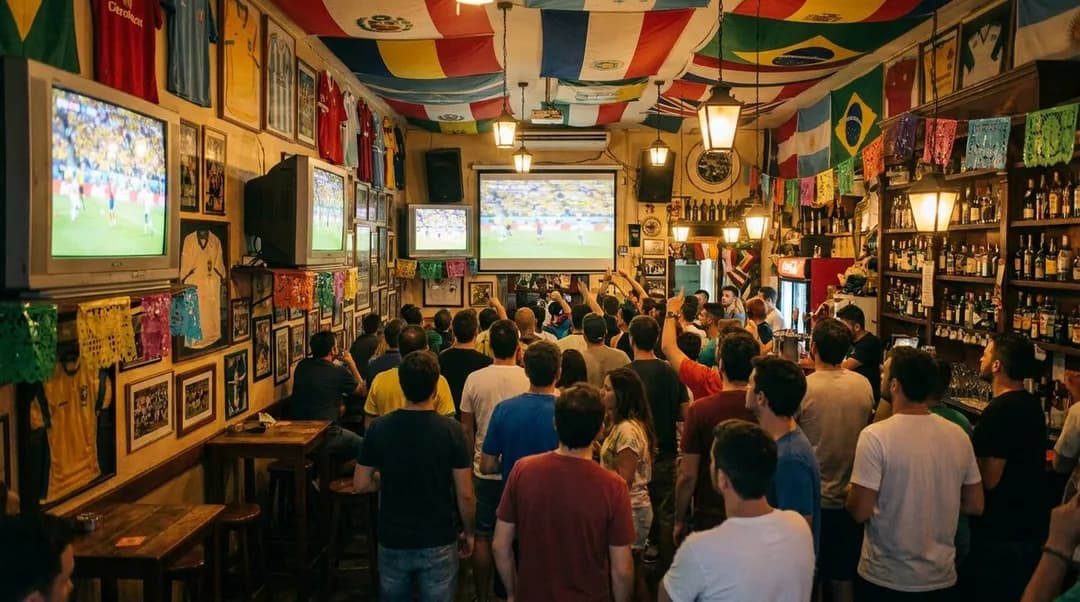
A South American Bar in Jackson Heights for Argentina vs Austria, Jerseys and Drums
World Cup energy in a packed neighborhood bar: the crowd on its feet, drums in the corner, jerseys everywhere, and the feeling that this is what the whole block came for.
The bar sits on a corner in Jackson Heights where the elevated train rattles overhead every few minutes and the sidewalk smells like grilled meat and diesel. Inside, it's standing room only two hours before kickoff. The television mounted above the bar shows a pre-match countdown. Someone in an Albiceleste jersey is already drumming on a plastic bucket near the bathroom.
The Crowd Arrives in Waves
The first arrivals show up when the doors open, claiming the tables closest to the screen. They order empanadas and beer and settle in like they're preparing for a long siege. By the time the lineups are announced, the place is packed shoulder to shoulder. Jerseys from every South American federation hang on the walls—faded Maradonas, newer Messis, a few Valderramas for good measure. The crowd skews Argentinian today, but there are Colombians in the corner and a table of Ecuadorians who showed up for the atmosphere alone. Everyone knows the drill. The bar has been doing this since long before streaming made every match accessible. This is communal viewing in its purest form.
What the Kitchen Sends Out
The menu is short and mostly fried. Empanadas arrive on paper plates, still hot enough to burn the roof of a mouth. Beef, chicken, cheese—the fillings are straightforward, the crusts flaky and golden. Chorizo sandwiches come piled with chimichurri that drips onto wrists. The kitchen works fast during match days, pushing out food in waves that correspond to lulls in play. Halftime brings a rush of orders. The grill smoke drifts into the main room, mixing with the smell of spilled beer and bodies pressed close. No one's here for fine dining. The food is fuel, something to anchor the drinking and keep hands busy during tense moments.
The Drum Section and the Chants
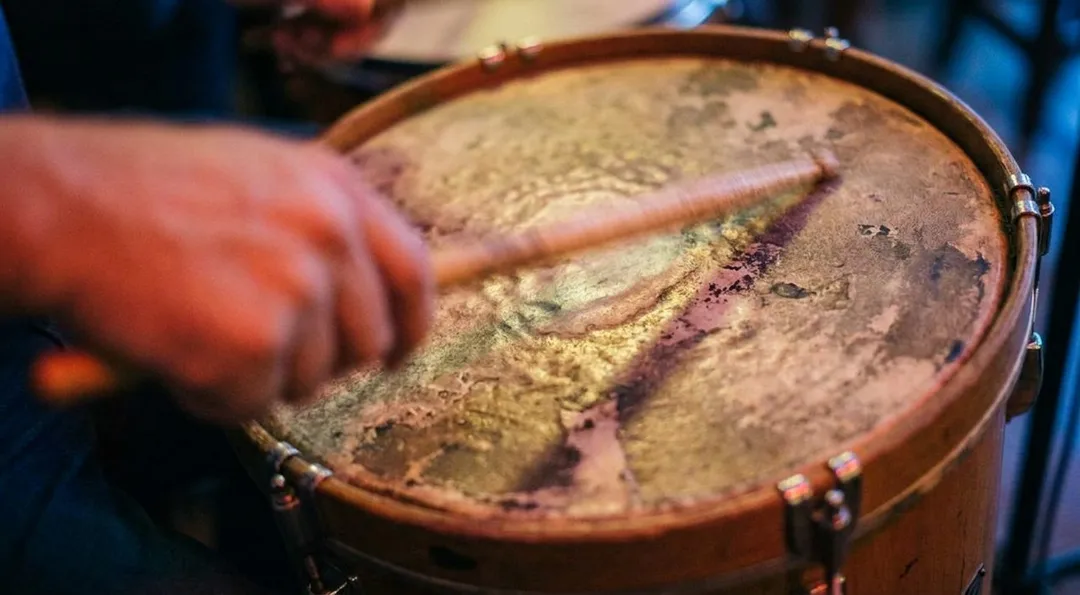
The drummers set up in the back corner, near the dartboard that no one's touched in hours. They've brought a full kit—plastic buckets, a snare, something that might be a tambourine. When the match starts, they launch into the chants. The whole bar joins in, voices layering over each other in Spanish and broken English. The rhythm is relentless, driving, the kind that makes strangers lock arms and sway. During a close call near the goal, the drumming stops. The room goes silent except for the television commentary. Then the moment passes and the drums come back louder. It's not professional. It's not polished. It's exactly what it needs to be.
How the Room Moves with the Match
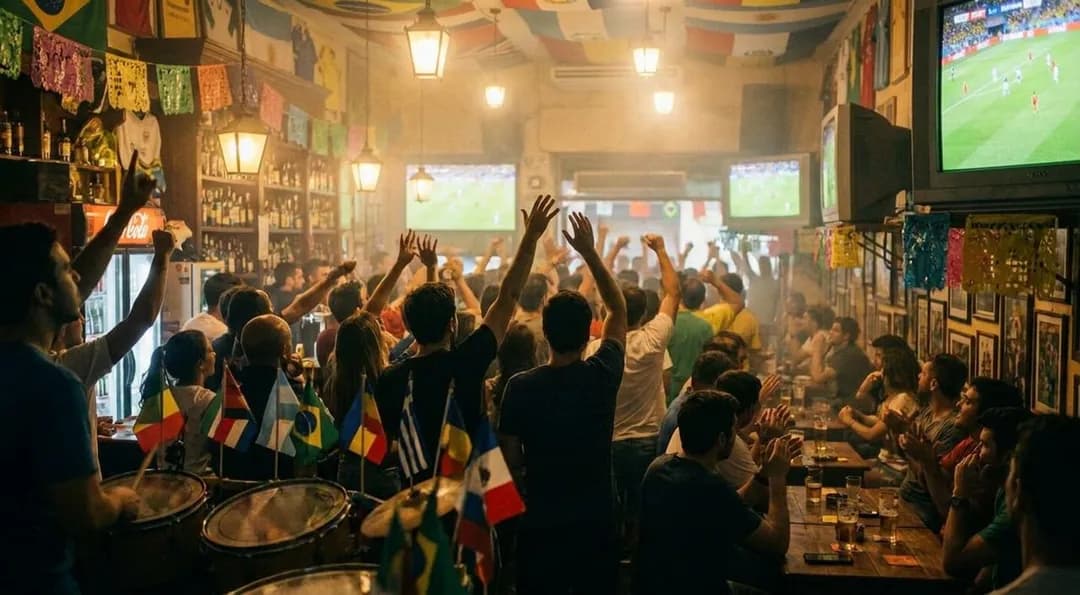
The energy shifts with every play. A near-miss sends half the room to their feet, hands on heads, mouths open in silent screams. A goal—if it comes—detonates the place. Beer flies. Strangers embrace. The drummers go wild. The celebration lasts a full minute before everyone settles back into their spots, eyes locked on the screen again. Between plays, conversations happen in pockets. Someone argues about formations in rapid-fire Spanish. A table near the window debates whether the referee has it out for South America in general. The bartender pours drinks without looking, muscle memory guiding every pour. The television volume is cranked high enough to cut through the noise, but barely.
Who Shows Up Here
Regulars have their corners staked out, the same seats they've claimed for years. They arrive early, sometimes before the bar officially opens, and the staff lets them in through the side door. Newcomers hover near the edges, trying to read the room before committing to a spot. Families come too—kids in oversized jerseys, parents who remember watching matches in living rooms back home. The age range is wide. Older men in button-downs and slacks stand next to college students in hoodies. What unites them is the game and the understanding that this bar is a portal to something bigger than a screen and a score. It's a piece of home transplanted to a Queens corner, sustained by ritual and repetition.
The Stretch Between Halves
Halftime is chaos. The line for the bathroom snakes out the door. The bar is three deep with people waving cash and shouting orders. The television switches to analysis, but no one's really watching. Conversations get louder, fueled by beer and adrenaline. Someone props open the front door and the street noise rushes in—car horns, the train overhead, a vendor selling flags on the corner. The drummers take a break, leaning their instruments against the wall and heading outside to smoke. The kitchen cranks out another round of empanadas. By the time the second half starts, everyone's back in position, the room reset and ready.
Practical Notes
The bar operates in the heart of Jackson Heights, a short walk from the Roosevelt Avenue subway station where the 7 train stops. Match days mean arriving early or accepting a spot near the back. Doors typically open mid-morning on game days, earlier for major tournaments. Reservations aren't a thing here—it's first come, first served, and the crowd doesn't thin until well after the final whistle. Cash is king, though cards work at the bar. Empanadas run a few bucks each. Beer is cheap and cold. Expect to stand for most of the match unless arriving in the first wave. The bathroom situation gets tight when the place is packed. Street parking is a gamble. The subway is the better bet.
Tags: #JacksonHeights #QueensNYC #WorldCupViewing #SouthAmericanBar #SoccerCulture #NeighborhoodBar #ArgentinaFútbol #MatchDayAtmosphere #DiasporaSpaces #RooseveltAvenue #NYCBars #AuthenticExperience #LocalGems #CommunalViewing #NYCNightlife
Sources consulted: timeout.com · secretnyc.co · thrillist.com
Please drink responsibly. Must be of legal drinking age.
All trademarks are the property of their respective owners.
Ask Karpo first
Want to know how early to arrive, whether standing-room is the only option, and what to drink when the drums start?
Ask Karpo for the door-open time, how to secure a spot, what the crowd orders, and a live route around Jackson Heights before you head out.
Ask Karpo for more information.
Keep reading
- Clubs Near Me in Ridgewood: Nowadays' Outdoor Dance Floor
 Clubs Near Me in Gowanus: Public Records' Hi-Fi Sound System
 Events Near Me in Bushwick: Elsewhere's Multi-Room Rooftop Nights