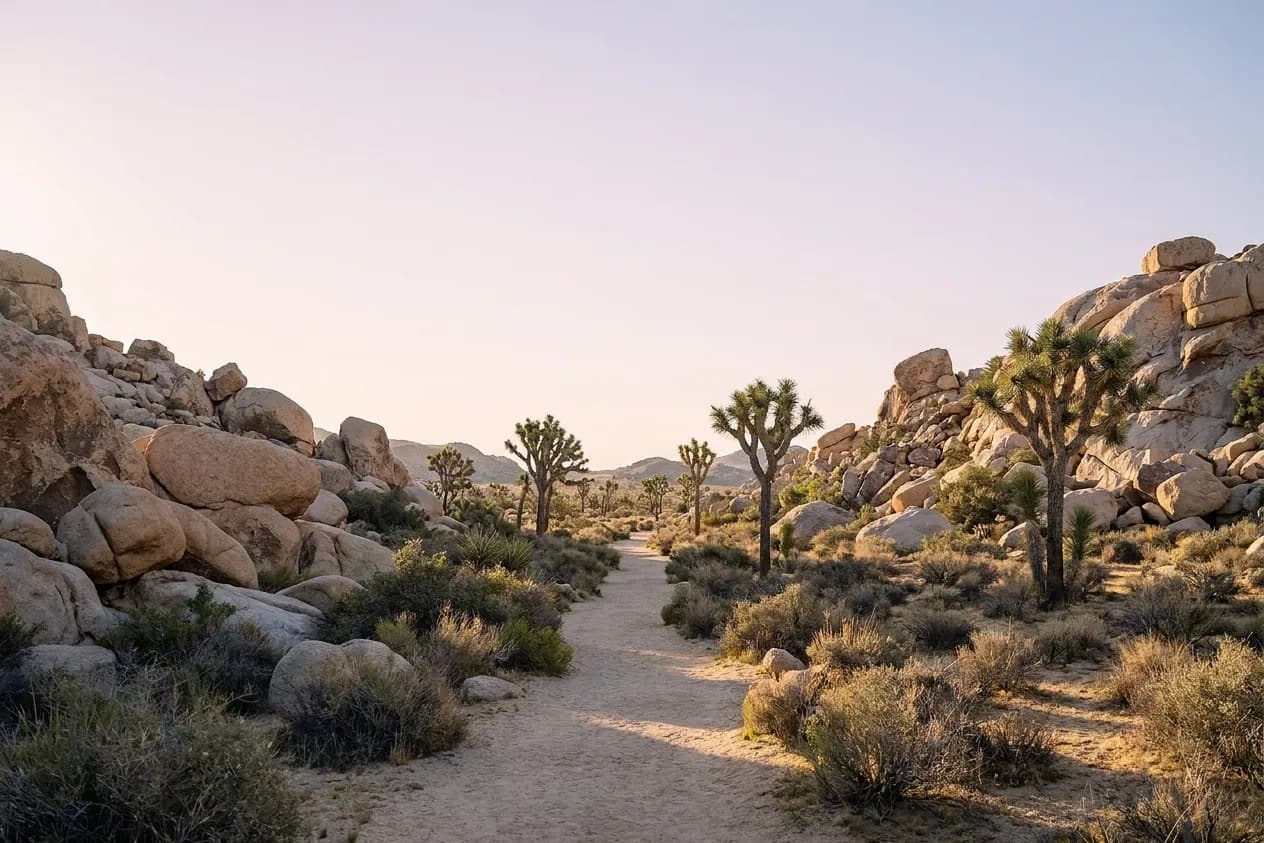
Joshua Tree in September is a park with two personalities separated by about six hours. Daily highs run from the high eighties to over a hundred, with the monthly average around ninety-five, and overnight lows drop into the sixties and seventies. That spread is the entire planning document. Everything good about a September weekend here — empty trails, cheap availability, spectacular light, genuine solitude — is available to people who organise their day around the temperature, and unavailable to everyone else.
The difference between a good September weekend out here and a miserable one is entirely about what hour you do things, and no map tells you that. Tell Karpo which weekend you are going and whether you are camping or staying in town, and get a timing plan for the heat, what is reservable, and where to be when the sun is at its worst.
The drive is two and a half hours and the departure time matters
From Los Angeles it is roughly two and a half hours to the park's western entrances, longer on a Friday afternoon when the whole basin is heading out to the desert at once. Leaving early on Saturday morning gets you into the park while it is still walkable; leaving at four on Friday puts you in traffic and then arriving in the dark, which is a fine plan if you are staying two nights and a poor one if you are not. The unromantic truth is that the Friday-night departure only works when someone else is driving.
Fees and passes, briefly
Entry is thirty dollars per vehicle and covers seven days. A park-specific annual pass is fifty-five, and the America the Beautiful annual pass is eighty and covers every national park in the country. If there is any chance of a second park visit within the year, the eighty-dollar pass is the obvious purchase; if this is a one-off, pay the thirty at the gate and do not think about it again.
Camping: what is reservable and what is not
Campground fees run from twenty-five to thirty-five dollars a night depending on the site — Black Rock, Cottonwood and Indian Cove at thirty-five, Jumbo Rocks and Ryan at thirty, Belle and White Tank at twenty-five. Cottonwood takes reservations year-round. Hidden Valley, White Tank and Belle are first-come, first-served, which in September is genuinely realistic in a way it never is in March. The September trade-off is simple: you will find a site, and you will be sleeping in seventy-degree air with no shade in the morning.
The hour-by-hour version of a good day
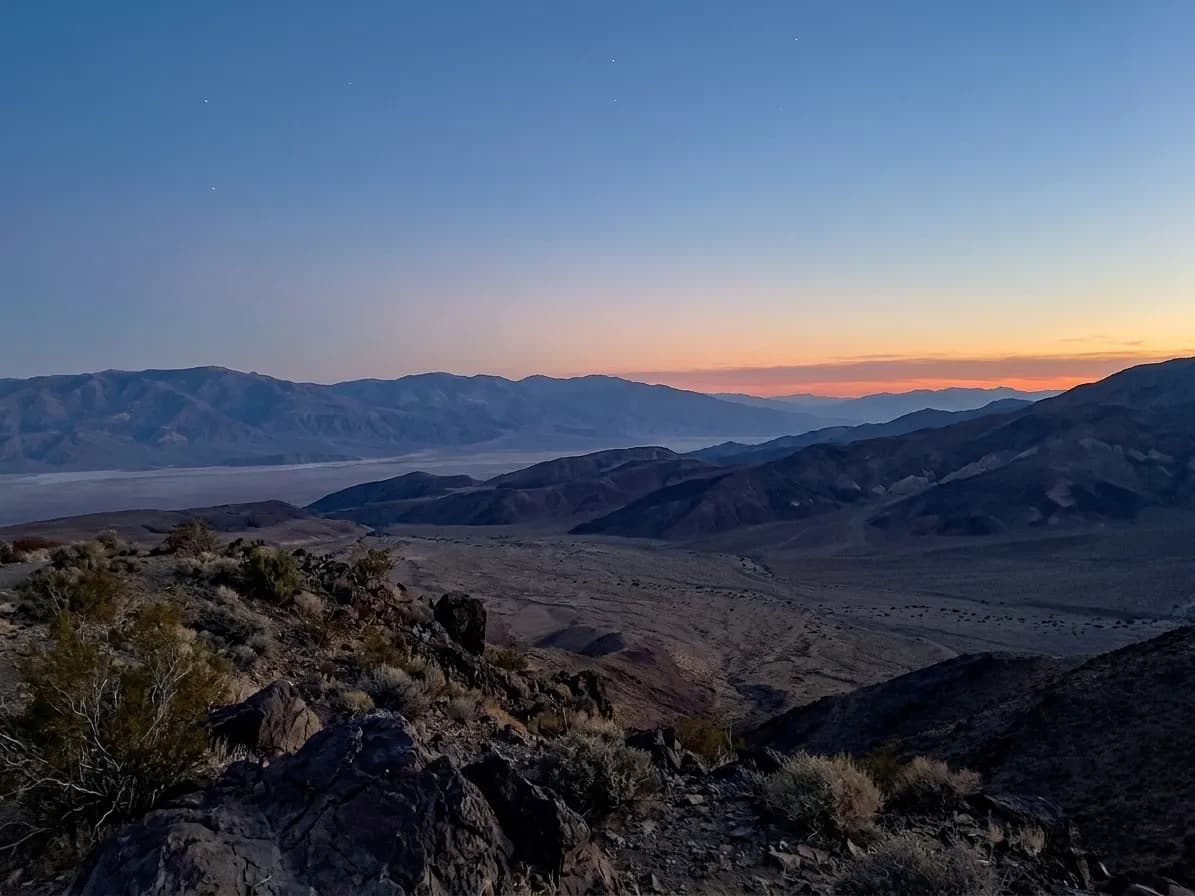
Hike between first light and about nine. Retreat somewhere air-conditioned between eleven and four — the town of Joshua Tree, Yucca Valley, or a car with the engine running while you drive the park roads. Return outdoors from five, when the light turns and the rocks start giving back heat rather than absorbing it. Stay out for the stars, because the night sky here is the reason a lot of people come and it is entirely unaffected by the heat. Anyone attempting a two o'clock hike in September is making a serious mistake and rangers will tell them so.
Water is not a packing detail, it is the plan
There is very little water available inside the park, and the standing advice in this heat is a gallon per person per day as a floor rather than a target. Fill everything before you enter, carry more than you intend to drink, and remember that the sun exposure on most trails here is total — there is no shade to walk into. Cotton, linen and loose light layers beat technical fabrics that cling. A hat is not optional and neither is starting early.
Where to stay if you are not camping
The towns strung along Twentynine Palms Highway — Yucca Valley, Joshua Tree, Twentynine Palms — hold most of the rentals, and the choice between them is really a choice about which park entrance you want. Joshua Tree town is closest to the west entrance and the busiest; Twentynine Palms sits by the north entrance and is quieter and cheaper; Yucca Valley has the supermarkets and the widest food options. September is off-season for rentals here, which means both good availability and properties running air conditioning against hundred-degree afternoons — worth confirming rather than assuming, because a desert rental without functioning cooling in September is unusable.
Practical notes
Two and a half hours from Los Angeles; leave early Saturday rather than late Friday. Entry is thirty dollars per vehicle for seven days, fifty-five for a park annual, eighty for America the Beautiful. Campgrounds run twenty-five to thirty-five, Cottonwood reservable year-round, several first-come and genuinely available in September. Hike before nine, hide from eleven to four, return at five, stay for the stars, and carry a gallon of water per person per day.
Tags: #JoshuaTree #NationalParks #WeekendPlans #LosAngeles #DesertWeekend #Camping #RoadTrip #Hiking #Stargazing #LAOutdoors #DayTrip #LAWeekend #LAGuide
All trademarks are the property of their respective owners.
Ask Karpo first
Want a September plan for the park that puts you outdoors at the right hours, tells you what is reservable that weekend and where to shelter in the middle of the day? Ask Karpo for a timed itinerary and the forecast that matters.