For New Yorkers planning a big-sky escape from JFK, LaGuardia, Newark or a long road trip west, bison viewing can be one of the most memorable parts of a national park vacation. It is also one of the easiest moments to misjudge. The National Park Service says visitors should give bison serious space, even when they look calm, slow or accustomed to cars. A recent Yellowstone news release about a June 26, 2026 visitor injury near Mud Volcano repeated the park’s core message: wild animals are unpredictable, and visitors are responsible for keeping distance. Here is a practical NYC trip-prep guide to seeing bison without turning a vacation into an emergency.
Text Karpo before you fly west, and we’ll help turn your national park wish list into a safer, realistic day-by-day plan. Ask Karpo for bison-viewing routes, packing reminders and kid-friendly safety scripts for your group.
Why NYC travelers should learn the distance rule before boarding
The most important number to know is 25 yards, or 23 meters, as a minimum distance from bison in Yellowstone and many other National Park Service settings. NPS also frames bison distance as 100 feet, roughly two bus lengths, on its bison visit guidance. That is not a suggested photo range; it is the minimum buffer you should maintain. If an animal moves closer, you move away. For travelers used to crowded sidewalks and zoo barriers, the mental reset matters: national parks are not managed like enclosed exhibits.
Before leaving NYC, make the distance rule part of the group plan. Tell kids and first-time park visitors that no picture, short video or social post is worth closing the gap. In the field, distance can feel larger than expected, so use a simple visual: about a quarter of a football field. If you cannot keep that space because a boardwalk, trail, parking area or traffic jam has narrowed the scene, backtrack, wait inside the car or choose another viewpoint.
Bison are not slow, and calm behavior is not consent
Yellowstone’s safety page says bison have injured more people in the park than any other animal and can run three times faster than humans. Its bison ecology page puts their top speed at up to 35 miles per hour. That speed matters because many unsafe encounters begin with a false read: a huge grazing animal looks settled, visitors inch closer, and the animal’s tolerance changes faster than people can react.
Watch behavior, but do not wait for dramatic warning signs. Yellowstone lists head bobbing while staring, pawing, bellowing, bluff charging and a raised tail as signs you are too close and that a charge may be imminent. The right response is not to stand your ground for a better shot. Move away immediately, seek cover behind a vehicle or tree when available, and do not create a crowd that boxes the animal in.
Where New Yorkers are most likely to see bison
Yellowstone is the classic bison destination, with NPS reporting a 2025 pre-calving estimate of nearly 5,300 animals and herds associated with the Lamar and Hayden valleys. Grand Teton can also offer roadside viewing of bison from the Jackson herd. Beyond Wyoming, NPS identifies bison-viewing opportunities or herds at parks and preserves including Badlands, Theodore Roosevelt, Wind Cave, Tallgrass Prairie, Chickasaw National Recreation Area and parts of the Grand Canyon’s North Rim area.
The planning takeaway is simple: check the specific park page, not just a general travel blog, before you go. Rules, road access, wildlife concentrations and seasonal closures can vary by park and by year. For New Yorkers trying to fit a western park into a holiday week or long weekend, it is better to choose one or two wildlife-viewing areas with realistic drive times than to chase every possible herd location on a tight itinerary.
How to handle roadside bison jams
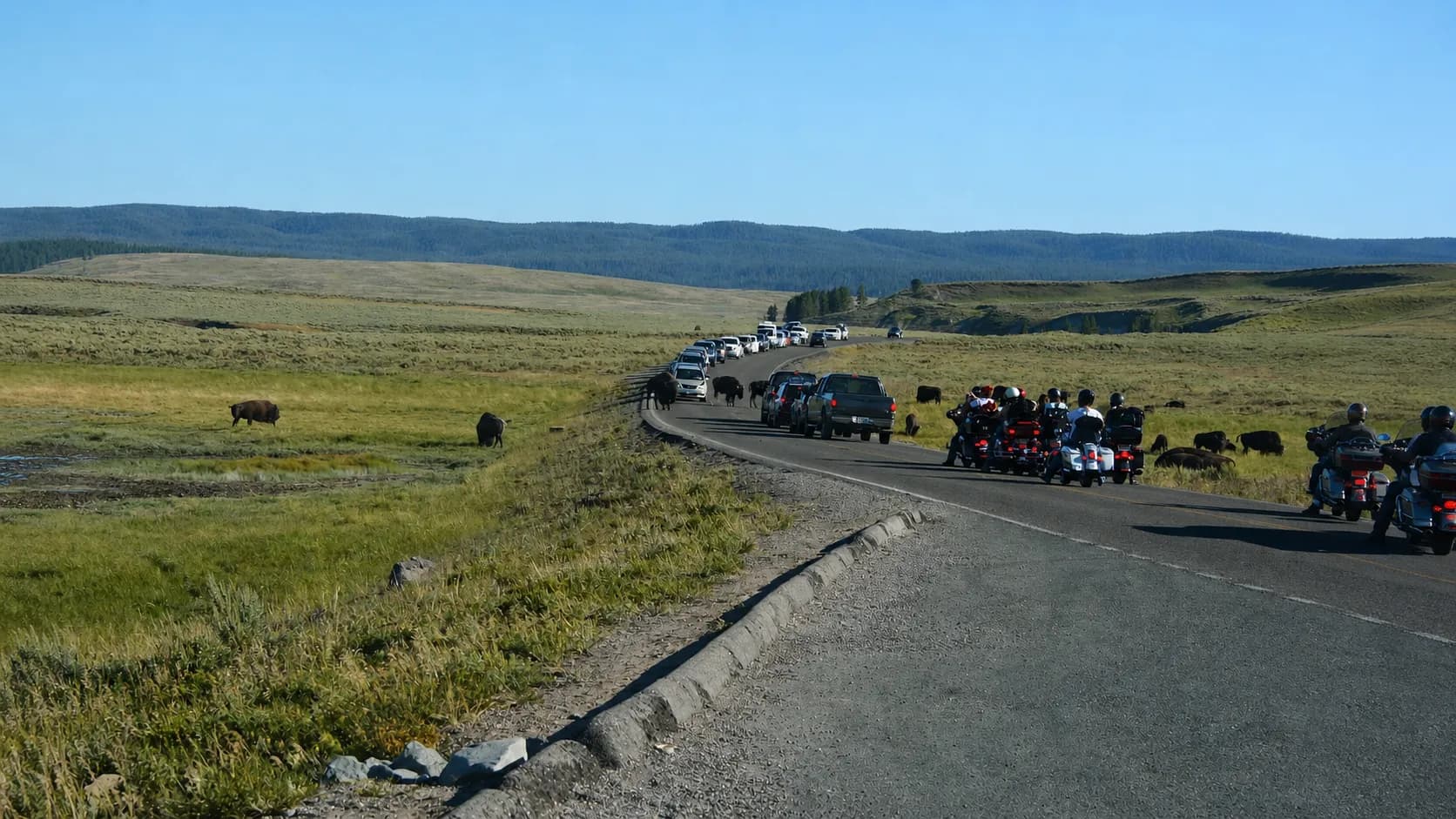
A bison jam is exciting the first time and stressful the tenth time. Yellowstone tells drivers to plan extra time, be patient, drive slowly, stay in the vehicle and wait for bison to move along. Do not honk, edge forward aggressively or stop in the travel lane for pictures. If you pull over, use a designated pullout and get all wheels safely off the road so other cars, emergency vehicles and wildlife can move.
For NYC drivers who rarely deal with open-range wildlife, treat the road itself as part of the habitat. Bison may use pavement like a path, and their dark bodies can be hard to see at night or in poor visibility. Keep cameras ready before a scenic drive so passengers are not scrambling over seats. The driver’s only job is driving; the best photo is not worth a fender-bender, a blocked ranger response or a startled animal.
What to pack for better photos without getting closer
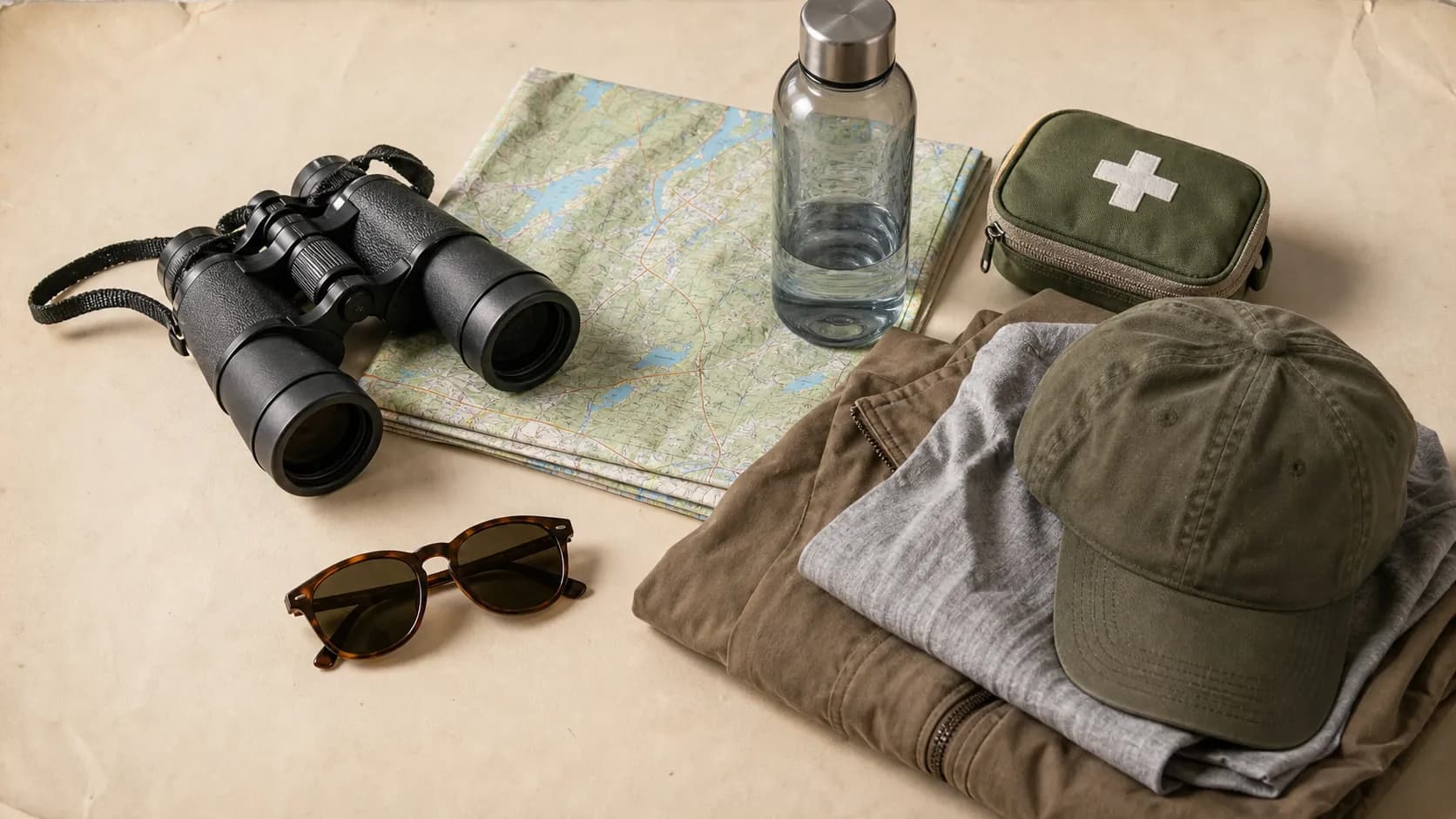
The safest wildlife photography kit is not complicated: binoculars for everyone who wants a close view and a camera or phone setup that works from a distance. Yellowstone recommends telephoto lenses of 300mm or greater for adequate reach. If you are using only a phone, accept that the best image may be wide and environmental rather than tight and dramatic. A sharp memory from a safe turnout beats a shaky close-up taken from the danger zone.
Add practical NYC-to-park items: a paper map or downloaded NPS app content for areas with poor service, layers for sudden mountain weather, a compact first-aid kit, water, snacks sealed away from wildlife, and sunglasses for long drives. If your itinerary includes bear country, read the park’s bear spray guidance before arrival. Bear spray is a field tool for certain backcountry risks, but most airline travelers should plan to buy, rent or otherwise obtain it locally rather than pack it from home.
Pets, kids and group dynamics need a pre-trip rule
NPS warns that pets can create risks for wildlife, people and themselves, and many parks do not allow pets on trails. Even leashed dogs may be perceived by wildlife as prey or a threat. If your trip includes a pet, confirm the destination’s pet rules before booking lodging and be realistic about what that means: you may be limited to roads, parking areas, campgrounds and developed zones, not the iconic trail you saw online.
Families and friend groups should decide in advance who calls the retreat. If one person says, “We are too close,” everyone backs up without debate. Children should stay within arm’s reach near wildlife-viewing areas, and no one should walk around parked cars or vegetation for a better angle without first checking sightlines. The most useful rule is boring and effective: keep the group together, keep distance, and leave before the animal’s behavior changes.
What to do if a bison approaches or charges
If a bison approaches, your responsibility is to restore distance. Back away and change your route; do not wait for the animal to pass within arm’s reach because the trail or boardwalk is convenient. If a bison charges, Yellowstone’s guidance is different from bear guidance: do not stand your ground. Move or run away, look for cover behind nearby cars or trees, and create separation as quickly as possible.
After any physical contact or serious wildlife conflict, report it to a ranger as soon as possible; Yellowstone says to dial 911 if cell service is available. Reporting is not about getting anyone in trouble first; it helps protect other visitors and the animal. If you see another visitor approaching wildlife, calmly alert them to the distance rule or notify a ranger rather than joining the crowd. Crowd pressure is one reason unsafe situations escalate.
Practical notes
Practical notes for NYC travelers: build extra time into any Yellowstone or Grand Teton driving day, because wildlife jams can turn a short map segment into a slow crawl. Download official park pages and maps before leaving a hotel Wi-Fi connection, since service can be unreliable. Do not pack bear spray in a carry-on; FAA PackSafe rules sharply limit self-defense sprays in checked baggage, and many bear-spray canisters exceed those limits, so check your airline and local rental or purchase options. Confirm the specific park’s wildlife-distance, pet, food-storage and road-status rules close to departure. If conditions, crowds or animal movement make the safe choice unclear, ask a ranger.
Tags: #bison #NYCTravel #NationalParks #Yellowstone #GrandTeton #WildlifeSafety #WeekendPlans #weekend_plans #TravelTips #FamilyTravel #RoadTrip #ParkRangers #OutdoorSafety #KarpoNYC
Sources consulted: National Park Service: Yellowstone visitor injured by bison encounter, June 26, 2026 · National Park Service: Yellowstone safety and wildlife guidance · National Park Service: Visit parks with bison and human safety guidance · National Park Service: 7 ways to safely watch wildlife · National Park Service: Risks to people from wildlife · National Park Service: Yellowstone bison ecology · Federal Aviation Administration: PackSafe sprays and repellents · Associated Press: Yellowstone bison injury coverage
All trademarks are the property of their respective owners.
Ask Karpo first
Ask Karpo to compare Yellowstone, Grand Teton, Badlands, Theodore Roosevelt and Wind Cave for your travel dates from NYC, including where bison are commonly viewed, how much driving to expect, and which official park alerts you should check before leaving.