Culture / Collection
The Archive or the Live Set? A Harlem Jazz Guide That Starts With People, Not Playlists
Harlem keeps its jazz history the way families keep photographs — in named rooms, on specific streets, behind ordinary doors. Here is how to decide where you belong first: in front of the archive, or three feet from the horn.
 Sally Abrams
There is a recording of Billie Holiday that almost nobody heard for seventy years. It sat in a private collection of radio transcription discs — nearly a thousand of them, cut off live broadcasts in the late 1930s by an audio engineer named William Savory — until the National Jazz Museum in Harlem acquired the hoard in 2010 and began restoring it. Louis Armstrong stretching out past the three-minute limit of a 78. Benny Goodman loose in a way the studio never allowed. Voices that were supposed to evaporate into the air over New York, caught and kept.
I want to start there, with the discs, because they make my argument for me. Jazz in Harlem was never really about venues. It was about people — who was in the room, who was listening, who decided a chorus was worth saving. The venues opened and closed and reopened and closed again (they still do, and we will get to that). The people are the continuity.
So this is not a list of the ten most photogenic jazz spots in Manhattan. It is a shorter, more honest collection, organized around one question: what kind of listener are you when you arrive? Some of us need the names and the story first, or the music stays beautiful wallpaper. Some of us need to be three feet from a saxophone before any history lesson means a thing. Harlem, generously, has a door for each of us — and the doors are within walking distance of one another, in the same neighborhood that produced the music in the first place.
The question is not whether Harlem's jazz is still alive. It is whether you plan to meet it as a story or as a sound — and the neighborhood will hand you either one, if you know which door to knock on.
First, decide how you listen
Be honest with yourself, because it changes your itinerary.
If you are the reader who pauses a documentary to look up every name on screen (I see you; I am you), start at the museum. You will walk into every live room afterward already knowing whose shoulders the bandstand rests on, and the music will land differently because of it.
If liner notes make your eyes glaze and you only believe what happens in front of you, skip ahead. Book a Friday basement set first and let the history come to you later, out of order, the way it comes to most people. There is no virtue ranking here. The archive-first listener and the live-set-first listener meet in the same pews eventually.
And if you are traveling alone — this matters, so I will say it plainly — Harlem's jazz rooms are some of the most comfortable places in New York to be a woman by yourself. The rooms are small, the crowds came to listen rather than to be seen, and a single seat is often easier to find than a table for four. Nobody will ask you to explain your presence. The music does not check who you arrived with.
The National Jazz Museum in Harlem — for the listener who wants the names first
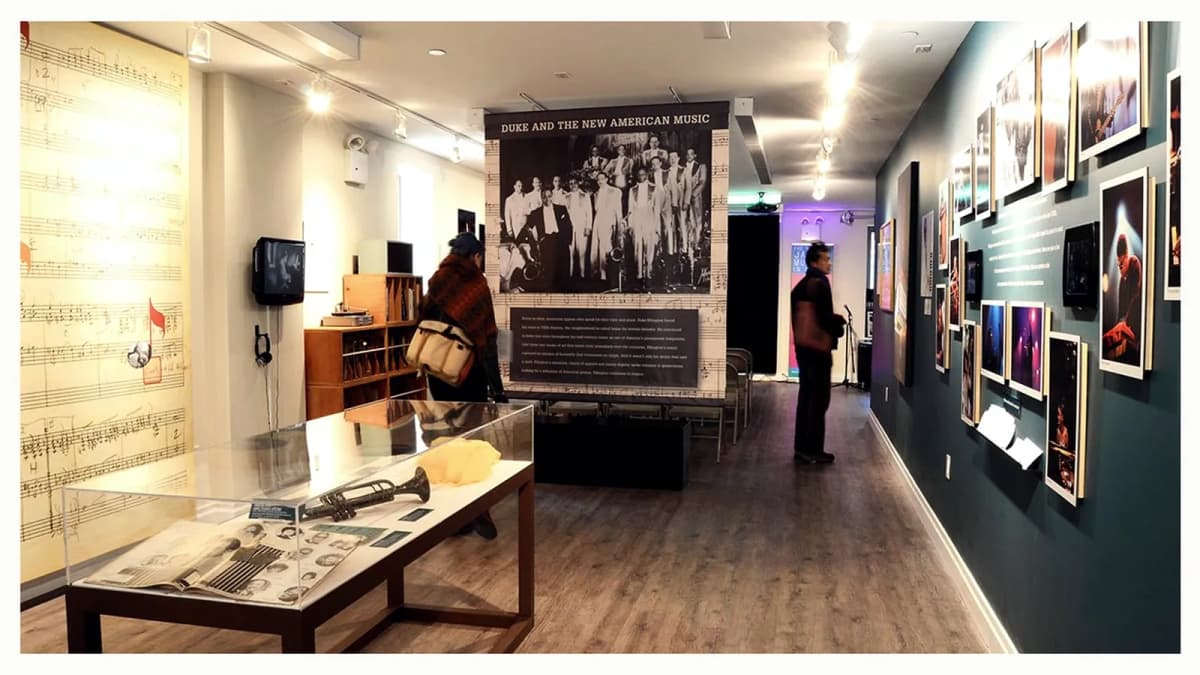
The museum occupies a compact gallery at 58 West 129th Street, between Malcolm X Boulevard and Fifth Avenue, a few minutes' walk from the 125th Street stop on the 2 and 3 trains. It is open Thursday through Saturday, noon to 5pm, with a suggested donation of $10 — which, in a city of $30 museum tickets, reads almost like an act of stubbornness. The museum suggests you plan at least thirty minutes; I would counsel doubling that, because the listening stations are where the visit actually happens.
Founded in 1996 and settled into its current Central Harlem home in 2016, this is not a marble-hall institution. It is closer to a working archive with the doors propped open. The exhibits walk you through Duke Ellington and the makers of what the museum calls the new American music; the real treasure is the Savory Collection, those rescued radio discs, which turned the museum from a neighborhood educational project into a place jazz scholars talk about internationally. Musicians of the caliber of Christian McBride and Jon Batiste have shaped its artistic programming over the years, and the museum stages free and low-cost concerts and talks on a calendar that runs to roughly 150 live events annually — meaning your "museum visit" has decent odds of ending with actual musicians playing actual instruments a few feet away.
Who should start here: the context-hungry, the first-time visitor to Harlem, anyone who has ever loved a song more after learning who made it and what it cost them. Check the events calendar before you pick your day (a listening party or lecture is worth planning around), and note the Thursday–Saturday window — this is not a rainy-Monday fallback, it is an appointment.
Bill's Place — for the listener who wants the horn three feet away
Two Fridays a month would not be enough for what happens at 148 West 133rd Street, and fortunately you get every Friday and Saturday: tenor saxophonist Bill Saxton leads his Harlem All-Stars in two sets, 7pm and 9:30pm, doors at 6:30, tickets around $30, reservations close to mandatory because the room holds only a few dozen chairs. It is BYOB — no bar, no bottle service, no upsell. You bring what you want to drink; the house provides the music and the walls.
About those walls. West 133rd was called Swing Street in the late 1920s and early 1930s, a block of basement speakeasies where Harlem drank and listened below sidewalk level during Prohibition — the block where, as the club itself tells it, a young Billie Holiday was singing when she was discovered. Bill's Place is a working revival of exactly that kind of room: a brownstone parlor floor, performers close enough that you can hear the mechanics of the instrument, the breath before the note. Every seat is effectively the front row.
Who should start here: the listener who trusts sound over stories, couples and solo travelers who want one unarguably real New York night, anyone whose only jazz experience so far has been a big impersonal hall. (One practical note for planners: two set times mean you can pair the early set with dinner afterward on Lenox Avenue, or the late set with an unhurried evening walk down from 125th.) Book ahead on the club's site; this is not a wander-in room.
Marjorie Eliot's parlor — for the listener who wants to understand why any of this survives
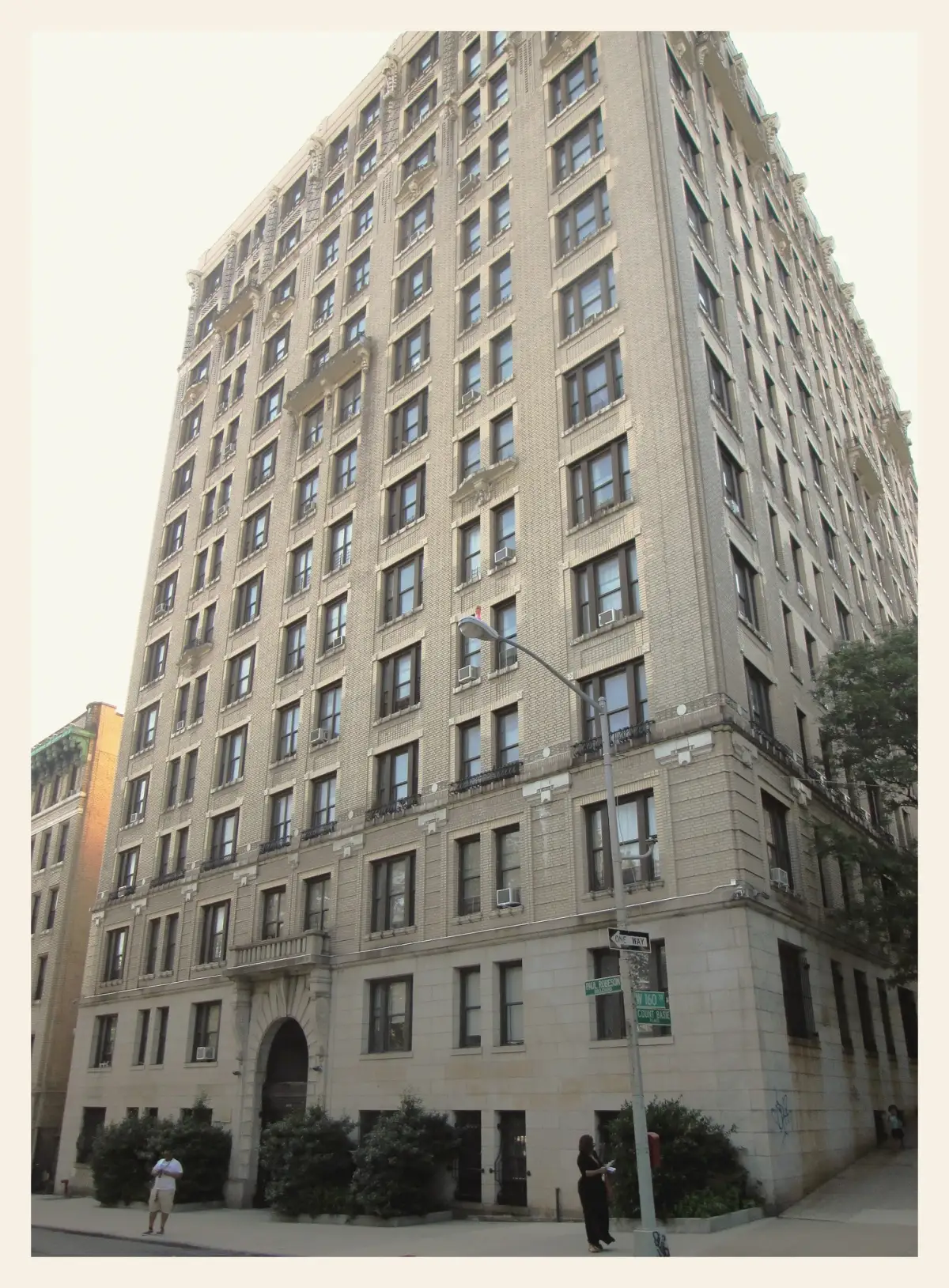
Every Sunday afternoon since 1993, pianist Marjorie Eliot has opened her own apartment — 3F, at 555 Edgecombe Avenue in Sugar Hill — and let strangers in to hear live jazz in her parlor, free of charge, at 3:30pm. She began the concerts as an act of grief and remembrance after losing her son, and has kept them going for more than three decades, which makes a Sunday in her living room one of the longest-running jazz engagements in New York — held not in a club but in a home.
The address matters as much as the music. 555 Edgecombe is a landmarked apartment house whose tenant rolls once read like a syllabus of Black excellence: Paul Robeson and Count Basie both lived here, in the years when Sugar Hill was where Harlem's most celebrated residents settled. When you sit in a folding chair in apartment 3F, you are inside that lineage, not looking at it through glass. Arrive early — the parlor fills — and bring something for the donation basket if you can; free has never meant costless, and the musicians who play these Sundays are professionals giving you their afternoon.
A museum preserves what a community made. A parlor concert is the community, still making it — and you are invited on the condition that you remember you are a guest in someone's home.
Who should start here: the traveler who cares about the "why" — why jazz belongs to Harlem, why a woman would turn her private grief into thirty years of public generosity, why the most moving room in New York might be a fourth-floor walk-up. Dress like a respectful guest, silence your phone, and let the host run her room. This is not a place to negotiate.
Minton's, and the honest footnote every guide owes you
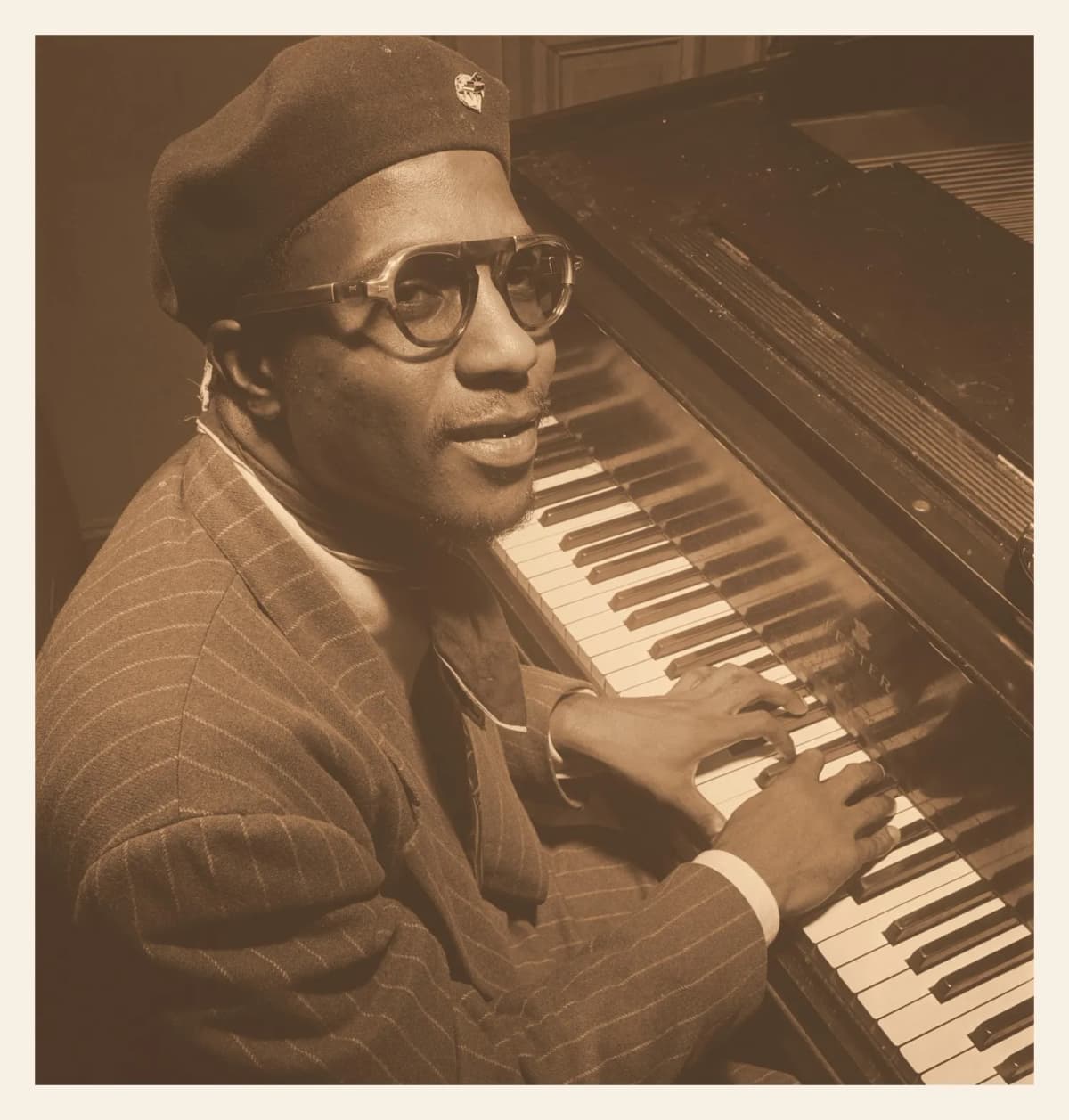
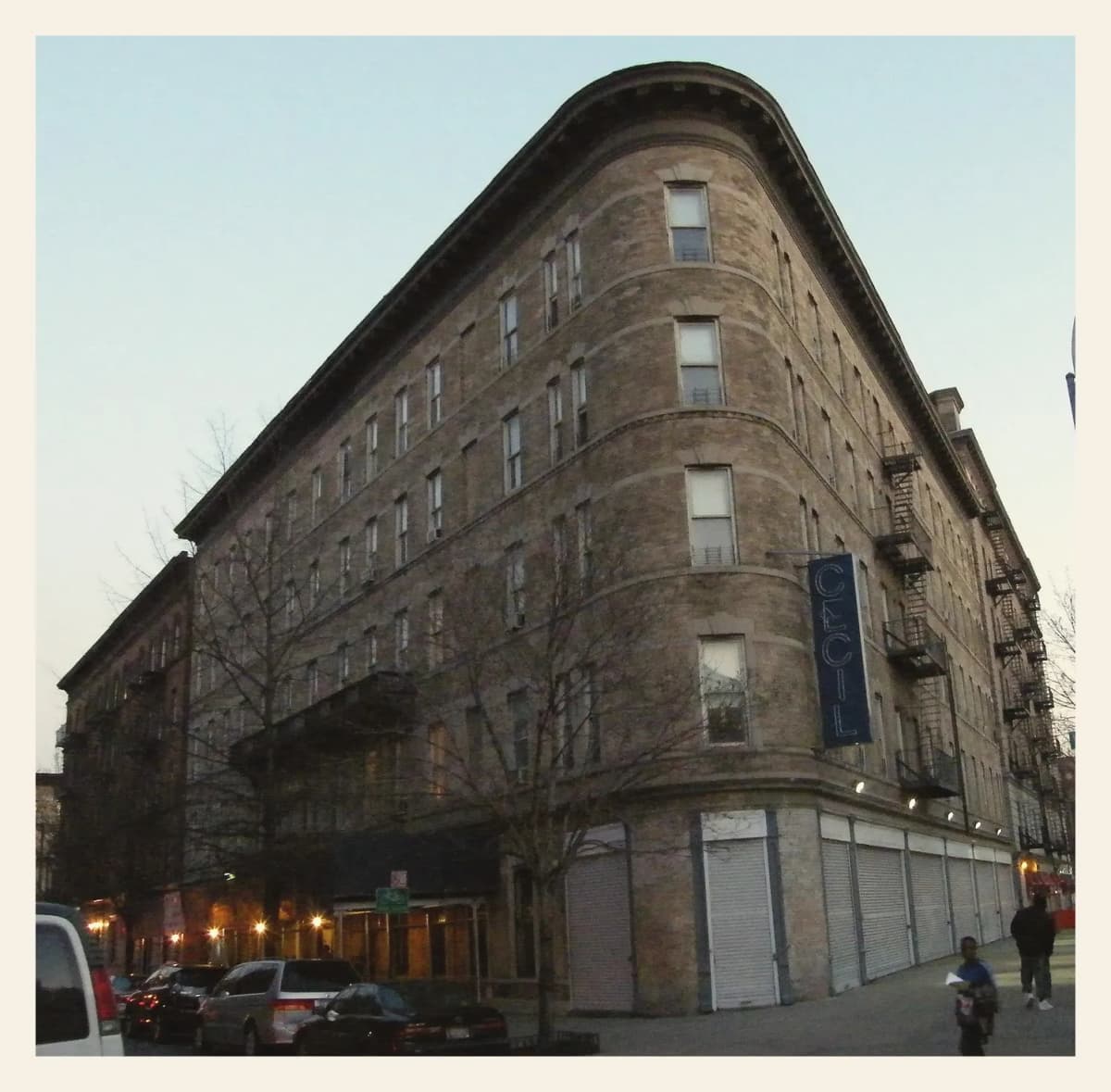
You cannot write about listening in Harlem without Minton's Playhouse, so let me give you both truths at once. The first: Minton's, opened in 1938 by saxophonist Henry Minton on the ground floor of the Cecil Hotel at 206 West 118th Street, is arguably the most important room in modern jazz — the after-hours laboratory where house pianist Thelonious Monk, Dizzy Gillespie, Charlie Christian and their circle bent swing into bebop at the Monday night jam sessions. The photograph above was taken there in 1947, when the revolution was still a rumor most of America hadn't heard.
The second truth: as of this writing, Minton's is temporarily dark. The club has cycled through closures and revivals across its long life — most recently reopening in 2024 before suspending operations again — and Harlem's own jazz guides currently list it as closed, while its neighbors carry the weight. Walk past the Cecil's curved corner anyway; the building is worth your eyes. But do not build your evening on it.
I include the closure deliberately, because it is the part of the story that guides usually airbrush out. Jazz landmarks are not granite; they are small businesses and private generosities, and they survive on rent math and one person's stamina. The same fragility that closed Minton's is the reason the museum's archive matters, the reason Bill Saxton's basement matters, the reason a donation in a Sugar Hill parlor matters. Preservation is not an institution. It is a habit, and visitors are part of it.
If your night needs live music and the calendar fights you — say, you land on a Wednesday, when the basement doors and the parlor are quiet — walk to Silvana at 300 West 116th Street, where the downstairs stage runs music nightly, jazz mixed in with sounds from across the African diaspora, usually with little or no cover. It is not a shrine and does not pretend to be one. It is where the neighborhood actually goes on a weeknight, which is its own kind of authenticity.
A one-weekend plan, if you want the whole argument
Here is how the pieces assemble, for a listener planning a Harlem weekend around this collection:
• Friday or Saturday afternoon: the National Jazz Museum, noon to 5pm, $10 suggested. Take the listening stations seriously. Learn three names you didn't know.
• Friday or Saturday night: Bill's Place, 7pm or 9:30pm set, booked in advance, bottle of whatever you like in your bag. Sit close. You will be close regardless.
• Sunday, 3:30pm: Marjorie Eliot's parlor at 555 Edgecombe Avenue, apartment 3F. Go early, give what you can, say thank you on the way out.
• Any leftover evening: Silvana on 116th, no plan required.
• En route: pass 206 West 118th Street and pay the curved corner of the Cecil a moment of attention, whatever state its doors are in.
Three days, four rooms, no ticket over about $30 — and by Sunday evening you will have heard Harlem's jazz the way it actually exists: archived upstairs, alive downstairs, and held together by people whose names you now know.
One last piece of advice for the solo travelers, because this column is written for you first: take the seat near the front. The map of this music was drawn by people who were told, in a hundred ways, to take up less space. The least we can do — in a museum gallery, a speakeasy basement, a borrowed folding chair in a stranger's parlor — is listen like we mean to be there.
Places in this guide


4 places