Sport / Collection
SummerStage, the Brooklyn Way: A Half-Day Route Around Herbert Von King Park
New York's biggest free concert series has a Brooklyn living room, and it is not in Central Park. This is the walking route — G train to lawn to fried chicken — plus the honest transfer math for the shows that stay in Manhattan.
 Ada Monroe
Every city is a federation of villages, and every big festival is a federation of lawns. Capital One City Parks Foundation SummerStage — the free concert series turning 40 in 2026, with more than 60 shows spread across 13 parks between late May and the first of October — gets reported as a Central Park story. It is not one. The series was built to move: Harlem, the East Village, Queens, the Bronx, Staten Island, and, for Brooklyn, a ten-acre rectangle in Bedford-Stuyvesant called Herbert Von King Park.
This is not a lineup recap and it is not a landmark guide. It is a route: one village block by village block plan for the park that hosts Brooklyn's SummerStage weekend every summer, walkable in half a day, with stops you can actually stand in, transfers you can actually make, and exit points marked the way a route planner marks them — before you need them. The address matters here. "New York, NY" tells you nothing. Lafayette Avenue, Tompkins Avenue, Greene Avenue, Marcy Avenue — the four streets that frame this park — tell you everything.
Tourists collect landmarks; locals collect corners. This route is four corners and a lawn.
One piece of honesty up front, because a route you cannot trust is decoration: Brooklyn's 2026 SummerStage run at Von King landed early, July 9 through 12 — a Boot Camp Clik anniversary night, a COLORSxSTUDIO bill with Mereba, MIKE's Young World with Max B, and Bilal closing in association with the Apollo. It came and went in one long weekend, which is how the Brooklyn stop usually behaves. That changes the assignment, it does not cancel it. Walk the route now, while the park is in full summer use, and you hold the ground plan for next season's run. And for the rest of this season — the series keeps going through October 1 in other boroughs — the back half of this piece does the cross-borough math from Bed-Stuy, in minutes, so you can decide whether a Manhattan show is worth your evening before you are standing on a platform.
Vibe Check
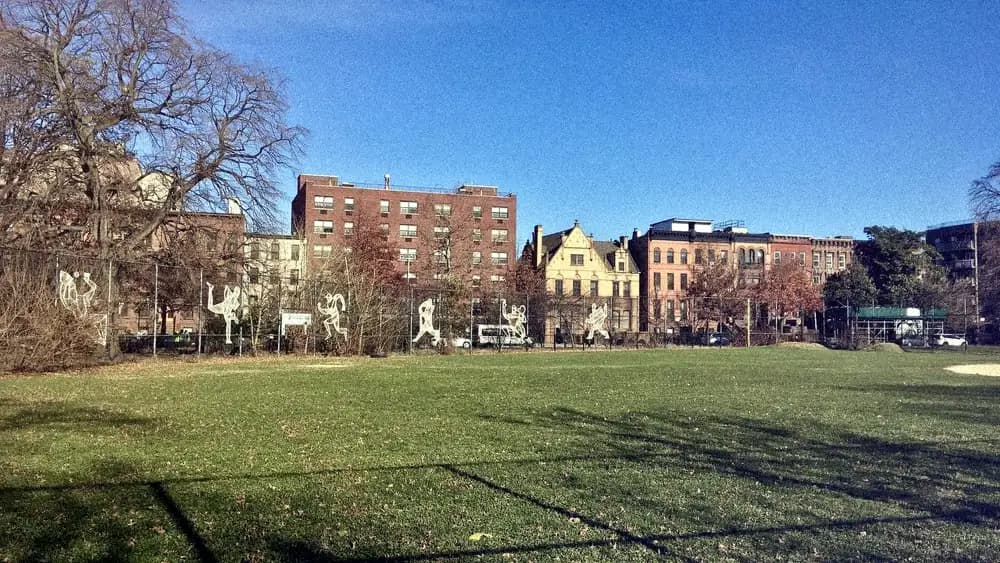
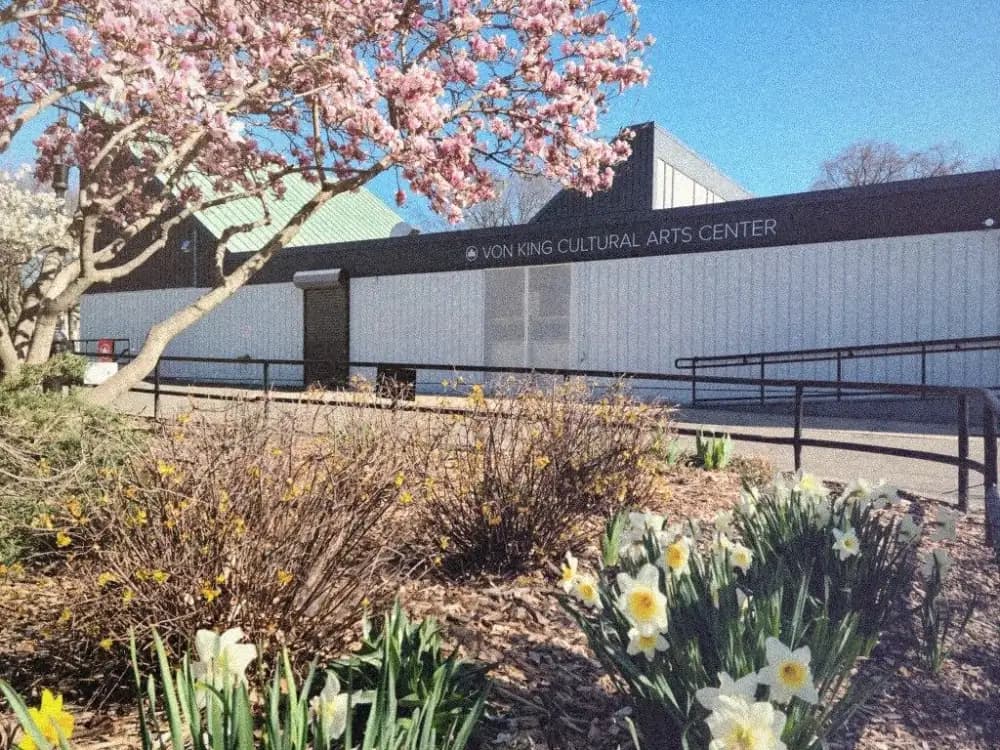
Herbert Von King Park is one of Brooklyn's oldest parks — the land was acquired in 1857, and the 1871 plan came from Olmsted and Vaux, the same two names behind Central and Prospect Parks. It spent a century as Tompkins Park, then was renamed in 1985 for Herbert Von King, a community organizer people called the mayor of Bedford-Stuyvesant. The park still works the way that nickname suggests: less scenery, more living room. A big open lawn in the middle, London planes around the edge, brownstones watching from all four sides, a dog run and a baseball diamond holding the northwest corner, basketball courts running the southeast. In the center sits the Von King Cultural Arts Center and its sunken outdoor stage, the Almira Kennedy Coursey Amphitheatre — named in 2011 for the educator and neighbor who spent decades pushing to turn a passive square into a working one.
The Crowd
On a summer Saturday: dog people negotiating the run before nine, pickup games claiming the courts by noon, birthday balloons zip-tied to lawn chairs, teenagers filming choreography near the amphitheater steps, and — on show days — a blanket line that starts forming while the soundcheck is still arguing with itself. Solo visitors do not read as odd here. Bring a book or a ball and you have a role.
Best For
Lawn concerts. Long warm-up walks. Pickup basketball. Dog-run sociology. Pre-show picnics. Reading a neighborhood by its corners instead of its skyline.
The Route: Four Stops, One Exit Marked in Advance
The transfer is part of the plan. So is the way out.
The whole circuit is about a mile and a half of walking, flat the entire way. Budget three to four hours moving at a talking pace; add the length of a show if you time it to a concert.
Stop 1 — Bedford–Nostrand Avenues (G), Your Front Door
Take the G to Bedford–Nostrand Avs. The station sits under Lafayette Avenue between Bedford and Nostrand, and the park's northwest corner at Lafayette and Marcy is roughly a block away — a two-minute walk, which for a New York park-to-platform ratio is close to unbeatable math. Come up the stairs, turn east on Lafayette, and the green arrives before your phone finishes finding the signal.
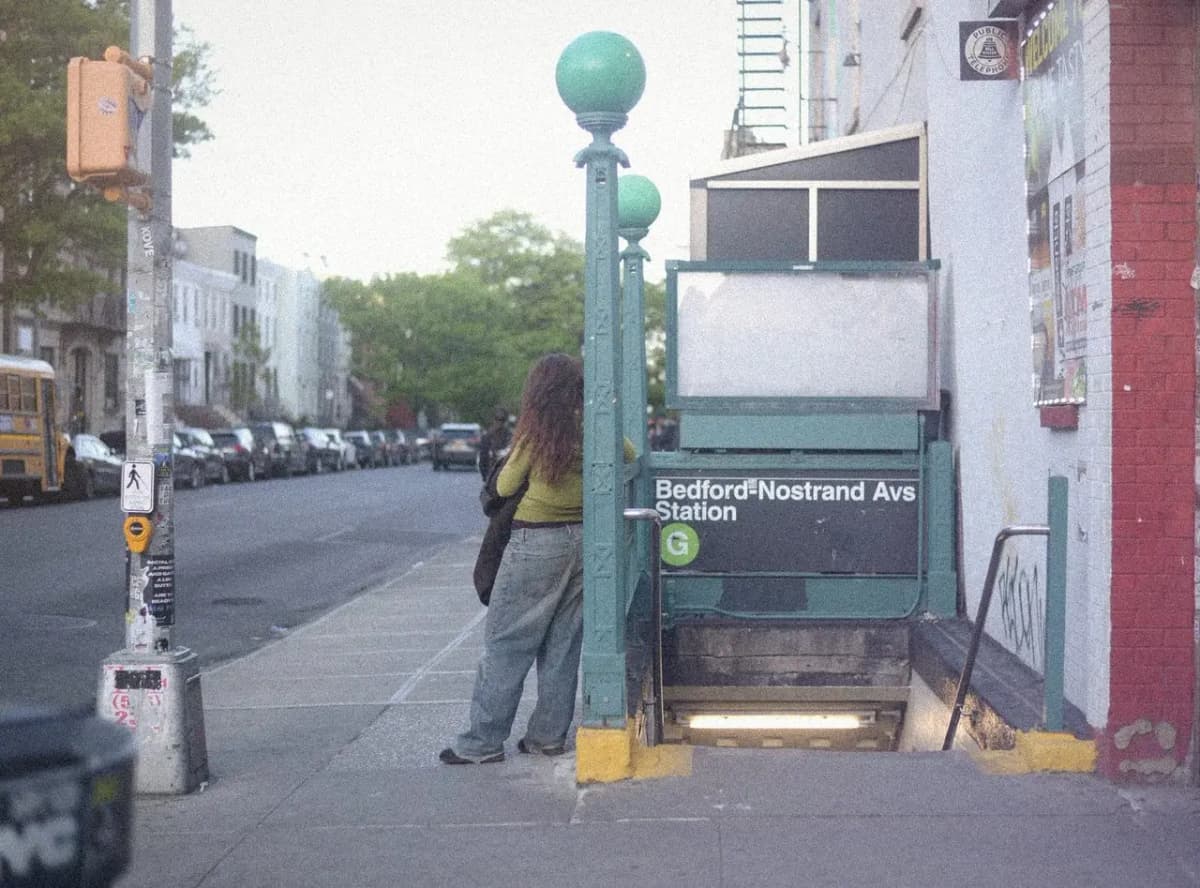
The G gets slandered a lot, mostly by people who do not live on it. For this route it is the correct train: it puts you at the park's quiet corner rather than the retail one, so you enter the way neighbors do. If your day starts in Manhattan, note the honest cost now — the G does not cross the East River from Midtown, so you will transfer at least once. More on that arithmetic later; it is the spine of this piece.
Stop 2 — Brooklyn Kettle, 385 Tompkins Avenue
Walk the north edge of the park along Lafayette, turn right on Tompkins, and you are on the avenue that functions as the park's kitchen and front porch. First order of business: Brooklyn Kettle, a family-run coffee shop at number 385, pouring farm-to-table beans inside a storefront it shares with art and design retail. Open daily from 8am — but note the closing time, 5pm, because it shapes the route below.
Get the coffee to go. The point of this stop is not the seat; it is walking back into the park holding something warm while you scout the lawn.
Pro Tips
• SummerStage shows at Von King tend toward late-afternoon and evening starts. Brooklyn Kettle closes at 5pm — on a show day, caffeine is a before errand, not an intermission one. Plan the cup for 3pm, not 7pm.
• The park has two personalities on show days: the amphitheater bowl fills first, then blankets colonize the lawn behind it. If you care about sightlines more than proximity, arriving when gates open beats arriving early to the wrong spot. Series-wide, gates typically open 60 to 90 minutes before showtime — check the listing for your date and treat the gate time, not the set time, as your appointment.
Stop 3 — The Park Loop and the Bowl
Re-enter the park mid-block on Tompkins and give it a full perimeter lap before you commit to grass — twenty minutes, unhurried. This is the sport section of a sport route, and it is also reconnaissance. Clock the corners as you pass them: dog run and ball field northwest, courts southeast, playground activity along Greene, the amphitheater and Cultural Arts Center in the middle. On non-show days the sunken stage is just an open secret with good acoustics; on show days it is the reason the neighborhood suddenly has opinions about folding chairs.
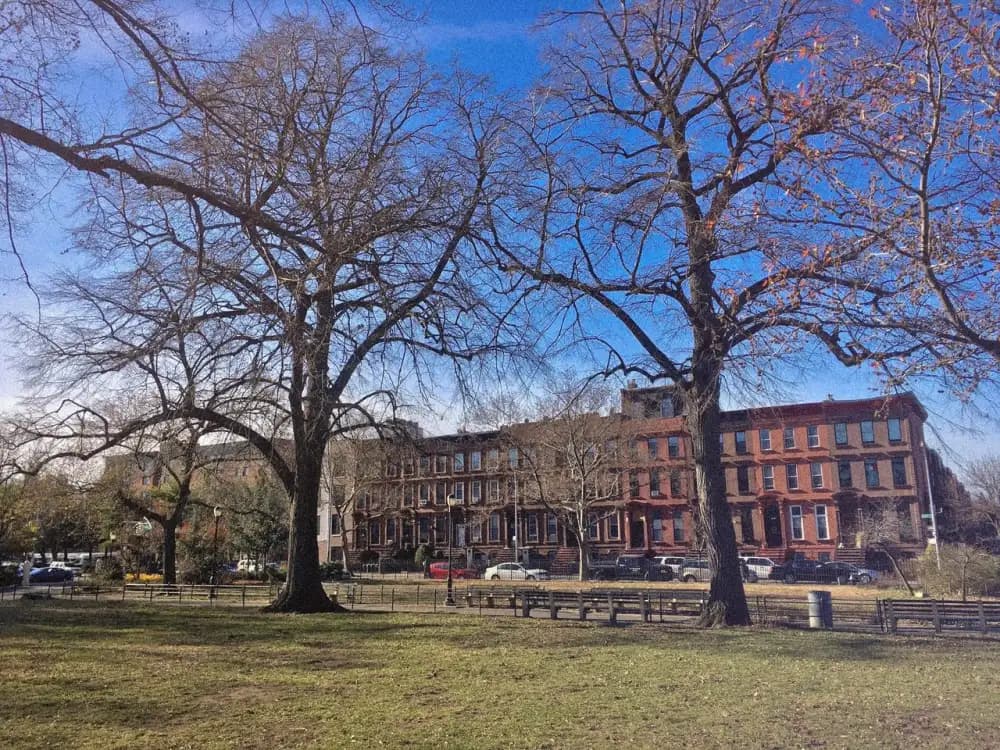
Where to stand when there is a stage to watch: the bowl seats are for people who arrived on time and travel light. The lawn behind the bowl is for groups, blankets, and anyone who thinks of a concert as a picnic with a soundtrack. The standing edges along the paths are the free agents' zone — easiest exits, most foot traffic, fine sound. Pick based on how you plan to leave, not how you plan to arrive. If you are catching the G afterward, stake the northwest side; your walk to the platform stays under five minutes even in a dispersing crowd.
Stop 4 — Tompkins Avenue, Southbound
Exit the park at Tompkins and Greene and walk south down the avenue's small-business spine. This strip has spent the last decade becoming one of the better arguments for reading a neighborhood at street level: Bed-Vyne's wine-and-spirits shop for a bottle that upgrades any lawn plan, a run of Black-owned boutiques and cafés that Time Out has been pointing readers toward for years, and stoops doing quiet stoop business the whole way down.
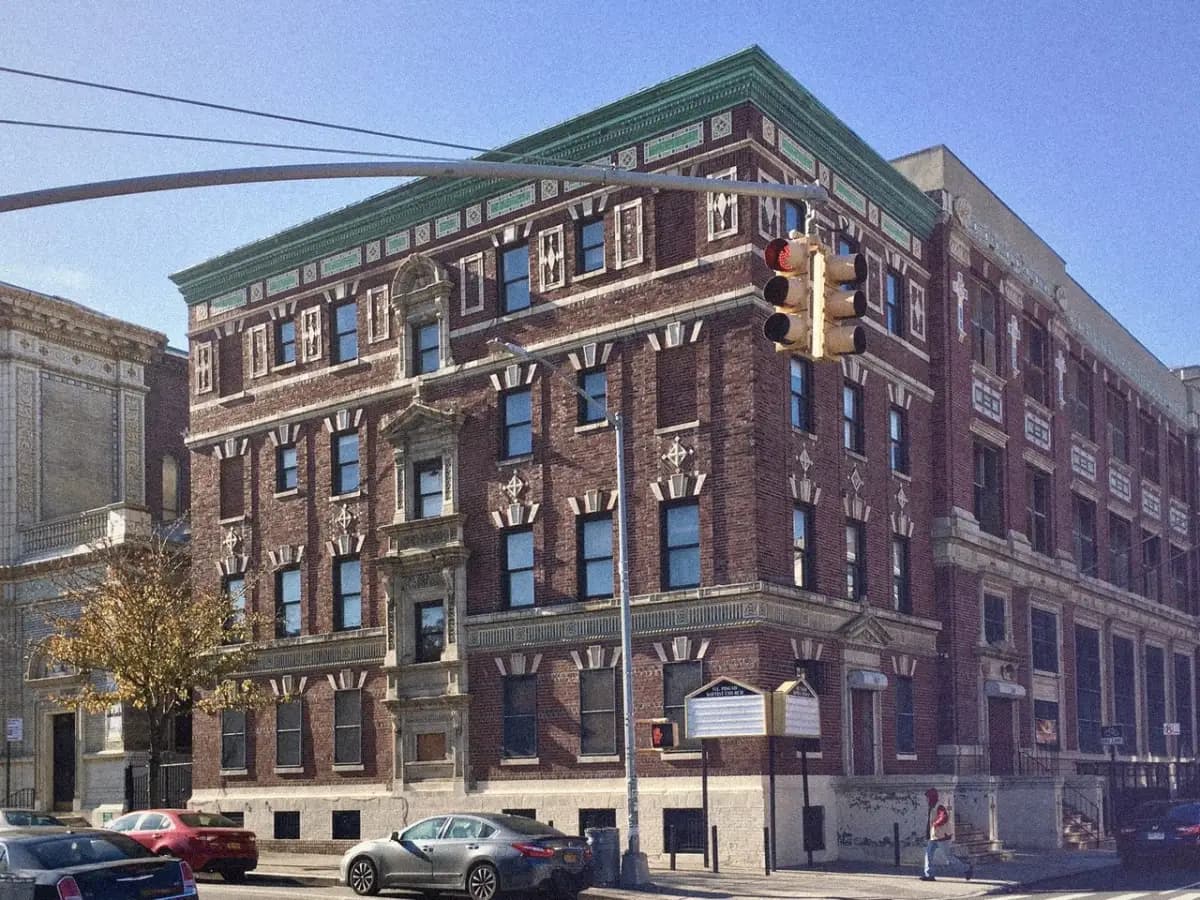
End the walking portion at Peaches HotHouse, 415 Tompkins at the Hancock corner: Nashville-style hot chicken, grits, spicy grilled broccoli, and a dining room that treats heat levels as a personality test. It runs 11am to 10pm most of the week, later on Friday and Saturday, from 10am on Sundays, with a weekday happy hour from 4 to 7pm that pairs suspiciously well with a 5pm gate time. Solo diners do fine at the bar.
Top Spots on this route
• Brooklyn Kettle — the pre-lawn coffee, family-run, closes at 5.
• Herbert Von King Park — the lawn, the loop, the bowl.
• Bed-Vyne Wine & Spirits — the picnic upgrade, on Tompkins.
• Peaches HotHouse — the after-show heat, happy hour 4–7 weekdays.
• Bedford–Nostrand Avs (G) — the front door and the fastest way home.
Exit points, marked: G at Bedford–Nostrand (two minutes from the park's northwest corner) for anywhere on the Crosstown line. For Manhattan, walk south from the park about twelve minutes to Fulton Street and pick up the A/C at Nostrand Av — the express option, and the one you will want after dark when the G's headways stretch. If the group's energy dies mid-route, the bail-out is painless: you are never more than three blocks from the train you came in on.
The Cross-Borough Math, Since the Season Moved On
Here is the part most guides skip because it is unglamorous: what this route costs when the show you want is not in Brooklyn. For the rest of the 2026 season, SummerStage's remaining calendar runs through parks in Manhattan, Queens, the Bronx and Staten Island — with the flagship stage at Rumsey Playfield in Central Park hosting both free shows and the ticketed benefit concerts that fund the free ones.
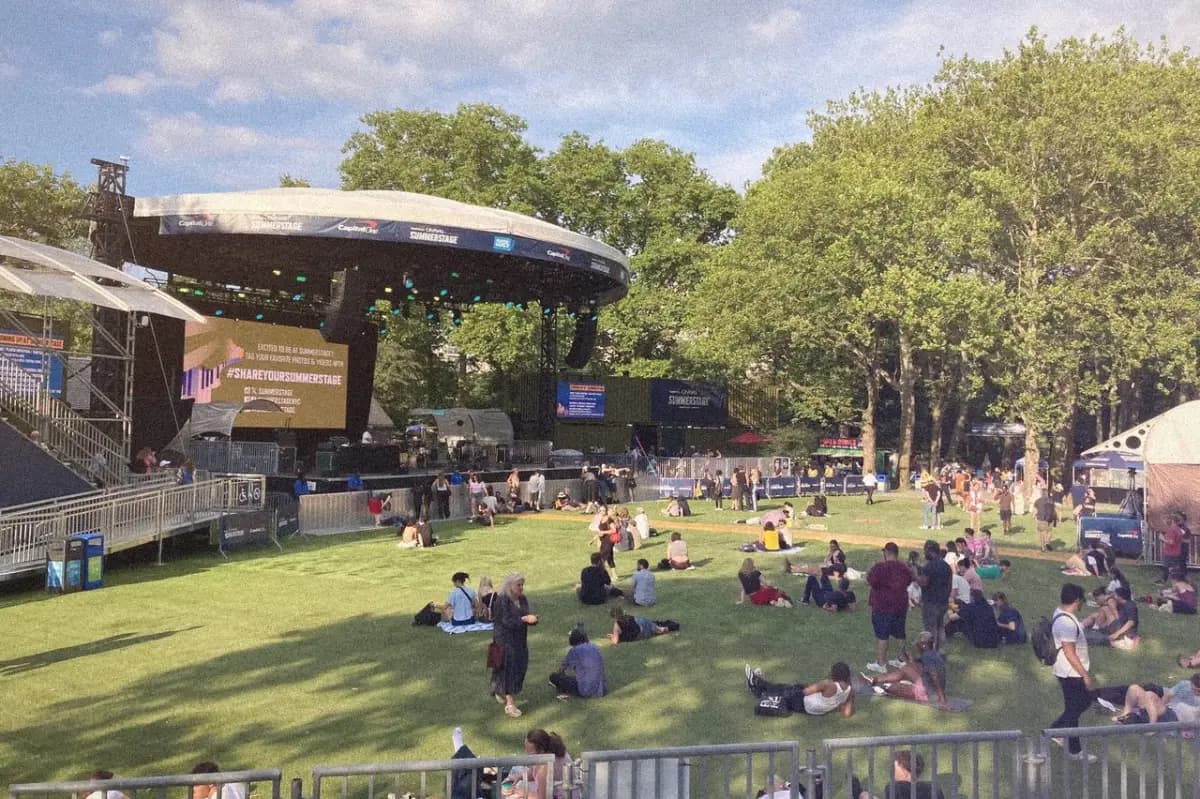
From this route's turf, the trip to Rumsey works like this. Walk to Fulton Street, take the A or C toward Manhattan, ride to 59 St–Columbus Circle, then cross into the park — the recommended way into Rumsey Playfield is the 69th Street and Fifth Avenue entrance on the east side, so give yourself a real fifteen-to-twenty-minute park walk on top of the ride. Call it an hour door to gate, each way, when the transfers behave. Gates at Central Park typically open 90 minutes before showtime on weekends and benefit shows, 60 minutes on weekdays.
So the judgment, plainly: a free Central Park show on a weeknight costs a Bed-Stuy resident roughly two hours of round-trip transit for a lawn spot you must arrive early to defend. Worth it for an artist you care about; not worth it as a default. The honest alternative is to treat Von King as your home fixture — one weekend a season, two minutes from the train — and to make the Manhattan trip a deliberate event, not a habit. Marcus Garvey Park in Harlem, another neighborhood stage on the series map, runs about an hour from Bed-Stuy by subway as well; the pattern holds. The series was designed so that every borough gets a lawn. Use yours first.
If the ride is longer than the opening act, you are not going to a free concert. You are paying with the transfer.
The Obligatory Tourist List
You are going to do some of this anyway. Fine. Three items, with the commentary they have earned:
• A Central Park SummerStage show at Rumsey Playfield. Yes, go once — the flagship earns its reputation. Just go knowing that half the crowd spent an hour getting there and will spend an hour getting home, and that the Brooklyn stage does the same job with a two-minute walk to the train.
• The Notorious B.I.G. mural at Bedford and Quincy. Thirty-eight feet of the neighborhood's most famous face, painted in 2015, a ten-minute walk from the park. The photo line is real. The corner it lives on is more interesting than the photo.
• Brownstone-gazing in Stuyvesant Heights. Permitted, encouraged even — the blocks south of the park are the architectural argument for the whole borough. Walk them after the route, not instead of it.
Save this one. The lawn is not going anywhere, the G is two minutes away, and next summer's Brooklyn weekend will be announced before you have used up the route.
Places in this guide


3 places