Culture / Collection
A Museum Day With Its Own Exit Plan
Crown Heights gives children the rare urban route that does not depend on heroic parenting: museum first, park in the middle, library when everyone needs a softer room.
 Ada Monroe
Some family days fail because the activity is bad. More often, they fail because the city gives you one good room and no clean way out of it.
This little Crown Heights loop solves that problem. Brooklyn Children's Museum sits at the center, Brower Park handles the body reset, and Brower Park Library gives the day a quieter landing. The useful part is not that all three are close. The useful part is that each place does a different job, and none of those jobs require pretending children move through a city like adults.
This is not a polished children’s district. It is better than that. It is a small civic machine.
The Quick Call
Go when you want culture without building a whole day around stamina.
The museum gives the first burst: rooms to touch, climb, sort, splash, pretend, and ask the same question six times. Brower Park gives the middle stretch: air, benches, scooters, snack negotiations, and the kind of public space where nobody has to whisper. The library gives the exit: books, tables, lower volume, and a final stop that does not feel like a bribe.
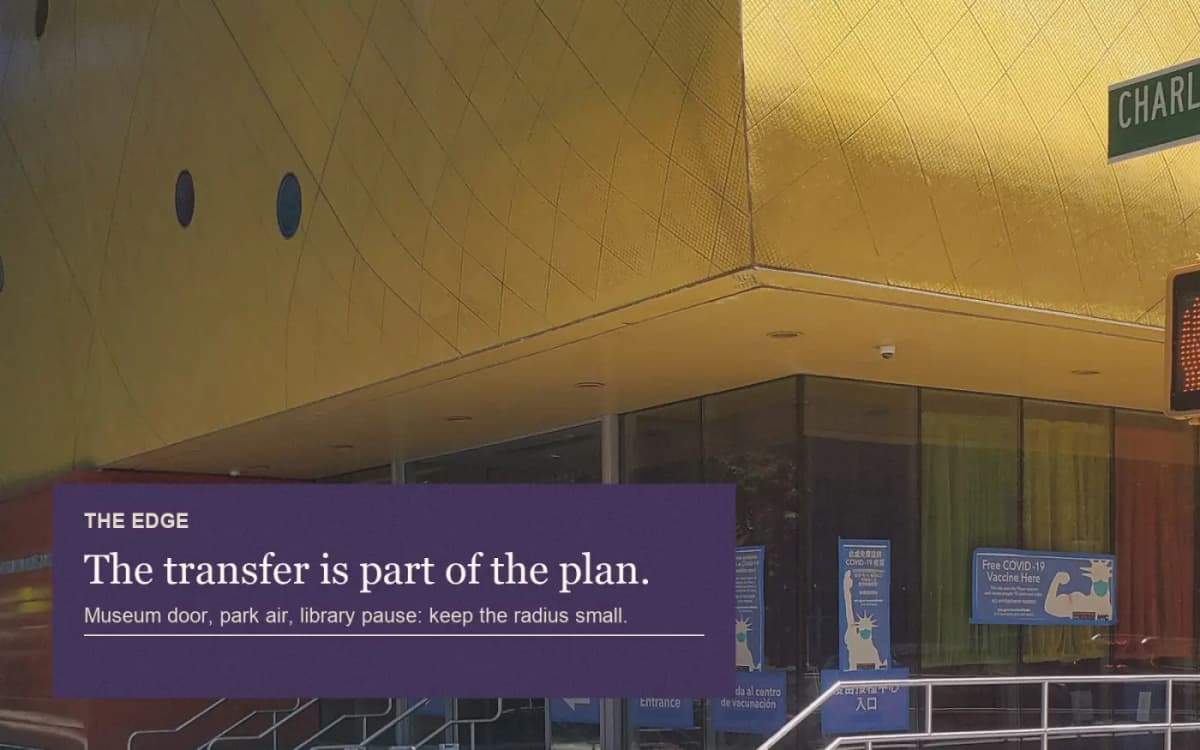
The mistake is trying to make this a full Crown Heights itinerary. Do not. Keep the radius small. The transfer is part of the plan, and with children, the transfer can also be the thing that breaks the plan.
Stop One: Brooklyn Children's Museum
Start here while attention is fresh.
Brooklyn Children's Museum is not a regular museum with a kid-friendly corner. It was founded in 1899 and is widely recognized as the first children's museum in the United States. That age matters less as trivia than as design logic: this place treats children as the primary users of culture, not as visitors being trained to behave in adult rooms.
The practical facts are simple enough. The museum is at 145 Brooklyn Avenue. Regular public hours are Wednesday through Sunday, 10 am to 5 pm, with last entry at 4:50 pm; Monday and Tuesday are closed. General admission is currently 15 dollars per person. Community Access Thursday makes admission free from 2 pm to 5 pm, with tickets available online or day-of and group visits restricted during that window.
The better planning rule is this: do the room that needs the most focus first. Do not save the hardest exhibit for later as if a tired child owes the itinerary a second wind.
What to prioritize inside
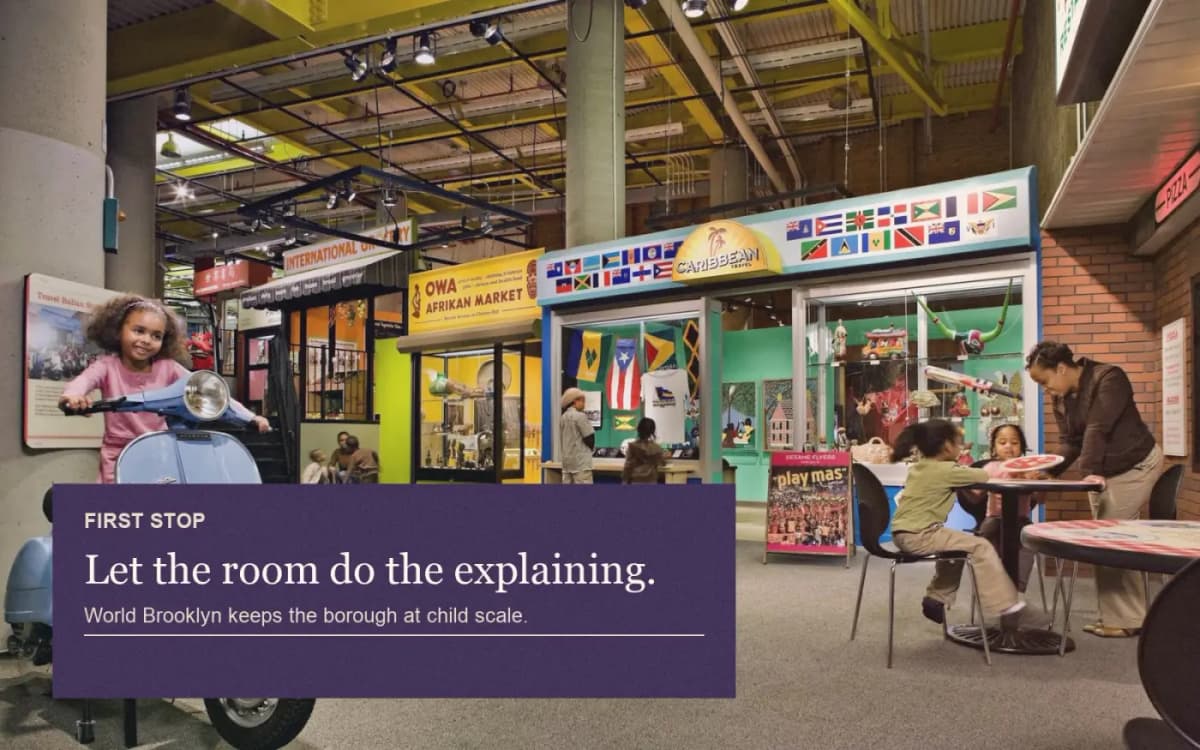
World Brooklyn works because it turns the borough into a set of kid-sized shops and roles. It is pretend play with actual civic content: a grocer, a baker, a performer, a shopper, a builder. Adults get to see something useful here too. Children do not need a lecture on how cities work when the scale finally fits their hands.
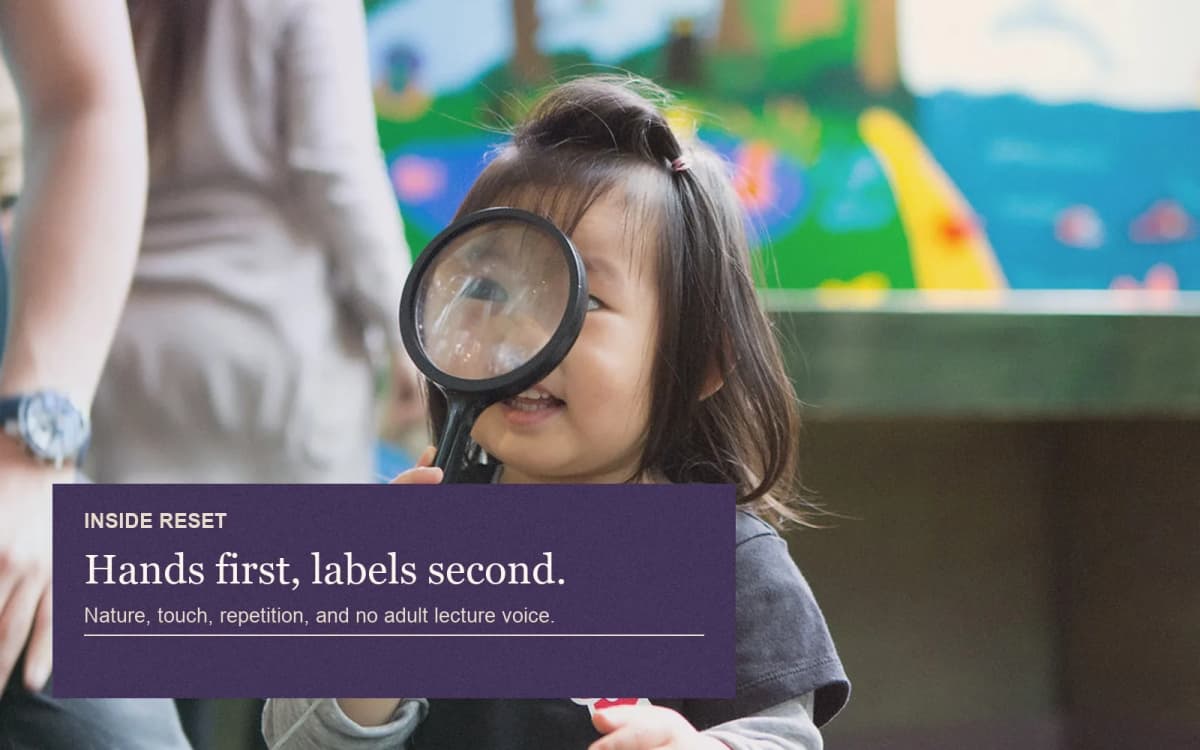
Neighborhood Nature is the better room when you need touch and observation, not performance. It is about local ecologies, live animals, tanks, texture, and the small scientific habit of looking longer than one second.
Totally Tots is the soft landing for the youngest visitors. Birth-to-six rooms are often designed like padded waiting areas; this one has enough water, sand, blocks, dress-up, and climbing logic to give small children actual work.
The Nest is the weather-dependent outdoor wildcard on the rooftop terrace. Treat it as a bonus, not the spine of the visit.
The museum day gets easier when you stop asking every room to be equally important. Pick two anchors. Let the rest be bonus air.
Stop Two: Brower Park
The park should be scheduled, not rescued.
Put Brower Park in the middle of the day before anyone melts down. This is the adult discipline of the route: leaving the museum while the visit is still working. The park sits beside the museum, so the shift is not a commute. It is a change of pressure.
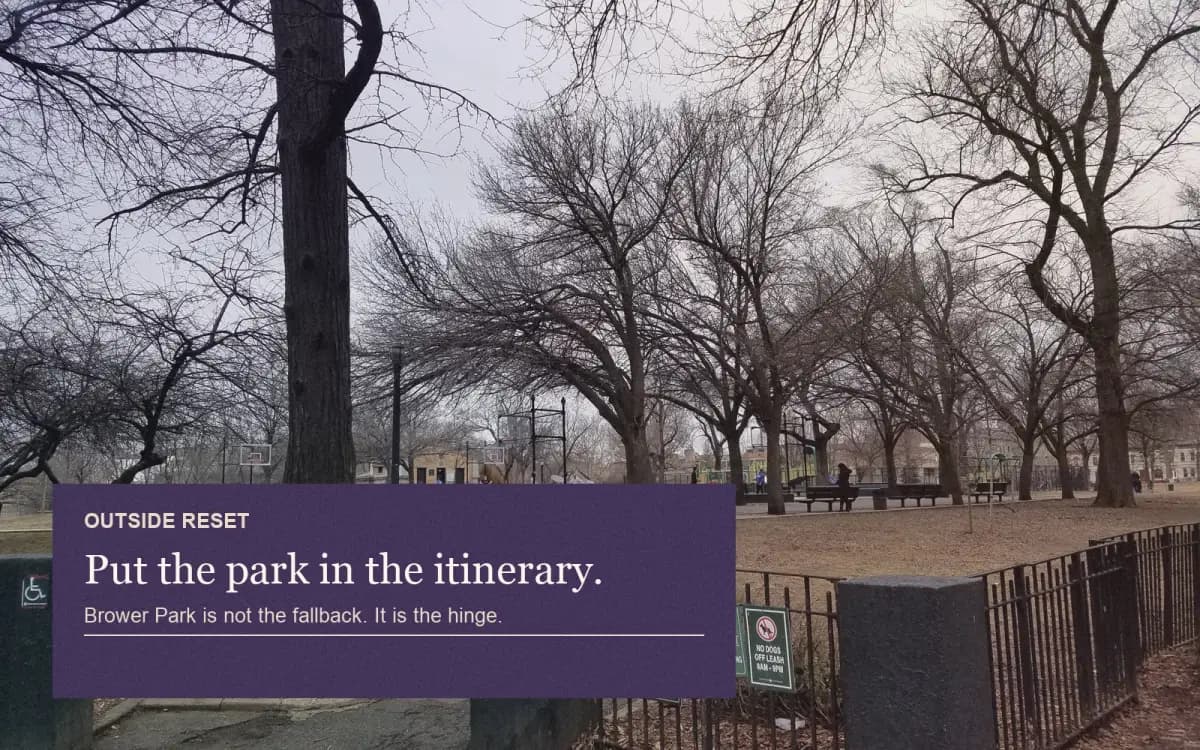
What the park gives you is not scenery. It gives you civic permission to be less composed. A child can run a loop, argue over a scooter, watch older kids, eat something that would be impossible in a gallery, and come back to the world with the nervous system reassembled.
Adults should pay attention to the bench hierarchy. Every neighborhood park has one. The benches near movement belong to caregivers watching bodies in motion. The benches slightly off the action belong to grandparents, readers, and people who know they do not need to stand up for every small conflict. A good family route respects that social map.
If the weather is rough, the park becomes a short breathing stop instead of a full chapter. If the weather is good, this is where the day stops feeling managed.
Stop Three: Brower Park Library
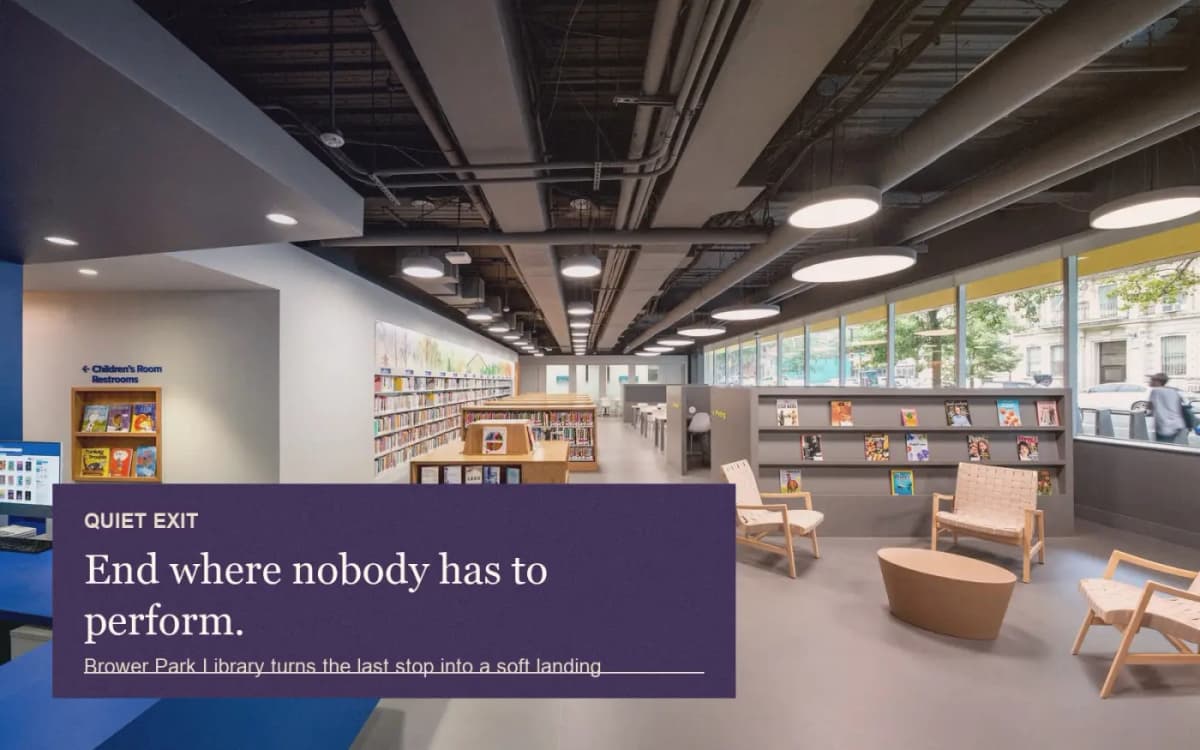
End with the library if the group still has one quiet gear left.
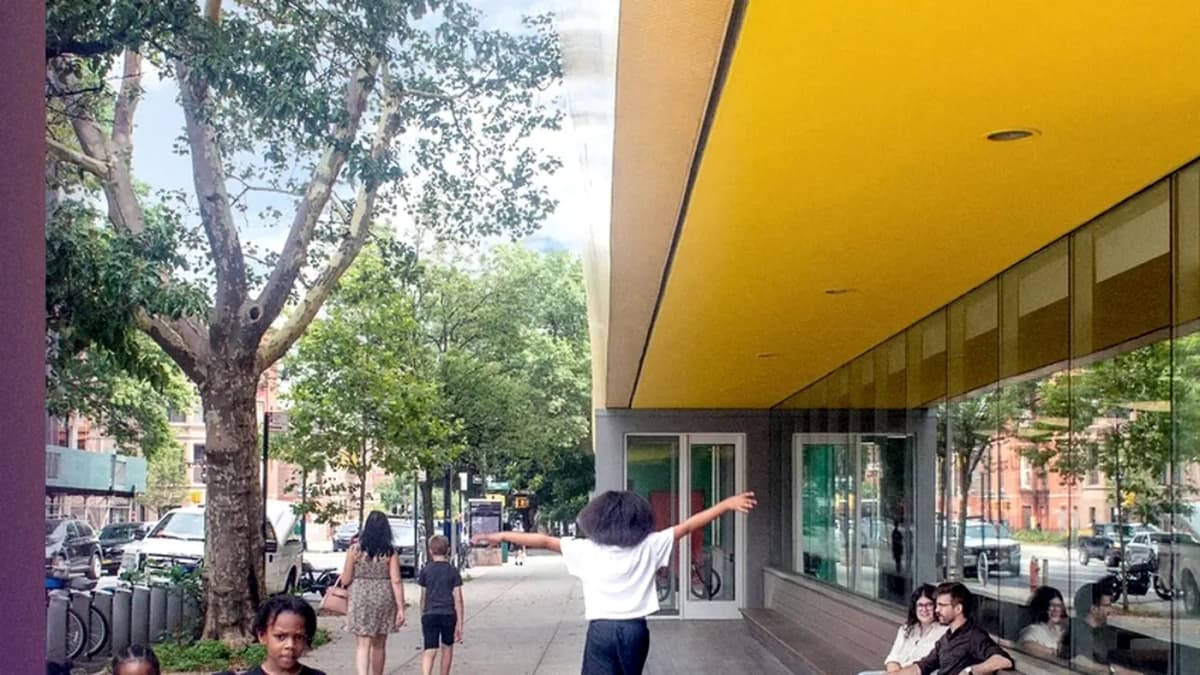
Brower Park Library is the newer home for Brooklyn Public Library's Crown Heights branch, built into the ground-floor world of the Brooklyn Children's Museum complex at 155 Brooklyn Avenue. That location is the whole point. The library is not an extra destination across the neighborhood. It is the soft exit built into the same civic triangle.
Use it carefully. A library stop after the park works for children who can downshift. It is wrong for children who are already past language. That is not a moral failure. It is route design.
The best version is short: pick books, sit for a few minutes, let one adult handle bags, let one child decide when the day has ended. A city family plan should sometimes end before the adults have extracted every possible ounce of value from it.
The Under-Four Version
Arrive close to opening. Start with Totally Tots. Avoid promising every floor. Leave while the water table is still a win. Use Brower Park as the main second stop. Skip the library unless the child is naturally ready to sit.
Exit point: after the park snack. Do not add a heroic errand.
The Five-To-Eight Version
Start with World Brooklyn or Neighborhood Nature. Let the child choose one second exhibit. Put Brower Park between museum and library. The library becomes a small self-directed ending: one book, one chair, one quiet reset.
Exit point: when the child starts negotiating for a completely unrelated activity.
The Free-Thursday Version
Treat Community Access Thursday as a shorter, denser visit. The free window runs from 2 pm to 5 pm, so do not arrive with a full-day fantasy. Choose one exhibit, keep the park in reserve, and make peace with a route that feels more like an afternoon pass than a museum conquest.
Exit point: before hunger turns the subway ride into a hearing.
Eating, Strollers, And Other Unglamorous Truths
The snack plan matters more than the cultural plan.
Do not build this day around an indoor picnic. The museum has specific food rules and designated break areas, and those details are exactly the kind that change. Check before packing like you are moving in.
Strollers are part of the room, not a character flaw. Use them when they help; stop defending them when they do not. The museum day is already doing enough.
Parking is not the point of this route. The subway and bus version is cleaner for many families, but the real planning variable is not transportation. It is how many transitions your group can survive before lunch.
What Adults Should Notice
This triangle works because it refuses a common city mistake: treating children as future citizens instead of current users.
At the museum, the city gets translated into scale, touch, repetition, and role-play. At the park, public life absorbs noise instead of punishing it. At the library, quiet becomes available without becoming precious.
That is the reason to make the trip. Not because the route is packed. Because it is edited.
Know Before You Go
• Start point: Brooklyn Children's Museum, 145 Brooklyn Avenue.
• Library stop: Brower Park Library, 155 Brooklyn Avenue.
• Museum rhythm: Wednesday through Sunday, 10 am to 5 pm; last entry 4:50 pm; closed Monday and Tuesday.
• Admission: General admission is currently 15 dollars per person.
• Free window: Community Access Thursday runs 2 pm to 5 pm.
• Best sequence: Museum, park, library.
• Skip: Any plan that requires a long transfer after the museum.
• Bring: Snacks, water, patience, and one adult willing to end the day early.
The Obligatory Tourist List
Brooklyn Bridge Park is useful, but it is a skyline product. This loop is a neighborhood system.
Prospect Park Zoo has its own rhythm, and it is a bigger day. Do not confuse animal logistics with museum logistics.
Manhattan's children's museums may be simpler for some families. Still, Crown Heights has the better civic lesson: one serious room, one public reset, one quiet exit.
Places in this guide
3 places