Shops / Collection
New York's Most Overlooked Main Street Is a Free Ferry and a $3 Train Away
New Dorp Lane, Staten Island, is a real village main street with a stationery atelier, a family jewel house, a legendary comic shop, and two dessert counters — and the whole day, transit included, has exactly six dollars of fixed costs. Here is how to shop it beautifully.
 Kiera Lane
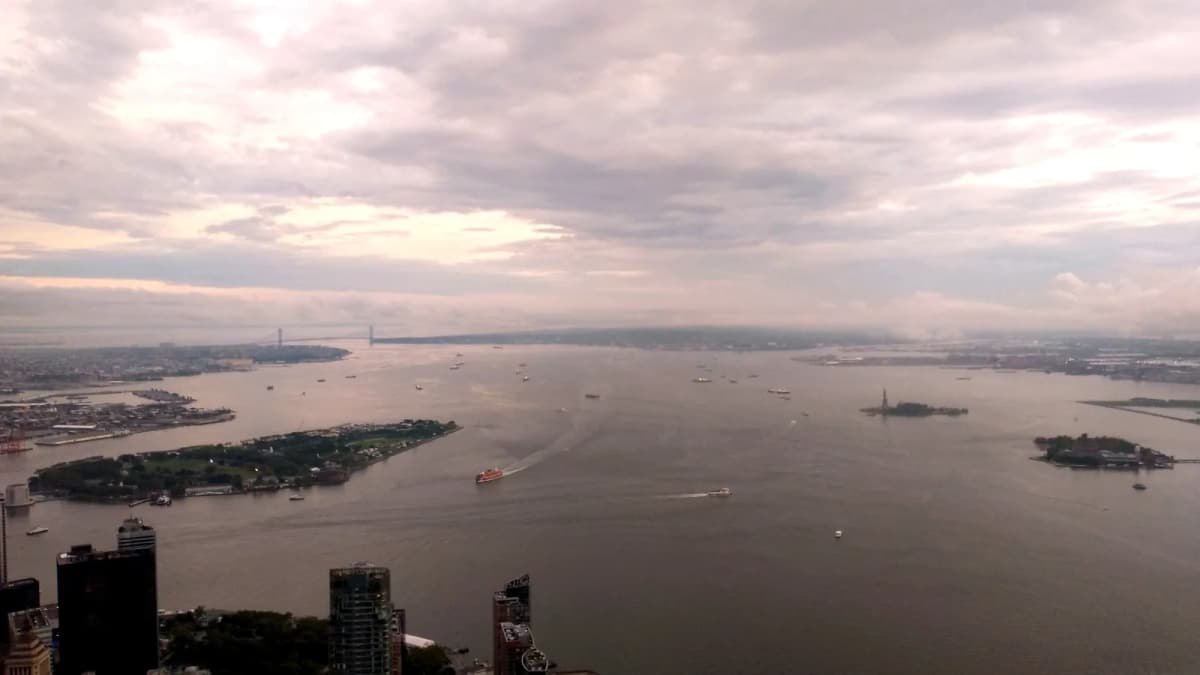
Picture this first, because the picture is the argument. You are standing on the open deck of a big orange boat at seven in the evening, and the entire upper bay of New York Harbor has gone the color of weak tea and rose gold. The Statue of Liberty is a green comma off the starboard side. The skyline you just left is dissolving into backlight behind you. Wind in your hair, a linen shirt doing exactly what linen does in harbor light — and the fare for this twenty-five-minute cinematic experience is zero dollars. It has been zero dollars for decades, it runs twenty-four hours a day, and most people who live in this city have still never taken it anywhere.
I used to build financial models for a living, so let me put this in the plainest terms I know: the Staten Island Ferry is the single best price-to-beauty ratio in New York, and almost everyone treats it as a turnaround ride. They sail over, photograph the skyline, and sail straight back without ever leaving the terminal.
I dare you to actually get off the boat.
Because twenty minutes past that terminal, at the end of a $3 train ride, there is a main street that Manhattan can no longer produce at any price: a walkable village lane of family-owned shops where the person behind the counter is usually the person whose name is on the lease. It is called New Dorp Lane, the locals call it the Lane, and it is the kind of place where you can buy letterpress stationery, a repaired watch, a back-issue comic, and a slice of layer cake within four blocks — then walk to a quiet federal parkland beach while the light turns gold.
This is the full itinerary, with the numbers, the light schedule, and what to actually buy. A budget is part of the aesthetic; so is knowing when the sun goes down.
Why This Lane, of All Lanes
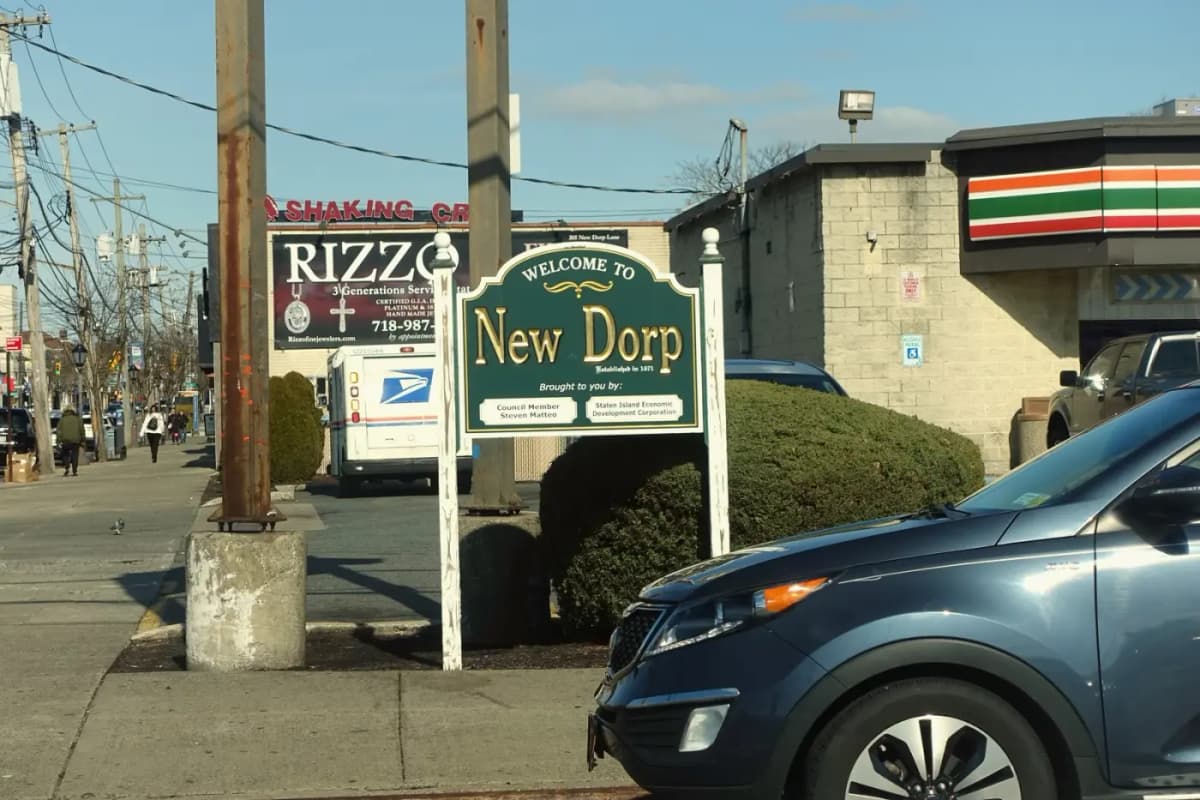
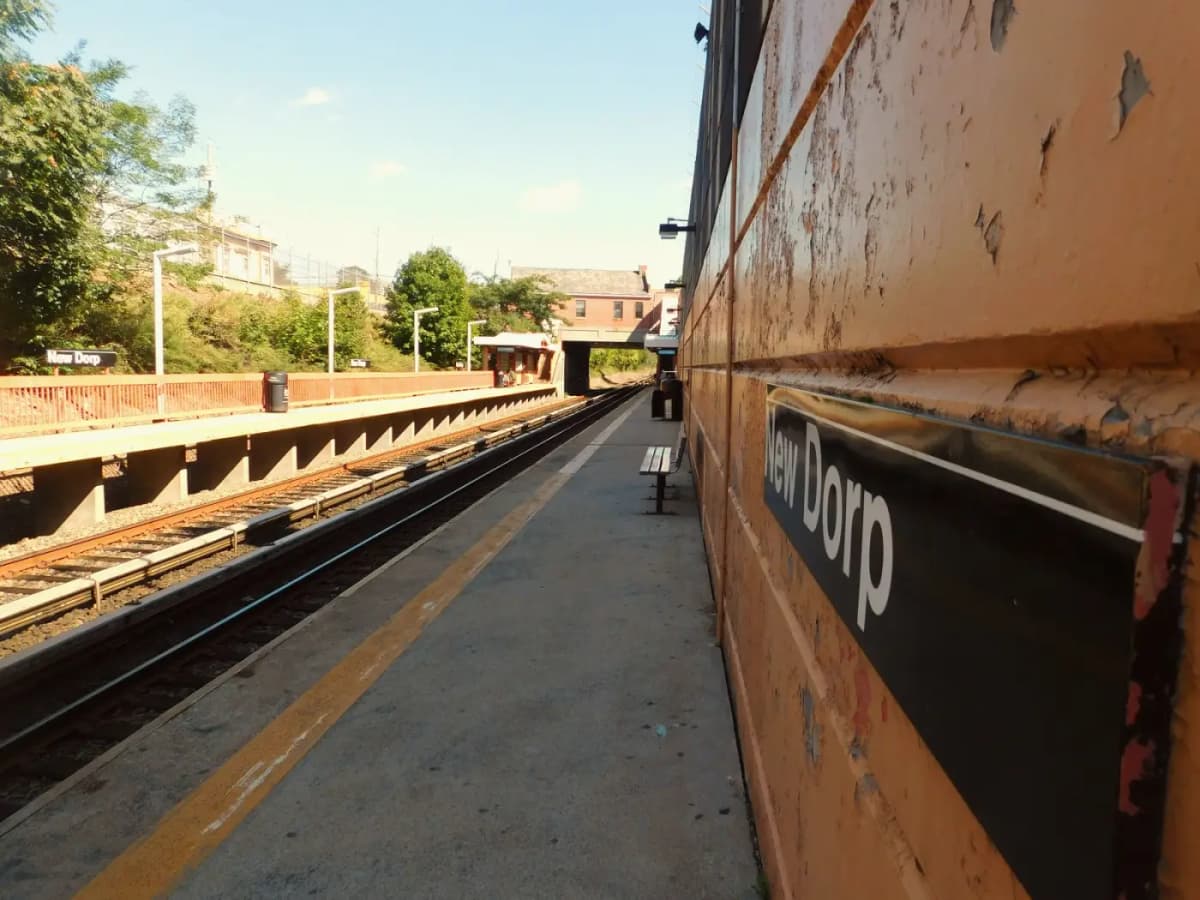
Staten Island gets flattened, in most retellings, into a punchline about strip malls and expressways. New Dorp is the correction. It grew up around one of the oldest stops on the Staten Island Railway — trains have called at New Dorp since 1860 — and the blocks between the station and Hylan Boulevard kept the shape that most of the city's shopping streets lost: low storefronts, short blocks, shopkeepers who stay for decades. The local merchant district counts over two hundred businesses along the corridor, and the overwhelming majority are independent — there is a district office right on the Lane whose whole job is keeping it that way.
A main street is not a mall with weather. It is a place where the shops know each other, and after one afternoon, a few of them will know you.
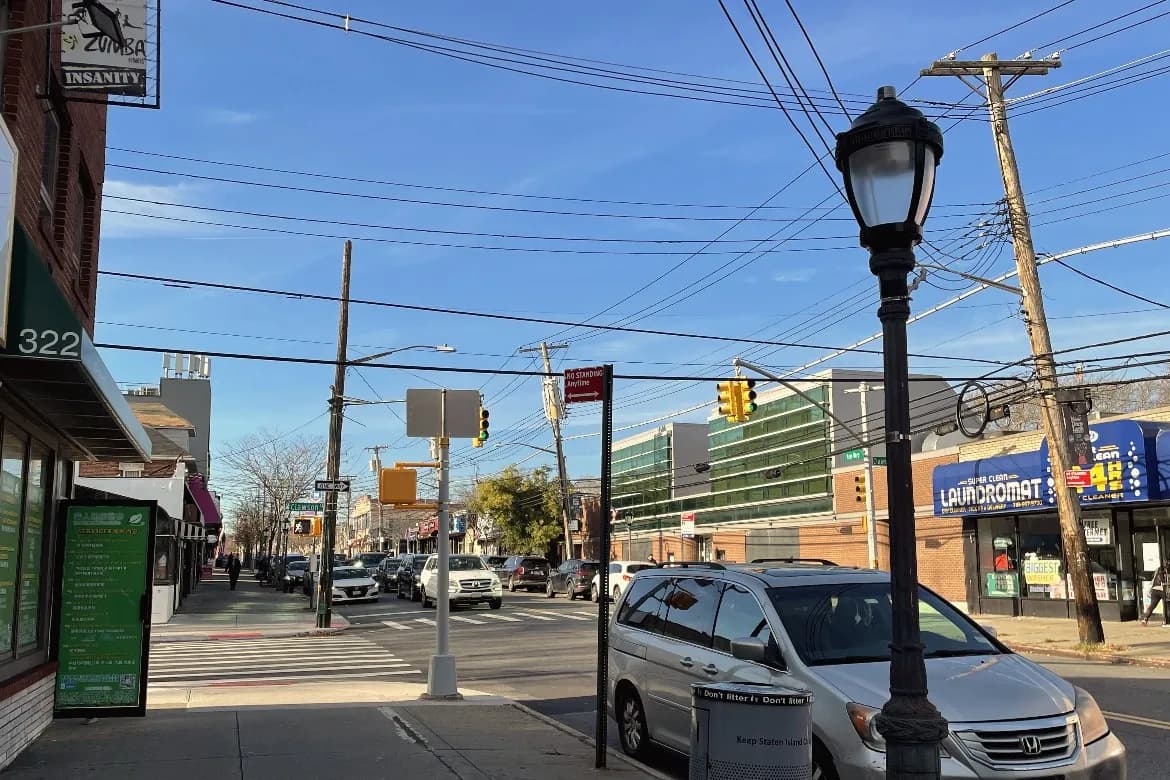
That texture matters for how you shop it. On the Lane you are not hunting a brand; you are collecting a very specific kind of souvenir — the object with a person attached. The invitation card someone printed for you. The ring resized while you had coffee. The comic pulled from a bin by someone who has read it. None of this photographs like a flagship store, and all of it photographs better: hand-lettered window signs, brick facades, awnings striped like beach umbrellas, and that unhurried late-day light that main streets seem to hold longer than avenues do.
Helpful Tip: The Lane runs roughly northwest to southeast, from the railway station down toward the water. In practice that means the golden hour floods straight up the street. Shoot the storefronts between 7:00 and 8:00 p.m. in late July; sunset lands a little after 8:00, and the brick goes copper for the last forty minutes.
Shopping the Lane, Counter by Counter
You could wander the Lane blind and do fine. But I am constitutionally incapable of recommending a shopping day without structure, so here is the route I would set, station to water, with what each stop is actually for.
The Paper Atelier: Plum Paperie
Start one block off the Lane proper, at 57 New Dorp Plaza, where Plum Paperie has been dressing Staten Island's weddings, showers, and milestone birthdays in fine paper since moving here in 2009 (the shop was born a year earlier at the island's southern tip and outgrew its first room almost immediately). This is an invitation and fine-stationery boutique in the old, serious sense: ready-to-order suites, personalized notecards, seating charts, event menus, and a tightly edited shelf of gifts.
Even if you have no wedding on the horizon, go in. Personalized stationery is the rare purchase that is simultaneously beautiful, useful, and under-bought — a box of notecards with your name set in good type will outperform almost anything else you could spend the same money on this summer. Note the hours before you plan the day: the shop keeps an appointment-friendly schedule and is currently closed Sundays and Mondays, which is exactly the kind of detail that separates a lovely afternoon from a locked door.
The Jewel Case: Kukulina Jewels
At 154 New Dorp Lane, Kukulina Jewels has been the Lane's jewel box since 2004, founded by a jeweler with decades of diamond and goldsmithing behind him. It is a working shop, not a showroom — custom design, engagement pieces, resizing, watch batteries swapped while you browse. This is where I would bring the splurge question of the day.
And here is my honest framework for it: a custom or custom-adjusted piece from a small family jeweler is absolutely a splurge, but it is the kind that ages in your favor. You are paying for a conversation, a fit, and a story — the opposite of the anonymous mall vitrine. Set your ceiling before you walk in (mine is written in my phone like a covenant), then let the counter conversation happen. If the number stays under the ceiling and the piece makes you stand differently, that is not an impulse. That is a decision.
The Archive: JHU Comic Books
Three blocks on, at 299 New Dorp Lane, stands a shop with a genuine New York pedigree: JHU Comic Books, run by veterans of the beloved Jim Hanley's Universe — for decades one of the most respected comic institutions in the city. When the Manhattan storefront closed, the Staten Island shop carried the flame, and it remains a destination in its own right: strong indie and international shelves, art books, and staff who treat a first-time browser as a future regular.
The best souvenir is not the thing everyone buys. It is the thing you did not know existed until someone who loves it put it in your hands.
Buy an art book or a beautifully drawn indie title even if you have never read comics. As objects, they are underpriced for the drawing they contain, and they style a coffee table harder than most décor twice the price. Next door sits a bridal boutique, and across the corridor you will pass a children's boutique, a furrier, and a home-goods studio famous locally for its window treatments — the Lane's range is genuinely odd in the best way, and the oddness is the point.
The Sugar Ledger: Piece-A-Cake and Moka & Co
Every disciplined shopping day needs exactly one scheduled collapse into sugar. The Lane offers a superb two-part version. At 177 New Dorp Lane, Cake Chef's Piece-A-Cake — opened in 2012 by a husband-and-wife team so devoted to dessert that the local chamber of commerce has formally honored them — sells layer cake by the slice, cookies, pastries, and a proper café menu, with a cookie-focused sibling shop right beside it. Order the slice that looks most architectural. This is research.
Then carry your second wind to 193 New Dorp Lane, where Moka & Co — a Yemeni coffeehouse that arrived in 2024 and promptly became the Lane's prettiest interior — pours Turkish coffee in glassware and a spiced house latte fragrant with cardamom and ginger, in a room of terracotta and soft off-white that photographs like an editorial set. Coffee culture from Yemen is centuries deep, and a coffeehouse like this on a Staten Island main street is precisely the kind of quiet cosmopolitanism the borough never gets credit for. Sit by the window. The window is the show.
One Building to Look Up At
Between the sweets and the coffee, pause at 168 New Dorp Lane. The narrow façade still spells LANE down its front: this is the Lane Theatre, a 1938 cinema by John Eberson, one of the great theater architects of the century. Its Art Moderne interior — serpentine corridor, streamlined bands, a ceiling like a 1930s radio cabinet — was landmarked in 1988 and survives as one of the last intact Depression-era theater interiors in New York. The movies stopped in 1990 and a church keeps the building today, so treat it as architecture rather than an attraction — but few main streets in this city still carry a landmark cinema in their pocket, and the marquee is worth your longest lens.
The Quiet Blue Detour at the End of the Lane
Here is what no Manhattan shopping street can offer you at the end of the receipts: keep walking. Past Hylan Boulevard, the Lane's commercial energy drains away into a residential hush, and about fifteen minutes on foot from the last storefront you reach Miller Field — a former military airfield, now a broad green expanse within Gateway National Recreation Area — and beyond it, New Dorp Beach, a low-key stretch of shoreline with open views across the water.
This is not a boardwalk scene, and that is its entire charm. On a July evening you will share it with dog walkers, a few kite flyers, and almost nobody else. Time it so you arrive in the last hour of light: the field goes honey-colored, the water holds the pink longer than the sky does, and the whole day's shopping bags suddenly look like a still life against the grass. If you packed one wardrobe change, this is its moment — swap the walking flats for nothing at all and put your feet in the sand. Elegance packs light.
Helpful Tip: There are no shops or kiosks once you pass the boulevard, so buy your water and your beach pastry on the Lane before you walk down. The bakery counter and the coffeehouse both stay open into the evening; the light does not negotiate.
The Ledger and the Light
Now the mechanics, because a plan you cannot execute is just a mood board.
Getting there. From Whitehall Terminal at the bottom of Manhattan, the Staten Island Ferry sails around the clock — every thirty minutes most of the day, more often at rush hours — and the crossing to St. George takes about twenty-five minutes, free in both directions. Inside St. George Terminal, follow the signs down to the Staten Island Railway, tap in ($3, the same as a subway fare), and ride roughly twenty minutes to the New Dorp stop. Here is the borough's best-kept transit secret: fares on this railway are collected only at the St. George and Tompkinsville gates. Your New Dorp exit is gateless — the ride into the island's middle simply costs what you tapped at the harbor.
The math of the day. Fixed costs: $0 ferry, $3 railway each way. Six dollars total. Everything above that is discretionary, which is exactly how a shopping day should be structured — a small, honest fixed base and a ceiling you chose yourself before the first window display started negotiating with you.
The light schedule. Take a mid-afternoon ferry out — around 3:00 p.m. — and you will shoot the harbor in clean, high light, browse the Lane from 4:00 to 7:00 while everything is open, catch the storefronts as the street turns copper after 7:00, and be at Miller Field for the last hour before the sun sets a little after 8:00. Then ride back and collect the day's final image for free: Lower Manhattan lighting itself up across the water from the ferry's bow. Golden hour is a schedule, not a filter, and this itinerary is built entirely around it.
Two versions of the day. Solo, this is one of the safest, gentlest adventure days the city offers — daylight hours, a busy main street, transit with big open sightlines, and a beach you leave before dark. With a friend, it becomes a divide-and-compare game: split up for one hour on the Lane with a shared price cap, buy one thing each, and present your finds over coffee at the Yemeni counter. I have played this game in three countries. The Lane holds its own.
When to go. The Lane is a weekday-afternoon and Saturday street; remember that the stationery boutique sits out Sundays and Mondays, and a handful of counters keep appointment-flexible hours — check before you build the day around one specific shop. If you land here in the fall instead, the neighborhood throws an annual restaurant crawl that pulls more than a thousand people down the same four blocks, which tells you everything about how this street sees itself.
There is a version of New York shopping that is about logos, and it does not need my help — it has Fifth Avenue and an advertising budget. This day is the other version: a free boat, a $3 train, a street where every purchase comes with a proper noun attached, and a beach at the end holding the last of the light. Beautiful, documented, and under ten dollars before you buy a single thing.
So here is my question for you: if the prettiest commute in New York costs nothing, what is actually stopping you from getting off the boat? Save this one for a clear evening — and tell me what you found on the Lane, because I am already planning the return trip for the thing I talked myself out of at the jewel counter.
Places in this guide


4 places