Community / Collection
Jackson Heights Is Not a Conference Break
 Ada Monroe
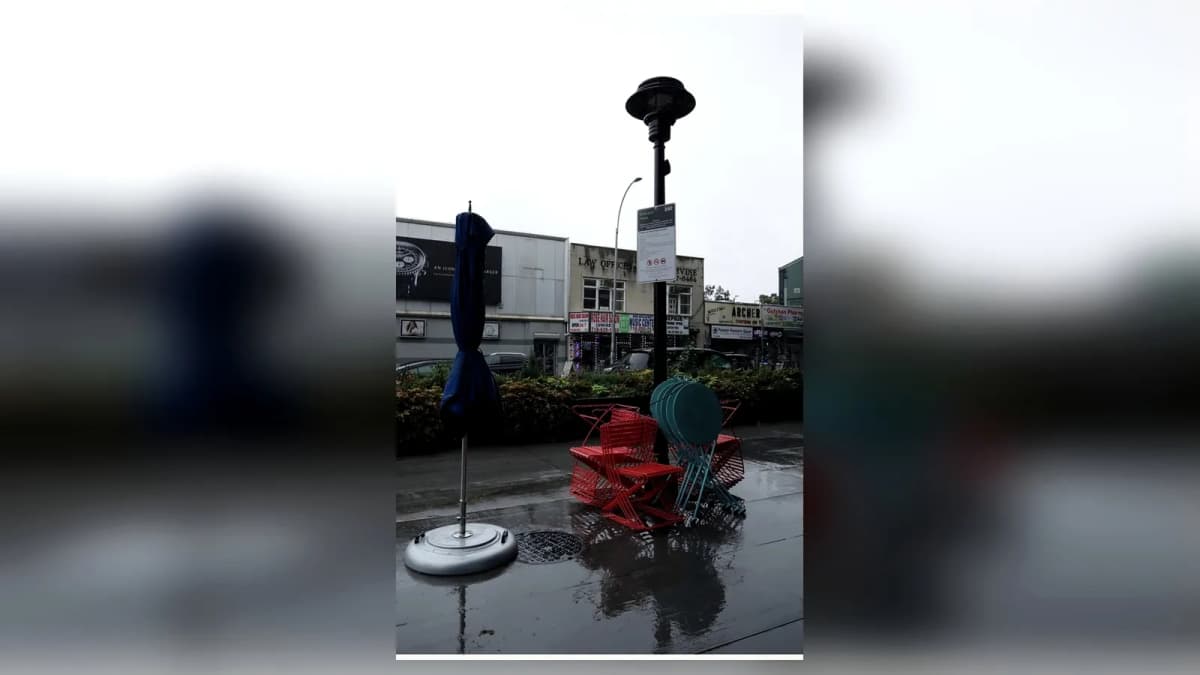
Caption: Diversity Plaza is not a lobby for a neighborhood tour. It is the neighborhood doing its own work.
If your idea of a community route starts with a conference center, Jackson Heights will correct you in under ten minutes.
The correction begins at Diversity Plaza, where 37th Road folds into 73rd Street and the station, buses, snack counters, grocery errands, phone calls, and sidewalk negotiations all arrive at once. It is not pretty in the postcard sense. Good. Postcards flatten places. This plaza does the opposite. It makes you stand inside the overlap.
Start here, not because it gives the cleanest photo, but because it gives the cleanest instruction: do not treat Jackson Heights as a tasting menu with subway access. The neighborhood is not a break between panels, a "diverse food stop," or an easy trophy for people who want to collect a borough without being changed by the walk.
Give it ninety minutes. Give it less ambition than that. The route works cleanest when you arrive with one appetite, one errand-sized curiosity, and enough humility to let the sidewalk set the pace.
Ada rule: tourists collect landmarks; locals collect corners. Jackson Heights is a corner education.
The Route Card
Start: 74th Street-Roosevelt Avenue / Jackson Heights station.
First anchor: Diversity Plaza, on 37th Road between Broadway and 74th Street and along 73rd Street between Broadway and Roosevelt Avenue.
Walk: Diversity Plaza -> 37th Road -> 74th Street -> Roosevelt Avenue -> 82nd Street / Junction Boulevard direction if you have energy -> return by subway before the route becomes conquest.
Time: 90 minutes for a first pass. Two hours if you are eating seated. Three hours only if you are already comfortable in the neighborhood.
Good for: people who can move slowly, read storefronts, eat one thing without ranking the whole block, and understand that a crowded sidewalk is not a personal inconvenience invented for them.
Skip if: you need a quiet stroll, stroller-wide sidewalks at all times, one definitive restaurant, or a neighborhood that performs itself for visitors.
Exit point: the train. Keep the route train-adjacent on purpose. A good Jackson Heights walk should leave you with a next visit, not a false sense that you have finished the place.
Why The Plaza Matters
Diversity Plaza did not appear because someone wanted a better Instagram foreground.
The city closed a difficult stretch of 37th Road after a transportation study looked at safety, traffic, and access around one of Queens' busiest transit knots. The plaza began in interim materials in 2012 and later became permanent. That history matters because it keeps the place from becoming only a symbol. It is also infrastructure: fewer cars in a hard intersection, more pedestrian room, benches and tables, a small public surface where a dense commercial district can breathe without leaving itself.
That does not make it simple.
People use the plaza differently because people need it differently. Someone is waiting for a relative. Someone is killing ten minutes before the bus. Someone is eating quickly, not performatively. Someone is looking for work, sending money, arguing over a phone bill, taking a campaign flyer, joining a vigil, ignoring a speech, meeting friends, or just crossing through because the shortest line between errands happens to pass through public life.
That is the part the word "diverse" misses. Diversity is a descriptor. Coexistence is labor.
Walk through like the second one matters.
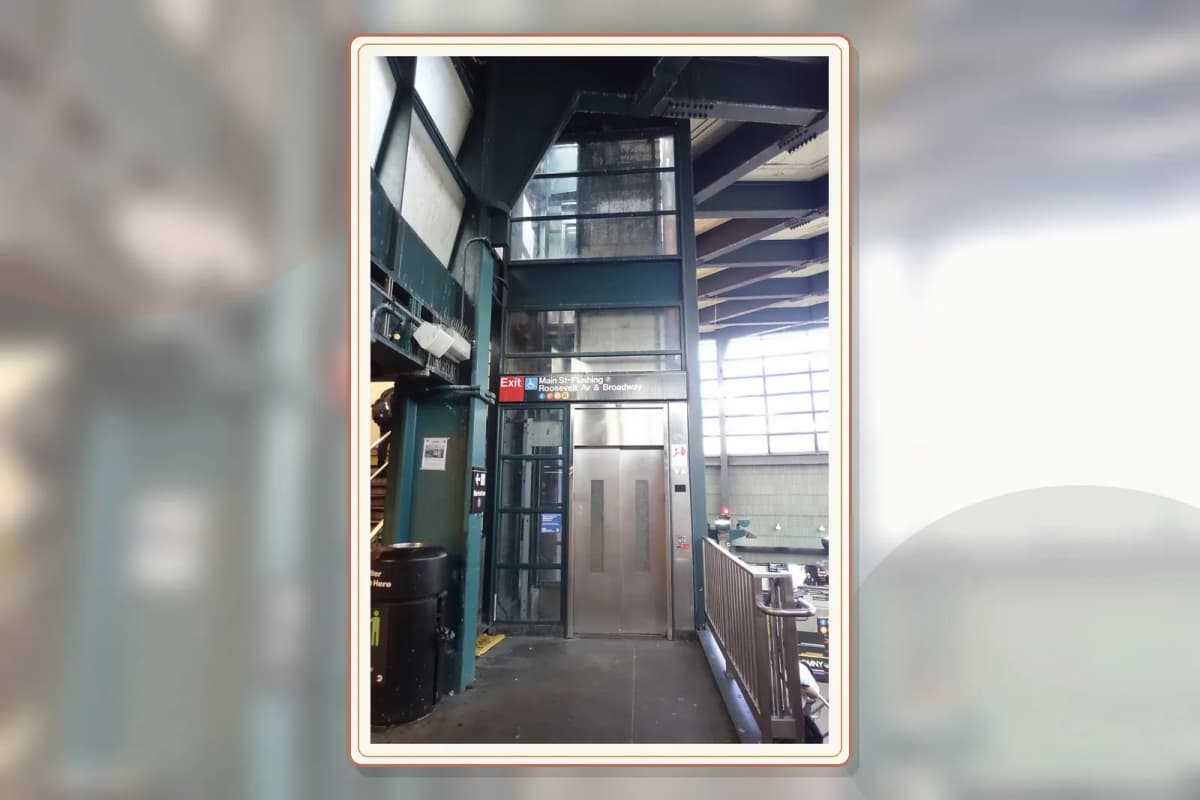
Caption: The 74th Street-Roosevelt Avenue station is the route's hinge, not a neutral arrival point.
First Ten Minutes: Learn The Grammar
Do not start by ordering. Start by standing.
Find the place where the subway stairs, plaza seating, and food windows all compete for attention. Watch how people move. Fast transactions on one edge. Long conversations on another. Families threading through with shopping bags. Delivery workers checking screens. Older men pausing in the exact posture of people who know which bench gets shade and which one catches too much wind.
The grammar is not mysterious. It is practical.
Step aside before checking your phone. Do not block the line you have not yet noticed. Let people pass with grocery bags before you take a photo. If you are not buying, do not turn a small counter into your private viewing platform. If a storefront is clearly serving regulars in another language, that is not an invitation to narrate the scene like fieldwork. It is a business doing business.
This is where Jackson Heights gets interesting for the right visitor. The neighborhood is not hiding from you. It is simply not centered on you.
That distinction is the route.
37th Road: Eat One Thing, Not Everything
The easiest bad version of Jackson Heights is the panic food crawl.
You read six lists. You arrive hungry and morally ambitious. You decide the neighborhood owes you momo, birria, fuchka, arepa, chai, thali, and dessert in one afternoon. By stop four, you are no longer tasting. You are proving you came prepared.
Do not do that.
On a first route, choose one small thing you can eat without converting the walk into a spreadsheet. A momo near 37th Road. A fuchka if you have the patience for the stand and the appetite for tamarind. A tea. A sweet. A taco if Roosevelt is pulling you east. The choice matters less than the way you make it: one stop, one line, one moment of attention.
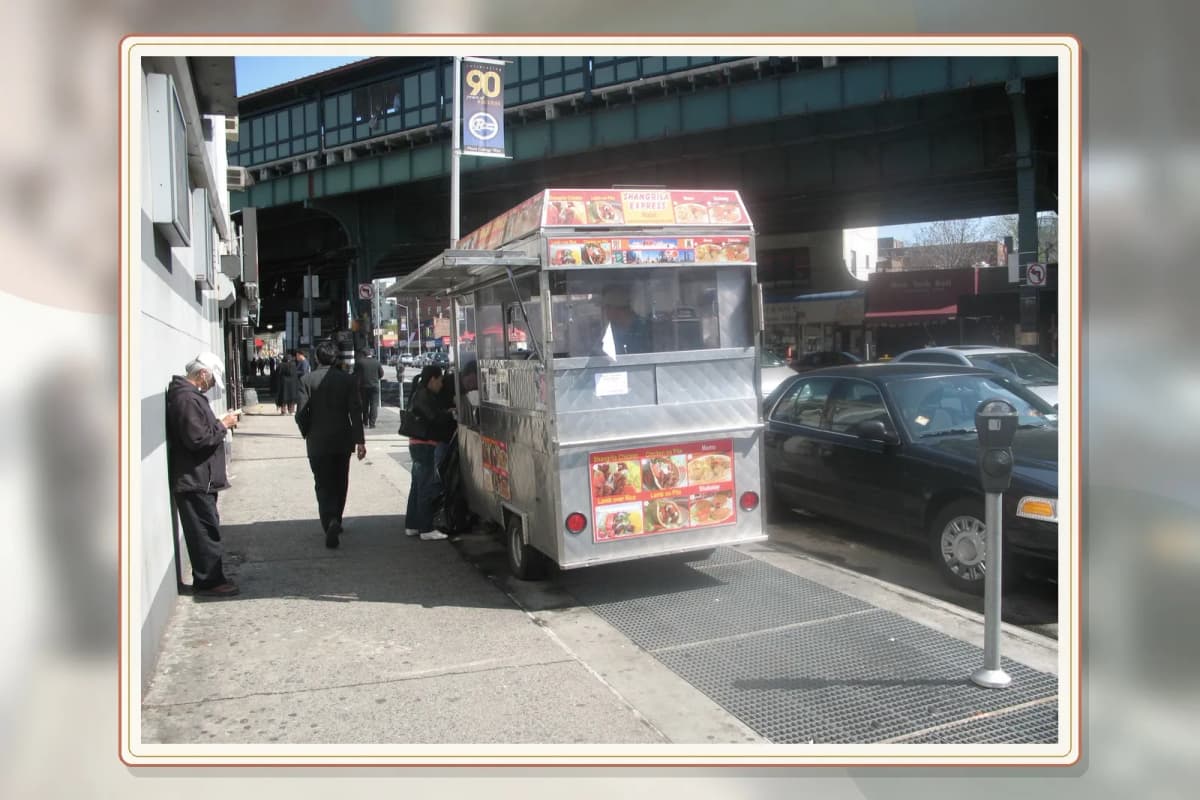
Caption: Food is one door into Jackson Heights. It is not the whole room.
If you want names, keep them as anchors, not trophies. Nepali Bhanchha Ghar sits close to the station and makes sense when you want to sit and settle into the block. Phayul is a Tibetan upstairs room for people who understand that second-floor restaurants are often where a neighborhood keeps its better secrets. Arepa Lady gives the route a Colombian pause on 37th Avenue. Birria-Landia belongs to the Roosevelt Avenue night logic, not a rushed daytime checklist. Tong's fuchka is about the cart rhythm as much as the bite.
Pick the stop that matches the route you are actually walking.
The most local-feeling decision may be restraint. Eat one thing. Leave five reasons to come back.
Roosevelt Avenue: The Noise Is Information
Turn back toward Roosevelt Avenue and the neighborhood changes register.
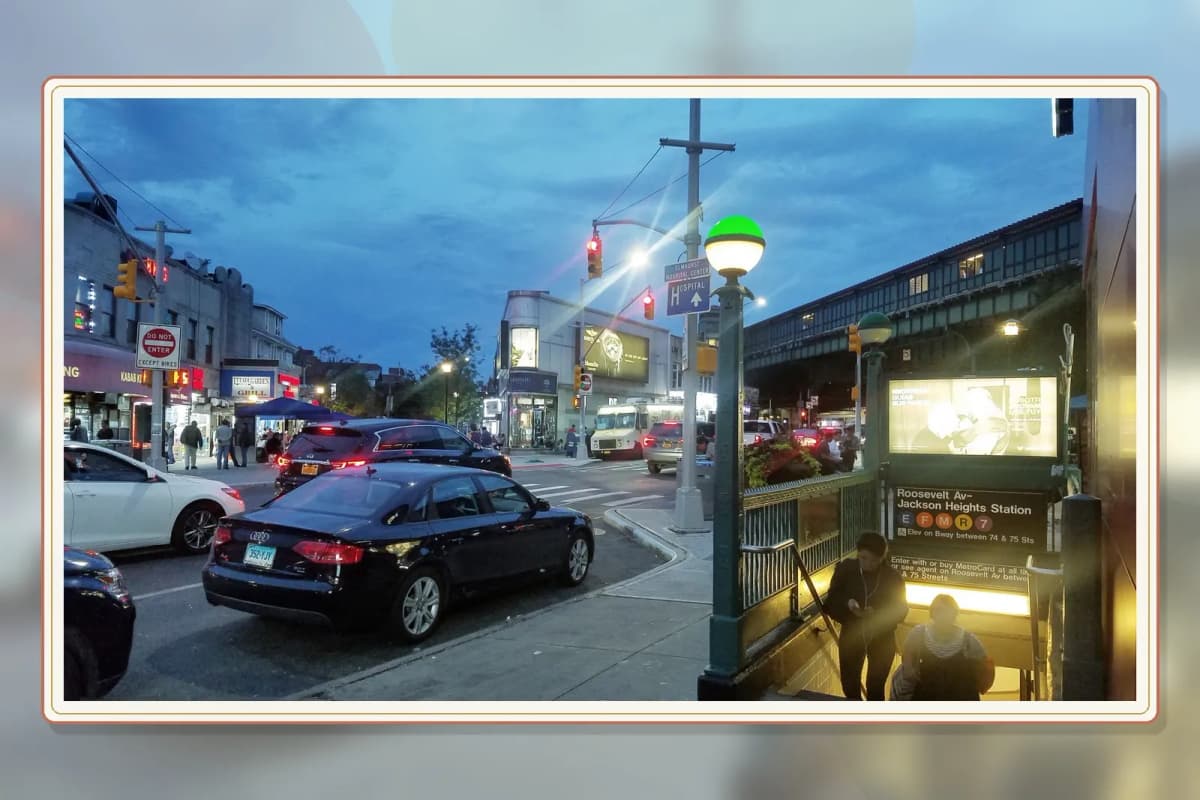
Under the elevated train, the light gets harder. The sound gets less polite. The storefronts become faster: remittances, phone repair, pharmacies, jewelry, travel agencies, bakeries, carts, buses, platform stairs, the constant metal sentence of the 7 train overhead.
This is not atmosphere. It is operating system.
Roosevelt Avenue is where a visitor has to stop confusing density with chaos. The corridor works because many small systems are running at once. Street vendors are not decorative. They are workers navigating permits, enforcement, sidewalk space, weather, competition, and customers who may have ten minutes between shifts. Shops are not "colorful" as a favor to your camera. Their signs are maps for people with specific errands.
Walk here with your shoulders slightly smaller.
The better route is not silent. It asks you to hear without treating every sound as spectacle. Music from a storefront. A bus kneeling. Someone calling across the sidewalk. The scrape of a cart wheel. Train brakes. A child being told to stay close. These are not background details. They are how the block manages itself.
If the sidewalk starts to feel too tight, do not punish the neighborhood for being used. Pause at the next corner, then decide whether to continue east or loop back toward the plaza. The exit point is part of the plan.
The Historic District Is Not A Separate Neighborhood
Caption: Jackson Heights keeps two city speeds close together: transit noise and residential pause.
If you have time, step away from Roosevelt and let the streets soften.
The Jackson Heights Historic District was built primarily between 1914 and 1939 and is recognized as the nation's first and largest planned cooperative and garden apartment community. That sounds like a preservation-board sentence until you walk the contrast: the commercial compression near the station, then the courtyards, brickwork, revival-style facades, and residential breathing room a few blocks away.
This is not a detour into a "quieter" Jackson Heights that somehow explains the "real" one. The point is the adjacency. The same neighborhood holds garden apartment planning, subway transfer pressure, South Asian jewelry shops, Tibetan upstairs rooms, Colombian arepas, Bangladeshi snacks, Latin American music, street vending politics, and family errands without becoming one neat story.
That is why the conference-break version fails. It wants one paragraph. Jackson Heights keeps handing you clauses.
For a light architectural pass, walk north or west from the station after your food stop and pay attention to entrances, courtyards, and building scale. Do not wander into private gardens. Do not turn residential blocks into a photoshoot. The reward is not access; it is context.
The Crowd
You will see people who know exactly where they are going, people pretending they do, and people trying to get out of everyone's way.
The local crowd is not one crowd. It is jewelry shoppers, office workers between trains, students, aunties with shopping bags, Bangladeshi snack loyalists, Nepali momo regulars, Colombian families, Mexican late-night eaters, Tibetan restaurant hunters, commuters from deeper Queens, activists flyering, vendors watching enforcement patterns, and visitors who came for one famous bite and accidentally found a whole street.
Your job is not to name everyone. Your job is to move in a way that leaves room.
Clean behavior: order clearly, tip when appropriate, step out of doorways, keep photos wide and respectful, ask before photographing people up close, and understand that "I saw it on a list" is not a relationship.
Worst behavior: calling the neighborhood chaotic because you are overstimulated, treating every language you do not speak as ambience, ranking immigrant food as a sport, blocking a vendor's selling space, or declaring that you "discovered" a place where people have been building lives for decades.
Pro Tips
Go earlier than your appetite says.
Mid-afternoon gives you more room to read the block before dinner lines and commuter pressure stack up. If you want the full night pulse, go with a simpler route and fewer stops.
Choose a side quest, not a checklist.
Food is one side quest. Architecture is one. Street vending politics is one. Transit design is one. Pick one lens per visit. Jackson Heights is better in chapters.
Leave through the same station the first time.
Returning to 74th Street-Roosevelt Avenue gives the route a clean loop and keeps you from drifting east until fatigue makes the decisions. Next time, extend toward Junction Boulevard or Elmhurst with intention.
Bring cash.
Cards work in many places. Cash still makes small transactions easier. This is not nostalgia; it is logistics.
The 90-Minute Version
Minute 0 to 10: Arrive at 74th Street-Roosevelt Avenue and stand at Diversity Plaza. Do nothing useful. Let the block introduce its pace.
Minute 10 to 35: Walk 37th Road. Choose one small food stop, preferably something you can eat without turning the sidewalk into your dining room.
Minute 35 to 55: Cut toward Roosevelt Avenue. Read the storefronts and watch the train-street rhythm. If it feels too crowded, that is information, not failure.
Minute 55 to 75: Step toward the historic district edge for a quieter block or two. Notice the shift in building scale. Do not trespass on private courtyards.
Minute 75 to 90: Return toward the station. Name one thing you will come back for. Leave before you start pretending you understood the whole place.
That last instruction is the most important one.
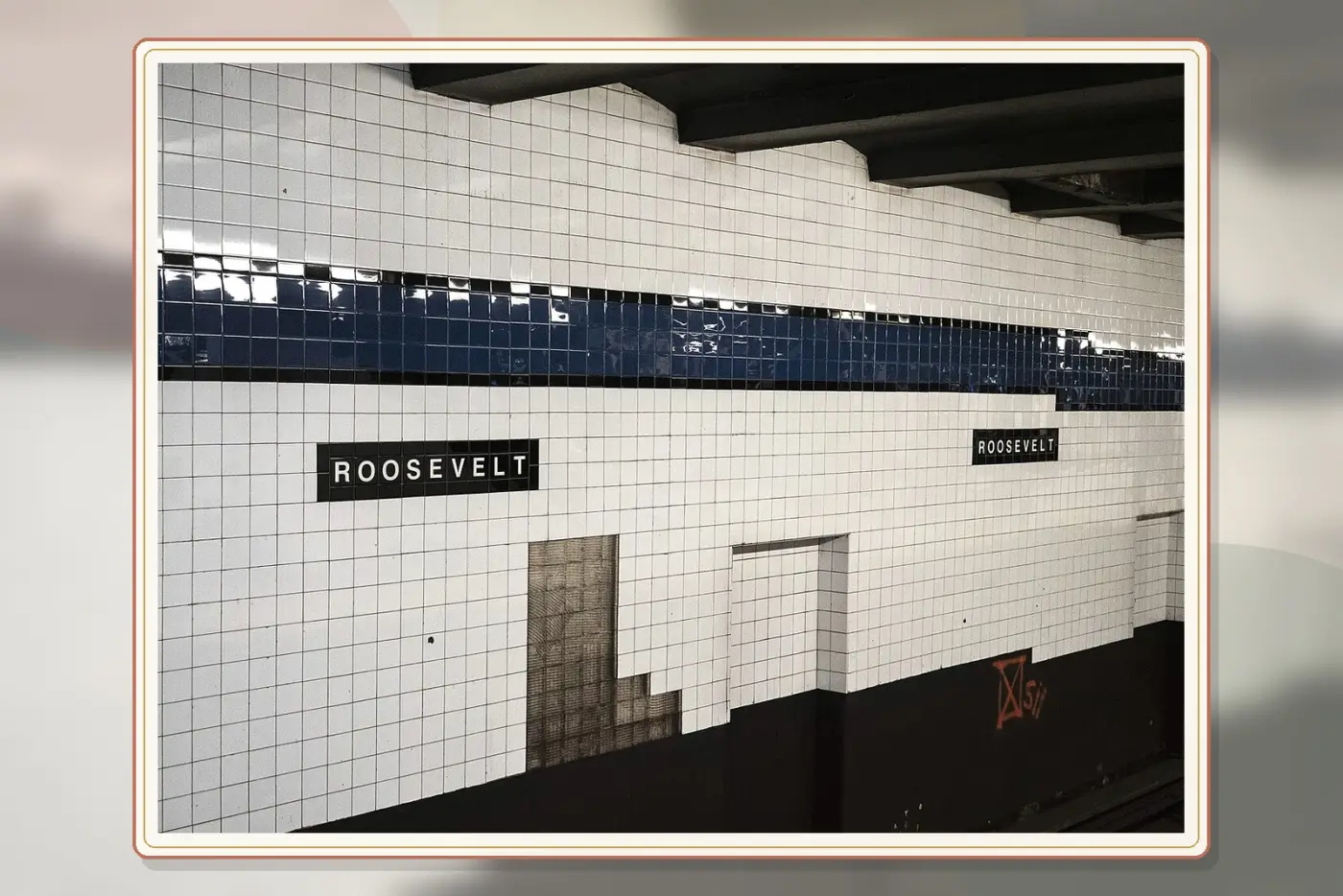
Caption: The station tile is a useful reminder: this route begins and ends with transit, not tourism.
The Karpo Read
Jackson Heights is not a conference break because breaks are designed to be consumed and then forgotten.
This neighborhood asks for a different verb. Notice. Queue. Step aside. Read. Return. Spend money like a person, not a camera. Let a plaza be infrastructure before it is symbolism. Let food be hospitality and labor before it is content. Let a crowded sidewalk remain a working sidewalk.
The route is short because the place is dense.
Start at Diversity Plaza. Eat one thing. Walk one corridor. Add one residential edge. Leave with one next visit. That is enough.
Anything more starts to sound like collecting.
Places in this guide


4 places