Culture / Collection
Doing Beats Watching: Six Bronx Stage Doors That Turn Regular Kids Into a Cast
Anyone can buy a ticket. The braver, cheaper, life-changing move is getting on the stage — and in the Bronx, most of the doors that lead there are free. Here is the actual pathway, door by door, before fall sign-ups open.
 Cara Bennett
What if your kid loves performing and you have no idea where that goes? What if you were that kid once, and nobody handed you a map? What if theater classes are secretly a rich-family thing? What if it takes an agent, a coach, a cousin on Broadway? What if your teen wants it badly and freezes at the word audition?
I asked all of those questions this month, on your behalf and honestly on mine, and here is the answer I kept getting back from the Bronx: the gap between watching a show and being in one is smaller than almost anyone believes. It is usually one interest form. Sometimes it is one Saturday. In several cases it costs exactly zero dollars.
So this is not a listicle of nice places. It is a pathway — the specific, checkable sequence by which a regular kid in the Bronx, with no connections and no budget, ends up standing on a stage saying lines while other people sit in the dark and listen. Fall enrollment season starts moving in September and October. If someone in your life is stage-curious, the next eight weeks are exactly when to act.
Watching is a window. Doing is a door. The Bronx has more doors than it gets credit for, and most of them are unlocked.
A Borough Built for Audiences, Rewired for Casts
First, some context, because the Bronx's relationship with theater did not start with an after-school flyer.
Walk the Grand Concourse at 188th Street and look up. Loew's Paradise Theatre opened there on September 7, 1929 — one of the five Loew's Wonder Theatres, an atmospheric palace by John Eberson where a machine blew fake clouds across a ceiling of electric stars. Close to four thousand Bronx moviegoers at a time sat under that painted sky. The building still stands, its facade and interior protected as New York City landmarks, and since 2012 it has been home to a church congregation. The seats survived. The habit of sitting in them survived.
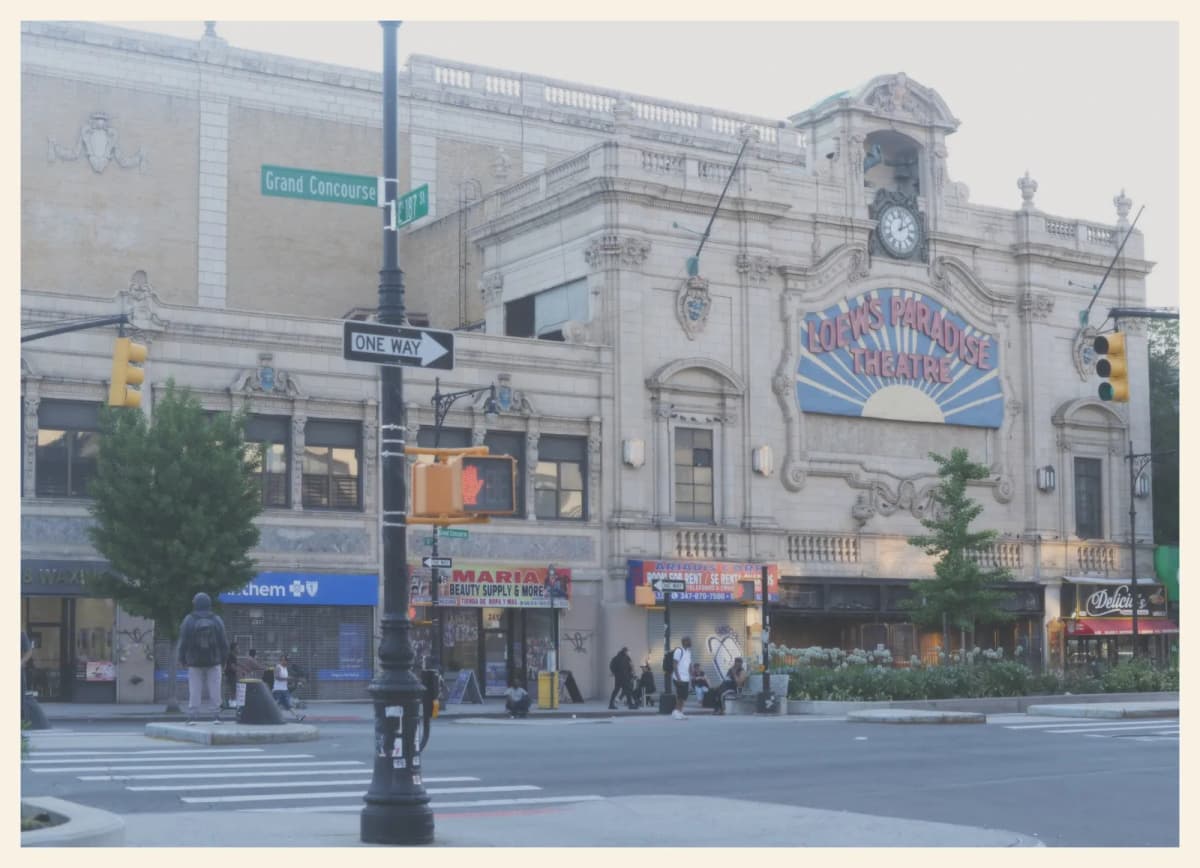
Here is what interests me about that gorgeous room: it was built entirely for watching. The whole architecture of it assumes your kid's place is in the velvet seat, not under the lights. And for most of a century, that was the deal the borough was offered — grand rooms, great shows, spectator status.
The pathway below is the rewiring of that deal. Over the last four decades, a network of community arts centers, nonprofit ensembles, and public schools has quietly built the other half of the equation: rooms where Bronx kids rehearse, fail safely, try again, and walk out the stage door instead of the lobby. None of it requires talent scouts. Most of it barely requires money. What it requires is knowing the doors exist — so let's open them in order, easiest first.
Door One and Two: The Free Saturday Track
The gentlest way into theater is a Saturday class with no audition, no fee, and no consequences for being terrible at first. The Bronx has two of the best in the city.
DreamYard's Bronx Acting Ensemble runs Saturdays from 10am to 3pm at the DreamYard Art Center at 1085 Washington Avenue in Morrisania. Five hours is not a typo. That is a real training block — acting technique, stagecraft, script analysis, character development, improvisation, ensemble work — the same skill list a conservatory would hand you, delivered free to Bronx high schoolers. Fall programs have kicked off in mid-October in recent years, and the entry mechanism is an interest form on their site. A form. Not a gate, not a judged audition, not a fee schedule. I have filled out longer forms to get a coffee loyalty card.
Mind-Builders Creative Arts Center, at 3415 Olinville Avenue near Pelham Parkway, has been doing this work since 1984, when it started as the Positive Youth Troupe, a traveling teen ensemble. Today its theater training — acting, voice, stagecraft, audition preparation — is free for young people ages 9 to 21, organized as a fall-to-spring season of weekly classes that ends in a real showcase, with summer workshop intensives in between. Read that age range again: a nine-year-old and a college kid can both walk in. The showcase matters more than it sounds, by the way. A class teaches skills; a showcase teaches your kid that an audience survived hearing them speak, and so did they.
If the person you're thinking of is younger, shyer, or further east, Bronx House at 990 Pelham Parkway South runs Saturday improvisation and drama classes for ages 7 to 17 — the younger group (7–10) inventing characters and scenes on the spot, the older group (11–17) working rehearsed scenes and monologues from published plays and presenting them for feedback. This one is a community-center class rather than a free program, so there is a fee — but there is also a financial aid application posted right on the site, and I want to say this plainly: applying for aid for an eight-year-old's improv class is not a failure of anything. It is using the door as designed.
The first stage doesn't need to be a stage. A rehearsal room where it's safe to be bad is the single most valuable arts facility in any borough.
Door Three: The Company That Puts Kids in Full Musicals
Somewhere between a Saturday class and a professional track sits the Riverdale Children's Theatre, a nonprofit founded in 2010 that stages full-scale musicals with kids and teens from the Bronx, Yonkers, and beyond — this past spring the company put up both The SpongeBob Musical and Guys and Dolls. Full sets, full scores, real runs in front of real audiences.
RCT is tuition-based, but it distributes thousands of dollars in scholarships every year so that the cast list isn't a reflection of the parents' bank accounts. And its track record travels: by the company's own count, more than 95 percent of its students who aim at New York's competitive performing arts high schools get in. Which brings us to the most underrated fact in this whole pathway — the next doors are public schools.
Doors Four and Five: When School Itself Is the Theater Company
This is the part of the map I most wish someone had shown me at twelve.
Theatre Arts Production Company School — everyone says TAPCo — is a public school at 2225 Webster Avenue serving grades 6 through 12, where incoming students major in theater, dance, vocal or instrumental music, visual studies, or video production, and graduates can earn a Chancellor's Endorsed Diploma in the Arts. The building has a full-sized auditorium, a theater scene shop, and a rooftop garden that doubles as an outdoor performance space — a genuine rarity in the public system. Entry is by audition, and applicants are ranked on that audition, not on a checkbook.
Bronx Theatre High School, on the John F. Kennedy campus up by Marble Hill, takes the idea even further: the whole school is modeled as a theater company. Students in grades 9 through 12 stage plays, musicals, and original work, and the course list reads like a backstage tour — acting, stage movement, improvisation, costume and set design, stage and production management, theater business. That last pair matters. A kid who discovers they love calling cues or budgeting a production has found a real future too; the industry employs far more people behind the curtain than in front of it.
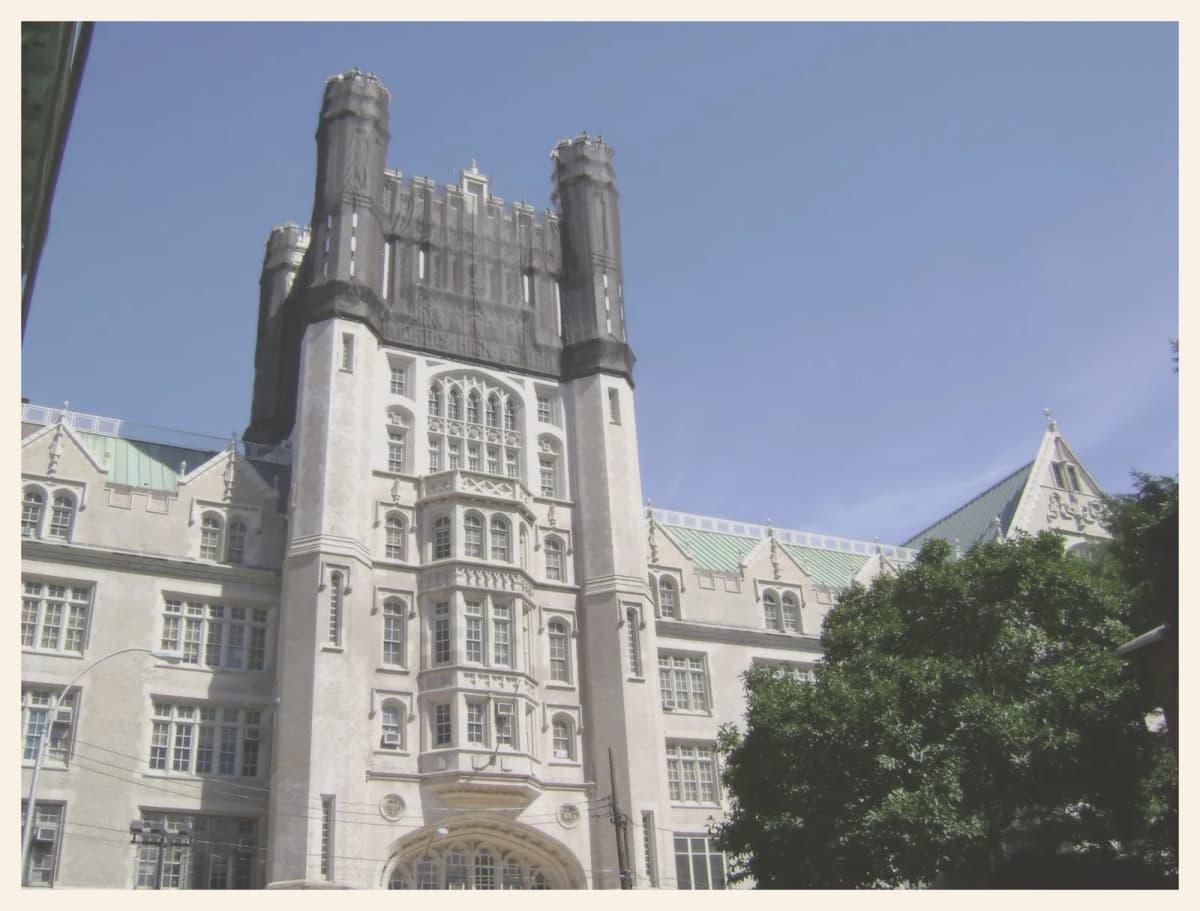
There's a lovely historical rhyme here. The Bronx's first public high school, Morris High School, opened in Morrisania in 1904 inside a Collegiate Gothic castle whose auditorium — steel-ribbed vaults, stained glass, a grand pipe organ — was declared a city landmark in 1982. The original school closed in 2002, but the campus now houses small specialty schools, among them one devoted to violin and dance. The borough's oldest school building, in other words, still keeps a stage warm for its kids. It always did; the pathway just got more deliberate.
The Alumna Question
Whenever I write a pathway piece, someone asks the fair question: does this road actually lead anywhere?

Ask Kerry Washington. Before Scandal, before the film festivals, she was a kid born in the Bronx in 1977 who found her early training with TADA! Youth Theater's teen ensemble — a youth theater rehearsal room, exactly the species of door this whole article is about. The notable detail: in her day, that door was in Manhattan, a commute away. A Bronx kid with the same spark today can find the equivalent room on Washington Avenue, on Olinville Avenue, on Webster Avenue — inside the borough, often free, no train transfer required.
Not every kid in these programs becomes famous, and that is emphatically not the point. The showcase alumni I find most persuasive are the anonymous ones: the teen who stops dreading class presentations, the twelve-year-old who learns that a flubbed line is survivable, the seventeen-year-old who discovers stage management and suddenly has a college plan. Confidence is a souvenir. It doesn't expire.
What the Whole Pathway Costs
You know I refuse to leave without doing the math, so here is the honest budget for a Bronx family trying this in the coming school year:
• DreamYard Bronx Acting Ensemble: $0. One interest form.
• Mind-Builders theater training (ages 9–21): $0. Fall–spring season plus showcase.
• TAPCo / Bronx Theatre High School: $0. Public schools; the currency is an audition and an application on time.
• Bronx House improv & drama: class fee varies by term — and a financial aid application sits right on the website. Ask. Always ask.
• Riverdale Children's Theatre: tuition-based, with scholarships awarded every year.
• Transit: $3.00 a swipe under OMNY, capped at $35 a week — and most families will spend a fraction of that, because these rooms are neighborhood rooms.
Total possible cost of finding out whether a kid loves theater: a subway fare and an afternoon. I have paid more to find out I dislike a brunch place.
Your First Step (Small Enough for Tonight)
Now the part I'd send you in a voice note.
If the kid in question is yours, or your niece, or the neighbor you mentor: tonight, open one tab. DreamYard's interest form if they're in high school; Mind-Builders' registration page if they're 9 to 21; Bronx House's inquiry form if they're younger. Fill it in. It takes four minutes, and September-you will be grateful that July-you did it before the fall calendars filled.
If the kid in question is the one you used to be — the one who watched from the velvet seats and never got handed the map — I see you, and for what it's worth, Mind-Builders' age range runs to 21 and community theaters everywhere are chronically short of adults willing to paint flats and run lights. Doors, plural. Still unlocked.
And if the obstacle is fear — theirs or yours — let me be honest instead of inspirational: the fear doesn't skip anyone. Every person on every Bronx stage this fall will have felt it in the wings. The training in all six of these rooms is not the removal of stage fright; it is the repeated, supervised discovery that you can act anyway.
Stage fright is not a verdict. It's a rehearsal note. The kids who end up on stage aren't the fearless ones — they're the ones somebody handed a door.
Start small. Send the form.
Places in this guide


4 places