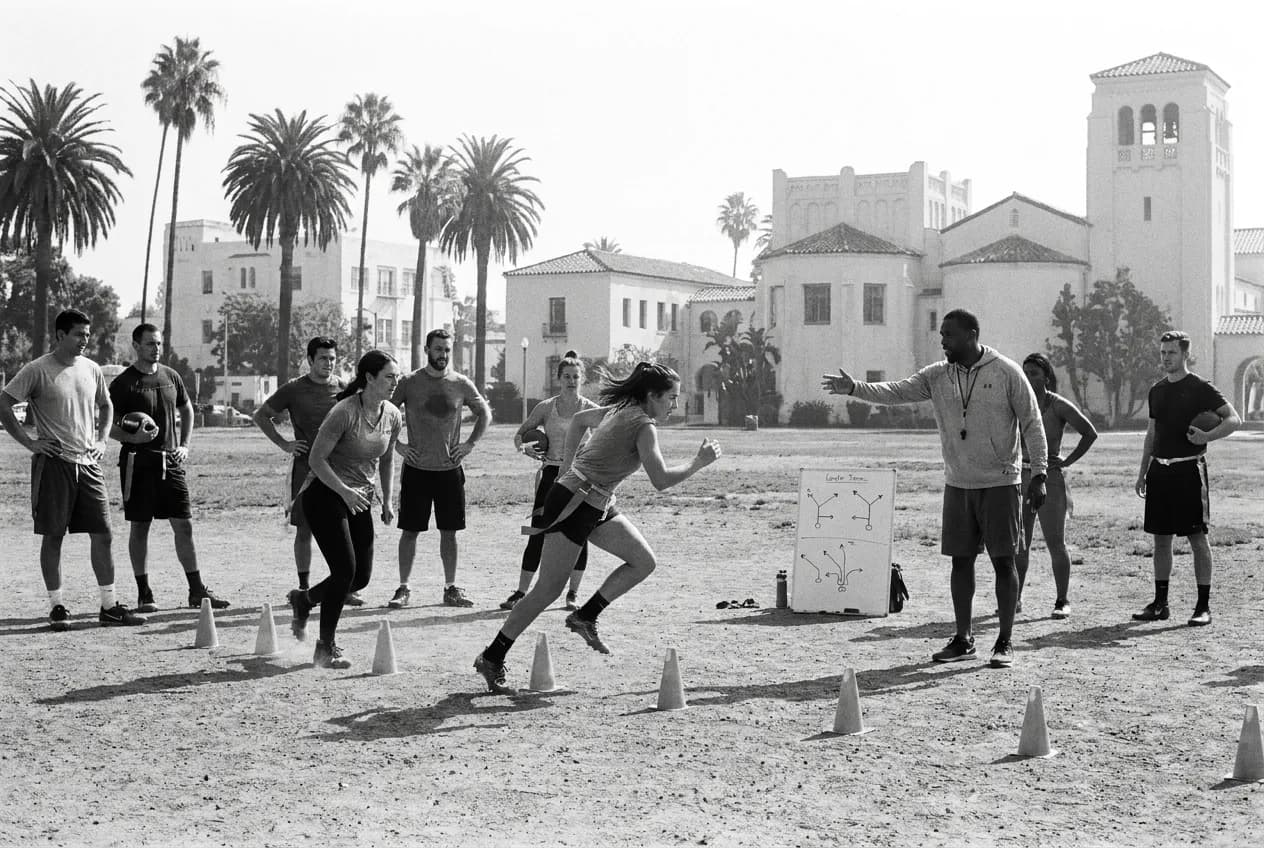
Recreational athletes scrolling through zay flowers highlight reels can translate that inspiration into tangible skill improvement at Los Angeles flag football leagues that dedicate Sunday mornings to route running fundamentals. These two-hour sessions blend cone-drill precision with film review, targeting intermediate-level participants who want structured coaching beyond pickup games. Former college players lead workshops that dissect route trees, release techniques off the line, and stem concepts—the same mechanics that make NFL receivers effective. The format suits solo participants looking to refine footwork or workout partners who want competitive rep counts, though the decision between drop-in flexibility and season-long commitment shapes both cost structure and skill progression.
Text Karpo your Los Angeles starting point, timing, companion, and priorities for a current skill-building league inspired by zay flowers, with one realistic backup before you leave.

Verifying League Format and Commitment Models Before Registration
Most LA flag football organizations operate on either drop-in or seasonal enrollment, and the distinction matters for Sunday availability. Drop-in leagues charge per session—typically allowing participants to attend any Sunday within a registration window—while season-long commitments lock in eight to twelve consecutive weeks with the same cohort. The drop-in model fits athletes with unpredictable schedules or those testing whether route running drills match their training goals, but it sacrifices continuity in coaching feedback. Seasonal formats build on prior weeks' lessons, letting instructors correct recurring footwork errors and track whether a participant's three-cone agility improves from week four to week ten.
Before paying, confirm whether the league defines "intermediate fitness level" by prior flag football experience, general athleticism, or specific metrics like forty-yard dash time. Some programs welcome anyone who can jog continuously for two hours, while others expect participants to already understand zone versus man coverage concepts. Ask whether the league is co-ed and how gender ratios affect team formation during live drills—unbalanced rosters can mean fewer reps for underrepresented participants. Clarify refund policies if a Sunday session cancels due to field permit issues or weather, since outdoor leagues in LA occasionally face heat advisories that postpone morning slots.
What Route-Tree Workshops Actually Cover in Two-Hour Blocks
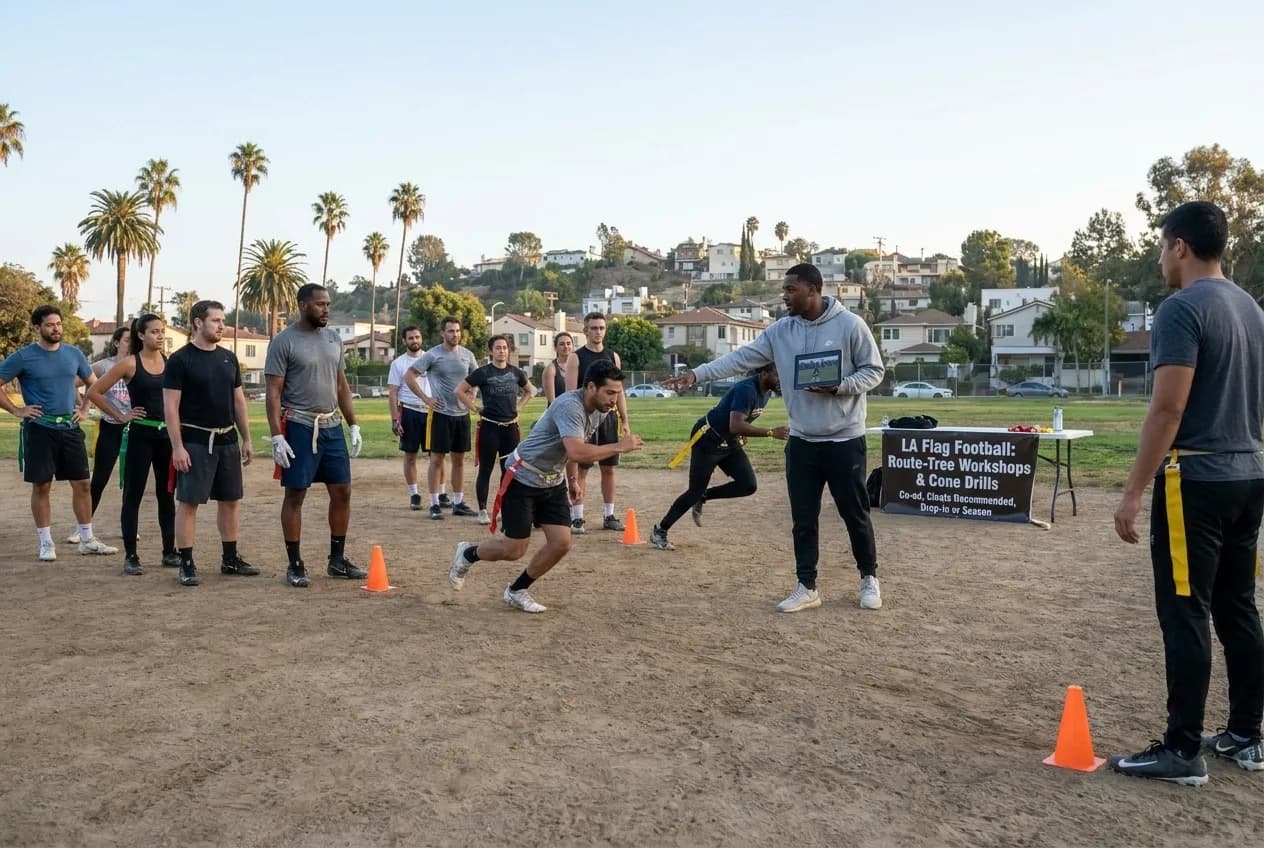
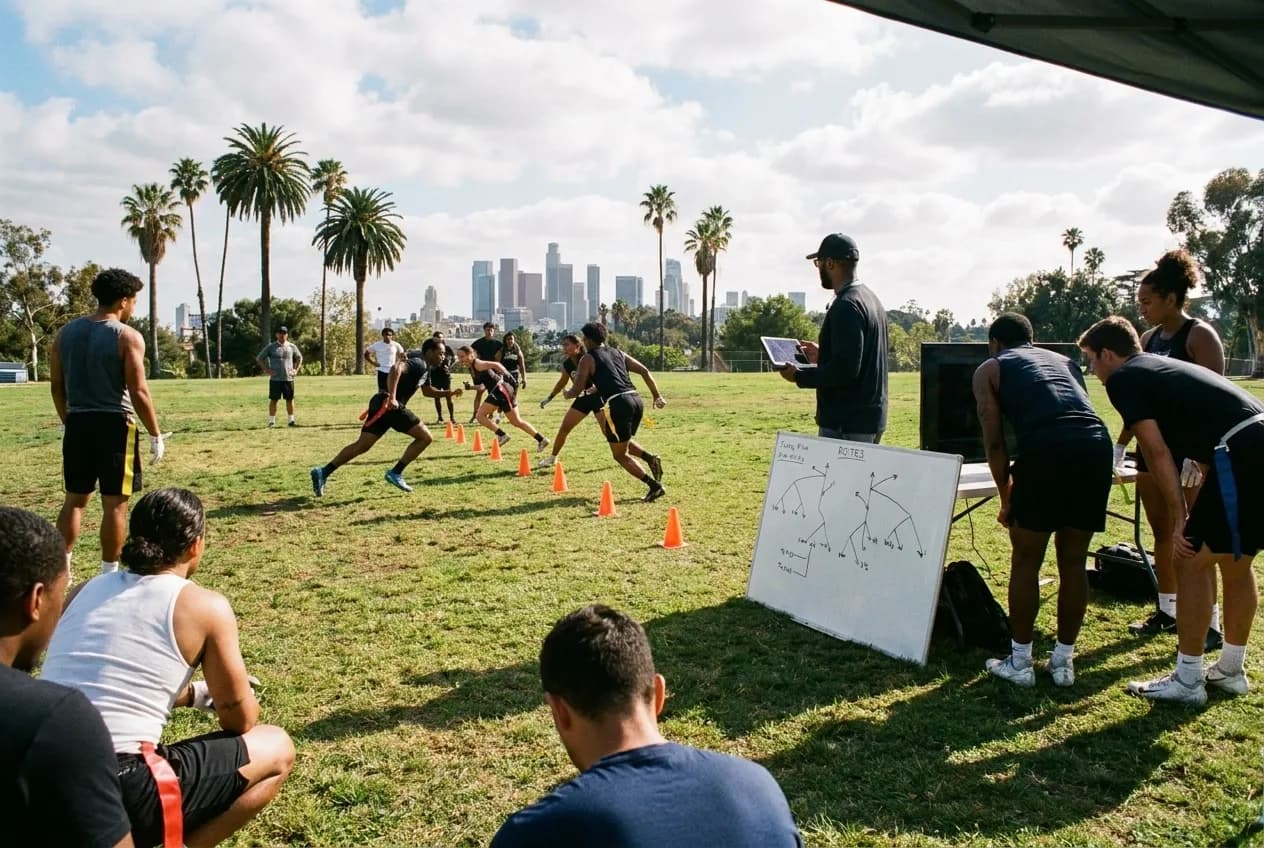
A typical Sunday morning session divides into three segments: dynamic warm-up and cone-drill stations, film review with whiteboard breakdowns, and live seven-on-seven reps where participants run called routes against defenders. The cone-drill portion emphasizes footwork patterns—stutter steps at the top of curls, speed cuts on slants, and throttle-down technique for comeback routes. Former college players demonstrate how to sink hips during breaks and use arm swings to decelerate without losing balance, then rotate through small groups to offer individual corrections. This segment usually consumes forty-five minutes, giving each participant multiple attempts at each route type.
Film review sessions use tablet devices or portable projectors to show NFL clips—sometimes including trending receiver highlights—then overlay the same route concepts onto flag football spacing. Coaches freeze frames to illustrate leverage advantages, explaining why a receiver's inside release defeats press coverage or how a stem to the sideline creates separation on out routes. The final segment moves to live competition, where participants run routes against defenders who mirror coverage shells. Expect fatigue to accumulate; two hours of cutting, sprinting, and mental processing challenges even fit athletes, so hydration breaks and shade access become practical concerns under LA's August sun.
Cleat Requirements and Surface Considerations Across LA Venues
Field surfaces vary widely among LA flag football leagues, and cleat rules follow accordingly. Turf facilities—common in the San Fernando Valley and near LAX—often mandate molded rubber cleats or turf-specific shoes, prohibiting metal spikes that damage synthetic fibers. Grass fields in Griffith Park or Exposition Park typically allow molded or detachable cleats, though some permit coordinators ban metal tips to reduce injury risk during non-contact drills. Confirm the league's cleat policy in writing, since showing up with incorrect footwear can mean sitting out the session or purchasing replacements from a nearby sporting goods retailer.
Surface type also affects route running mechanics. Turf provides consistent traction for sharp cuts but can increase knee torque if cleats grip too aggressively, while natural grass offers more forgiveness during deceleration but becomes slippery after morning dew or irrigation. Participants with prior ankle injuries might prefer turf's predictability, whereas those concerned about joint stress often choose grass. Ask whether the league rotates venues or uses a single home field, since travel logistics change if Sunday sessions alternate between Northridge and Torrance. Metro connections exist for some parks—the official Metro site confirms bus and rail routes across Los Angeles County—but early Sunday service may require checking real-time arrivals if relying on public transit.
Matching Skill-Building Leagues to Personal Training Goals
These workshops serve recreational athletes who want structured improvement rather than casual scrimmages, but they occupy a middle ground between pure conditioning classes and competitive travel leagues. If your primary goal is cardiovascular fitness, a route running clinic might undershoot intensity compared to high-interval bootcamps, since rest periods between drill reps allow heart rate to drop. Conversely, if you aim to join a ranked adult flag football league by next season, these Sunday sessions provide the technical foundation—route timing, hand placement at the catch point, reading defender hip angles—that separates effective receivers from athletes who rely solely on speed.
The solo-or-partner decision also influences outcomes. Solo participants benefit from unbiased coaching attention and the flexibility to focus entirely on personal weaknesses, but they miss the accountability and friendly competition a workout partner provides. Partners can film each other's reps for later review, compare progress on timed cone drills, and share transportation costs if driving to distant fields. However, mismatched skill levels between partners can create frustration if one consistently outperforms the other during live drills. Consider whether your motivation thrives on internal benchmarks or external competition, then choose the attendance model accordingly.
Practical Steps for First-Time Participants on Sunday Mornings
Arrive fifteen minutes early to complete any waiver paperwork, locate the correct field within multi-use park complexes, and observe the tail end of any prior session. Bring a labeled water bottle—LA's August mornings start mild but climb quickly—and apply sunscreen before leaving home, since shade structures vary by venue. Pack a small towel and a change of shirt if you plan to run errands afterward, as two hours of cutting drills generates sweat regardless of fitness level. Avoid eating a heavy breakfast within ninety minutes of the start time; a banana or energy bar provides sufficient fuel without causing cramping during sprints.
During the session, ask questions when coaches demonstrate techniques rather than waiting until live drills, since real-time clarification prevents ingraining incorrect habits. If a particular route concept—like the difference between a corner route and a post-corner—remains unclear after the whiteboard explanation, request a slow-motion demonstration. Most former college players appreciate engaged participants and will offer additional tips between formal drill rotations. After the session ends, note which route types felt most natural and which exposed weaknesses, then use that self-assessment to decide whether the league's curriculum aligns with your improvement priorities. Some leagues offer mid-season evaluations or skill-specific clinics that let participants double down on problem areas like release technique or ball tracking.
Tags: #flagfootball #routerunningdrills #LosAngelessportsleagues #receivertechnique #Sundaymorningworkouts #intermediatefitness #skillbuildingleagues #coedsports #formercollegeplayers #conedrills #filmreviewsessions #recreationalathletes
Sources consulted: Source 1: metro.net · Source 2: discoverlosangeles.com · Source 3: lacity.gov · Source 4: lapl.org
All trademarks are the property of their respective owners.
Ask Karpo first
Ask Karpo to turn this Los Angeles idea into a current plan for your date, budget, companion, transit preference, and energy level. Karpo can narrow the route and flag what to verify before you go.