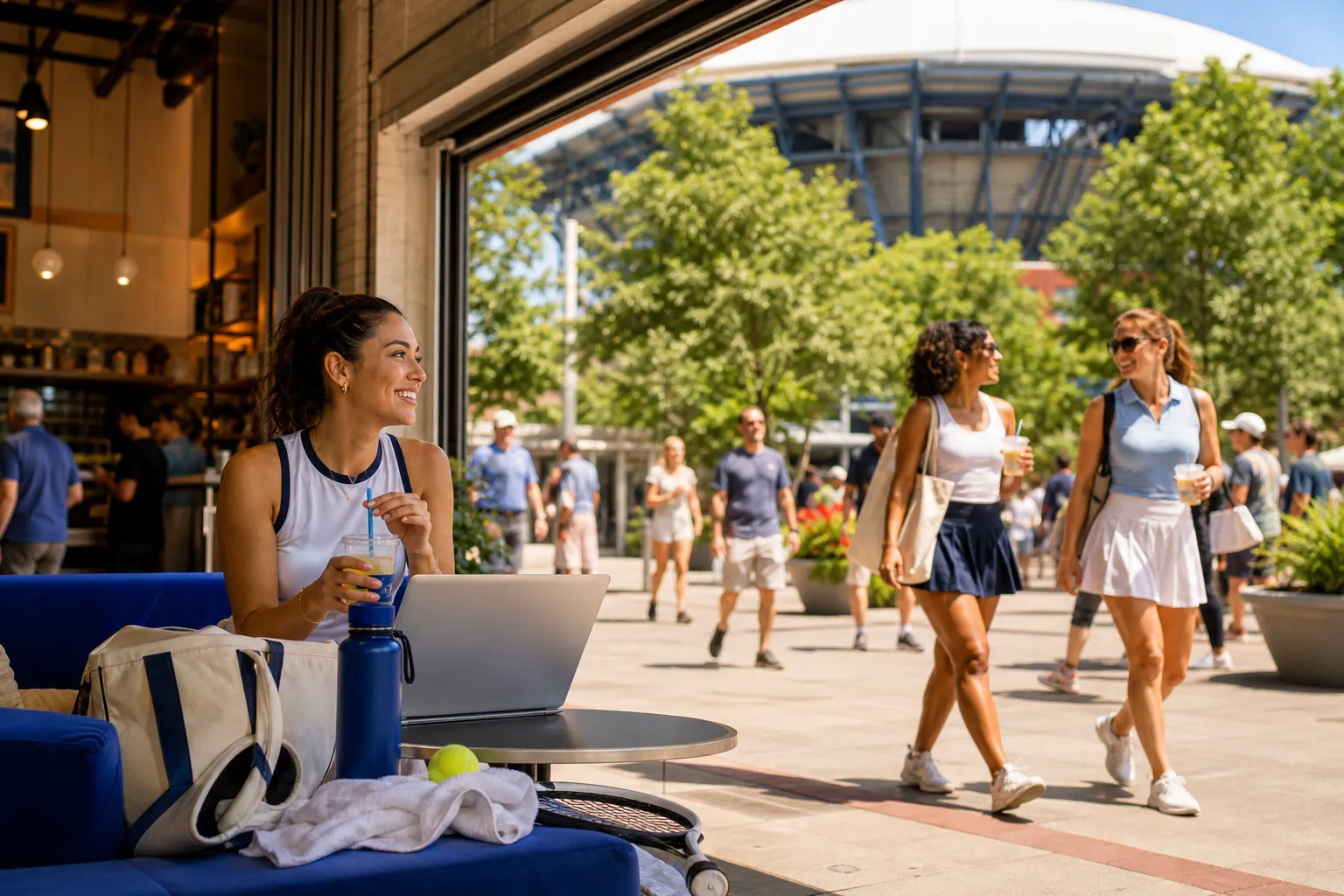
When Yellowstone's wide-open landscapes and thermal basin trails trend online, it's a reminder that even during high-energy events like the US Open, New Yorkers and visitors crave moments of sky, space, and low-pressure outdoor time. The 2026 US Open runs late August through early September at the USTA Billie Jean King National Tennis Center in Flushing Meadows Corona Park, and while the tournament draws global crowds, the surrounding 897-acre park—one of the city's largest—offers meadows, waterside paths, monument zones, and quiet pockets where you can reset between matches, before an evening session, or on a non-tennis day. This guide helps you plan public-park walks, sky breaks, and low-pressure outdoor pauses around Flushing Meadows, using the Yellowstone search moment as a lens for finding nature and breathing room in Queens during one of the borough's busiest sporting weeks.
Text Karpo with your US Open session time and Queens starting point, and we’ll turn this public-park walks, sky breaks, and low-pressure outdoor pauses around Flushing Meadows into a practical local plan.
Why Yellowstone Searches and US Open Planning Connect
Yellowstone trends reflect a national appetite for open horizons, thermal features, wildlife, and trails that let you move at your own pace. While Flushing Meadows Corona Park doesn't offer geysers or bison, it does provide something rare in New York: expansive sight lines, waterside promenades, meadow edges, and monument plazas where you can see the sky, feel weather, and walk without a fixed destination. During the US Open, when the Tennis Center and surrounding lots fill with fans, food vendors, and broadcast crews, knowing where to find a quiet bench, a tree-lined path, or a lakeside pause becomes practical trip intelligence. The park's scale and layout—shaped by two World's Fairs—mean you can step away from tournament energy and into a different rhythm within minutes.
Flushing Meadows Corona Park Layout and Access
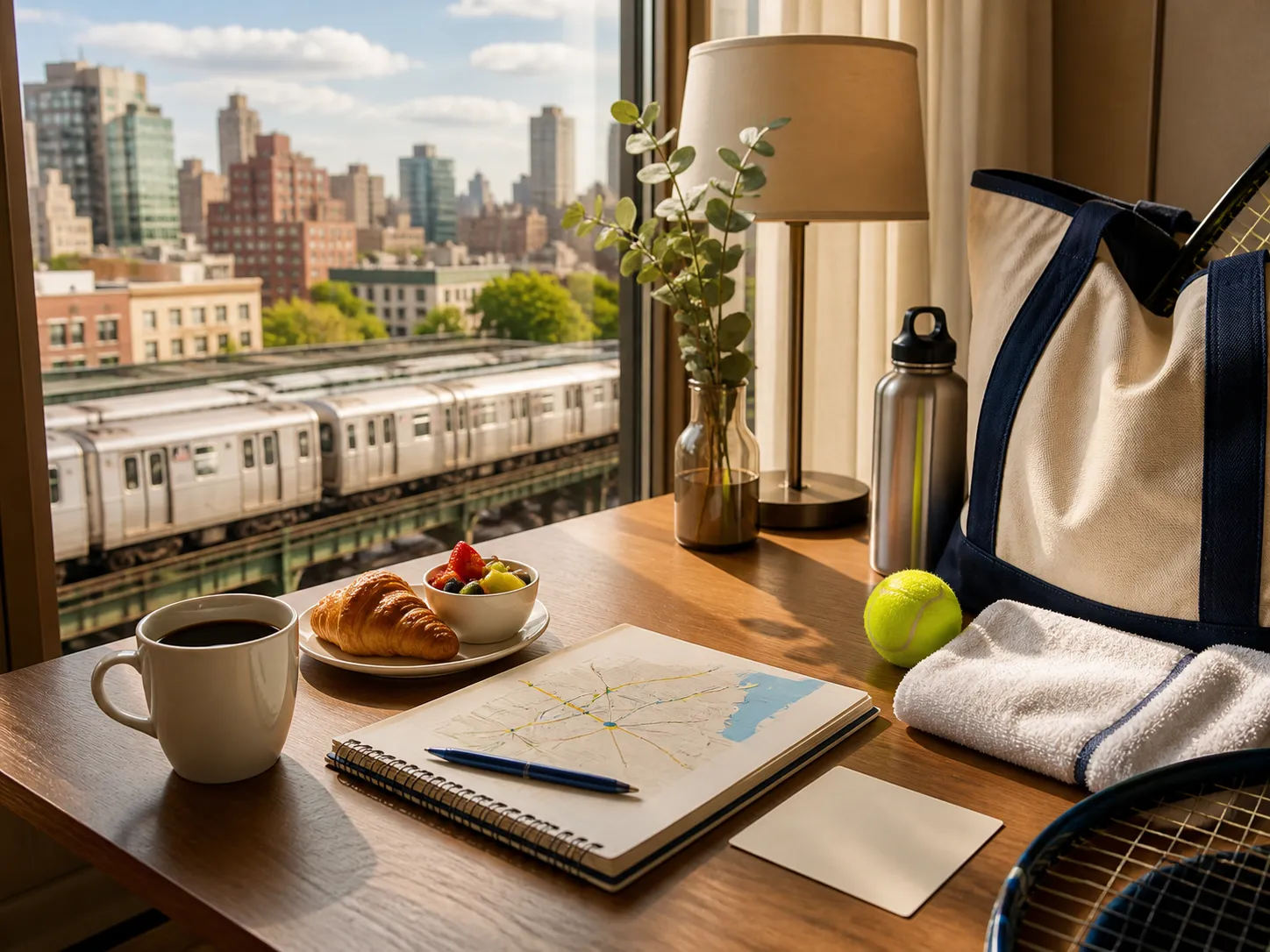
Flushing Meadows Corona Park stretches across central Queens, bordered by the Grand Central Parkway, Van Wyck Expressway, and neighborhoods including Flushing, Corona, and Forest Hills. The USTA Billie Jean King National Tennis Center occupies the park's southern end, adjacent to Citi Field. The park itself includes Meadow Lake, Willow Lake, the Unisphere, the Queens Museum, the New York Hall of Science, and miles of paved and unpaved paths. The 7 train stops at Mets-Willets Point, delivering you to the park's core; the Long Island Rail Road also serves the station during major events. Walking north from the Tennis Center, you'll encounter the Unisphere plaza, then Meadow Lake's western shore, then meadow zones and tree groves that feel surprisingly removed from the tournament bustle. NYC Parks manages the entire park, and standard park rules apply—no alcohol, no amplified sound, no drones, and respect for wildlife and plantings.
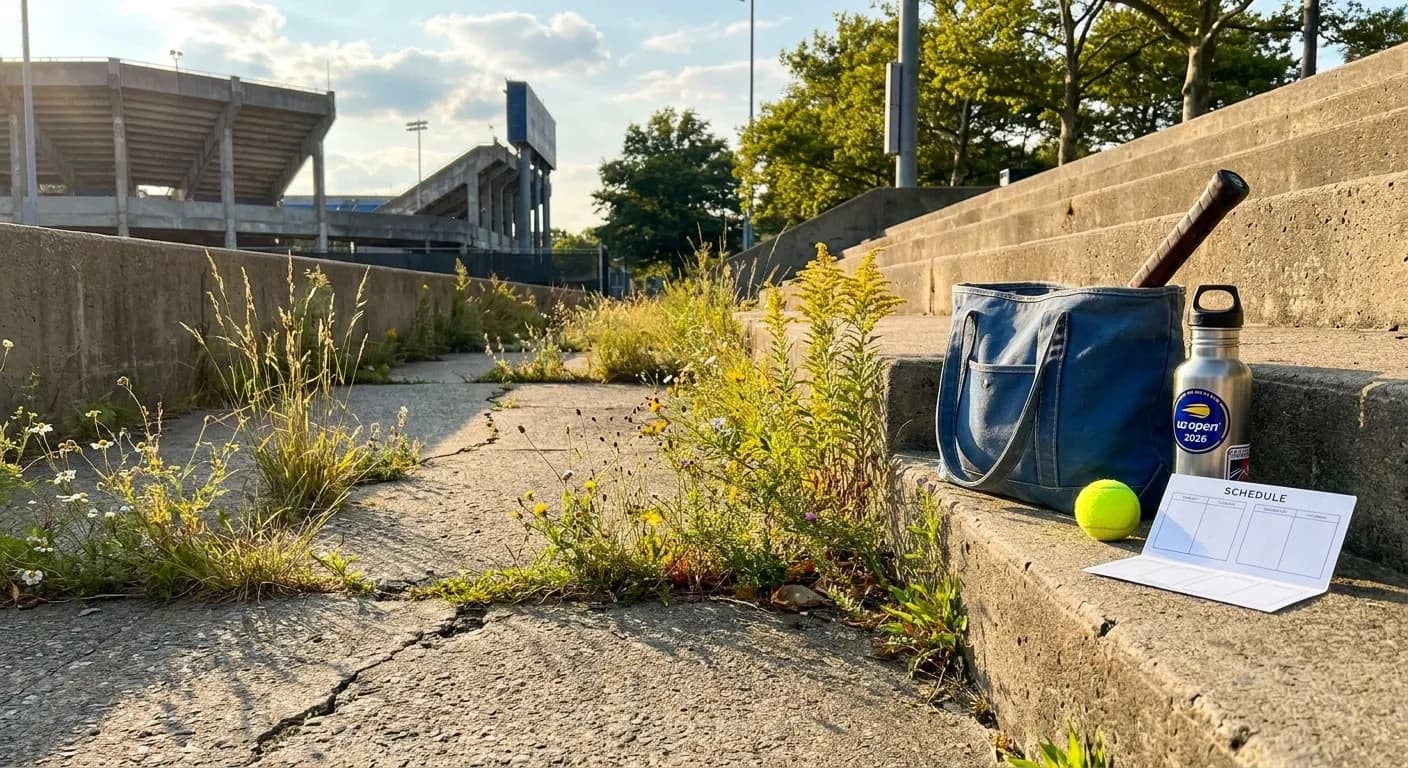
Morning and Pre-Session Park Walks
US Open day sessions typically begin around 11 a.m., and evening sessions start at 7 p.m., according to the official event schedule. Arriving early gives you time to walk the park before crowds peak. A morning loop around Meadow Lake—roughly two miles of paved path—offers water views, birdlife, and benches facing east where you can watch light change. The path is flat, accessible, and connects to smaller trails leading toward the Queens Museum and the Hall of Science. If you're staying in Flushing, Corona, or Jackson Heights, you can walk or bike to the park, using local streets and greenway segments. The park's northern meadows, near the Hall of Science, are less trafficked during tournament weeks and provide open grass, shade trees, and sight lines that feel more like a regional park than an urban one. Bring water, sun protection, and a hat; the park has limited shade in some zones, and August and early September in New York can be hot and humid.
Sky Breaks and Low-Pressure Pauses Between Matches
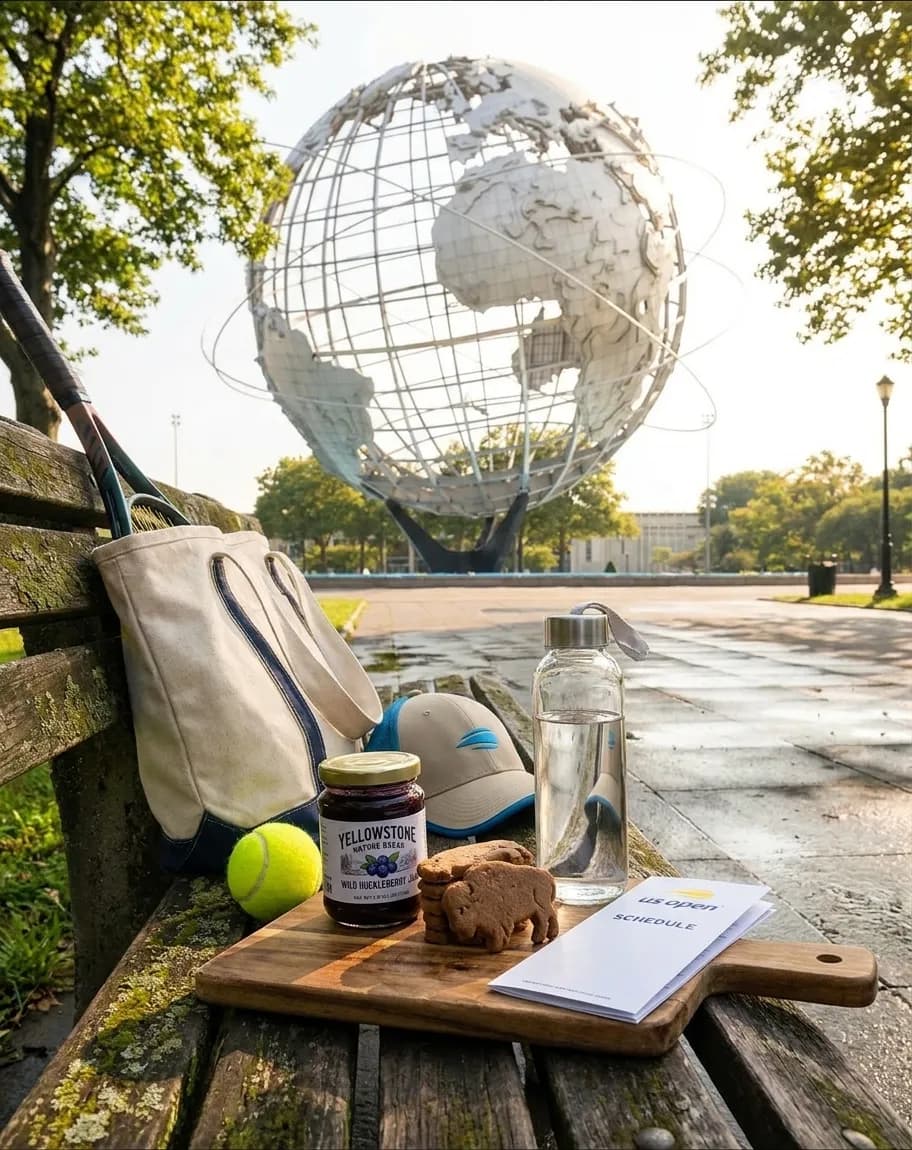
If you're attending multiple matches or spending a full day at the US Open, the Tennis Center's crowds, noise, and sensory intensity can build. The park offers natural break zones. The Unisphere plaza, a short walk north of the main gates, is an iconic photo spot but also a place to sit on the steps, watch families, and feel the scale of the 1964 World's Fair relic. Willow Lake, smaller and quieter than Meadow Lake, sits west of the Tennis Center and has a perimeter path, benches, and waterfowl. The Queens Museum, located mid-park, has public restrooms, a café, and the Panorama of the City of New York—a room-sized scale model that offers a different kind of perspective. Museum admission and hours vary, so check ahead. These pauses don't require planning or tickets; they're simply available when you need air, quiet, or a change of scene.
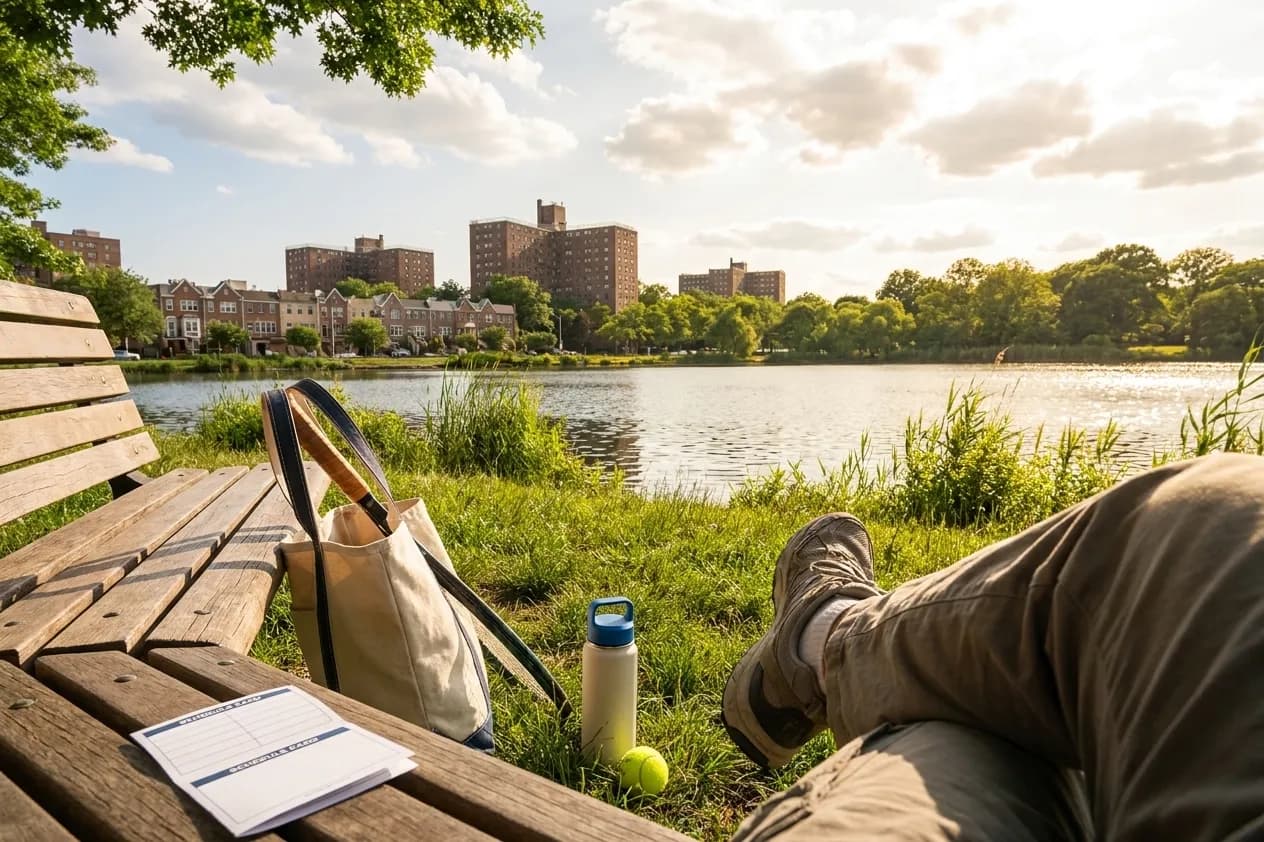
Evening and Post-Session Park Time
Evening sessions at the US Open can run past 11 p.m., especially during later rounds. After a match, the park's paths remain lit near the Tennis Center and Unisphere, but the outer zones grow darker and quieter. If you're walking back to the 7 train or LIRR, the main paths are well-traveled and staffed during the tournament. If you want a post-match pause, the Unisphere area and the plaza near the Queens Museum offer benches, lighting, and a sense of space without leaving the park's core. NYC Parks posts current park rules and closing policies online.m., per NYC Parks rules, but most visitors exit earlier. If you're staying in Long Island City or Astoria, the 7 train runs frequently, and the ride west offers views of the Manhattan skyline—a different kind of sky break after hours in the park.
What to Bring and What to Skip
The US Open has a detailed prohibited-items list, including bags larger than 12"x12"x16", outside food and beverages (except one sealed water bottle), selfie sticks, and professional cameras. If you're planning park time before or after your session, pack light: a small backpack or tote, refillable water bottle, sunscreen, hat, sunglasses, and a portable phone charger. The park has water fountains, but they may be crowded or out of service, so carrying your own hydration is smart. Comfortable walking shoes matter—Flushing Meadows is large, and paths are paved but can be uneven. If you're planning a longer walk or bike ride, check the weather forecast and plan for heat, rain, or wind. The park has limited shelter, and summer storms can move in quickly.
Practical Notes for Park Walks and Outdoor Pauses
- Flushing Meadows Corona Park is free and open to the public; no ticket or reservation required for park access.
- The 7 train (Mets-Willets Point) and LIRR (during events) are the most reliable transit options; parking near the Tennis Center is limited and expensive.
- Meadow Lake and Willow Lake loops are paved and accessible; unpaved trails exist in meadow and wooded zones.
- Public restrooms are located near the Unisphere, Queens Museum, Hall of Science, and Tennis Center; availability and cleanliness vary.
- The park has limited food vendors outside the Tennis Center; bring snacks or plan to eat in Flushing, Corona, or Jackson Heights.
- Cell service is generally strong, but crowds during the US Open can slow data speeds.
- Bikes are allowed on park paths; the park connects to Queens greenway segments.
- Dogs are allowed on leash; clean up after pets and follow NYC Parks rules.
- Check NYC Parks and US Open official sites for any temporary closures, construction, or event-related access changes.
Queens Neighborhoods and Wider Walks
If you're staying in Queens for the US Open, consider extending your park time into neighborhood walks. Flushing's downtown, a short walk or bus ride north, offers dense commercial streets, Asian bakeries, food courts, and the Flushing Town Hall cultural center. Corona, west of the park, has Latin American restaurants, street vendors, and the Louis Armstrong House Museum. Jackson Heights, accessible via the 7 train, is known for its historic garden apartments, diverse food scene, and Travers Park. Long Island City and Astoria, farther west, offer waterfront parks, breweries, and Manhattan skyline views. These neighborhoods provide context, food, and local rhythm that complement the global energy of the US Open. Walking between them—using the 7 train, buses, or your own feet—turns a tennis trip into a Queens exploration.
yellowstone, US Open, Flushing Meadows Corona Park, Queens, New York, public park walks, outdoor breaks, nature pauses, tennis tournament, local planning, sky breaks, Meadow Lake, Unisphere, 7 train, Mets-Willets Point, USTA Billie Jean King National Tennis Center, NYC Parks, Flushing, Corona, Jackson Heights, Long Island City, Astoria, park trails, low-pressure outdoor time, 2026 US Open
US Open, USTA, Billie Jean King, Flushing Meadows Corona Park, and related names are trademarks of their respective organizations. This guide is informational only and is not endorsed by, affiliated with, or sponsored by the USTA, NYC Parks, or any official tournament, transit, or city entity.
Ask Karpo First
Tags: #USOpen2026 #Queens #FlushingMeadows #KarpoFinds #Karpo #yellowstone #NewYorkLocal #TennisTravel #NYCLocalLife #TennisTravel
Sources consulted: usopen.org — Official event schedule · usopen.org — Official visitor A-Z guide · usopen.org — Official transportation directions · usopen.org — Official prohibited-items guide · NYC Parks — Flushing Meadows Corona Park · NYC Parks — Park rules
All trademarks are the property of their respective owners.
Ask Karpo first
Want to know what is actually open, how to time the trip, and where to pause around Queens? Ask Karpo for the latest public US Open context, a respectful visitor plan, and a live route around Flushing Meadows before you head out.