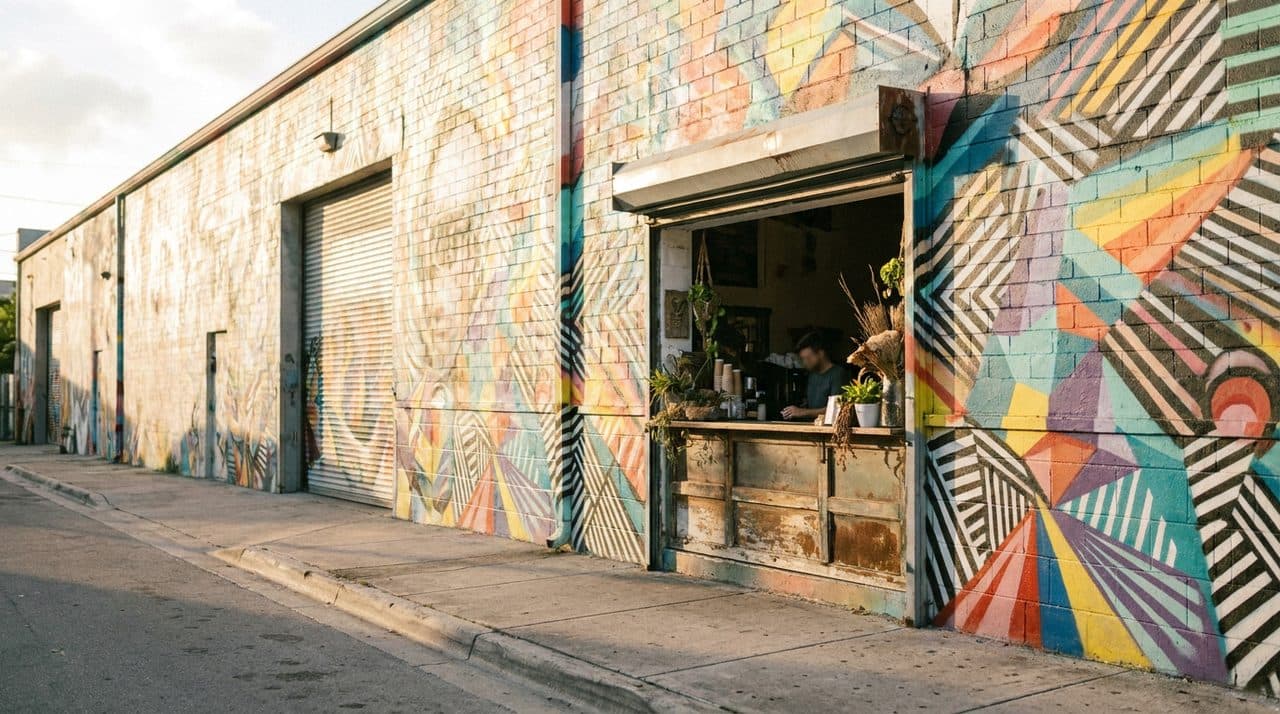
The murals along Northwest Second Avenue hold a different quality before ten in the morning—colors still sharp against the concrete, shadows long and clean, no tour groups forming human chains for the wide-angle shot. Wynwood, Miami's most-photographed art district, exists in a brief, unperformed state on weekend mornings, when the open-air coffee windows serve their first pours and the galleries haven't yet flipped their signs. The neighborhood that made its name on street art and late-night energy offers something rarer in these early hours: the chance to see the work without the performance of seeing it.
The Window Before the Line
The coffee comes through a walk-up window on Northwest 26th Street, the kind of setup that reads as temporary but has been there for years. First-timers often miss it—no signage above eye level, just a chalkboard menu leaning against the wall and the sound of an espresso machine warming up. The barista who works the early shift knows the regulars by drink, pours cortados into small ceramic cups that stay on the premises, hands them through the window with a nod. Whoever arrives before nine gets the counter along the exterior wall, a narrow ledge that faces the street and catches the angle of morning light that makes the whole block look like it was art-directed. The coffee is strong, the pastries come from a bakery two neighborhoods over, and the rhythm is unhurried in a way that disappears by eleven when the weekend crowds start their mural crawl.
The Walls in Their Quiet State
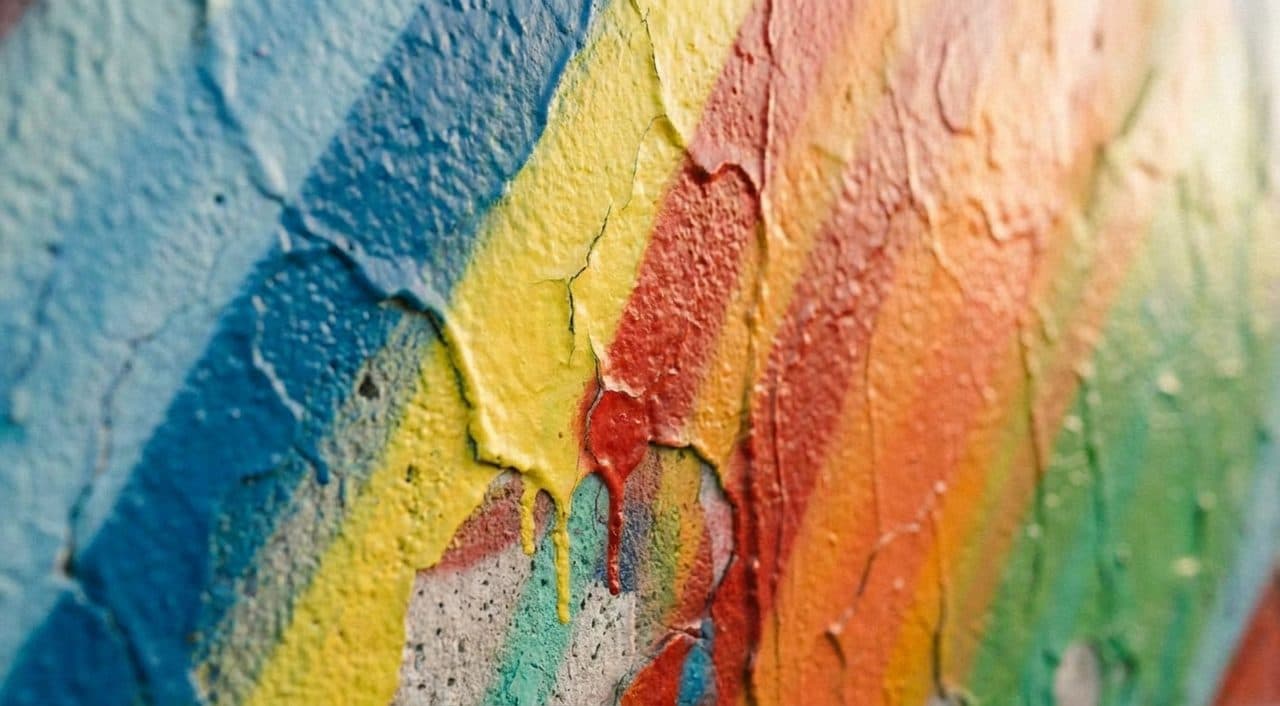
The Wynwood Walls complex sits a few blocks west, its entrance gates open but the interior courtyard still empty in the morning lull. The murals here rotate on a schedule that keeps the district current, new pieces appearing every few months, but the early hours offer something the daytime rush obscures: the chance to stand in front of a three-story piece and actually see it. No selfie queues, no guided tours blocking the sightlines, just the work and the light and the sound of someone sweeping the courtyard. The pieces range from abstract color fields to intricate figurative work, each wall commissioned and curated, the production values higher than the guerrilla tags that first put Wynwood on the map. Those who arrive early can trace the details—the layering in the spraypaint, the way certain colors shift in direct sun versus shade, the small signatures tucked into corners. The complex itself is free to enter, the surrounding streets lined with more murals that spill across entire building facades, some sanctioned, some less so, all part of the visual density that defines the neighborhood.
The Gallery District Off-Schedule
The galleries along Northwest 24th Street don't open until later, but their exteriors tell half the story. Converted warehouses with roll-up doors, windows that reveal works-in-progress, the occasional artist arriving early to work before the heat sets in. Wynwood's gallery scene operates on a different clock than its street art reputation—openings happen on second Saturdays, serious collectors come through by appointment, the commercial side of the district running parallel to its Instagram-famous murals. On weekend mornings, the gallery blocks are quiet enough to hear conversations from open studio windows, to notice which spaces are between shows, to see the infrastructure that supports the spectacle. One gallery near the corner keeps a small sculpture garden in its side lot, benches arranged around pieces that weather in the Miami humidity, a space that exists for sitting more than selling. The neighborhood's art credentials are real—working artists, established dealers, a pipeline that connects to Art Basel and the broader Miami art economy—but the early hours strip away the event-iness and leave the baseline operations visible.
The Breakfast Counter That Feeds the District
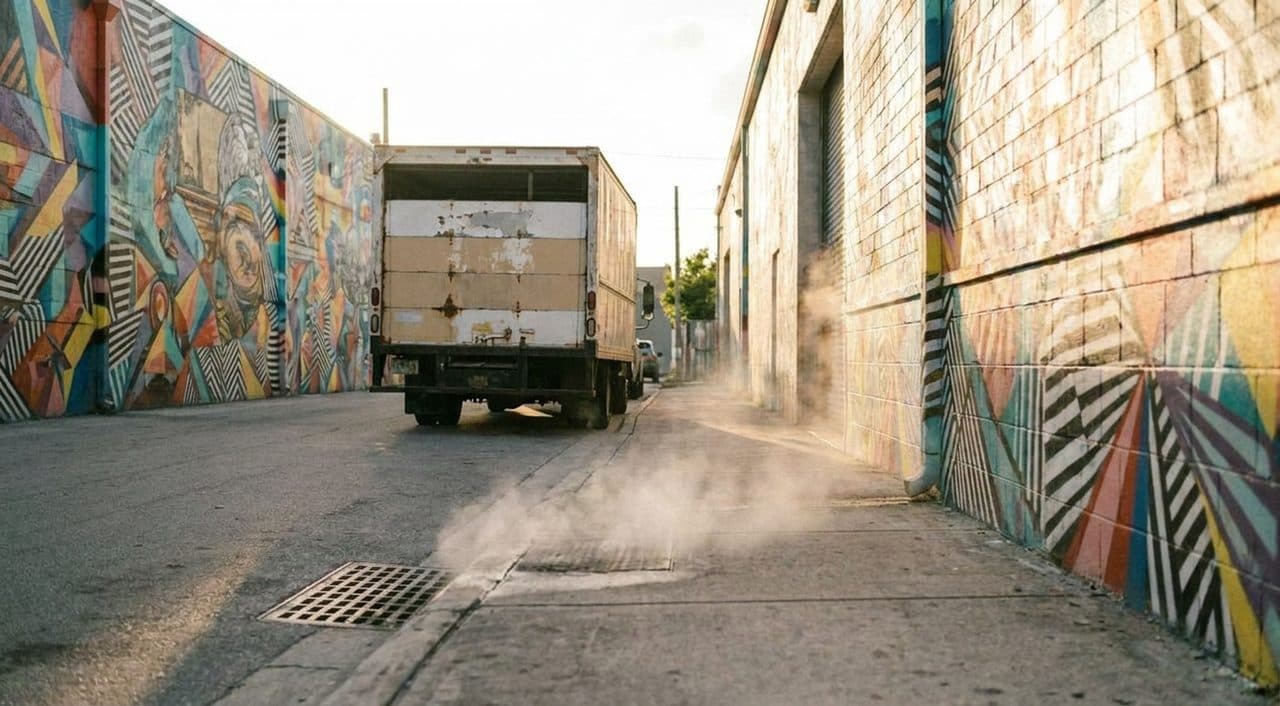
The Venezuelan breakfast spot on the eastern edge of Wynwood opens at seven, its counter lined with construction workers and gallery staff before the brunch crowd discovers it. The menu runs to arepas and cachapas, the kind of food that requires no translation and arrives quickly, the kitchen visible through a half-wall that separates the cooking line from the dining room. The coffee here is different from the specialty window three blocks over—larger, sweeter, served in styrofoam that regulars know to double-cup. The rhythm is efficient: order at the counter, find a seat at one of six small tables, wait for someone to call out a number in Spanish-inflected English. The clientele skews local in the morning—the people who work in Wynwood rather than visit it, the ones who know which streets have shade and which parking lots charge less before noon. The food is inexpensive enough to be a regular stop, filling enough to last until mid-afternoon, and the vibe is utilitarian in a neighborhood that often performs its cool.
The Side Streets That Reward Wandering
The numbered avenues between 23rd and 29th hold the density of murals, but the lettered streets that run perpendicular—Northwest First and Second Avenues—carry a different texture. Fewer tour groups, more functional businesses, the occasional mural that predates the district's branding. These blocks mix working warehouses with newer developments, the gentrification timeline visible in the architecture: original industrial buildings, mid-2000s gallery conversions, recent condo projects that market Wynwood proximity. On weekend mornings, these streets are nearly empty, the kind of quiet that lets someone notice the small details—a mural tucked into an alley, a community garden behind a chain-link fence, the way certain buildings still carry ghost signs from previous tenants. The side streets also offer practical advantages: easier parking, less crowded sidewalks, the ability to move through the neighborhood at a natural pace rather than the stop-and-pose rhythm that dominates the main drags.
The Moment the Performance Begins
Somewhere around ten-thirty, the shift happens. The tour buses arrive on Northwest 25th Street, groups forming at the Wynwood Walls entrance, the coffee window suddenly three-deep. The neighborhood that spent the morning in its working clothes changes into its public face—vendors setting up carts, gallery staff unlocking doors, the street performers taking their positions. The murals don't change, but the experience of seeing them does, the solitary morning viewing replaced by the collective daytime energy that Wynwood is known for. Those who arrived early can feel the difference, can measure the neighborhood's two modes against each other. Both versions are authentic—the performed and the unperformed, the spectacle and the infrastructure—but the morning hours offer the rarer view, the one that requires intention and early alarms and a willingness to see a place before it sees itself.
Practical Notes
Wynwood sits north of downtown Miami, accessible via the Metromover to Adrienne Arsht Center station followed by a northbound bus, or by car with street parking easier before ten on weekends. The coffee windows and breakfast spots open as early as seven, the Wynwood Walls complex by nine, galleries typically not until eleven or later. No admission fees for the outdoor murals or the Walls courtyard, though some galleries require appointments for viewings. The neighborhood is walkable but sun-exposed—morning visits avoid the midday heat that makes the concrete blocks feel like convection ovens. The district is safe and heavily trafficked during daylight hours, less so after dark on quieter side streets. Weekend mornings offer the best balance of open venues and manageable crowds, with the understanding that by eleven the neighborhood shifts into its daytime mode and the early quiet disappears.
Tags: #WynwoodMiami #MiamiArtDistrict #WynwoodWalls #StreetArtMiami #MiamiMornings #ArtDistrictWalks #MiamiNeighborhoods #WynwoodCoffee #UrbanArtScene #MiamiBeforeTheCrowds #WynwoodGalleries #MiamiWeekend #StreetArtPhotography #WynwoodEats #TheLongWayHome
Sources consulted: timeout.com · atlasobscura.com · nycgo.com
All trademarks are the property of their respective owners.
Ask Karpo first
Want to know which streets have the newest murals, or where to park before the meters fill up?
Ask Karpo for the Wynwood morning route and the coffee window that opens earliest before you head out.