 Halloween Makeup Near Me in Downtown Miami: Halloween Megastore Omni
Hidden Gems & Odd Finds
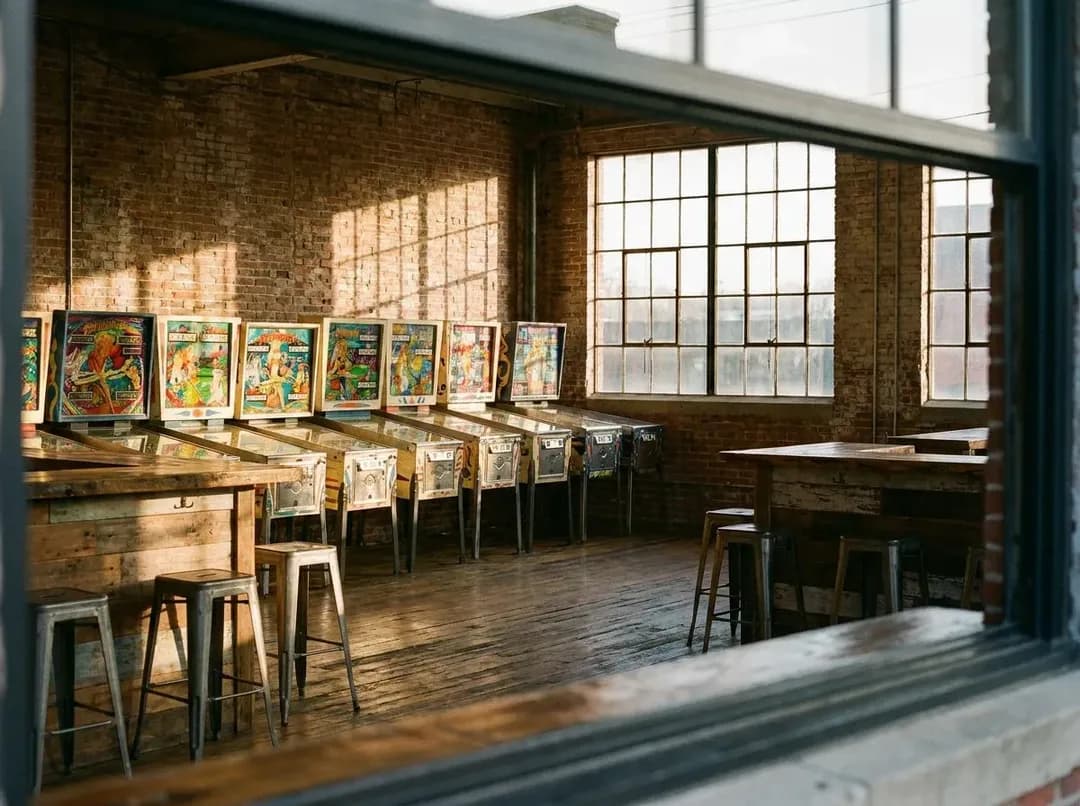
the wreck room's vintage pinball machines when cabbagetown's arcade regulars arrive before evening crowds
A Cabbagetown bar preserves rotating restored pinball machines spanning four decades. Late afternoon offers uncontested access to competitive players who know every mechanical quirk before evening bar crowds arrive.
The electronic bells and mechanical clatter carry differently in the late afternoon, before the bar fills and conversation drowns the scoring reels. At The Wreck Room, tucked into Cabbagetown's industrial-bones architecture, a dozen vintage pinball machines stand in generous rows—none of the shoulder-to-shoulder cramming that turns most arcade bars into obstacle courses. The space breathes. High ceilings absorb the silver-ball percussion. And for a few weekday hours, the machines belong to players who understand the difference between a drop target and a standup, who can read a playfield's geometry the way a pool shark reads felt.
The competitive window
Timing matters if you want to watch pinball played as something closer to sport than nostalgia. Competitive players typically arrive between five and seven on weekdays to claim machines before the evening bar crowd filters in with weekend plans and casual curiosity. These aren't the players hunting Instagram moments. They're tracking ball trajectories, testing flipper responsiveness, learning which ramp shots reward risk and which drain balls into the outlanes with ruthless consistency.
You'll recognize them by posture—weight shifted forward, hands ready, eyes scanning three moves ahead. They play games in succession, feeding quarters with the efficient rhythm of someone conducting research. A good machine gets twenty minutes of attention. A great one anchors an entire evening. They're reverse-engineering quarter-century-old engineering, one three-ball game at a time.
Industrial bones, arcade heart
The Wreck Room occupies the sort of Cabbagetown building that wears its manufacturing past openly—exposed brick, steel-beam bones, windows that let in the slanted autumn light of late 2026 in broad dusty planes. The conversion left room for what matters: machine spacing that allows players to step back and assess angles without bumping barstools, sightlines clear enough to watch three games at once, acoustic breathing room so each machine's audio signature remains distinct. No slot-machine jangle here. Just the electromechanical honesty of solenoids firing, rubbers bouncing, score reels clicking upward.
The bar itself runs along one wall, craft taps and straightforward cocktails, nothing precious. This isn't a theme restaurant wearing pinball as costume. It's a neighborhood bar that takes its machines seriously, where the arcade and the drinking coexist without one apologizing for the other. The clientele reflects that balance—half here for the beer, half here for the silver ball, considerable overlap between the two.
The rotating collection
Nothing kills an arcade bar faster than stagnation—the same broken machines, the same stuck flippers, the same high scores gathering dust for years. The Wreck Room's current machine rotation and announcement schedule should be verified directly with the venue and drawing collectors on debut weekends. It's a system that rewards repeat visits. The electromechanical table you mastered in September might be gone by November, replaced by a solid-state machine with a completely different scoring philosophy and three times the playfield complexity.
This rotation keeps the competitive players engaged and the collection vital. Machines get pulled for maintenance before problems become unfixable. New arrivals generate buzz. And the bar builds relationships with restorers and collectors who understand that these aren't museum pieces—they're meant to be played hard, maintained properly, and cycled thoughtfully. A vintage pinball machine in regular use is a living thing. Let it sit idle and the rubbers perish, the solenoids freeze, the scoring reels jam.
Mechanical education
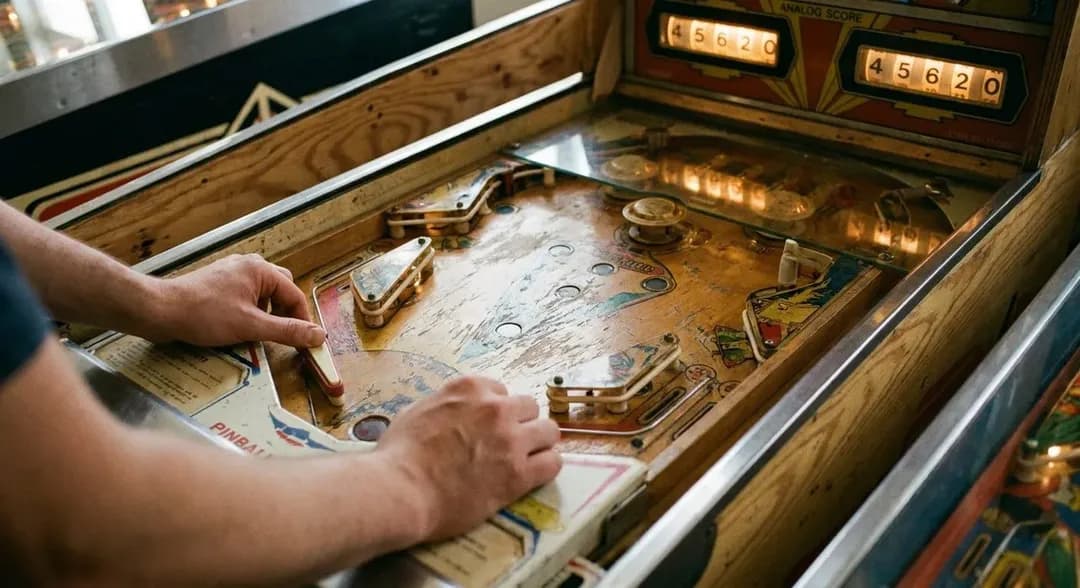
Staff can explain the mechanical differences between electromechanical and solid-state pinball eras for players interested in gameplay variations—and those differences run deeper than age alone. Electromechanical machines from the 1970s are analog creatures, all relays and steppers, score reels that physically rotate, chimes that actually ring. Solid-state machines introduced circuit boards and digital displays, more complex rule sets, multiball modes that would have been impossible in the earlier era. By the 1990s, dot-matrix displays were telling stories between balls, and modes stacked like video-game objectives.
For the uninitiated, the staff's willingness to explain these distinctions transforms casual curiosity into educated appreciation. You start to notice why an electromechanical machine feels more immediate, more tactile, every score physically manifested in spinning reels. You understand why solid-state machines reward strategy over reflexes, why memorizing shot sequences matters as much as flipper timing. The machines stop being interchangeable retro props and become distinct expressions of evolving game design.
The serious player's advantage
Arrive during the competition window and you'll see what fluency looks like. Players who understand that the left outlane on one machine is slightly more forgiving than the right, who know which drop-target bank to complete first for maximum bonus multiplier, who can trap a ball on a raised flipper to break chaos into considered strategy. They'll play the same machine four games in a row, adjusting approach based on what the previous game revealed about ball speed and flipper strength.
These players aren't competing against each other directly—pinball remains fundamentally solitary, you versus the table—but they're aware of the leaderboard ecology. High scores get logged. Reputations accrue. A top score on a newly rotated machine carries particular weight, proof you can adapt quickly to unfamiliar geometry. By the time evening crowds arrive and casual players queue up, the serious players have either secured their preferred machine or completed their research and moved on.
Light and sound in the afternoon
The sensory experience shifts dramatically between afternoon and evening. Late-day sun angles through those industrial windows, backlighting the translite artwork—the hand-illustrated backglasses that defined each machine's identity before digital screens replaced painted glass. Colors glow. Chrome rails catch light. The playfields become luminous stages. And with the bar still relatively quiet, you hear the mechanical symphony properly: the sharp crack of a slingshot, the softer thunk of a bumper, the cascading ding-ding-ding of a spinner spinning free, the deep thud when a ball drains and the machine resets for the next player.
By nine or ten, the bar's packed, conversation rises to competitive volume, and the machines become part of the general sensory blur. Still fun, still playable, but no longer distinct. The afternoon hours preserve clarity—each machine audible and visible as its own entity, the experience closer to what the designers intended when they built these things in wood-paneled workshops decades ago.
Practical notes
The Wreck Room's current address and hours should be verified directly, as neighborhood bar schedules shift seasonally. Parking and MARTA access should be verified directly with the venue or current transit maps with a short walk or ride-share leg. The space is ground-level with step-free entry. Bring quarters for machines—change is usually available at the bar but having a roll ensures uninterrupted play. Weekday late afternoons offer the best machine access and the chance to observe competitive play before evening crowds. Check social channels for monthly machine rotation announcements if you're hunting specific tables or newly restored arrivals.
Tags: #TheOddEdit #AtlantaBars #CabbagetownAtlanta #VintagePinball #PinballArcade #AtlantaNightlife #NeighborhoodBars #IndustrialSpaces #CompetitivePinball #CraftBeerAtlanta #RetroGaming #FallInAtlanta #LocalAtlanta #HiddenAtlanta #AtlantaInsider
Please drink responsibly. Must be of legal drinking age.
All trademarks are the property of their respective owners.
Ask Karpo for more information.
Keep reading
- Halloween Makeup Near Me in Downtown Miami: Halloween Megastore Omni
 Halloween Makeup Near Me in South Miami: Blick Art Materials
 Halloween Makeup Near Me in Kendall: Wonder Costumes Showroom Warehouse