There is a version of this article that just lists rooms with fast wifi, and it would be useless within a month. Cafe work policies in San Francisco change constantly, and the places with the best coffee in San Francisco are frequently the places least interested in hosting your afternoon. What does not change is the underlying economics, and once you understand those you can read any room in about ten seconds.
Rather than walking to three cafes to find one with a free plug, tell Karpo the neighbourhood, how long you need and whether you have to take calls. It will filter for the rooms that actually accommodate that.
The economics that decide whether you are welcome
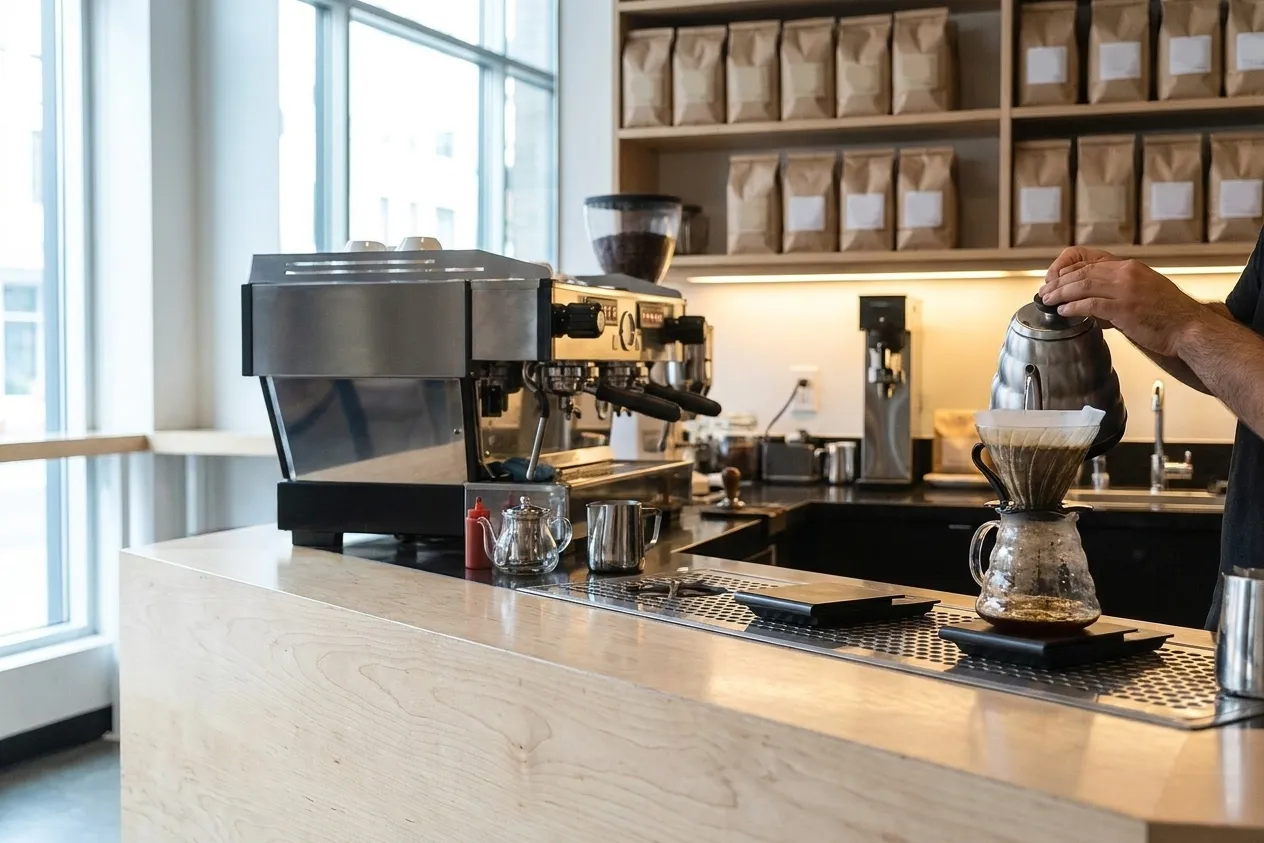
A San Francisco cafe makes almost all of its money in a rush that runs from roughly seven to ten in the morning. A four-dollar filter coffee occupying a two-top for three hours is a worse outcome for that business than the same table turning over six times. So the rooms that welcome laptops are the ones with either a lot of floor space, a strong food menu that gets you buying lunch as well, or a deliberately different model. The rooms that do not welcome laptops are small, espresso-focused and busy. Neither is being unreasonable; they are just running different businesses.
This is why the correlation between coffee quality and laptop friendliness is roughly zero, and sometimes negative. Some of the most serious espresso bars in the city have four seats and no wifi at all, on purpose.
Read the room before you commit
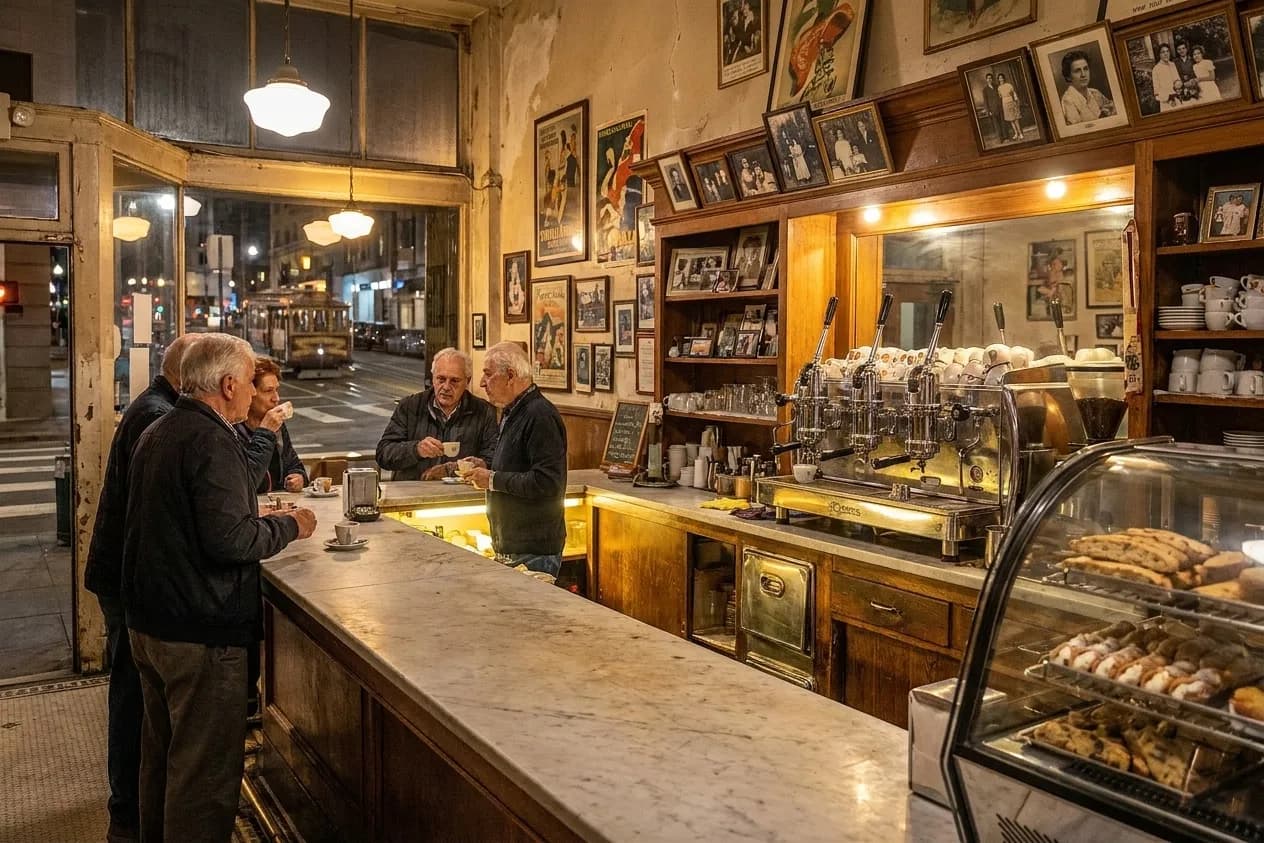
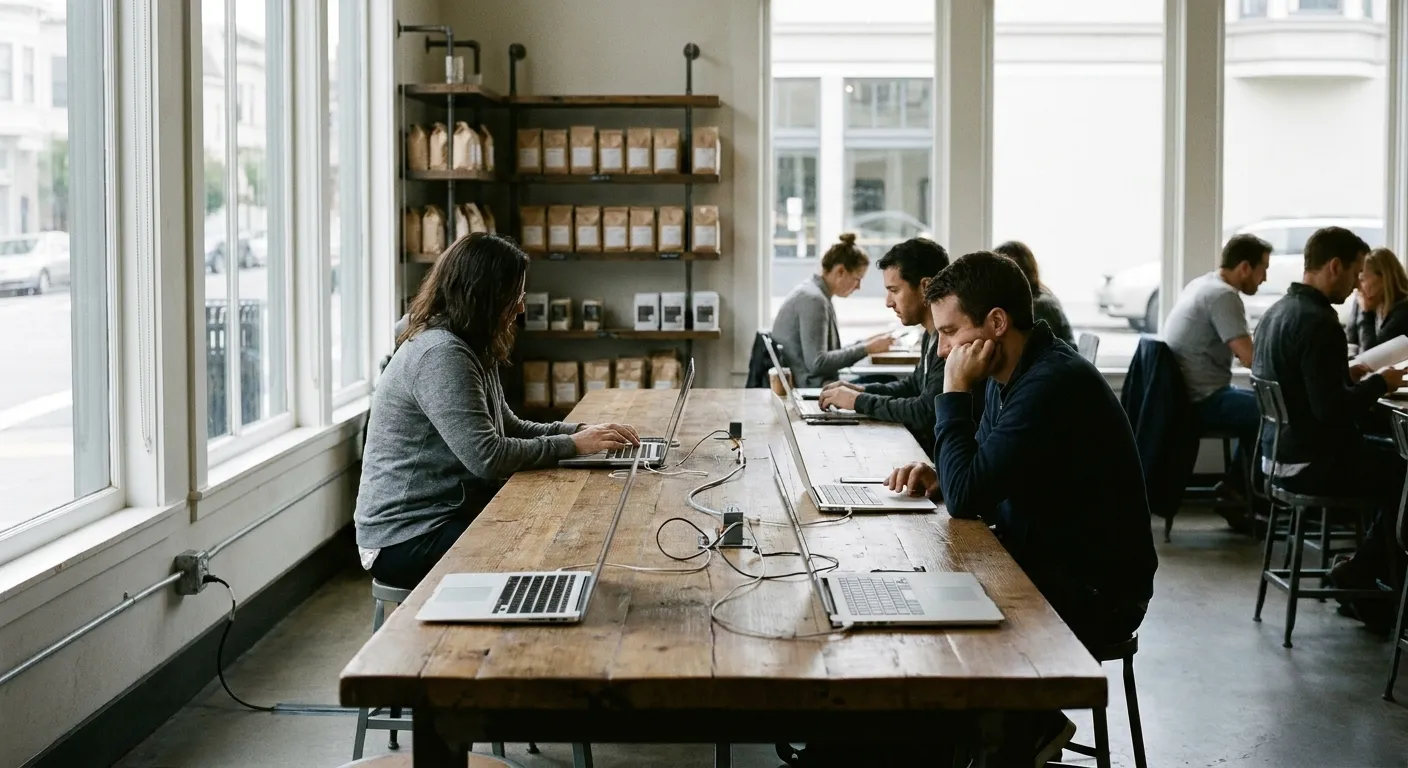
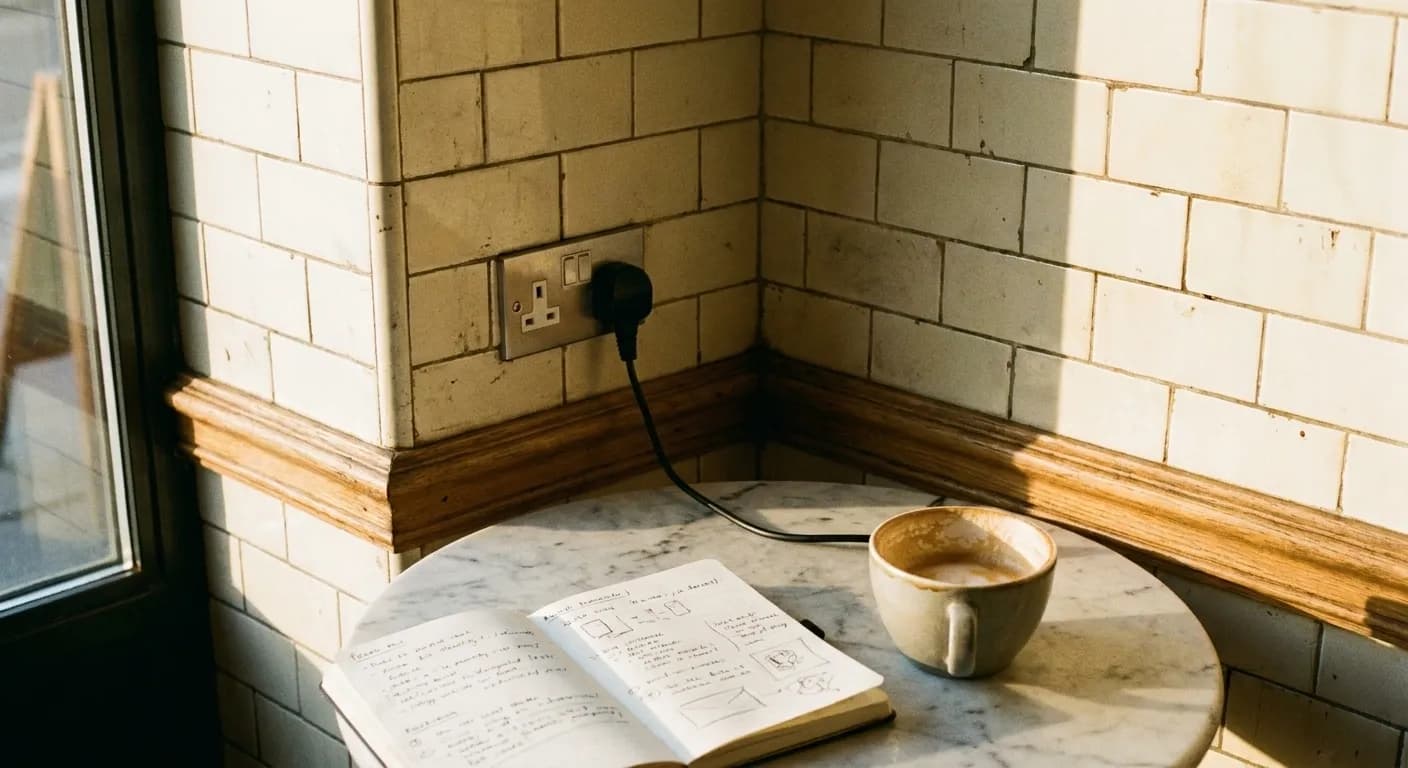
Three signals tell you almost everything. First, count the sockets — not the seats. A room designed for working has floor boxes or a run of sockets along a shared table; a room that tolerates working has one plug behind a plant. Second, look at the table shape. Long communal tables and deep two-tops mean they expect people to stay; a bar rail facing a window and a scatter of small round tables means they expect you to leave. Third, check whether there is food beyond pastry. A cafe with a proper lunch menu wants your one o'clock; a cafe with a pastry case wants your nine.
There is also an explicit signal worth taking seriously: posted laptop curfews. A number of San Francisco rooms allow laptops on weekday mornings and ban them from the afternoon onward, or from Friday evening through the weekend entirely. These policies are usually on a small card by the till rather than on the website, and staff enforce them politely but completely. Turning up at a weekend with a laptop bag and discovering this is a wasted trip, and it is entirely avoidable.
The windows that actually work
If you want a table and a plug, the two reliable slots are early — before about nine — and the trough between roughly two and four in the afternoon. The middle of the day is the worst possible time to try, because that is when the freelancers who arrived at nine are still there and the lunch crowd has arrived on top of them. The late-afternoon window has a hard edge: a large share of San Francisco cafes stop serving between four and six, so a session that starts at three-thirty gets ninety minutes at best.
Wifi quality is the least of your problems in this city, and worth almost no weight in the decision. Nearly everywhere has a workable connection. What varies enormously is whether you can plug in, whether the noise level allows a call, and whether you will be asked to move. If you have to take a video call, the honest answer is that a cafe is the wrong venue in almost every case, and a library branch or a day pass at a coworking space will cost you less social friction than trying it at a shared table.
The etiquette that keeps you welcome
None of this works if you are the reason a room changes its policy. The unwritten rule in San Francisco is roughly one purchase per ninety minutes, which is neither arbitrary nor onerous — it is approximately what the table would have earned if it had turned over normally. Beyond that: do not take the four-top if you are one person, do not sit at the window bar with a second chair pulled over for your bag, and if there is a queue at the door and you have been there three hours, that is the signal to leave rather than to order another filter.
The other thing worth internalising is that staff will almost never ask you to go. San Francisco cafes are, by and large, extremely polite about this, which means the enforcement mechanism is entirely social and entirely invisible. Rooms do not tell laptop users to leave; they quietly install a laptop policy six months later, and then everyone loses the room. The cafes that are still relaxed about working are relaxed because the people using them have not pushed it.
When the cafes are full
San Francisco has two good fallbacks that people forget. The public library branches are quiet, free, have power and are notably empty in the middle of a weekday afternoon. And the bank-run cafes around Union Square operate on a model where sitting for hours is explicitly encouraged, because the coffee is a customer-acquisition cost rather than the product. The coffee is fine rather than good. If the goal is finishing something rather than drinking something, that trade is usually worth making, and you can go and get the actual best coffee in San Francisco afterwards as a reward.
Tags: #SanFrancisco #SFCoffee #BestCoffeeSF #WorkFromCafe #LaptopFriendly #RemoteWork #DigitalNomad #SFCafes #CoffeeShopOffice #SoMa #MissionSF #Freelance #SFGuide #WifiCafe #CoffeeGuide
All trademarks are the property of their respective owners.
Ask Karpo first
Before you carry a laptop across town, ask Karpo which cafes near you are open, which ones have a laptop policy worth knowing about, and where the nearest quiet fallback is if every table with a plug is already taken.