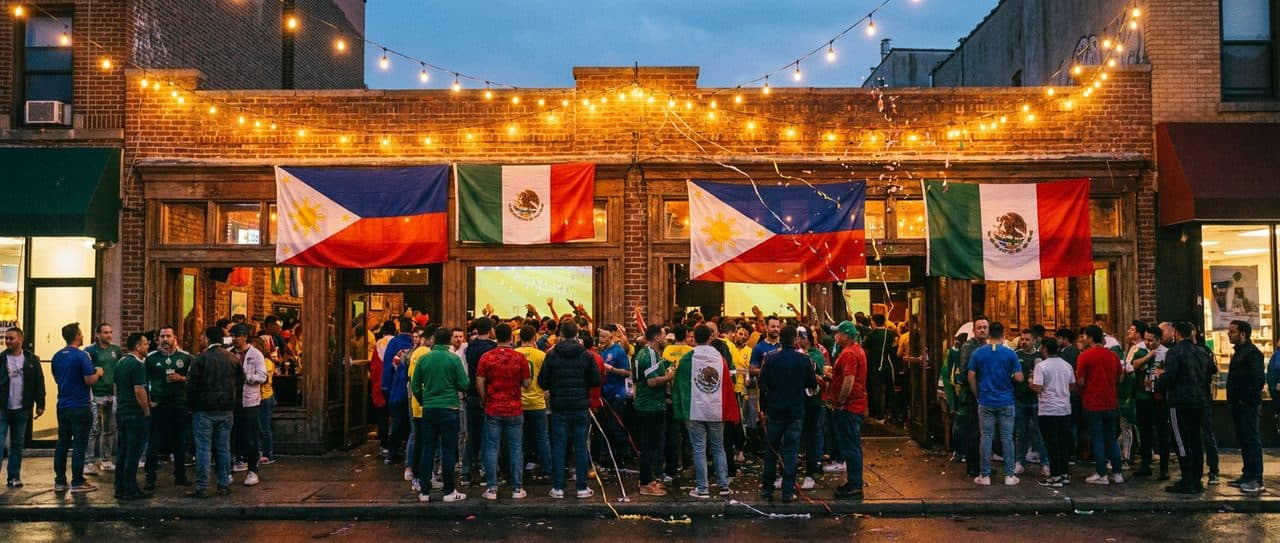
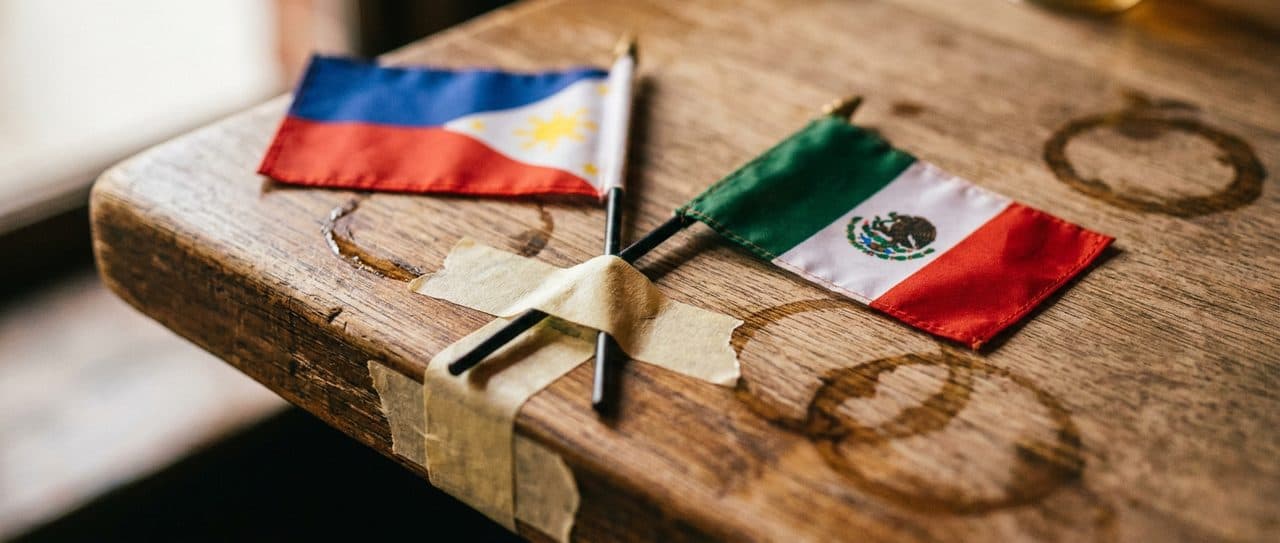
The stretch of Roosevelt Avenue between 61st and 64th Streets holds a quiet geography lesson every four years. Filipino flags hang beside Mexican ones in bar doorways, and when the tournament arrives, the neighborhood's two largest communities find themselves at adjacent tables, sharing salt and commentary in a bilingual current that runs smoother than anyone expected. Woodside has hosted this overlap since long before the sport became fashionable elsewhere in the city, and 2026 promises the most concentrated version yet—a home tournament with visiting loyalties intact.
Two Doorways, One Block
The bars sit close enough that their sound systems bleed into each other during group stage matches. On the north side of Roosevelt, the Filipino spots anchor corners with karaoke setups that switch to sports mode when kickoff nears. Across the street and a few storefronts down, the Mexican cantinas keep their televisions tuned to Spanish-language broadcasts, but the crowd spills onto the sidewalk regardless of commentary language. What makes the block work during tournament months isn't separation—it's the porousness. Regulars drift between venues depending on which match is showing where, and the staff have learned to time their kitchen output so that lumpia and tacos al pastor arrive at tables in waves that correspond to halftime breaks. The crossed flags appeared during the 2018 tournament and never came down. By 2022, they'd become a standing invitation.
The Pre-Match Rhythm
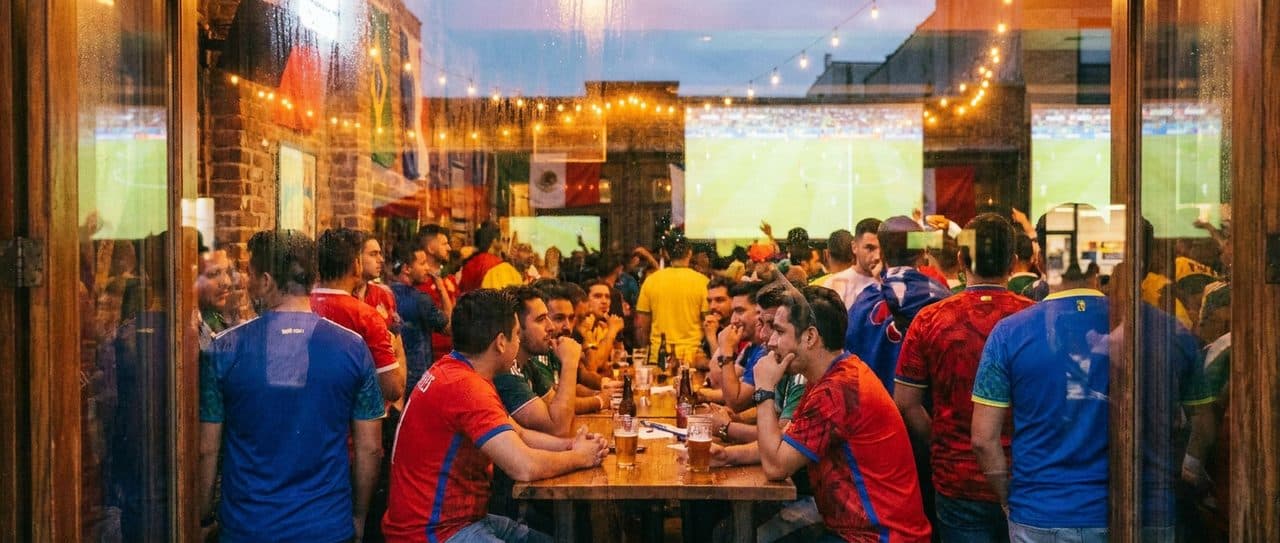
Doors open earlier than usual on match days, sometimes as early as mid-morning for European fixtures that air during New York breakfast hours. The first arrivals claim the corner tables with sightlines to multiple screens, and within an hour the demographic layering becomes visible—older men who remember the sport before it was broadcast widely, younger crowds in replica jerseys, families with children who treat the occasion as a weekend outing. The Filipino bars tend to fill first for matches involving Asian teams, then empty partially as patrons migrate across the street when Mexico or another CONCACAF side takes the pitch. This creates a tidal pattern: the block never empties, but its center of gravity shifts every ninety minutes. Bartenders have developed a shorthand for tracking who's ordered where, since tabs often span two establishments by the end of an evening session.
Shared Tables and Borrowed Chairs
The inside detail that separates tournament veterans from first-timers: seating is collaborative, not reserved. A table for four regularly hosts six, and chairs migrate between establishments without ceremony. During high-stakes matches—knockout rounds, anything involving the host nation—the bars informally coordinate to stagger their table arrangements, creating a continuous seating area that spills from interior to sidewalk to the next doorway. The staff don't police this. They've learned that the shared-table system self-regulates, and that the cross-venue traffic actually increases per-person spending since no one wants to occupy a chair without ordering. The unspoken rule: if someone brings a chair from one bar to another, they're expected to order at least one round at the destination. It's a system built on repeat visits and neighborhood accountability, and it functions because most faces are recognizable by the second week of group play.
The Halftime Economy
Food moves differently here than in stadiums or Manhattan sports bars. The Filipino kitchens run a parallel menu during tournaments—smaller portions, faster turnover, dishes designed to be eaten standing or shared across a table of strangers. Pork skewers and spring rolls dominate because they don't require utensils and they travel well between venues. The Mexican spots counter with taco platters and quesadilla wedges, priced for grazing rather than full meals. What emerges is an informal buffet economy: groups order from multiple kitchens and consolidate the food at whichever table has the best screen angle. The staff have stopped trying to track which establishment provided which plate. Payment happens in rounds, and the system balances out over the course of a match. The insider move is arriving with cash—card transactions slow down during the final fifteen minutes of close games, and no one wants to miss a goal while waiting for a reader to process.
The Broadcast Calculus
Each bar makes its own call on which feed to show, and the choices reveal allegiances. The Filipino establishments default to English-language broadcasts unless a Southeast Asian team is playing, in which case they'll hunt down Tagalog commentary. The Mexican bars stick with Spanish networks, but they'll split screens during simultaneous matches if the request comes from a table that's been ordering steadily. The audio usually follows the primary screen, but during overlapping matches of high interest, some bars run dual feeds with the volume low on both, letting the crowd provide the soundtrack. This creates a peculiar acoustic: two languages of commentary, plus the multilingual shouts from tables, plus the bleed-through from the bar next door. It's loudest during penalty shootouts, when even the kitchen staff emerge to watch. The tell for whether a bar is serious about a particular match: if they've moved the karaoke machine to the back room, the crowd has claimed the night.
Practical Notes
The stretch of Roosevelt Avenue in central Woodside is accessible via the 7 train, with the 61st Street-Woodside station landing visitors directly into the bar corridor. The bars open earlier than their standard hours on match days—often by 10 a.m. for morning fixtures—and stay open until the last whistle of evening broadcasts. No reservations are taken during tournament periods; seating is first-come and operates on the shared-table principle. Expect to stand during high-profile matches unless arrival happens at least an hour before kickoff. Cash is preferred for faster service, though cards are accepted. The block gets crowded enough during knockout rounds that sidewalk seating becomes the norm, and the noise carries several blocks in each direction. Dress codes are nonexistent, but wearing a neutral jersey is considered safer than sporting the colors of a team playing that day—the atmosphere is friendly, but partisan.
What Carries Over
When the tournament ends, the crossed flags stay up and the bars return to their regular programming—karaoke nights, weekend family gatherings, the occasional boxing match. But the table-sharing habit persists, and the staff maintain the tournament-era kitchen rhythm for a few weeks afterward, as if the neighborhood needs time to decompress. The real legacy isn't the sport itself but the proof that a single block can hold multiple allegiances without friction, that a shared match can override the usual boundaries of language and custom. The bars have been here longer than the tournament hype, and they'll outlast it. What 2026 offers is simply a concentrated version of what Woodside already knows: that a table is never full if someone's willing to pull up a chair, and that ninety minutes is long enough to turn strangers into co-conspirators.
Tags: #WoodsideNYC #QueensNightlife #FIFAWorldCup2026 #FilipinoBars #MexicanCantinas #RooseveltAvenue #NeighborhoodBars #DiasporaCulture #SharedTables #SoccerCulture #WorldCupBars #QueensEats #CrossedFlags #CommunitySpaces #NYC2026
Sources consulted: timeout.com · secretnyc.co · thrillist.com
Please drink responsibly. Must be of legal drinking age.
All trademarks are the property of their respective owners.
Ask Karpo first
Want to know which bar opens earlier, or how the sidewalk table situation works on match days?
Ask Karpo for the block's World Cup rhythm and where to start your evening before you head out.