Miami was not a pizza city fifteen years ago and it is one now. The change came in a single wave, and it came Neapolitan — wood-fired domes, ninety-second bakes, small pies eaten with a knife and fork — rather than through the New York slice tradition that dominates most American cities. That history explains almost everything about what is good here and what is worth being sceptical of.
Wood ovens run hot and pizzerias sell out of dough rather than closing on a schedule. Ask Karpo which ovens near you are still firing tonight.
What the oven actually does
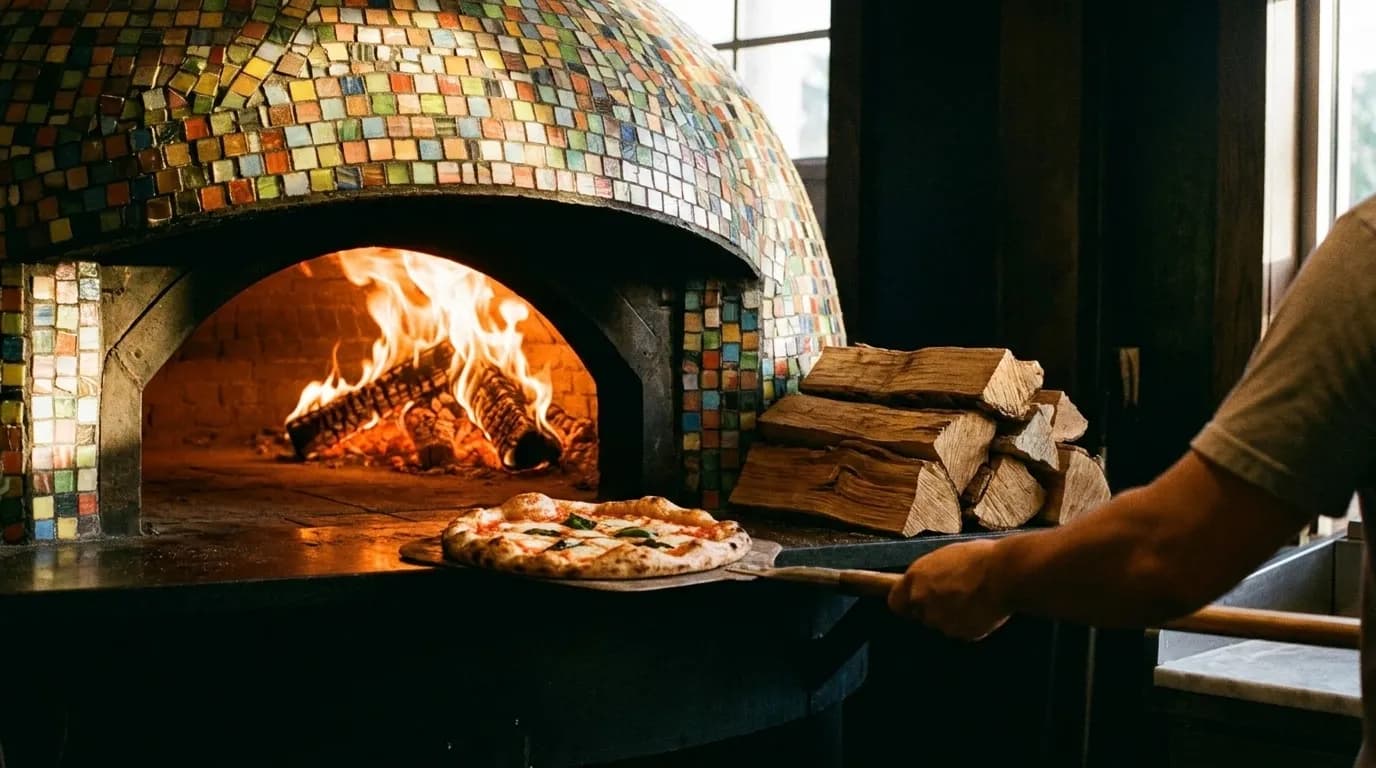
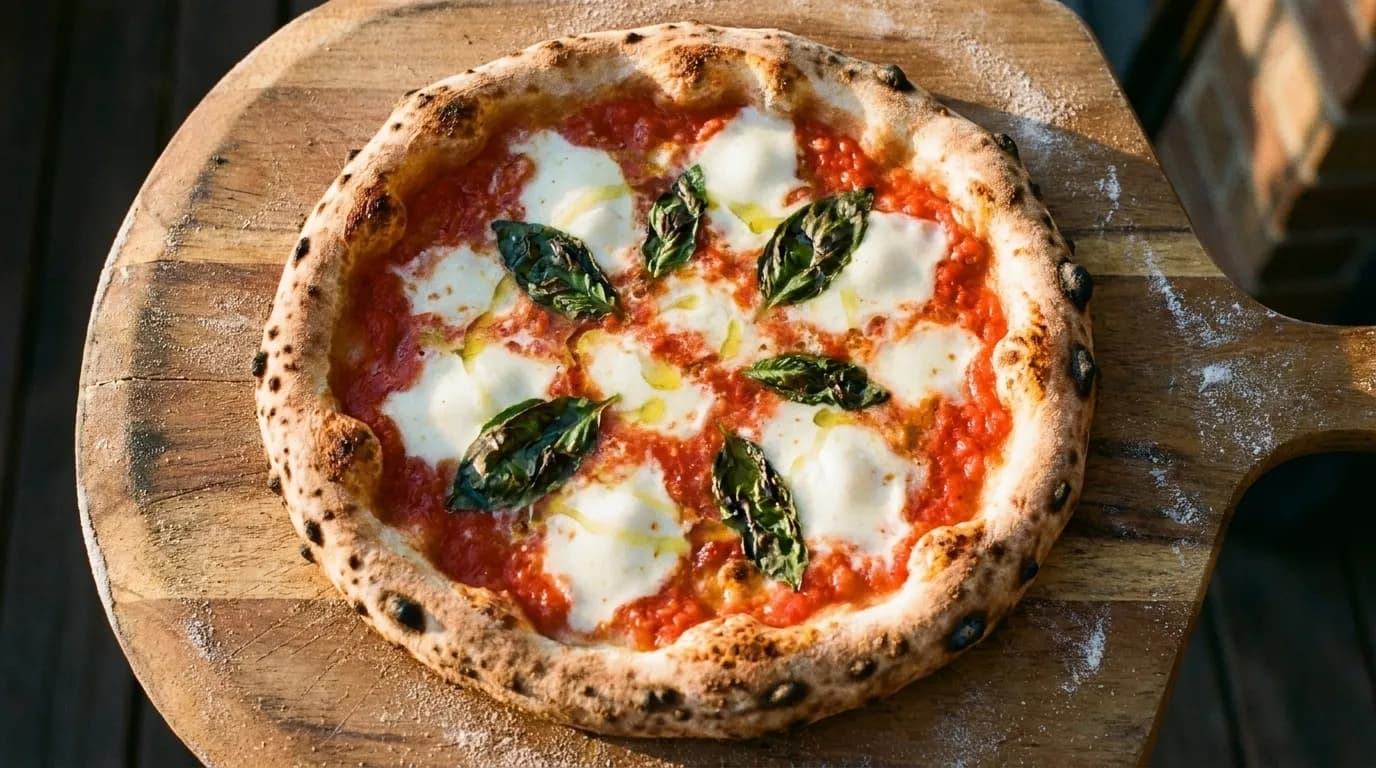
A wood-fired dome runs somewhere around four hundred and thirty to four hundred and eighty degrees Celsius at the floor, which cooks a pizza in sixty to ninety seconds. That speed is the whole point: the base sets before the moisture in the dough can escape, so you get a rim that puffs dramatically and stays soft, with the dark blistering — leoparding — that comes from very fast, very hot contact with the oven floor and the radiant heat of the dome.
Everything about a true Neapolitan pie follows from that. The centre is deliberately soft and slightly wet, which is why it is served whole rather than sliced and eaten with cutlery. It does not travel and it does not reheat. If a restaurant with a wood oven is selling by the slice and reheating, it is running a different product, which may be excellent but is not the thing the oven was built for.
The certification, and what it means
Some Miami pizzerias display certification from the Associazione Verace Pizza Napoletana, the Naples-based body that sets rules for what may be called true Neapolitan pizza. The requirements cover flour type, the use of San Marzano-style tomatoes and fior di latte or buffalo mozzarella, hand-shaping rather than rolling, a wood-fired dome, and the bake time. It is a genuine standard rather than a marketing badge, and a certified room has been inspected against it.
It is not, however, a quality ranking. Plenty of uncertified pizzerias make better pizza than certified ones, and certification says nothing about whether the fermentation is long enough or whether the person on the oven is any good. Treat it as a statement of intent — this kitchen has committed to a specific tradition — rather than a guarantee.
The humidity problem
Miami's climate is the most underrated variable in its pizza. Dough is a hydration system and ambient humidity changes how it behaves: proofing runs faster, the dough is slacker, and a recipe that works in a dry climate needs adjusting here. Serious pizzerias in Miami adjust their hydration and fermentation seasonally, and the ones that do not produce noticeably different pizza in August than in February.
There is a second, more visible consequence. A Neapolitan pie carried outdoors in Miami in summer loses its structure quickly, because the humidity prevents the base from staying crisp. This is a genuine argument for eating it in the dining room within a minute of it landing, which is what the format assumes anyway.
Where to look
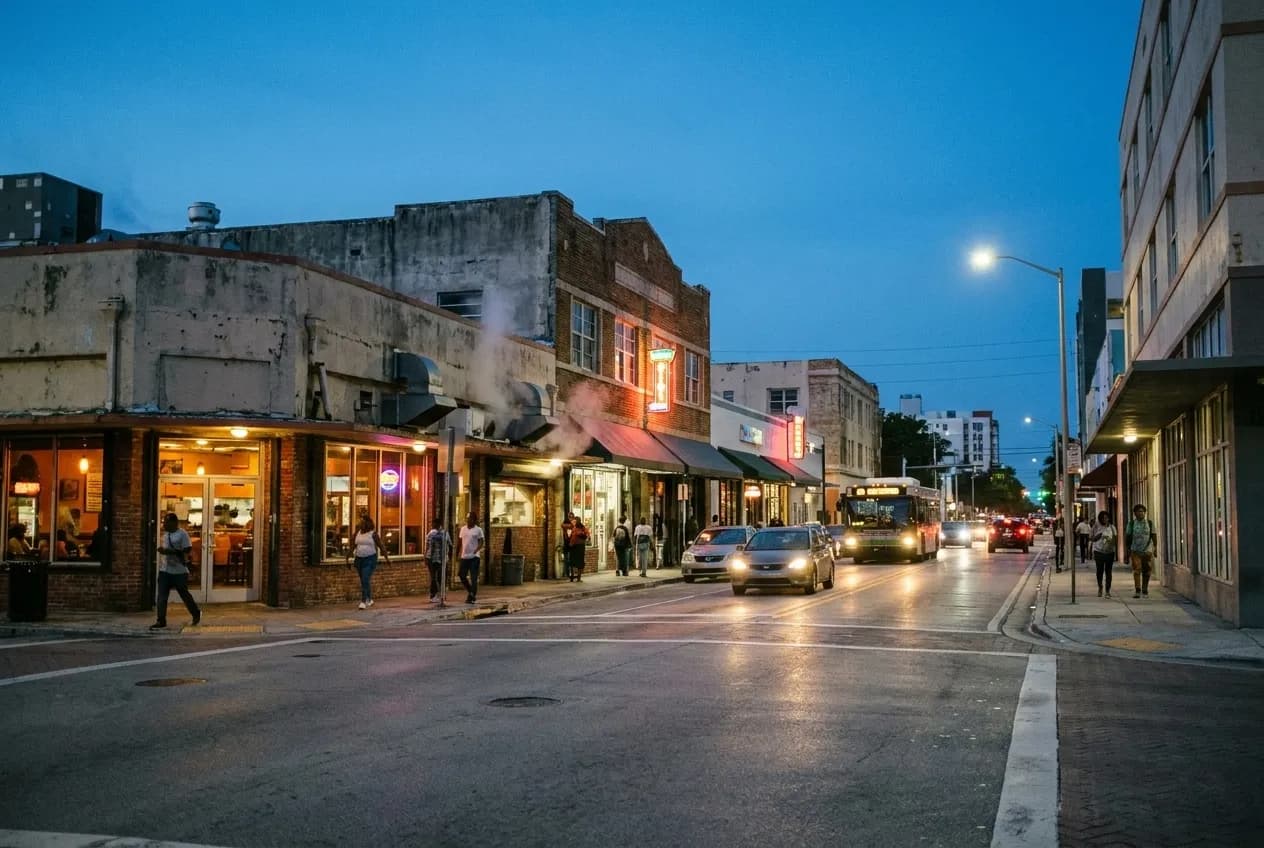
The wood-fired concentration in Miami runs through the neighbourhoods that gentrified in the same period the pizzerias arrived: Wynwood, the Design District and Buena Vista, Edgewater, Brickell, and Coral Gables. South Beach has several, mostly aimed at visitors and priced accordingly. Little Havana and the western suburbs have their own, often family-run and cheaper, and frequently better value.
A useful distinction when scanning: a pizzeria with a short menu — half a dozen pies, a couple of salads, a burrata — is committed to the oven. One with a long Italian-American menu that also has a wood oven is a restaurant that installed a pizza oven, which is a different proposition. Neither is wrong, but the first is where the interesting pizza is.
The New York counter-argument
Miami does have a slice tradition and it is worth acknowledging alongside the wood ovens, because the two serve different evenings. The deck-oven counters in Hialeah, Kendall and along Southwest Eighth Street are a New York-derived format brought south by people who moved from the north-east, selling wide foldable slices that reheat and travel. That pizza is cheaper, feeds a group from one pie, and survives a car journey in a way a Neapolitan pie does not. Neither style is competing with the other. If you are sitting down for two, go to the oven. If you are feeding four people at home, go to the counter.
How to order
Order the margherita first at any wood-fired pizzeria you have not tried. It is the reference dish precisely because it hides nothing — dough, tomato, cheese, basil, oil, and no toppings to distract from a bad bake. If it is good, everything else will be. Expect a small, slightly wet centre and do not read that as undercooked; it is the intended texture.
Ask what the fermentation is if you are curious and the room looks serious; anything from twenty-four to seventy-two hours is a real answer and a kitchen that knows the number is a kitchen paying attention. And go early rather than late — wood ovens are fired for a service and the dough is made in a finite quantity, so the last hour of the night is when both are at their weakest.
Practical notes
Many Miami pizzerias close for a couple of hours between lunch and dinner, and several are closed on Monday. Wood-fired rooms often run out of dough before their stated closing time, particularly at weekends, so a late arrival is a gamble. Outdoor seating is common and pleasant from November through April and genuinely uncomfortable in the middle of a summer afternoon. Parking is valet in the Design District and Brickell, free and easy in the western neighbourhoods. And if you are ordering delivery, a Neapolitan pie is the single worst candidate in the city — order the New York-style one instead.
Tags: #Miami #MiamiFood #WoodFiredPizza #NeapolitanPizza #Pizza #Wynwood #DesignDistrict #Brickell #CoralGables #LittleHavana #PizzaNearMe #MiamiEats #FoodNearMe #Margherita
All trademarks are the property of their respective owners.
Ask Karpo first
Want to know which wood ovens near you are still firing tonight, which have dough left, and which room is worth the drive? Ask Karpo before you go.