The standard assumption about wine tasting in the Bay Area is that it involves a car and an hour and a half in each direction. It does not have to. San Francisco has a small urban winery scene, most of it south of Market, where producers truck fruit down from Sonoma, Napa and further north and crush, ferment and age it inside warehouse buildings within walking distance of the ballpark.
These are working production spaces with limited tasting hours rather than open-all-day rooms, and several want a booking. Tell Karpo the day and it will check who is actually pouring.
How an urban winery works
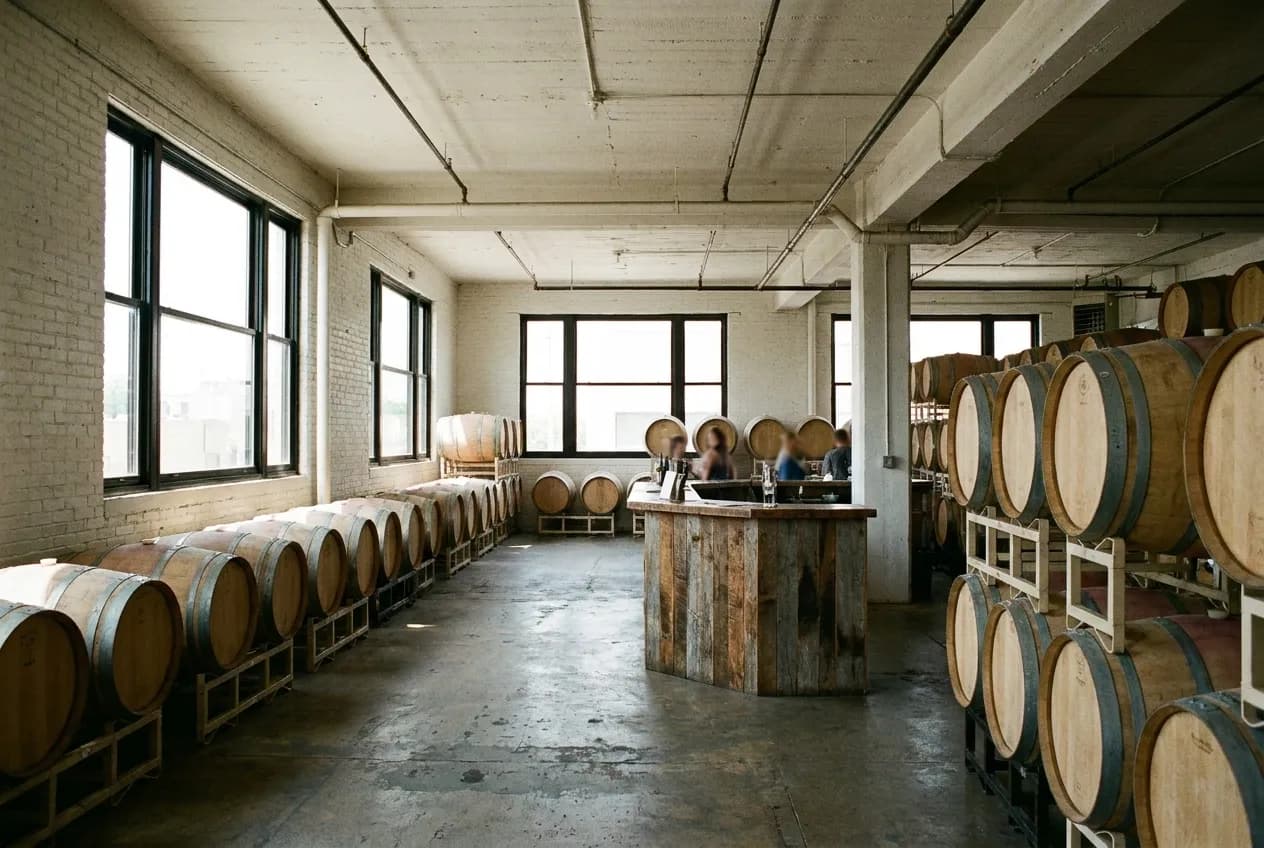
The model is straightforward: grapes are grown under contract in the wine country, harvested, and brought to the city within hours; everything after that — crush, fermentation, barrel ageing, bottling — happens in the warehouse you are standing in. What you get as a visitor is closer to a brewery tour than to a château visit: barrels, tanks, hoses on the floor, and a tasting counter in the middle of it.
That produces a genuinely different tasting experience. There is no view of the vines and no terrace, and instead you are talking to people who are actually making the wine while they are making it. During harvest, in late summer and autumn, the buildings smell like fermentation and the tasting happens around active work.
What to expect from a visit
Tasting rooms in SoMa generally run limited hours — several open only Thursday to Sunday, or by appointment — because the space is a production facility first. Flights are the standard format, often with the option to buy by the glass or bottle afterwards. Bluxome Street Winery on Bluxome Street is the longest-established of the group and the reference point for what the format looks like in the city.
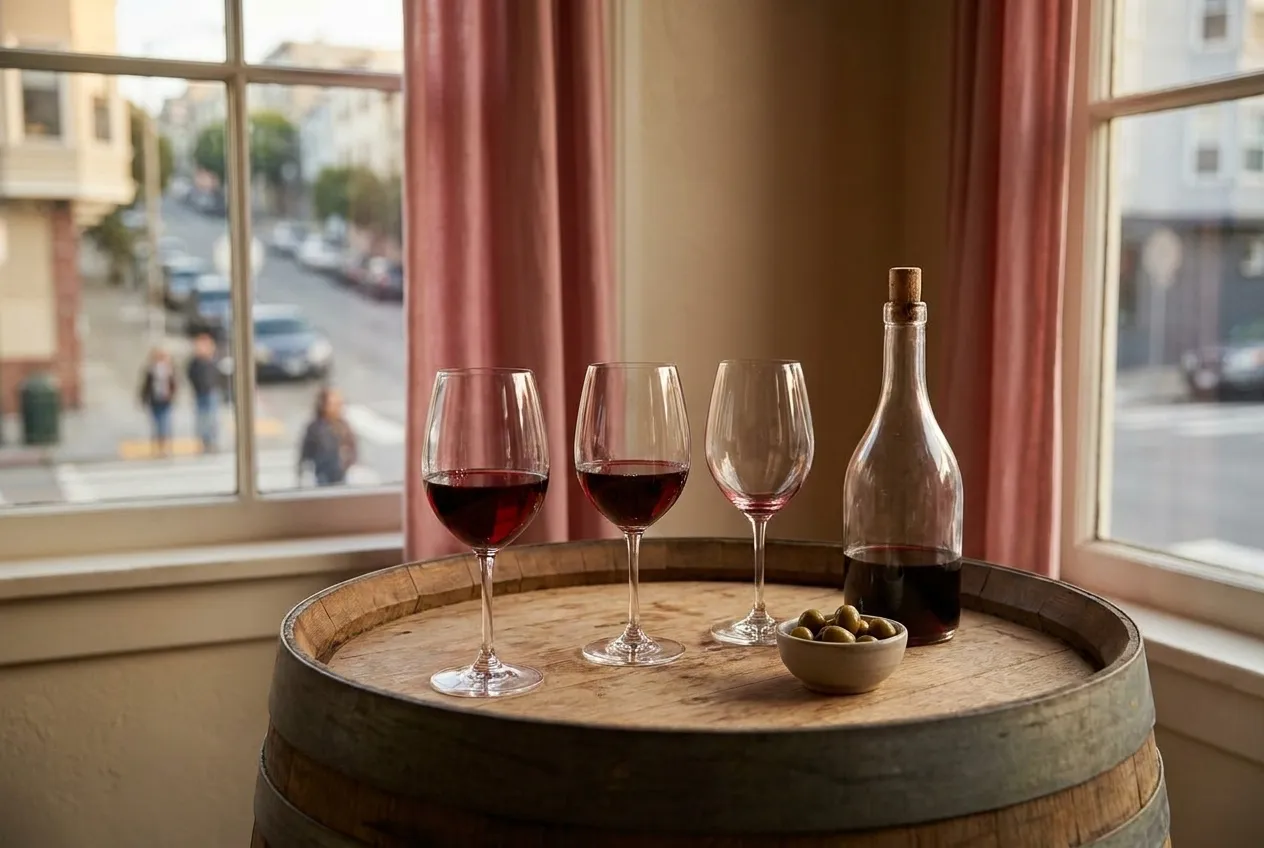
Two practical notes: book if you are more than four people, because these rooms are small; and check harvest timing, because a visit during crush is more interesting and also considerably busier and noisier.
Building an evening around it
SoMa's geography is the useful part. The ballpark is a short walk east, which means a tasting before a game is entirely practical — and on a game day the neighbourhood is full, which is worth knowing in both directions. The Embarcadero waterfront is ten minutes east on foot. South Park, a small oval garden a few blocks away, is one of the more pleasant places in the district to sit.
If you want to keep drinking, the district's bars run later than the wineries and the Mission is a short ride south-west. If you want to eat, the area around 4th and Brannan and the Yerba Buena side both have options, though SoMa empties on weekends when the office population is not there.
Getting there
Caltrain terminates at 4th and King, two blocks from the Bluxome Street area, which makes this the rare San Francisco wine experience you can reach from the Peninsula without a car. Muni Metro's T and N lines run along the Embarcadero and King Street. Street parking is metered and event-dependent; on a game night, do not plan to park nearby.
Practical notes
SoMa's urban wineries make wine in warehouse buildings south of Market using fruit trucked in from Sonoma, Napa and other regions. Bluxome Street Winery is the longest-established of the group. Tasting rooms typically keep limited days and hours, sometimes by appointment — check and book ahead, especially for groups. Harvest season in late summer and autumn is the most interesting and busiest time to visit. Oracle Park is a short walk east and fills the district on game days. Caltrain terminates at 4th and King; Muni's T and N lines serve King Street and the Embarcadero.
Tags: #WineTastingNearMe #SoMa #SanFrancisco #UrbanWinery #BluxomeStreetWinery #WatchParties #SFWine #SouthOfMarket #Caltrain #OraclePark #SFDrinks #WineFlight #SFWeekend #Harvest
All trademarks are the property of their respective owners.
Ask Karpo first
SoMa's wineries keep production hours, not retail hours, and the neighbourhood changes completely on a game day. Ask Karpo who is pouring this weekend, whether you need to book, and what is on at the ballpark.