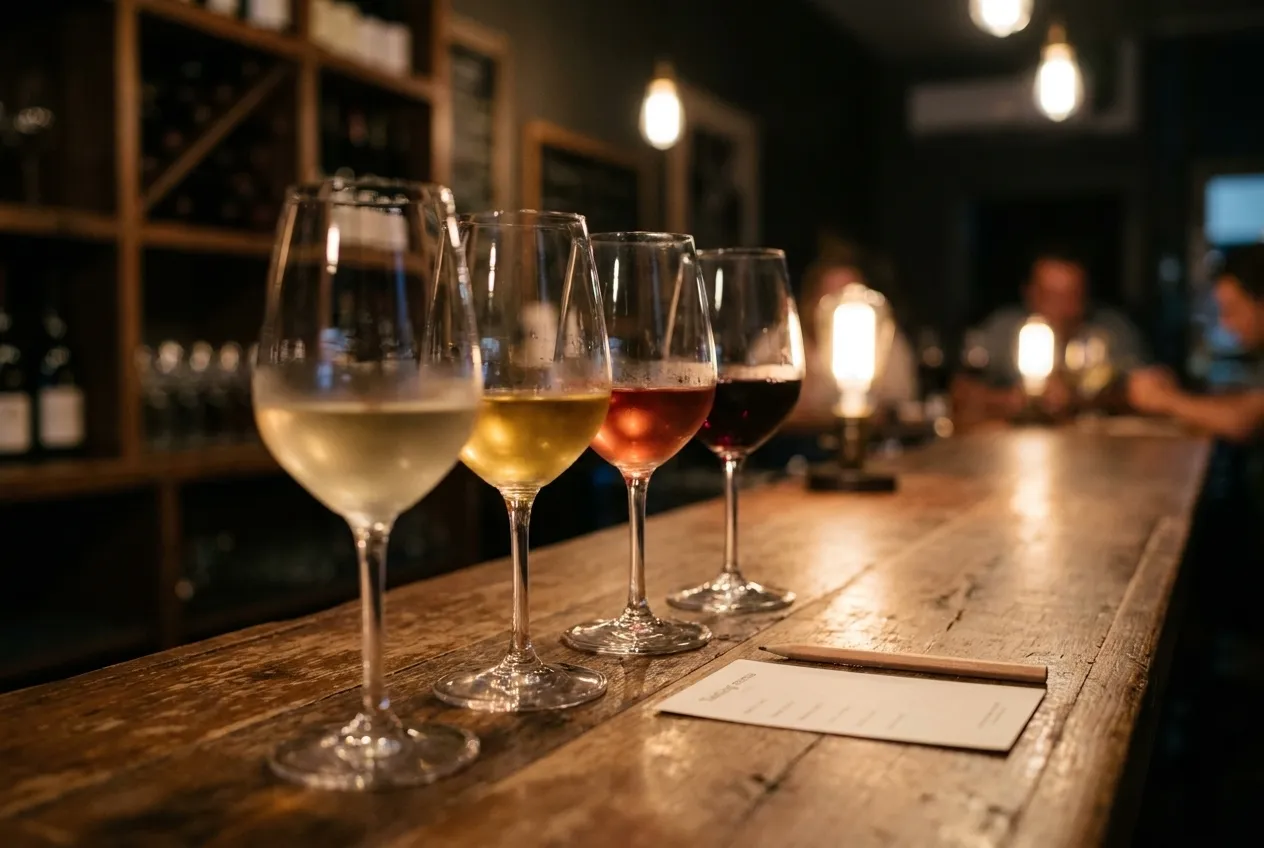
Most people searching for wine tasting near them end up at weekend events in crowded tasting rooms where the person pouring is managing fifteen other people and trying to move inventory. You pay twenty to forty dollars, taste six wines in twenty minutes, and leave with a branded tote bag and no clear idea what you actually liked or why. The better product is a Tuesday or Wednesday flight at a wine bar or shop that does weeknight pours. You pay twelve to twenty dollars, taste three to five wines, and the person pouring has time to explain what the flight is actually comparing.
Open the Karpo app to find wine shops and bars running weeknight flights tonight, with current opening hours and whether they're pouring reds, whites or both.
Why Weeknight Flights Work Differently
A well-built flight is structured around a single variable. Three Pinot Noirs from different regions. Four expressions of the same grape at different price points. Five natural wines showing what no-sulfite winemaking does to acidity. The structure is the education. Weekend tastings tend to show range — a sampler of what the shop carries or what the distributor is pushing — because the room is full and the goal is exposure. Weeknight flights are smaller and slower because the economics are different. The shop or bar is open anyway, the staff is already there, and pouring three glasses from already-open bottles costs nearly nothing. What they are selling is the conversation.
The person pouring on a Tuesday has time to watch how you taste. They see you go back to the second glass twice. They notice you wrinkle your nose at the third. That information shapes what they recommend next, and it shapes what you learn about your own palate. On a Saturday afternoon in a room with thirty people, that interaction does not happen. You get a two-sentence description of each wine, a dump bucket, and a table where you can buy bottles. The price is higher because the event has overhead. The value is lower because no one is paying attention to what you actually like.
Where to Find Weeknight Pours
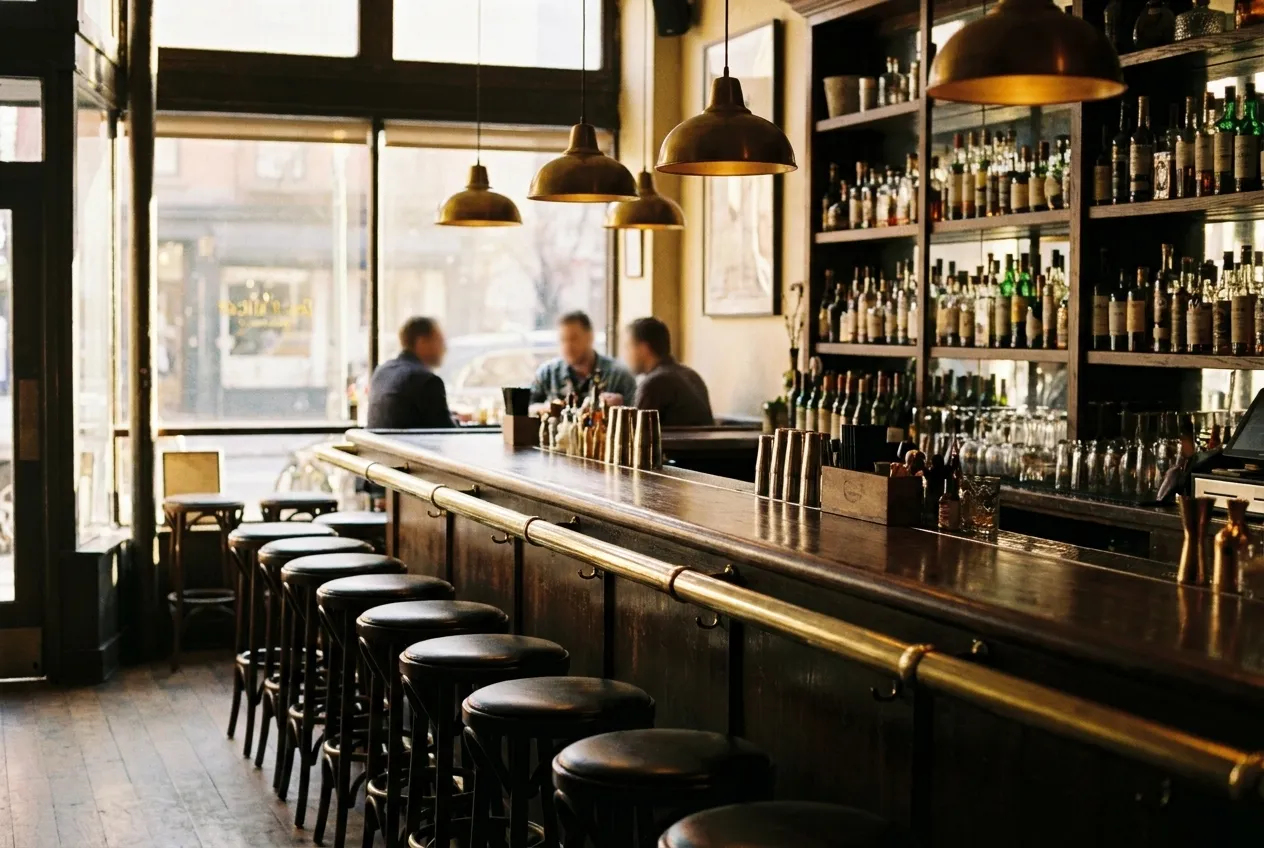
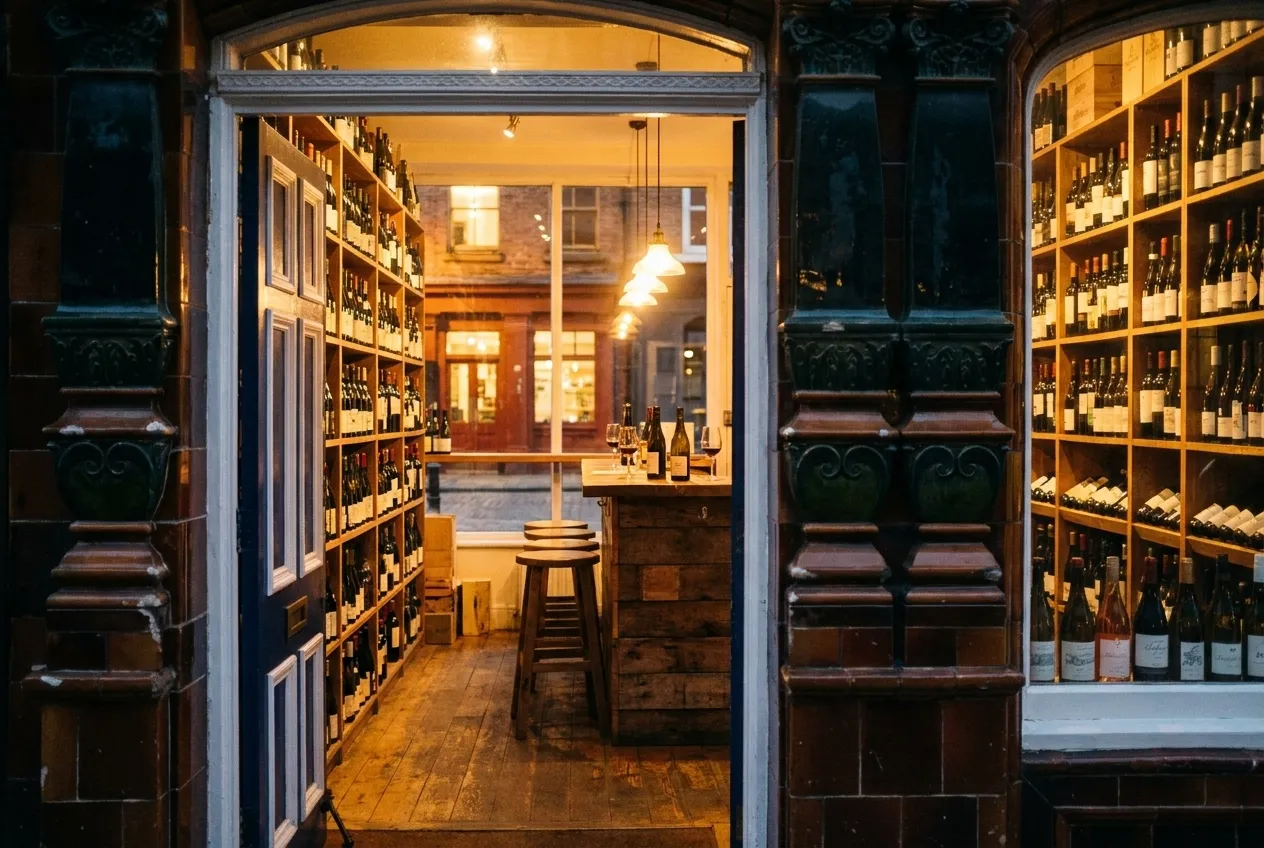
Wine shops in Manhattan below Fourteenth Street and in brownstone Brooklyn run the most consistent weeknight programs. The shops are small-format retail, not destination tasting rooms, and they use flights to keep the space active on slow nights. Most run flights Tuesday through Thursday from six to nine. Some rotate the theme weekly, others pour from a standing menu. You walk in, ask what is pouring, and sit at a small bar or a corner table. The format is informal. You are not signing up for an event or buying a ticket in advance. You are ordering a flight the way you would order a drink.
Wine bars in the West Village, the Lower East Side, Fort Greene and Cobble Hill do this slightly differently. The bar is open for dinner service, and flights are on the menu as a starter or a standalone order. The advantage is that the person pouring is a bartender or sommelier who is already talking about wine all night. The flight is part of the rhythm of service, not a separate program. The disadvantage is that if the bar fills up, your window for questions closes. Arrive before seven or after nine on a weeknight and you will have the room and the attention.
A smaller number of natural wine shops and bars in Bed-Stuy, Bushwick and Ridgewood do drop-in tastings on weeknights, often with no formal flight structure. The shop opens a few bottles, announces it on Instagram that afternoon, and pours by the glass until the bottles are gone. These sessions skew younger and looser. You pay by the glass rather than for a fixed flight, and the conversation is less structured. The trade-off is access to bottles the shop does not normally pour because the format is experimental. If you want to try orange wine or pét-nat or low-intervention reds without committing to a full bottle, this is the cheapest entry point in the city.
How to Ask a Question That Gets a Real Answer
The worst question you can ask during a flight is whether a wine is good. The person pouring will say yes, because they chose it, and you learn nothing. The best question identifies what you are tasting and asks why it is there. Why is this wine more expensive than the last one. Why does this Burgundy taste different from the Oregon Pinot we just tried. What is the winemaker doing differently in the vineyard or the cellar. These questions have actual answers, and the answers teach you how to read a wine list or a shelf tag the next time you are shopping alone.
If you taste something you like, ask for a reference point you can find again. Not just the name of the wine, but the region, the importer, the style descriptor that will connect it to other bottles. A good pour person will write this down for you or point you to two other producers working the same way. If you taste something you do not like, say so and ask what it is about that wine that does not work for you. Tannin, acidity, alcohol level, funk, fruit concentration. Naming what you dislike is faster education than naming what you like, because it eliminates whole categories the next time you order.
The other move that works is asking what the pour person drinks at home. This cuts past the marketing and the price points and gets you a recommendation based on what someone who tastes wine all day actually chooses when they are off the clock. Half the time it is something on the flight. Half the time it is something they wish they had included in the flight. Either way, you leave with a name and a reason.
What to Do With the Information
The goal of a weeknight flight is not to find your favorite wine forever. The goal is to build a vocabulary that makes the next decision easier. You learn that you like Chenin Blanc but not Chardonnay, or that you can taste the difference between old-vine and young-vine fruit, or that natural wine is a spectrum and not a binary. That information makes you faster at a wine shop and more confident ordering at a restaurant. It also makes weekend tastings more useful, because you know what you are looking for instead of tasting randomly and hoping something lands.
Take a photo of the tasting menu or the bottles before you leave. Write one note about each wine on your phone while you are still sitting there. Not a score or a flowery description, just a few words that will remind you what you thought. Bright, tight, rich, thin, funky, clean. Two months later when you are staring at a shelf and trying to remember what you liked, those notes are the only thing that will help. The branded tote bag from the weekend tasting will be in a closet somewhere, and you will have no memory of what was in the glasses.
If the shop or bar sells bottles, buy one of the wines from the flight to take home. Not the most expensive one, and not necessarily your favorite, but one you want to spend more time with. Open it two weeks later with food and see if it still works. That follow-up is the second half of the education. A wine that tastes great in a tasting room at seven thirty on a Tuesday might be too sharp with dinner or too soft without food. Tasting the same wine twice in different contexts teaches you more than tasting ten wines once.
The next weekend, go to one of the bigger tastings you skipped in favor of the Tuesday flight. You will move through it faster and with more purpose because you know what you are looking for. You will ask better questions and skip the tables that do not matter to you. The weekend tasting is not worse than the weeknight flight. It is a different tool that works better once you have done the foundational work on a slow night when someone had time to teach you what you were drinking.
Tags: #WineTastingNearMe #NYCWine #WineFlights #TuesdayWine #WineBarsNYC #WineEducation #LowerManhattanWine #BrooklynWineBars #NaturalWineNYC #WestVillageWine #WeekdayDrinks #WineShopsNYC #NYCNightlife #KarpoNYC #BarsAndNightsOut
Please drink responsibly. Must be of legal drinking age.
All trademarks are the property of their respective owners.
Ask Karpo first
Open the Karpo app to see which wine bars and shops are pouring flights tonight in your neighborhood, with live hours and whether you need a reservation. Karpo will route you to the closest option and tell you what time the pour person takes a break.