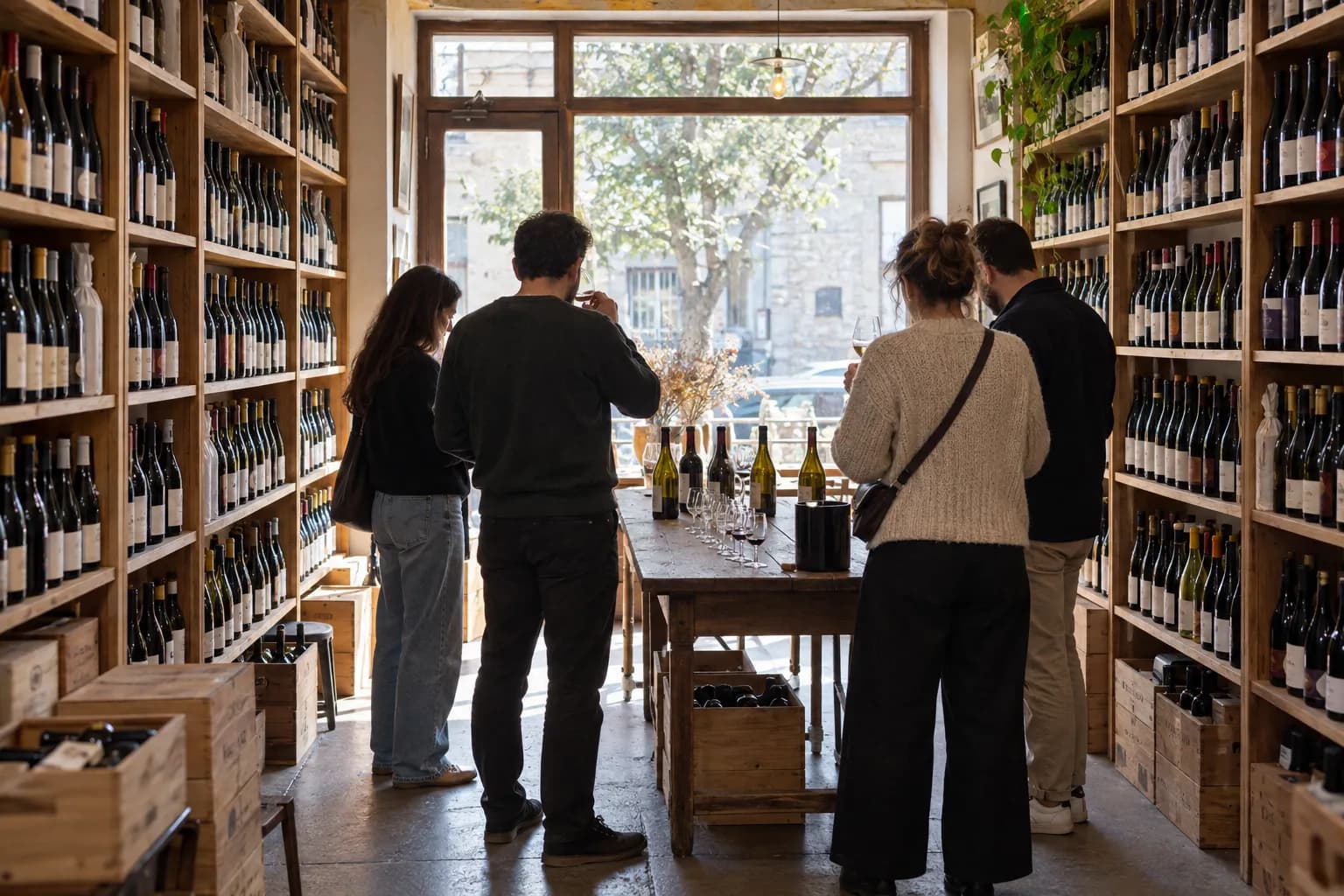
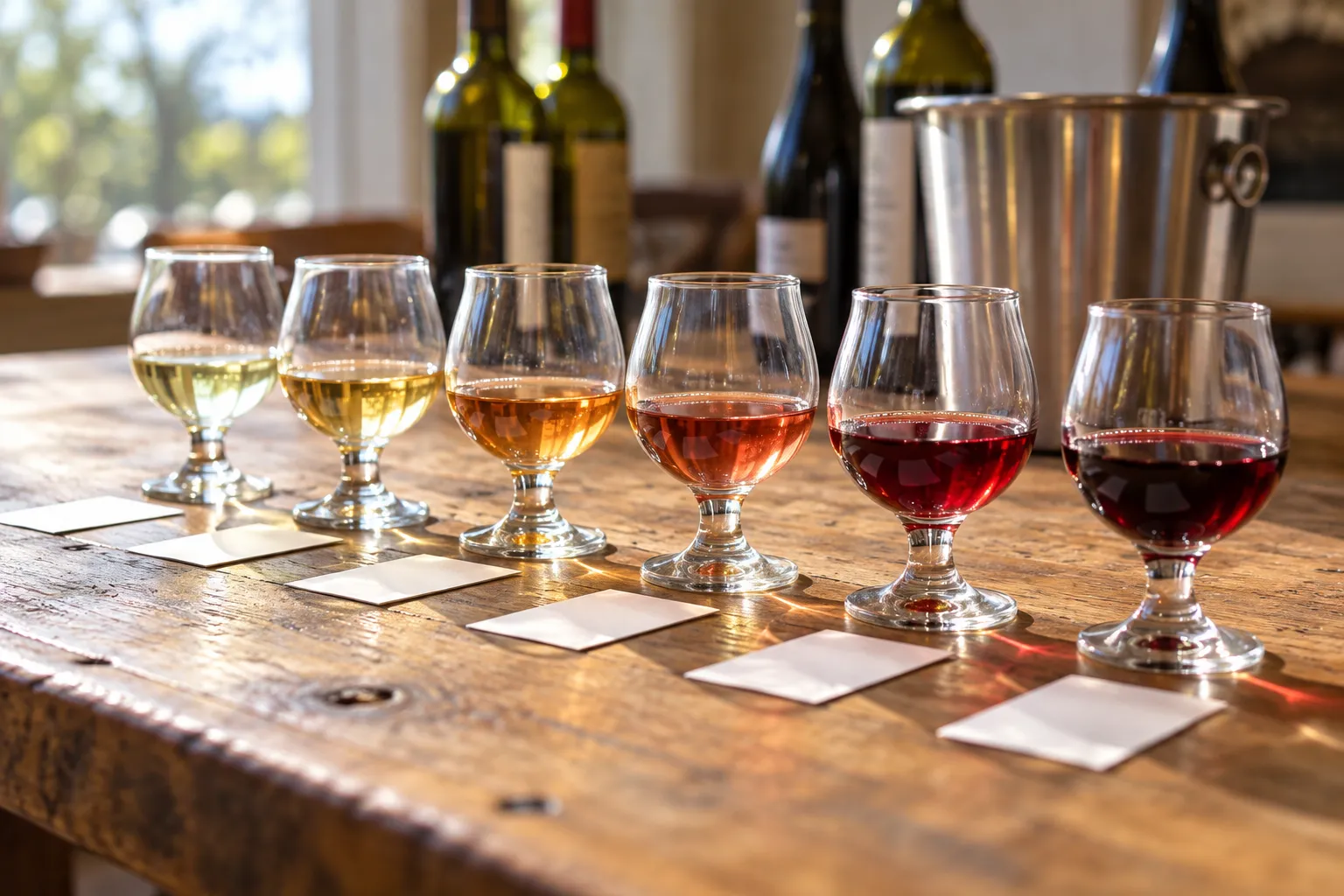
Every Sunday from two until five, Domaine LA opens five or six bottles and pours them for anyone who walks in. That is the whole proposition and it is the best standing wine tasting in Los Angeles, because the wines are not chosen to sell you something — they are chosen to teach you a region, a country or a style, and the person who chose them is usually standing behind the table.
Sunday tastings get a different theme and sometimes a visiting winemaker each week, so which Sunday you pick genuinely changes what you learn. Ask Karpo what is being poured on Melrose this weekend.
Why a shop tasting beats a bar flight
A bar pours what it has open. A shop tasting pours what somebody decided you should compare, and then lets you buy the bottle you liked at retail rather than at a restaurant markup. Those two differences compound into a genuinely better way to learn about wine, and it costs a fraction of the equivalent evening in a wine bar.
The structure here is deliberate: five or six wines from a single growing region or country, or a single style examined across producers. That is a tasting with a thesis. Comparing six wines from one appellation teaches you what that appellation tastes like in a way that six unrelated glasses never will.
Guests are a regular feature — winemakers and importers turning up to pour their own bottles. Being able to ask the person who made the wine why it tastes the way it does is the sort of access that does not normally exist outside the trade, and on Melrose on a Sunday afternoon it is free.
Jill Bernheimer and the shop
Domaine LA opened in 2009 and its owner, Jill Bernheimer, is credited with introducing a large share of Los Angeles to natural wine. That is not marketing language; it is the consensus of a city's wine trade about who did the early work, in a decade when organically farmed wine was a difficult sell in Southern California.
The buying philosophy is stated plainly — honest wines from Europe and the United States, made by people rather than manufactured by corporations — and the dedication to organically farmed bottles has held steady rather than softening as the category got fashionable. What you get is a shop where the selection reflects a consistent position held for seventeen years.
Beyond the Sunday tastings there are monthly wine clubs and a staff who will talk at length, which is the other half of what makes a shop like this valuable. A wine club from a buyer with this track record is a more reliable education than any subscription assembled by an algorithm.
How to use the Sunday session
Arrive near the start rather than near the end. At two the bottles are fresh, the pourers have time to talk, and the theme has not yet been explained forty times. By half past four the wines have been open two hours and the conversation has worn thin.
Taste all five or six before buying anything. The instinct is to buy the first one you like, and the instinct is wrong — the point of a themed flight is the comparison, and the bottle that seemed best on its own frequently is not the one you want once you have tasted the rest of the set.
Ask what the theme is and why. The answer is the most valuable thing in the shop. A buyer explaining why these six bottles belong next to each other is delivering a short lesson in wine geography that you would otherwise pay for.
Melrose around it
The address is 6801 Melrose Avenue, in the Melrose arts district stretch rather than the shopping end. That is a walkable pocket with galleries, design shops and a reasonable density of places to eat, which makes a Sunday afternoon here easy to build into a longer afternoon rather than treating it as a single errand.
Parking on Melrose is the usual Los Angeles negotiation — findable on the side streets, metered on the main road, worse in the afternoon than the morning. The good news is that a Sunday at two is genuinely one of the easier parking windows in this part of the city.
The sequence that works is tasting at two, lunch somewhere nearby at half past three with a bottle bought on the way, and the galleries afterwards. Treating the tasting as the anchor rather than the whole plan is how locals use it.
One habit worth adopting: write down the two bottles you liked least, not just the ones you liked most. Working out what you reliably dislike narrows a wine shop faster than chasing favourites does, and a themed flight of six is the cleanest opportunity you will get to find out.
Who this is for
If you want to learn about wine rather than just drink it, three hours on a Sunday afternoon in a shop like this is the single most efficient use of the time available anywhere in Los Angeles. The education-per-dollar ratio is not close to what a restaurant list can offer.
If you want atmosphere, a room to sit in and a kitchen, this is a shop rather than a bar and it will feel like one. Go to a wine bar for the evening and come here for the afternoon, and understand that they are doing genuinely different jobs.
Practical notes
Domaine LA is at 6801 Melrose Avenue in Los Angeles, opened in 2009 by Jill Bernheimer, focused on honest, largely organically farmed wines from Europe and the United States. Sunday tastings run from two until five, pouring five or six wines from a single region, country or style, frequently with a visiting winemaker or importer. There are also monthly wine clubs. Arrive at two rather than at four, taste the whole set before buying, and ask what the theme is and why. Parking is easiest on the side streets on a Sunday afternoon.
Please drink responsibly. Must be of legal drinking age.
Tags: #LosAngeles #DomaineLA #Melrose #WineTastingNearMe #NeighborhoodGuides #NaturalWine #LAWineShop #SundayTasting #JillBernheimer #OrganicWine #LADrinks #WineClub #MelroseAvenue #WineEducation
All trademarks are the property of their respective owners.
Ask Karpo first
Want to know this Sunday's theme, whether a winemaker is pouring and where to eat nearby afterwards? Ask Karpo before you head to Melrose.