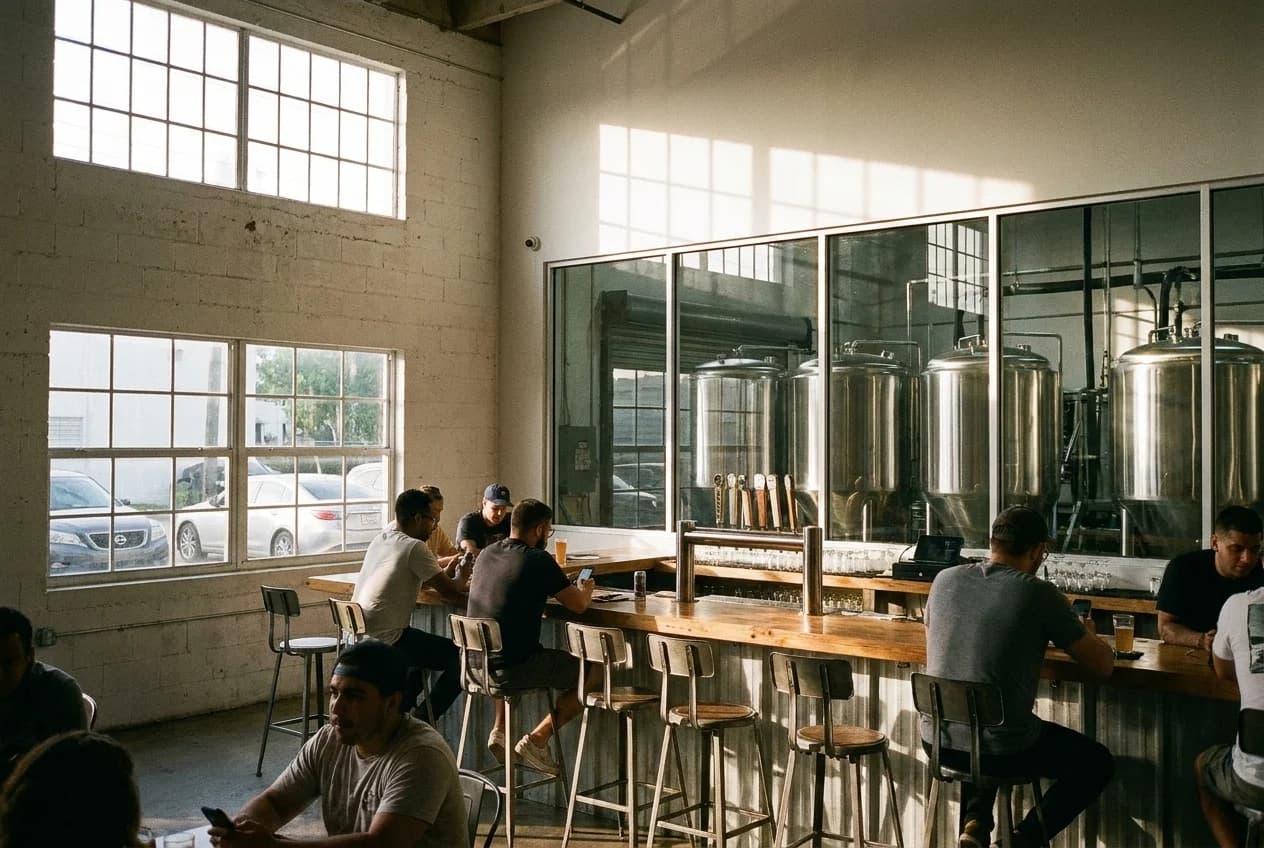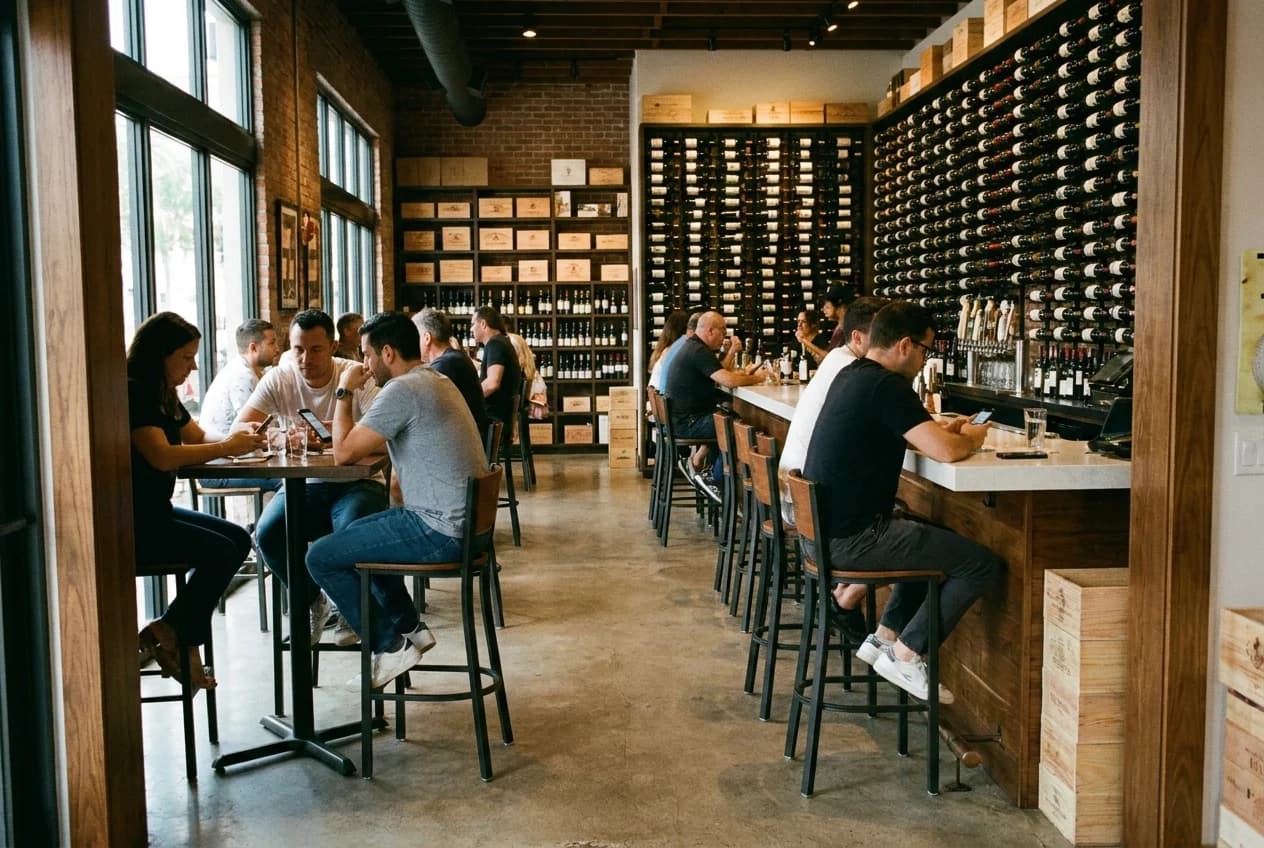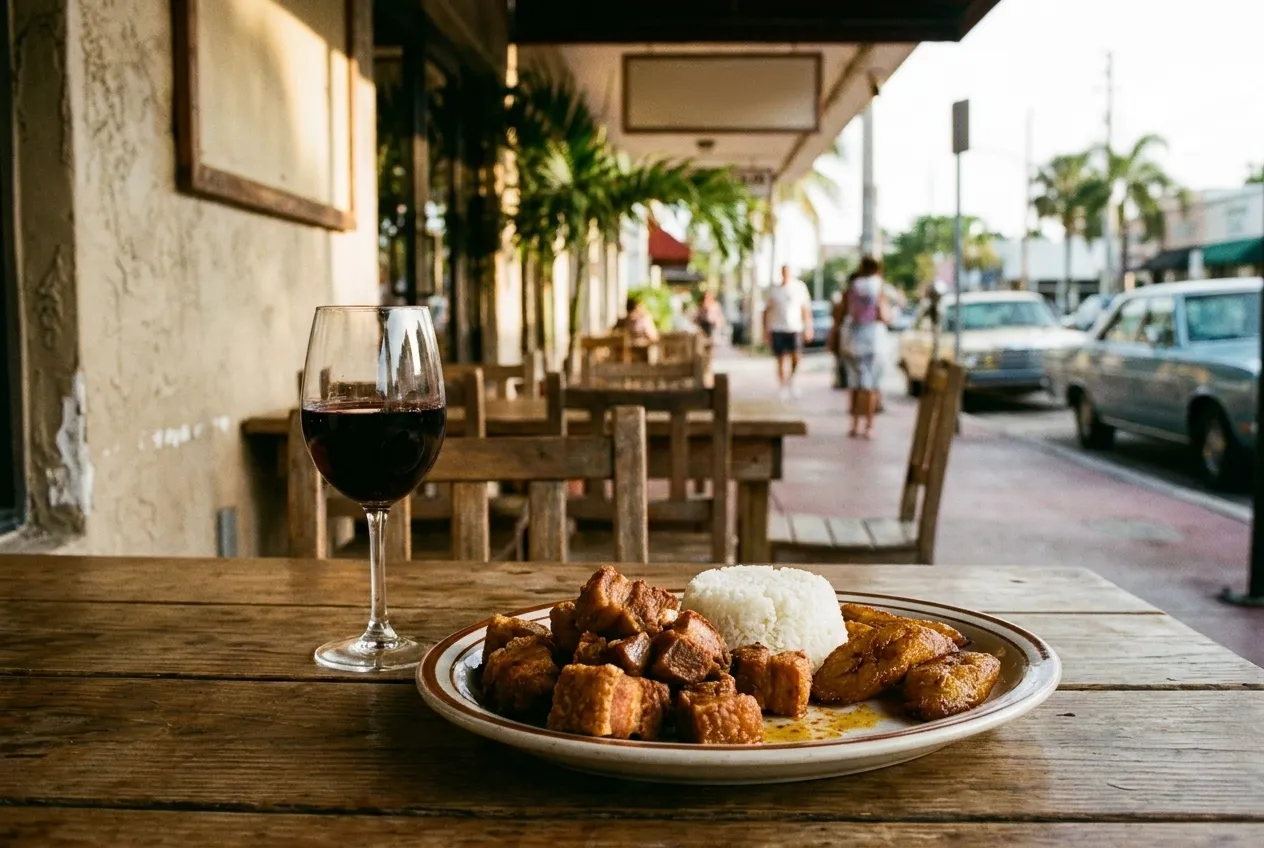
Two things happened in the same few blocks of north-east Miami and nobody has connected them. Little Haiti's kitchens have been serving griot, tassot and legim for decades. And over the past several years the converted warehouses immediately around them - the blocks now marketed as Little River - filled up with wine bars carrying adventurous, low-intervention lists. They are five minutes apart. Nobody has written the pairing, and it turns out to be one of the more rewarding food-and-wine exercises available in this city.
The kitchens close early and the wine rooms open late, so the overlap window is narrower than it looks. Tell Karpo the evening and Karpo can line the two up.
What you are actually pairing against
Start with the food, because Haitian cooking presents a specific and unusual set of problems for wine. Griot is pork shoulder marinated in sour orange and green herb, braised, then fried until the edges crackle - so it is rich, salty, fatty and crisp, with citrus already in it. That last part matters: the dish arrives with its own acidity, which changes what the wine needs to do.
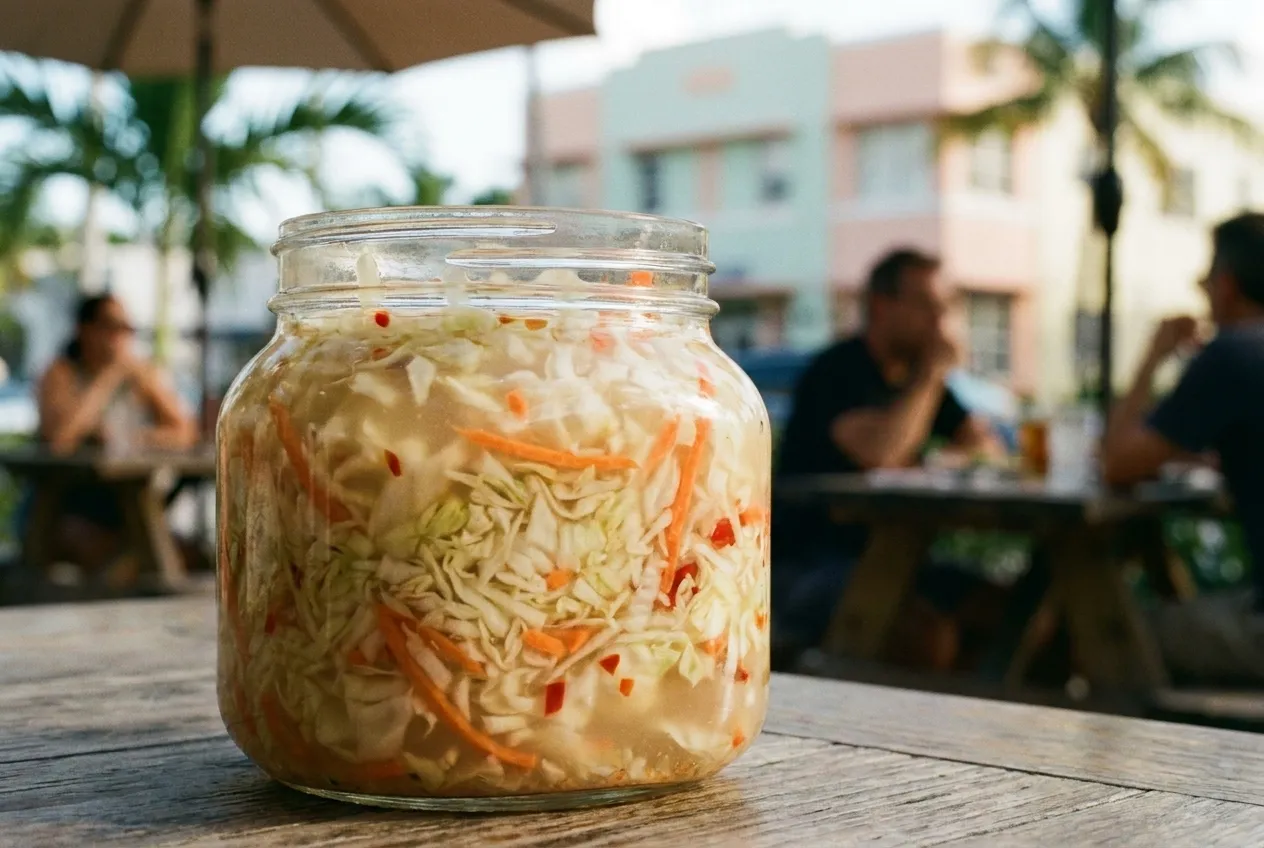
Then there is pikliz, the vinegar pickle of cabbage, carrot and scotch bonnet that comes with everything. It is aggressively acidic and genuinely hot. Capsaicin heat and tannin fight each other - tannin amplifies the burn and the burn strips the fruit out of the wine - which rules out a great deal of what people reach for with pork. And diri ak djon djon, rice cooked in black mushroom liquor, adds a deep earthy savouriness that wants something with earth in it rather than fruit sweetness.
The rule that solves most of it
Light, high-acid, low-tannin red, served cold. That single formula handles griot, tassot and most of the board. The acid stands up to the pikliz instead of being flattened by it, the lack of tannin means the chilli heat does not escalate, and serving it at cellar temperature rather than room temperature makes it refreshing against fried food in a hot climate.
In practice that means asking for a chilled red - gamay, a light pinot, a young cabernet franc, a Sicilian frappato or one of the many unlabelled light reds these bars carry. The Little River rooms are unusually well stocked for this because chilled light red is a house style of the natural wine movement, which is a genuine piece of luck: the neighbourhood happens to have the exact category the neighbourhood's food wants.
The white and orange options
If red is not the mood, the equivalent is a high-acid white with texture rather than a crisp neutral one. Something with a bit of skin contact, a chenin, an assyrtiko, a savagnin - anything with enough body to sit beside fried pork without disappearing. A very light, cold, neutral white will be obliterated by pikliz within one mouthful, which is the most common pairing mistake with this food.
Orange wine - white grapes fermented on their skins, giving amber colour, light tannin and a savoury, tea-like character - is the wildcard and it works better than it should, particularly with legim and with anything involving djon djon rice. The savoury, slightly bitter edge meets the earthiness of the mushroom rice head on. It is also the bottle these bars are most likely to be excited about, so asking for it starts a better conversation than asking for a chardonnay.
What not to order
Big, ripe, high-alcohol reds are the wrong answer and they are what most people instinctively choose with fried pork. A fourteen-and-a-half percent cabernet against pikliz produces a mouthful of heat and alcohol and very little else - the chilli and the tannin escalate each other and the fruit vanishes. The same applies to heavily oaked whites, where the vanilla and butter clash with sour orange rather than complementing it.
Sweet wine is a more interesting near-miss. Off-dry riesling is a classic pairing with chilli heat and it genuinely works against the pikliz, but it fights the sour orange in the marinade. If you want to try it, order it alongside something and see - this is a pairing that divides people and it is worth forming your own view rather than taking anyone's word.
How to actually do it
The logistics need a little planning because the two halves keep opposite hours. Haitian kitchens are lunch-and-early-evening operations; most are winding down by nine. The wine bars open in the late afternoon and run into the night, and several are closed on Monday and Tuesday. The overlap is roughly six to nine in the evening, Wednesday to Sunday.
Two approaches work. Eat first at a Little Haiti restaurant, then walk or drive five minutes to a wine room for the second half of the evening - simple, and the wine bar staff will happily build something around what you just ate if you tell them. Or buy a bottle to take away: most of these rooms are also retail and the take-away markup is far lower than the by-the-glass price implies. Several Little Haiti restaurants are relaxed about corkage or bringing your own; ask rather than assume.
Practical notes
The formula: light, high-acid, low-tannin red, served cold. Avoid big ripe reds and heavily oaked whites. Orange wine works with djon djon rice and legim. Prices: glasses generally fourteen to twenty-two dollars, bottles from around fifty, and retail take-away markups are much lower - ask. Wine bar hours are short and irregular with several closed Monday and Tuesday; Haitian kitchens mostly close by nine, so the overlap is about six to nine, Wednesday to Sunday. The neighbourhood is not walkable end to end - plan two stops rather than five, and parking is easy and free on the industrial streets. And ask about corkage before turning up at a restaurant with a bottle.
Tags: #WineTastingNearMe #LittleHaiti #LittleRiver #Miami #Griot #Pikliz #DjonDjon #ChilledRed #OrangeWine #WinePairing #HaitianFood #CreativeWorkshops #MiamiWine #WineBars
All trademarks are the property of their respective owners.
Ask Karpo first
This pairing only works inside a three-hour window a few nights a week, because the kitchens and the wine rooms barely overlap. Ask Karpo which Little Haiti kitchens are still serving at the hour you want to eat, which wine rooms nearby are open afterwards, and which of them sells bottles to take away.