It surprises people to learn that Los Angeles was one of the largest wine-producing regions in the United States before Prohibition, with vineyards covering what is now downtown and the areas around the river. The industry was destroyed twice — once by disease and once by the law — but it never entirely disappeared, and wine tasting in Los Angeles today is a genuine city activity rather than a euphemism for a drive to Santa Barbara.
Tasting rooms here keep short and irregular hours. Ask Karpo which are pouring near you today.
The urban wineries
There is a working winery in downtown Los Angeles that has been producing continuously since the late nineteenth century, which makes it the oldest in the state still operating on its original site. Beyond that there is a scattered set of newer urban wineries in the eastern industrial districts and out toward the harbour, trucking fruit in from Paso Robles, Santa Barbara County, the Sierra foothills and Lodi, then fermenting and ageing it here.
Tasting at these is a different experience to a wine-country visit. You are in a warehouse among the tanks, the person pouring is frequently on the production team, and the fee is modest and usually creditable against a purchase. The limitation is hours — most open Thursday through Sunday, several by appointment only, and a couple close in the middle of harvest.
Malibu, which almost nobody knows about
The Santa Monica Mountains have a genuine appellation and a scattering of small wineries and tasting rooms in the canyons above Malibu. It is a thirty-minute drive from the Westside rather than a two-hour one, the setting is spectacular, and the wines are made in very small quantities from vineyards you can see from the tasting room.
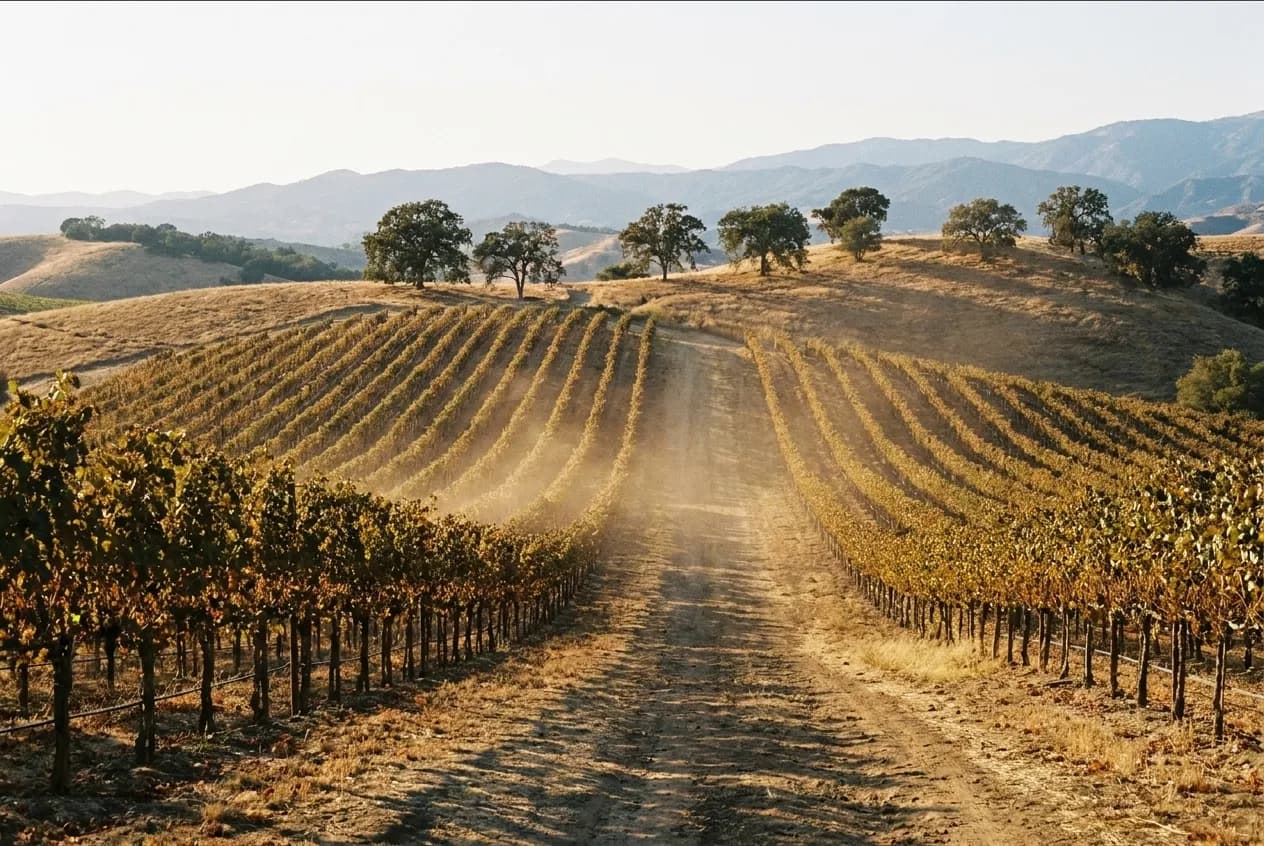
The practical caveats are real. The canyon roads are winding and there is no transit, which makes the designated-driver question unavoidable. Several of the tasting rooms require reservations. And the fire history in these hills has been brutal over the last decade, so it is worth checking what is currently open rather than assuming.
Pour bars and shops that serve
The most useful format in the city is the bottle shop with a licence to pour by the glass. You taste at close to retail pricing, you can buy the bottle you liked, and the staff taste constantly and will steer you accurately. These are clustered in Silver Lake, Echo Park, Highland Park, Culver City and along the Westside, and they are the cheapest way to drink well here.
The related format is the wine bar with a retail licence, where the list is the shop and the markup on drinking in is small. Either arrangement beats a restaurant wine list on price by a wide margin, and the selection is usually more interesting because the buyer is the person who owns the place.
The natural wine question
Los Angeles went further into natural wine than almost any American city and the eastern neighbourhoods in particular are dense with bars built around it. The category has matured — the early phase where everything was cloudy and volatile has largely passed, and the good bars now stock a spread rather than a dogma.
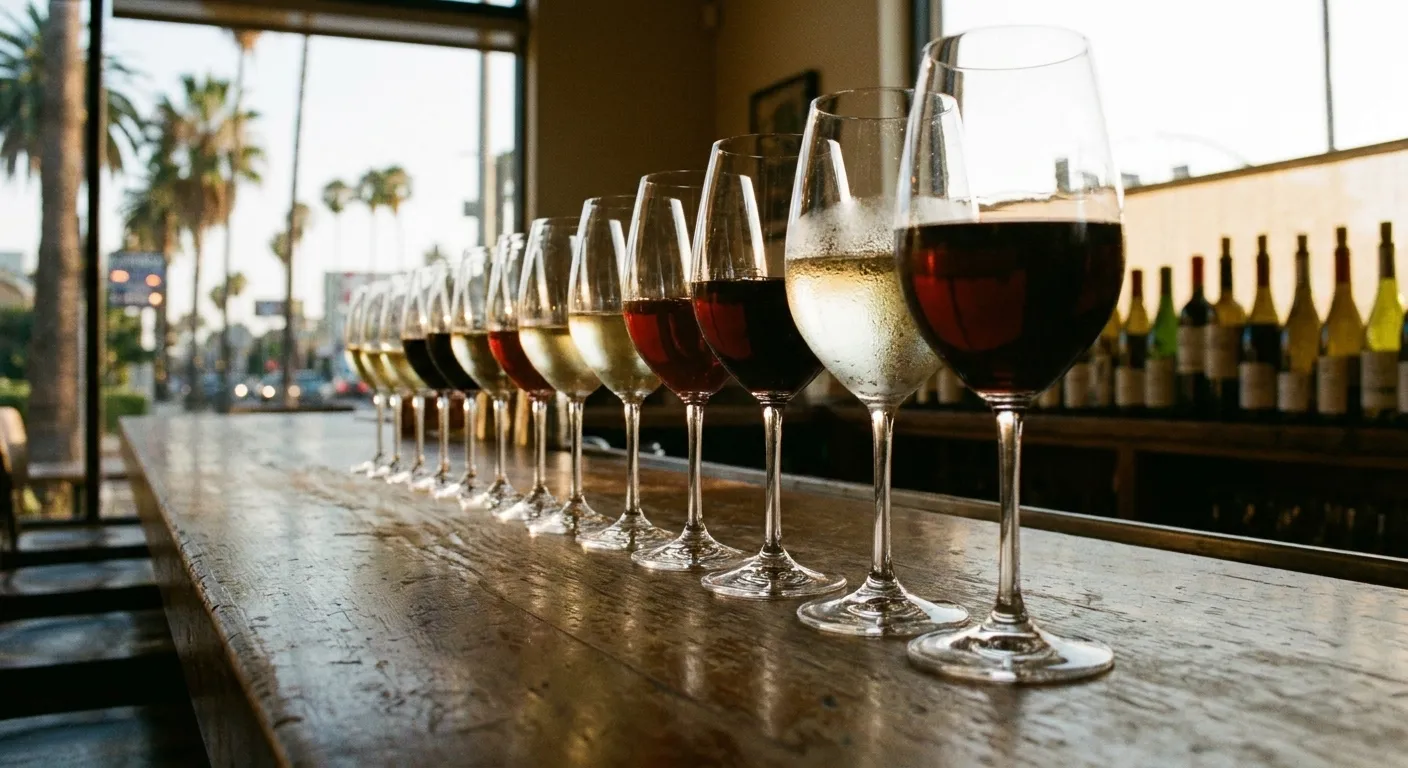
If you are unsure whether you like it, the useful move is to go somewhere that pours both and ask for a conventional and a natural example of the same grape side by side. Most of these bars will happily do that, and it settles the question in ten minutes rather than through argument.
Where the wine bars cluster
Geography here follows the same pattern as the food. The eastern neighbourhoods — Silver Lake, Echo Park, Highland Park, Frogtown — carry the natural and low-intervention end. Downtown and the Arts District have the larger rooms with serious lists. Culver City and the Westside skew classical, with deeper Burgundy and Bordeaux selections and prices to match. The Valley along Ventura Boulevard has a quiet run of neighbourhood wine bars that get no coverage at all.
That last group is the value play. A Valley wine bar is charging Valley rent, serving people who live within a mile, and frequently pouring the same producers as a Westside room for a third less. If you are over the hill anyway, it is worth looking rather than driving back across.
Doing it cheaply
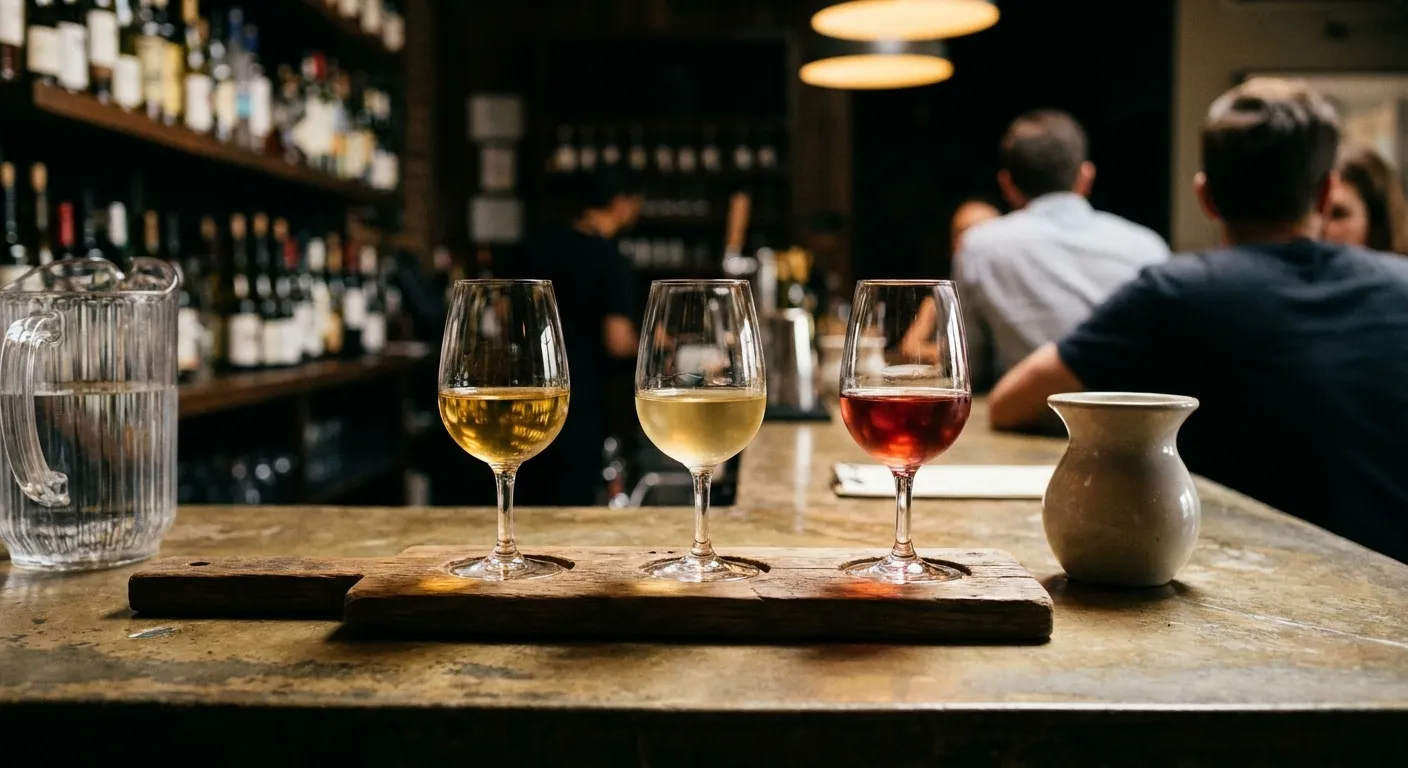
Flights are the answer almost everywhere — three or four tastes for around the price of a glass and a half, and every bar in the city offers them. Weekday evenings frequently carry by-the-glass promotions. And the shop-that-pours format cuts the restaurant markup out entirely, which on a mid-priced bottle is a difference of thirty or forty dollars.
The larger point is that California wine is a local product here, and it should be priced like one. A very good bottle from a shop in this city costs less than a mediocre glass in a hotel bar, and anyone drinking wine regularly in Los Angeles is better served by finding a good shop than by finding a good restaurant list.
If you do leave the county
Santa Barbara County is the closest serious wine region and it is a genuine day trip, roughly two hours up the coast, with the Santa Ynez Valley and the town of Los Olivos as the usual destinations. Temecula, to the south-east, is closer and much less well regarded, though the tasting fees are lower. Paso Robles is a weekend rather than a day.
But as with most things in this county, the honest advice is to try what is here first. An afternoon in a downtown warehouse tasting room, or an evening working through a flight at a shop in Highland Park, delivers most of what a wine-country day gives you without four hours of driving attached.
Tags: #LosAngeles #WineTasting #UrbanWinery #DowntownLA #Malibu #NaturalWine #WineBar #HighlandPark #SilverLake #BottleShop #SoCal #LANights #SantaBarbara
All trademarks are the property of their respective owners.
Ask Karpo first
Ask Karpo which tasting rooms and wine bars near you in Los Angeles are open right now, what a flight costs, and whether they need a reservation.