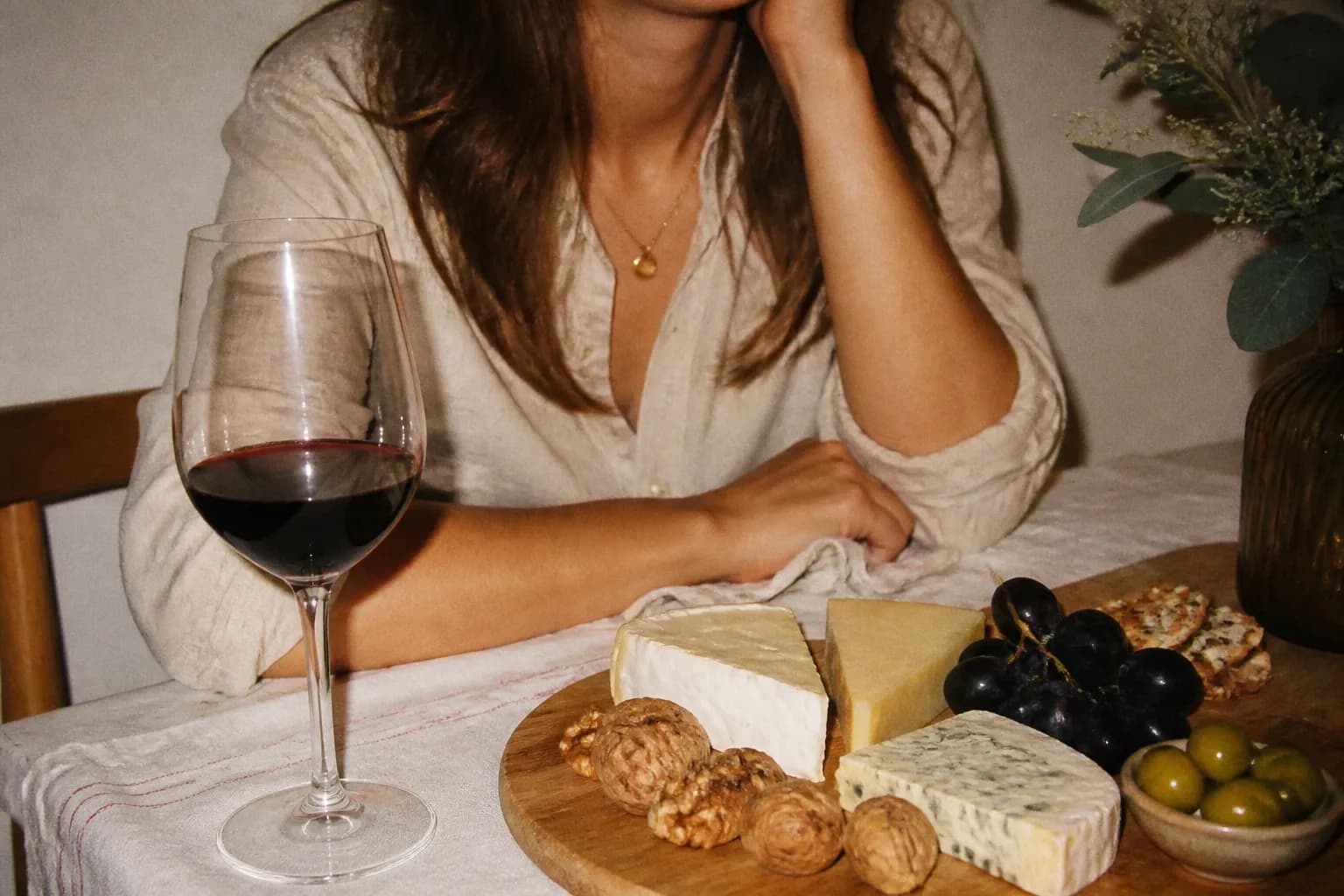
New to wine and cheese pairings? The easiest rule is to match intensity: light, crisp wines with fresh, mild cheeses, and bolder wines with stronger, aged ones. Classic combinations are classic for a reason, but taste is personal — use these as starting points and trust what you actually enjoy over any strict rulebook.
The One Rule That Carries You Far
If you remember nothing else, match the weight of the wine to the weight of the cheese. A delicate cheese gets overwhelmed by a heavy red, and a bold aged cheese steamrolls a light white. When both are in the same intensity range, they tend to lift each other rather than fight. From there, small tweaks fine-tune the pairing to your taste.
- Light, fresh cheeses pair well with crisp, light whites.
- Semi-hard cheeses are flexible and work with many medium-bodied wines.
- Aged, hard cheeses stand up to bold reds and richer whites.
- Blue and pungent cheeses often love a touch of sweetness in the wine.
Easy Classic Pairings to Start With
A few time-tested combinations rarely miss. Crisp white wines flatter fresh, tangy cheeses; medium reds get along with nutty, semi-hard cheeses; and sweet or fortified wines are the go-to for salty blues. These aren't rigid laws — they're reliable defaults that give beginners a confident place to begin experimenting from.
Building a Simple Cheese Board
A good board offers a little variety without becoming a project. Pick two or three cheeses across a range — something fresh, something aged, maybe something bold — and add a couple of accompaniments to bridge them to the wine. Serve cheese closer to room temperature so the flavors open up, and give everyone a chance to mix and match their own pairings.
- Choose two or three cheeses across mild, medium, and bold.
- Add bridges like nuts, fruit, honey, or crackers.
- Let cheeses come to room temperature before serving.
- Pour a versatile wine or two so guests can experiment.
Wines That Play Well With Many Cheeses
If you want one or two bottles that cover a whole board, look for wines with balanced acidity and moderate body — they tend to be the most forgiving across different cheeses. A crisp white and an easygoing red together will handle most boards. Sparkling wine is a quiet secret here too, since its bright bubbles refresh the palate between rich bites.
Trust Your Own Palate
Pairing guides are helpful, but the best pairing is the one you like. Try a bite and a sip together, notice whether they clash or click, and adjust. There's no failing grade — half the fun is discovering an odd combination that works for you. Keep it relaxed, experiment freely, and let your own taste be the final word.

Text Karpo before you head out — it'll check who's actually open right now, remember the spots you love, and save you the endless searching.

Frequently Asked Questions
Does red or white wine go better with cheese?
Both work — it depends on the cheese. Crisp whites often flatter fresh and tangy cheeses better than reds, while bold reds shine with aged, hard cheeses. Rather than picking a side, match the wine's intensity to the cheese and lean on your own taste.
What's the easiest crowd-pleasing pairing?
A sparkling wine with a varied cheese board is hard to beat, since the bubbles and acidity refresh the palate between bites. Alternatively, offer one crisp white and one easygoing red so guests can mix and match to their own liking across the board.