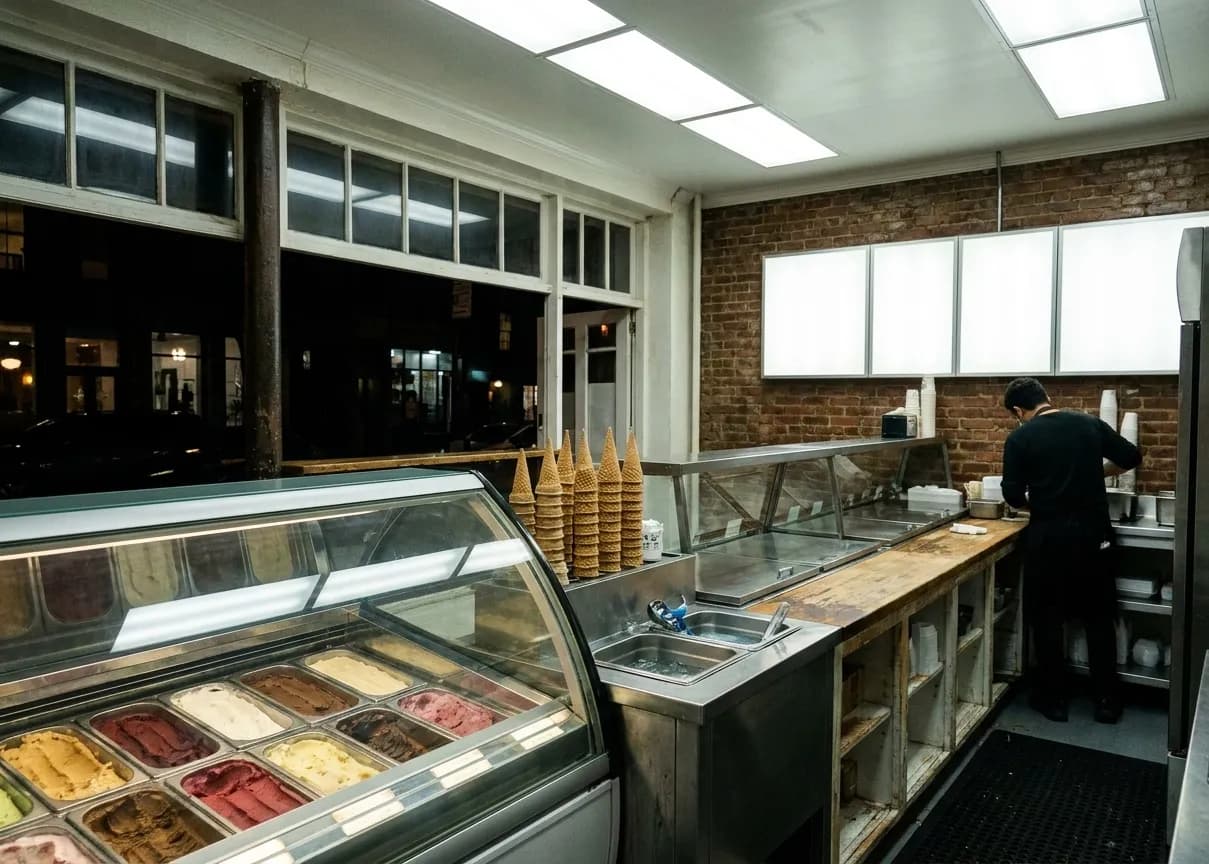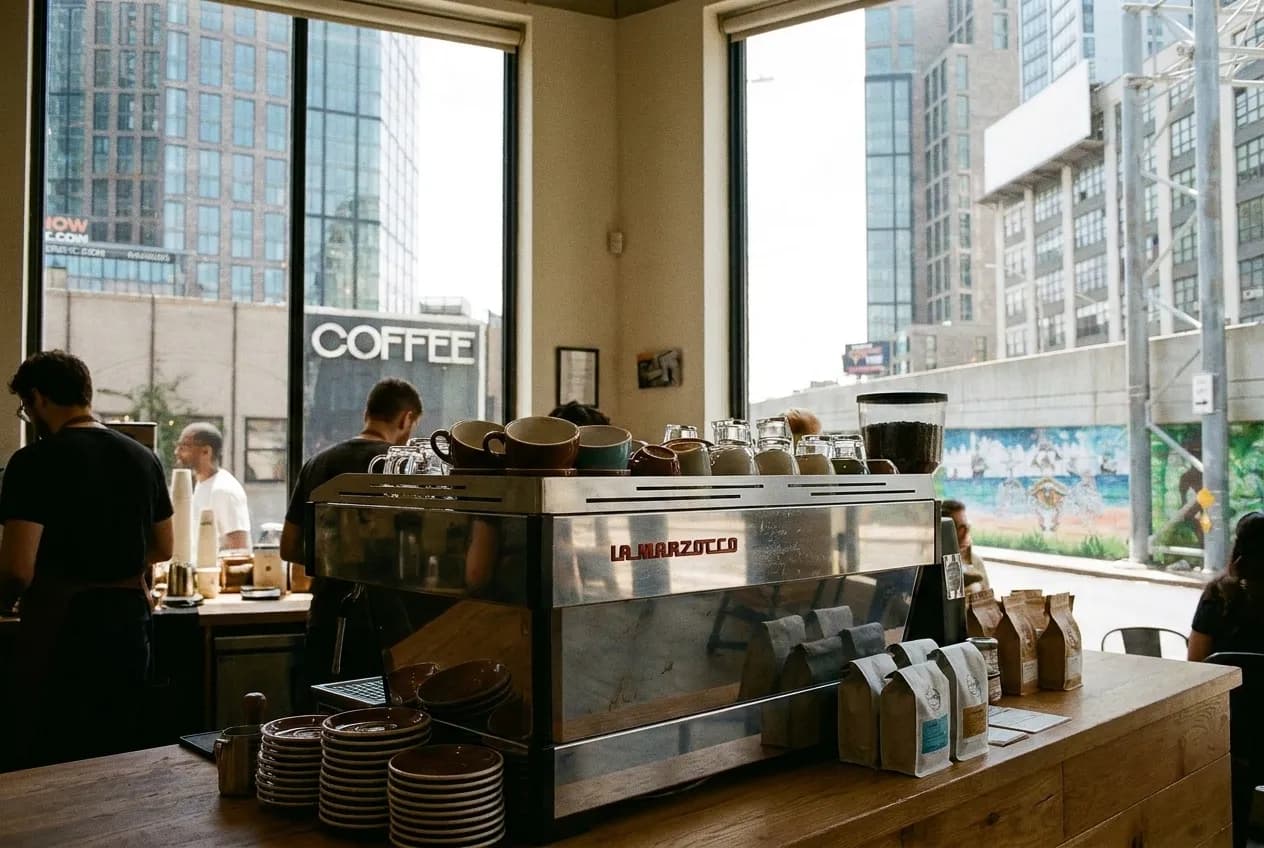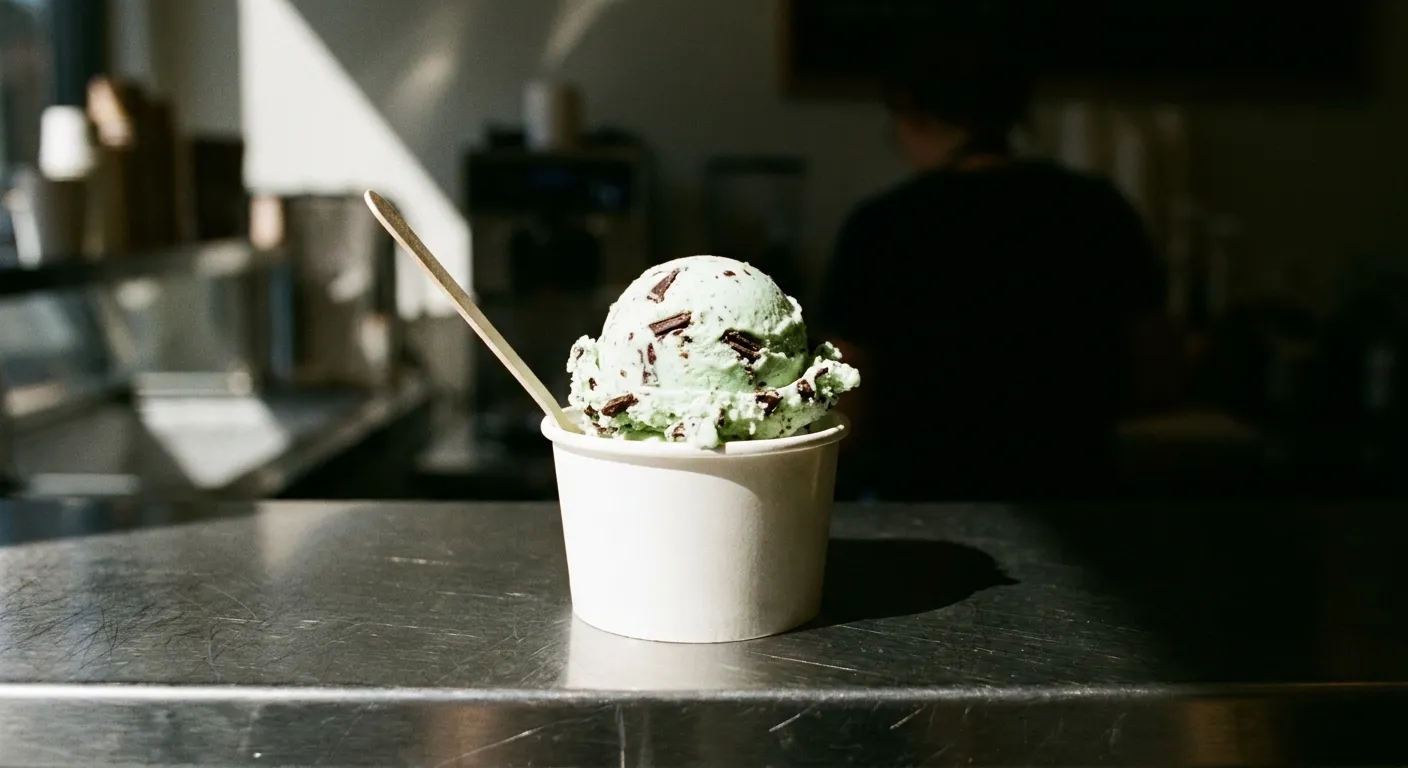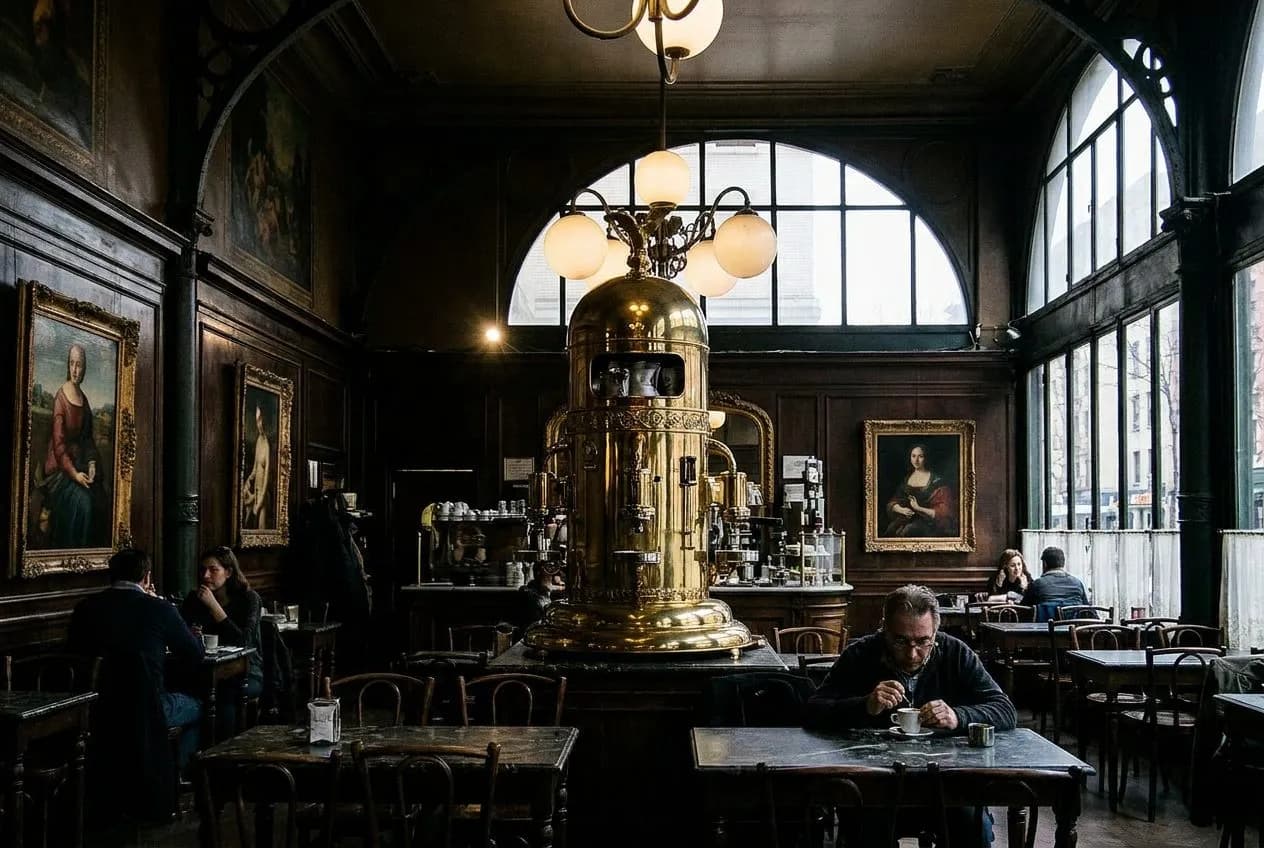
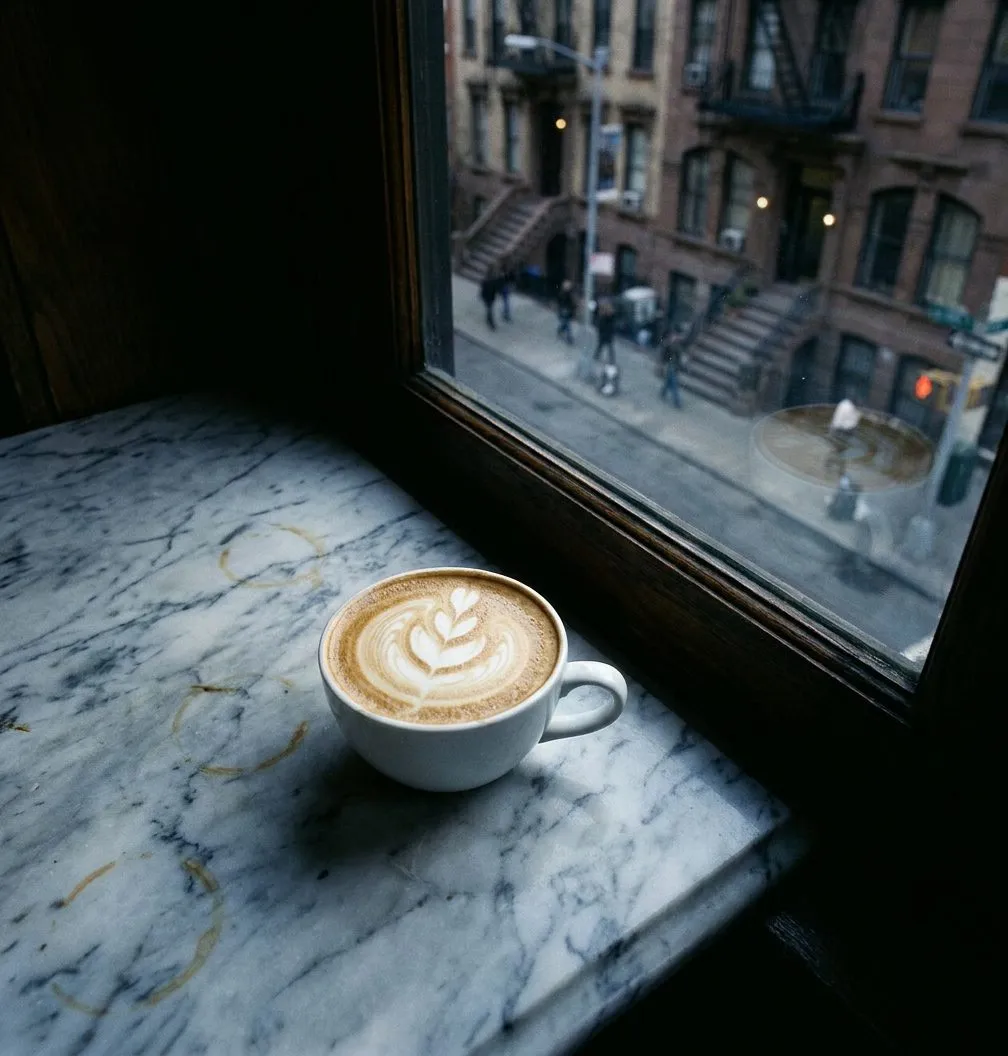
The marble is cool under your forearms, the street just beyond the glass, and the brass espresso machine catches the afternoon light like a monument to caffeine and continuity. Caffè Reggio on MacDougal Street has occupied the same storefront since 1927, and it wears its age like a velvet smoking jacket—unironic, unapologetic, fully committed to the bit. The front window tables are small, intimate, designed for solitary contemplation or quiet conversation. The cast-iron bases anchor them to the black-and-white checkerboard floor. Renaissance paintings crowd the walls. Opera drifts through the room. This is not a laptop café. This is a brass-and-marble time capsule where cappuccino still means something.
The best seat in the house
The front window table closest to the door offers the best combined view of the 1902 espresso machine and MacDougal Street foot traffic, a dual prospect that turns every visit into theater. From this vantage point, you can watch the barista work while tracking the parade of students, tourists, and neighborhood regulars who stream past the glass. The table is typically available on weekday mornings before ten, when the café belongs mostly to early risers and the occasional insomniac finishing a night shift.
The marble top shows its history—faint rings from decades of espresso cups, hairline fractures that suggest stories. The table wobbles slightly if you press it wrong. This is not a flaw; it's a credential. You adjust your posture, not the furniture. The window offers enough natural light for reading but not so much that you squint. The glass is old, slightly wavy, which gives MacDougal Street a faint dreamlike quality, as if you're watching a film on gentle dissolve.
The brass altar
The 1902 espresso machine dominates the back wall like a reliquary, all gleaming brass tubing, ornate eagle finials, and pressure gauges that suggest steam-powered ambition. It's not a prop. The machine is a working antique, and baristas occasionally use it for demonstration pulls during slow afternoon hours, particularly when asked by regular customers who understand that this is a ritual worth witnessing. The hiss and clank of the lever pull, the dark espresso streaming into a white cup—it's mechanical theater, a reminder that coffee was once an event, not a transaction.
The machine stands nearly five feet tall, its brass polished to a soft glow under café lighting. It anchors the room visually and conceptually, a monument to pre-war craftsmanship and the idea that some technologies don't need improving. Around it, the café arranges itself like a chapel: the marble bar, the wooden shelves lined with espresso cups, the framed photographs of long-departed regulars. You can feel the weight of continuity here, the stubborn insistence that a coffeehouse doesn't need Wi-Fi passwords or oat milk to justify its existence.
The cappuccino's alleged American debut
Caffè Reggio claims to have served the first cappuccino in America in 1927, a declaration that sits somewhere between historical fact and coffeehouse mythology. A framed newspaper clipping near the espresso machine documents this claim, though the date and publication remain subjects of coffeehouse debate among regulars who gather here like scholars parsing an apocryphal text. The truth matters less than the story, which has calcified into legend through sheer repetition and the café's refusal to modernize its narrative.
Whether or not the café's founder truly introduced cappuccino to American palates, the drink here tastes like an argument for tradition. The foam is dense, the espresso dark and slightly bitter, the proportion unapologetic. This is not the oversized bowl of milky comfort you'll find among the city's sprawling nyc restaurants scene. This is a small ceramic cup, a three-ounce manifesto, finished in four sips. It tastes like 1927 might have tasted, assuming 1927 had good coffee and low expectations for sweetness.
The atmosphere of velvet and varnish
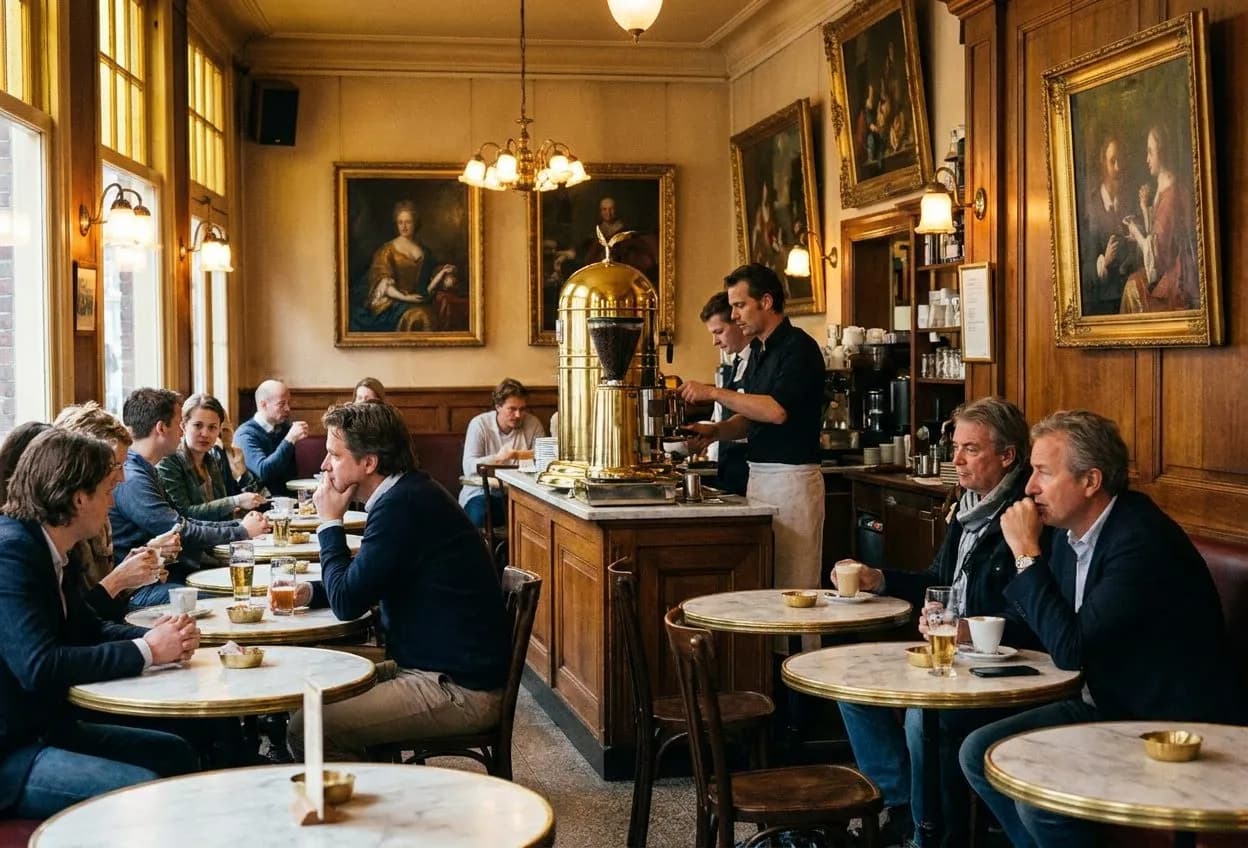
The walls are a riot of Renaissance and Baroque painting reproductions, gilt frames stacked nearly floor to ceiling in a salon-style hang that would give a museum curator hives. Madonnas and saints gaze down at you while you sip. A carved wooden bench runs along one wall, its red velvet cushion worn smooth by generations of patrons. The ceiling is pressed tin, painted cream, slightly water-stained. The lighting is warm and dim, more appropriate for a confession than a caffeine jolt.
Opera plays softly—Puccini, Verdi, occasionally something earlier and more melancholy. The volume is calibrated perfectly: present but not intrusive, a soundtrack that suggests longing without demanding your attention. The staff moves efficiently, with the calm competence of people who have worked the same espresso machine for years. Regulars nod at the baristas, exchange brief remarks in Italian or heavily accented English. The clientele skews older in the mornings, younger and more restless in the evenings, but everyone seems to understand the unspoken contract: this is not a place for loud phone calls or sprawling laptops.
The regulars and the rhythm
Caffè Reggio has outlasted most of its MacDougal Street peers, surviving rent hikes and changing tastes through sheer inertia and a loyal clientele that treats the place like a private club. The regulars arrive at predictable hours—retirees in the mid-morning, writers and artists in the early afternoon, couples on evening dates seeking atmosphere over innovation. They claim their tables with the confidence of long familiarity, folding their coats over the chair backs, ordering without consulting the menu.
The rhythm of the café shifts with the light. Morning is quiet, contemplative, the domain of crossword puzzles and Italian newspapers. Afternoon brings a slight uptick in energy, the occasional tour group stopping for photographs of the espresso machine. Evening softens again into romance—the dim lighting, the opera, the sense that you've stepped sideways out of the city's relentless pace into a slower, warmer pocket of time. Winter is particularly lovely here, when the cold presses against the windows and the café glows like a brass-and-marble hearth.
Practical notes
Caffè Reggio is located at 119 MacDougal Street in Greenwich Village. The nearest subway stations are West 4th Street (A/C/E/B/D/F/M lines) and Broadway-Lafayette (B/D/F/M/6 lines), each about a five-minute walk. Street parking is scarce; public garages are available on Bleecker and Houston. Hours vary seasonally; verify directly before visiting. The café is small and accessed via a single step at the entrance; accessibility may be limited for wheelchairs. Bring cash or card; the café accepts both. A small notebook fits the mood better than a laptop. Dress as you like, but the atmosphere rewards a certain old-world consideration—leave the athleisure at home.
Tags: #CaffèReggio #GreenwichVillage #NYCCoffee #MacDougalStreet #PullUpAChair #VintageNYC #EspressoMachine #CappuccinoHistory #NYCHiddenGems #WinterInNYC #CoffeehouseCulture #BrassAndMarble #OldWorldNYC #VillageLife #2026Travel
Please drink responsibly. Must be of legal drinking age.
Sources consulted: Caffè Reggio - Wikipedia · Espresso machine - Wikipedia · Greenwich Village - Wikipedia · NYC Landmarks Preservation Commission · New York Times - New York
All trademarks are the property of their respective owners.