A Housing Estate That Was Built to Last
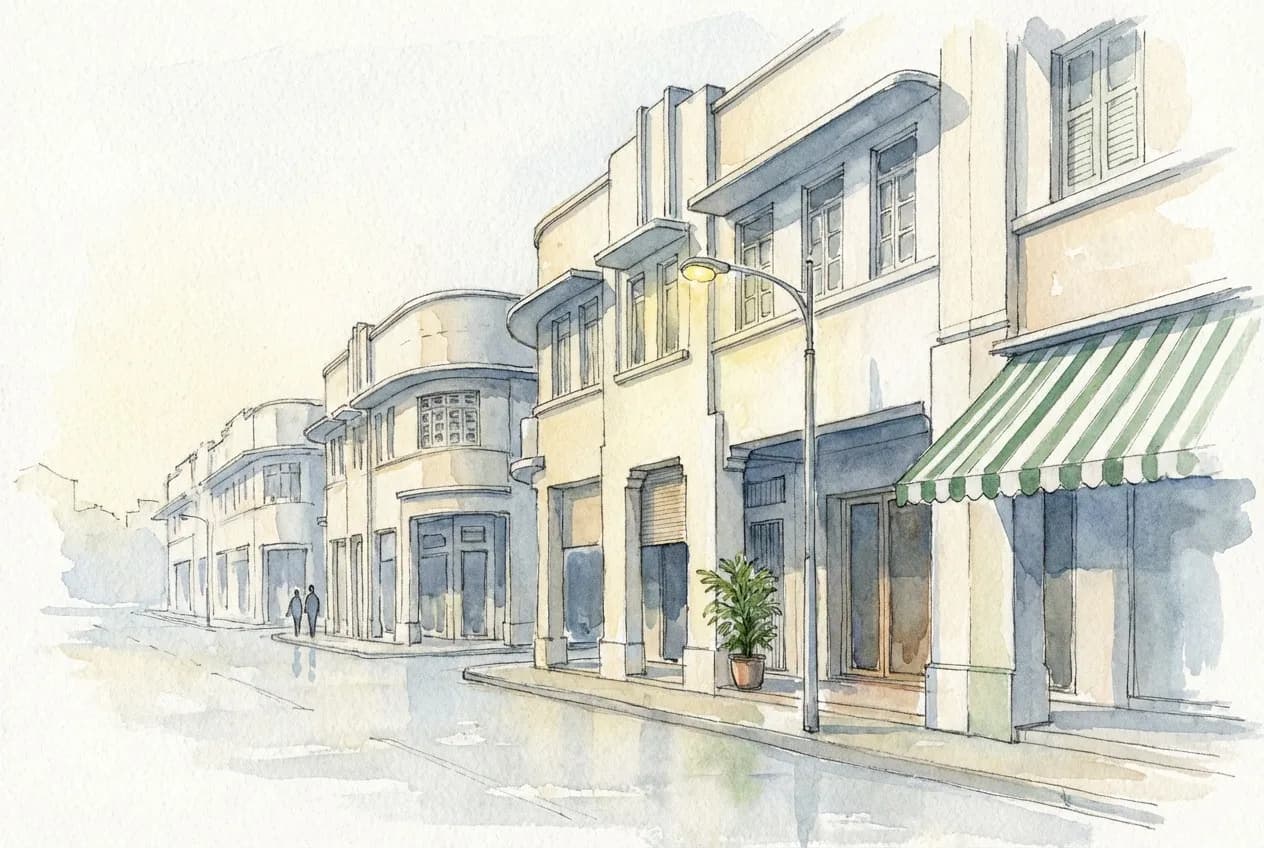
Tiong Bahru is Singapore’s oldest surviving public housing estate, constructed in the 1930s under the Singapore Improvement Trust. The blocks along Eng Hoon Street are prewar stepped shophouses with curved balcony edges and Art Deco cornices — not quite colonial, not quite Modernist, something that belongs only here. The estate was designed to house working families, and that civic DNA has never entirely left. Wet market traders still open at five in the morning. The coffee shops on Tiong Bahru Road still serve teh tarik in glass cups. The back lanes remain in use for exactly the purposes they were designed for.
Tiong Bahru Bakery opened on the ground floor of one of these shophouses in 2012 and slotted into the neighbourhood’s rhythm without disrupting it. It has had time to settle. Twelve years on, it is part of the furniture in a way that newer cafes in the estate are not. The regulars are not tourists; they are people who live here and have been eating croissants at this counter since the year the bakery opened.
The Specific Stool Worth Sitting In
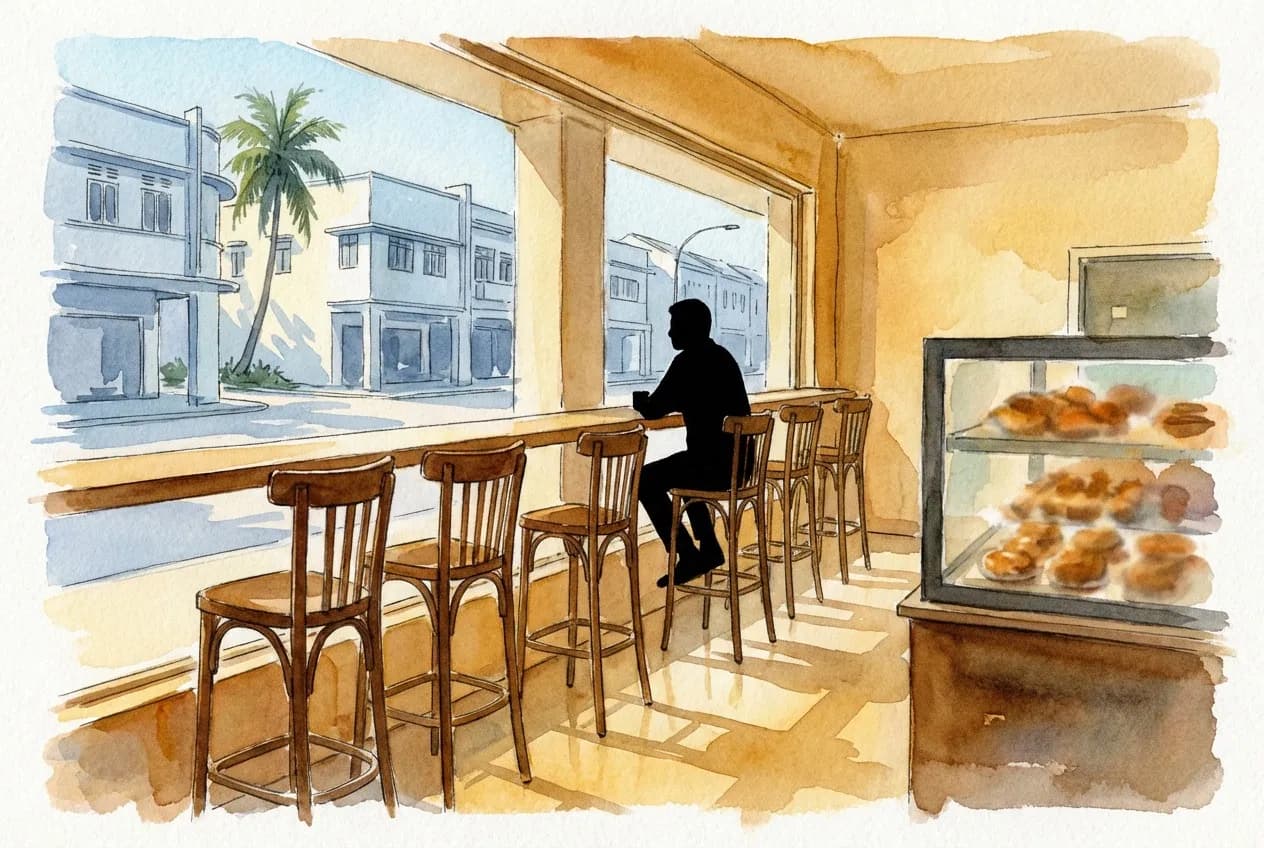
The window counter runs along the shophouse frontage facing Eng Hoon Street. There are six stools in total. The one worth knowing about is the far left — the one nearest the entrance, angled so that you see the stairwell of the block opposite, the red Singapore Post letterbox mounted on the wall, and, most weekday mornings, at least one person wheeling a wire trolley toward Tiong Bahru Market.
The jalousie windows tilt open by default, so air moves through the gap. There is a narrow ledge running below the window, wide enough for a coffee cup, a phone, and not much else. The stool itself is uncushioned wood, which keeps you honest about how long you plan to sit. The window counter fills from the right — regulars tend to anchor to the end nearest the pastry display, where they can see the whole room. The far left gets claimed last. On weekdays before nine, it is often entirely free.
From that stool you are neither inside the bakery nor quite outside it. The glass is open. The street is close.
Croissants Made Twice a Day, French Flour Throughout
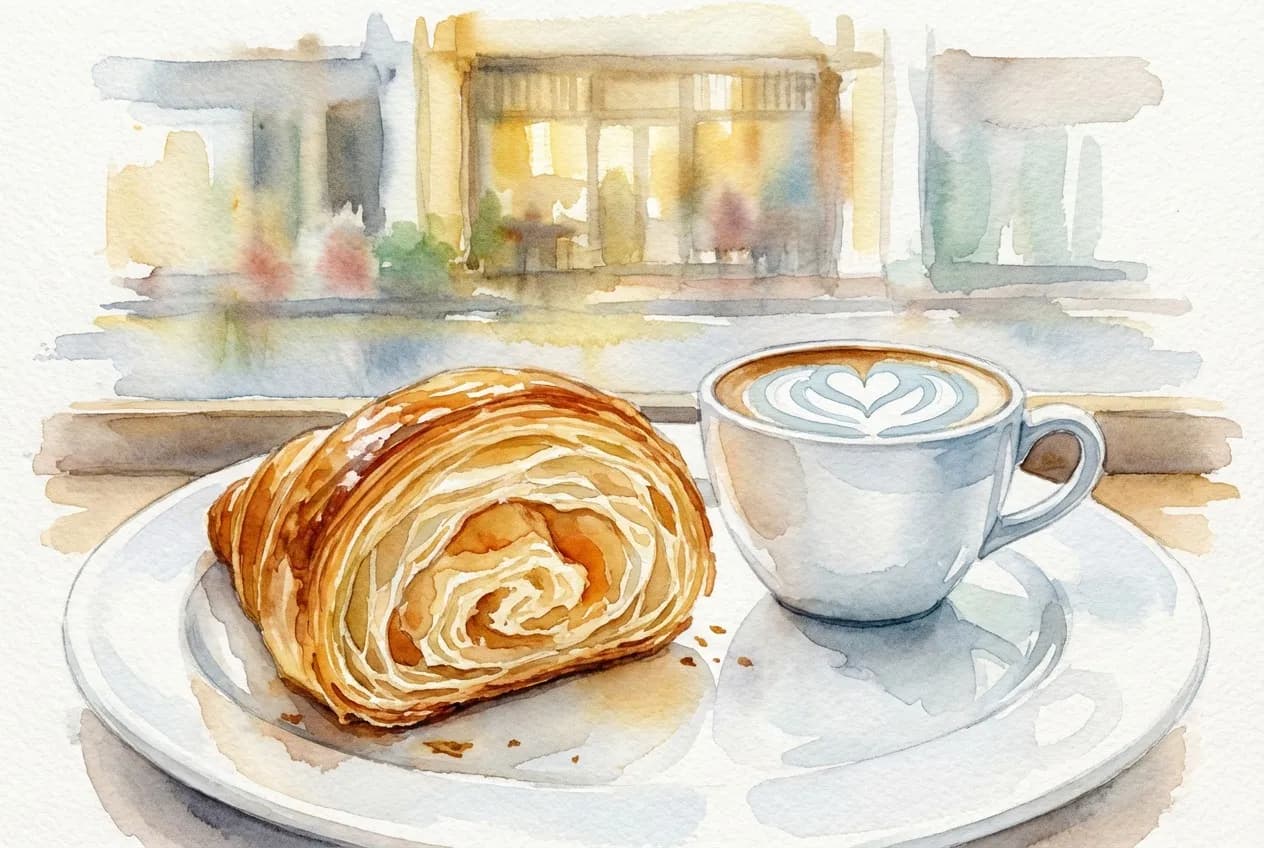
The bakery was co-founded in 2012 by French pastry chef Gontran Cherrier and Singapore entrepreneur Cynthia Chua of the Spa Esprit Group. Cherrier had been running his Paris boulangerie on Rue Caulaincourt; the Tiong Bahru outlet became his first international collaboration. The croissants are made with 100 percent French flour and French butter, laminated in-house, baked every two hours. At SGD 4.20 they are not cheap for a shophouse street, but the layering holds and the butter smell is genuine. Order one plain before you try any of the variations — it tells you everything about the dough.
Coffee comes from Common Man Coffee Roasters, a Singapore-based specialty roaster. The flat white at this branch is calibrated slightly drier than the Australian norm, which stops it from overwhelming a croissant pairing. Get both.
The Exclusives You Won’t Find at the Other Eight Outlets
Tiong Bahru Bakery now operates eight Singapore locations. In 2025, the Eng Hoon branch added three items carried nowhere else: a Kouign Amann Soft Serve (cold, with the laminated pastry flavour built into the custard), a Black Sesame Matcha Danish, and a Nori Furikake Scone. All three are made in small batches and sell through by mid-morning on weekdays. None of them appear on the main printed menu; they are listed on a handwritten daily specials card propped against the pastry case. The soft serve alone makes the specific trip defensible. Arriving before nine-thirty is the working rule.
What the Street Shows You Between Eight and Ten
On a weekday morning between 8am and 9:30am, Eng Hoon Street operates on a different schedule from the rest of the city. The financial district is already at desks. Orchard Road hasn’t opened. Here, the pavement belongs to older residents going to market with wire trolleys, younger residents in running gear cutting through toward Tiong Bahru Park, and the occasional school bus making a first pass before it fills up. A street cat that appears to live in the block opposite makes at least one run along the shophouse roofline per morning.
The overhead trolleybus wires that once ran along this section of the estate are gone, but the mounting poles remain. At roughly 8:20am in April, the morning light angles between them and lands on the tiled floor of the bakery interior in a way that makes the mosaic look newer than it is.
The far left window stool is not a seat for a long document or a difficult call. It is a seat for watching a city get going, at the hour before the day becomes what it normally is.
Why the Original Still Holds
Most of the brand’s newer outlets are in malls or transit nodes — VivoCity, Raffles City, Jewel Changi. They are convenient and well-run. None of them have the window. The Eng Hoon shophouse is the original format: narrow, slightly compressed, with the counter running along the front face of the building. The stools face outward by design, not as a style choice but as a function of the architecture. In a shophouse, the front wall is the business’s relationship with the street. Sitting at the counter is sitting in that relationship.
Practical notes
- Address: 56 Eng Hoon Street, #01-70, Singapore 160056
- Hours: Mon–Fri 7:30am–8pm; Sat–Sun 8am–8pm
- Getting there: Tiong Bahru MRT (EW17), 8-minute walk via Tiong Bahru Road and left onto Eng Hoon Street
- What to order: Plain butter croissant + flat white; ask for the daily specials card for Eng Hoon exclusives (Nori Furikake Scone, Black Sesame Matcha Danish, Kouign Amann Soft Serve) — arrive before 9:30am on weekdays
- Best window: Weekdays 8:00–9:30am; the far-left stool is almost always free in that slot
- What to do after: Five-minute walk to Tiong Bahru Market on Seng Poh Road for a second breakfast or a browse; or east along Tiong Bahru Road past the independent bookshops and record stores that occupy the neighbouring shophouses
The point
Most cafes are built for volume — tables turn, queues form, the next person waits. The window counter at the Eng Hoon bakery is built for the opposite: a narrow strip of space where one person sits facing one specific street for as long as the coffee lasts. Tiong Bahru was designed to house people rather than attract them. That purpose has not been redeveloped away. The stool at the window is a small argument for that continuity — still open, still facing the right direction, still offering the street as something worth watching.
Tags: #tiongbahrubakery #frenchbakery #windowseat #specialtycoffee #croissant #tiongbahru #singaporecafe #shophouseliving #artdecoestate #tiongbahrulife #morningritual #slowsingapore #weekdaymorning #karpofinds #pullupachairkarpo
Sources consulted: tiongbahrubakery.com · timeout.com · thesmartlocal.com · wikipedia.org
All trademarks are the property of their respective owners.