 Speakeasy Cocktail Lounge Near Me in Shibuya: The Bellwood Guide
Bars & Nights Out

the wild detectives' back patio when oak cliff's literary regulars claim the picnic tables
This Oak Cliff bookstore-bar hybrid draws Spanish-language readers to its string-lit back patio, where mature trees hold cooler air and bilingual conversations unfold over mezcal and dog-eared paperbacks long into the evening.
The picnic tables appear empty at six, still radiating the day's stored heat. By seven-thirty they're claimed territory, each rough-planked surface colonized by the same readers who occupied them the night before. The Wild Detectives operates as both noun and verb in Oak Cliff—it's the bookstore-bar where you go, and it's also what you do there, nursing mezcal while parsing a Bolaño passage you've underlined three different times in three different colored inks. The back patio functions as evening refuge, a canopy-shaded enclave where the temperature drops a crucial five degrees below the Bishop Avenue dining patios just blocks away, and where conversations slip easily between English and Spanish without anyone bothering to signal the transition.
when the regulars arrive
The patio fills predictably, a nightly ritual governed by the angle of late-day sun. Between seven and nine on weeknights, the regulars materialize immediately after the evening heat breaks, claiming their usual spots with the territorial certainty of migratory birds returning to known nesting sites. You'll recognize them by their lack of hesitation—no scanning for the best table, no deliberation about sun versus shade. They know which picnic bench catches the last breeze, which corner stays darkest for reading, which spot puts you close enough to the bar window for easy refills but far enough from the speakers to preserve conversation.
The crowd skews bilingual and book-serious, the kind of readers who travel with tote bags heavy enough to require shoulder adjustments. Dog-eared paperbacks in Spanish and English stack beside pint glasses. Marginalia enthusiasts compare notes. Someone's always halfway through a Valeria Luiselli essay, and someone else is inevitably rereading Cortázar for the fourth time, insisting that this is the reading where it finally clicks.
the Latin American fiction wall
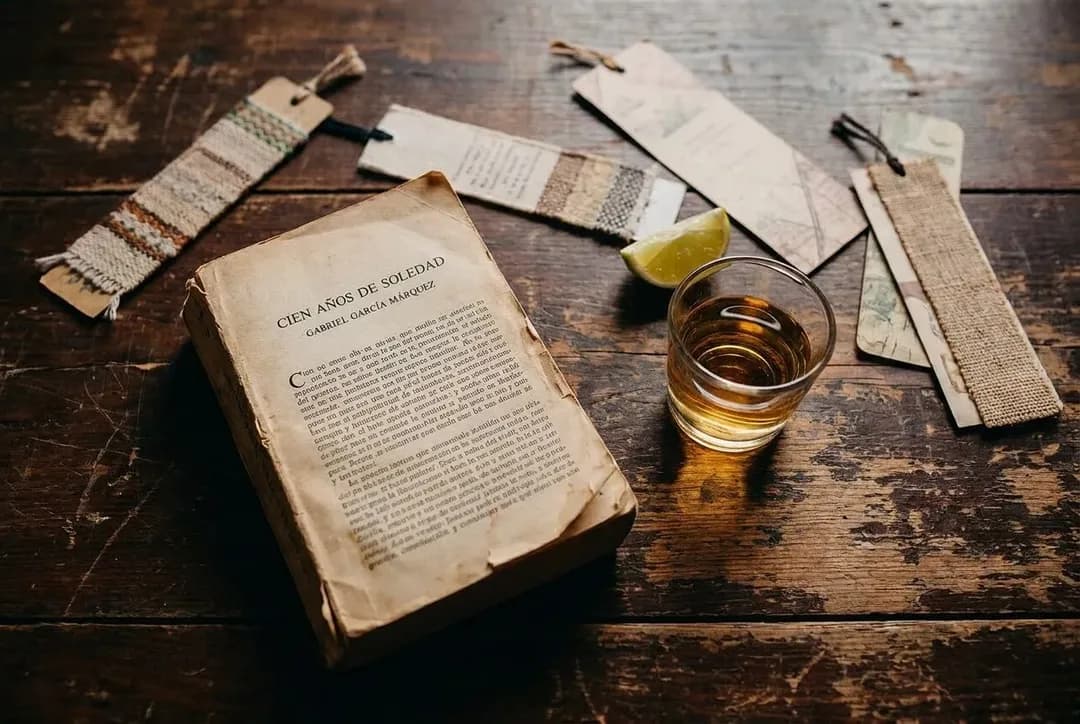
Inside, before you claim your patio seat, the Latin American fiction wall demands attention. It's not arranged by alphabet or bestseller prominence but by something more idiosyncratic, a taxonomy that makes sense only after you've spent enough time here to recognize the through-lines. The staff—themselves readers with strong opinions about translation styles and regional literature movements—can guide you toward titles based on specific preferences you didn't know you had. Mention you loved the rhythm of a particular translator's work, or that you're curious about contemporary Argentine fiction that isn't Borges, and they'll pull three books you've never heard of, each one exactly right.
The selection goes deep rather than broad, favoring small presses and translated poetry over mass-market thrillers. You'll find Paraguayan fiction, Cuban noir, Venezuelan magical realism that predates the term. The bookstore's original name comes from a Bolaño novel, and that literary sensibility—boundary-crossing, peripatetic, devoted to writers operating outside traditional centers of power—shapes every shelf.
the drinks worth ordering
The bar program isn't fussy, which is precisely the point. Mezcal comes in generous pours, Mexican beer stays cold, and the wine list favors natural options that pair as well with humid summer evenings as they do with the modernist fiction you're pretending to focus on. This isn't a craft-cocktail destination; it's a place where the drinks support the reading rather than competing for attention. Order at the bar window that opens onto the patio, then settle in for the long evening ahead.
The lack of table service feels intentional, a gentle enforcement of the patio's egalitarian ethos. Everyone makes their own trips to the bar, which means everyone stands in the same line, overhears the same recommendations, becomes part of the same of regulars recognizing one another's drink orders before their faces.

under the tree canopy
The patio's secret advantage is elevation and foliage. Mature trees create a canopy that holds cooler air long after nearby patios turn sweltering, and the string lights woven through branches cast just enough illumination for reading without drowning out the ambient darkness. By late 2026, as summer travel patterns shift more readers toward Dallas's arts districts, Oak Cliff's relative remove from downtown becomes an asset—close enough for easy access, far enough to feel discovered rather than overrun.
The acoustic quality shifts as evening progresses. Early arrivals get birdsong and traffic hum. By nine, conversations layer over one another, bilingual and book-focused, punctuated by laughter and the occasional reading aloud of a particularly good sentence. Someone's always willing to translate a passage, and someone else inevitably wants to debate whether the English version captures the original's cadence.
the event-night advantage
Author readings and literary events draw larger crowds, but they reveal the space's operational flexibility. The back patio remains open later than the front retail space on event nights, operating on a separate bar-hours schedule that lets the evening extend past the official programming. This matters if you arrive mid-event and can't squeeze into the indoor reading, or if you want to linger after the Q&A ends and the author has signed the last book. The patio becomes the after-party, the place where conversation continues without microphones or moderation.
Even without formal events, the patio generates its own programming—impromptu in the best sense, shaped by whoever happens to occupy the tables that night. Regulars know one another's reading lists, debate translation choices, loan books across picnic tables. It's the kind of literary socializing that can't be engineered, only cultivated over time through consistent good taste and a refusal to soften the intellectual expectations.
what to bring
Pack something substantial to read—the patio demands commitment, not casual browsing. A notebook for marginalia makes sense here, as does a tote bag sturdy enough to carry new purchases home alongside whatever you arrived with. The regulars bring sweaters for when the evening air finally cools, and everyone brings patience for the slower pace the space enforces. This isn't a stop on a broader bar crawl; it's a destination that rewards staying put.
Practical notes
The Wild Detectives is located at 314 W 8th St in the Bishop Arts District of Oak Cliff. Street parking is typically available within a block or two during evening hours. No nearby rail access; ride-share or personal vehicle recommended. Hours vary by day and season—verify directly before visiting, especially for patio access. The space is ground-level with step-free entry to both bookstore and patio. Bring cash for tips, though cards are accepted at the bar. Dogs are welcome in the outdoor space, which partially explains the regular canine presence among the picnic tables.
Tags: #TheOddEdit #WildDetectives #OakCliff #DallasBookstores #BishopArts #LiteraryTravel #BookstoreBar #LatinAmericanLiterature #DallasNightlife #Summer2026 #BilingualDallas #IndependentBookstores #PatioSeason #DallasCulture #TexasReading
Please drink responsibly. Must be of legal drinking age.
All trademarks are the property of their respective owners.
Ask Karpo for more information.
Keep reading
- Speakeasy Cocktail Lounge Near Me in Shibuya: The Bellwood Guide
 Speakeasy Cocktail Lounge Near Me in Ebisu: Bar Tram Guide
 Speakeasy Cocktail Lounge Near Me in Nishi-Azabu: Library Lounge These