 Mediterranean Food Near Me in Fort Greene: Miss Ada's Garden and Hummus
Neighborhood Guides
Why the Upper West Side Is Better Than Flatiron for a Solo Post-Work Unwind Right Now
When you need space to decompress after a long day, the Upper West Side delivers what Flatiron can't: parks on both sides, quieter sidewalks, and a neighborhood rhythm that actually lets you breathe.
Flatiron looks good on paper for a post-work reset—central location, plenty of bars, that iconic wedge building for orientation. But if you're finishing a shift and need to actually decompress rather than dodge foot traffic and wait in line, the Upper West Side makes more sense right now. The neighborhood sits between Central Park and Riverside Park, which means you have green space no matter which subway line drops you off. The sidewalks are wider, the bars less packed on weeknights, and the overall density feels manageable even at rush hour. The Upper West Side scores 9.5 out of 10 for transit access and 9 out of 10 for practical living on composite neighborhood indexes, which translates to easy arrival and plenty of options once you're there.
Text Karpo at (332) 334-3494 for real-time recommendations on which Upper West Side blocks feel calmest tonight, or where to grab a quiet drink without the Midtown crush.
Park Access Changes the Entire Equation
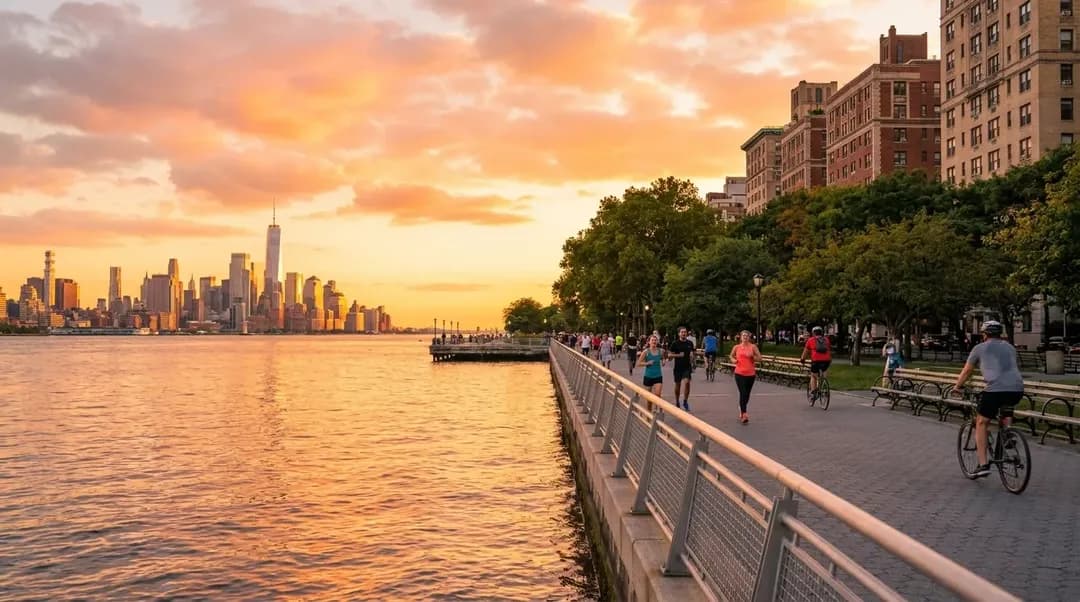
The Upper West Side sits between two major parks—Central Park on the east and Riverside Park on the west—which means you can choose your decompression backdrop based on the day and your mood. If you're coming from the east side or taking the 1/2/3 trains, you're steps from Central Park's western edge, where the Sheep Meadow and the Reservoir offer open sky and fewer tourists than the southern sections. If you take the 1 train further west or walk toward the Hudson, Riverside Park stretches for four miles along the water, with benches, bike paths, and sunset views that actually feel removed from the city grid. Flatiron has Madison Square Park, which is pleasant but small and often crowded, especially in decent weather. The Upper West Side's dual-park setup means you're never fighting for a bench or walking laps around the same fountain.
This geography matters for solo unwinding because it gives you room to move without a plan. You can walk north along Riverside without retracing your steps, or cut through Central Park toward the Met if you want a destination. The neighborhood's layout rewards aimless walking in a way that Flatiron—bounded by heavy traffic corridors and dense office blocks—simply doesn't. The Upper West Side has long attracted artists, professors, and writers precisely because it offers intellectual and physical breathing room within Manhattan, and that quality persists today even as the neighborhood has become more expensive.
Sidewalk Density and Noise Levels Favor the Upper West Side
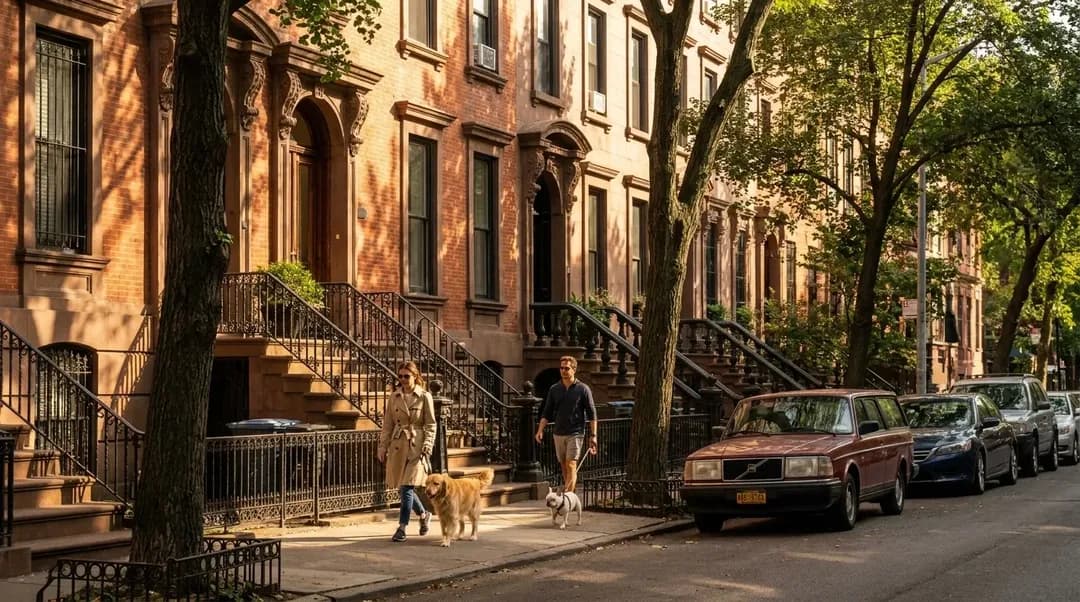
Flatiron's pedestrian traffic peaks hard between 5 and 7 p.m., when office workers, tourists, and commuters converge on the same few blocks. Broadway and Fifth Avenue are both major thoroughfares, and the neighborhood's compact footprint means there's no easy way to escape the crush if you're trying to walk off a stressful day. The Upper West Side, by contrast, spreads its density across a much larger area—from 59th Street to 110th Street—and the residential character of most side streets means you can step off Columbus or Amsterdam and find relative quiet within a block. The neighborhood does have a noise profile typical of dense Manhattan, but the ratio of residential to commercial space tilts heavily toward the former, which translates to fewer delivery trucks, less honking, and more predictable evening rhythms.
This difference becomes obvious if you're trying to find a place to sit with a book or a podcast. In Flatiron, your options are mostly cafés that fill up fast or the small park, which has limited seating and constant foot traffic. On the Upper West Side, you can claim a bench in Riverside Park, settle into a quieter café on a side street, or walk the tree-lined blocks between the avenues without constantly navigating around groups. The neighborhood's width—spanning from Central Park West to Riverside Drive—gives you multiple north-south routes, so if one avenue feels too busy, you can shift one block over and change the entire feel of your walk.

Bar and Café Culture Skews Toward Regulars, Not Crowds
Flatiron's bar scene caters heavily to after-work groups and tourists, which means most spots fill up early and stay loud through the evening. The Upper West Side has plenty of bars, but the clientele skews more toward neighborhood regulars—people who live within a few blocks and treat their local spot as a consistent decompression point rather than a destination. This doesn't mean the bars are empty or boring; it means you're more likely to find a seat at the bar on a Tuesday without waiting, and the staff will remember your order if you go back a few times. The neighborhood's reputation for attracting culturally aware residents—filmmakers, professors, writers—translates to bars and cafés that prioritize conversation and atmosphere over high turnover.
If you prefer a café over a bar, the Upper West Side offers more variety in terms of size and vibe. You'll find small bakeries on side streets, larger coffee shops along Columbus and Amsterdam, and spots near Lincoln Center that stay open later for the post-performance crowd. Flatiron has good coffee, but the cafés tend to be packed with laptop workers during the day and close early in the evening, leaving you with fewer low-key options if you want to sit somewhere warm without committing to a full meal or a loud bar. The Upper West Side's residential density supports a wider range of third spaces that don't require you to spend heavily or arrive at a specific time to secure a spot.
Transit and Arrival Logistics Work in Your Favor
The Upper West Side's transit score of 9.5 out of 10 reflects the fact that multiple subway lines run through the neighborhood—primarily the 1/2/3 on the west side and the B/C along Central Park West—and service is frequent even during off-peak hours. If you're coming from downtown or Brooklyn, the 1/2/3 trains run express above 96th Street, which means you can reach the neighborhood quickly without multiple transfers. Flatiron is also well-served by transit, but the stations tend to be more crowded and the surrounding blocks more congested, which can extend your effective travel time even if the subway ride itself is short. The Upper West Side's station exits drop you onto wider sidewalks with clearer sightlines, so the transition from underground to street level feels less abrupt.
Once you arrive, the neighborhood's grid is straightforward—numbered streets run east-west, and the avenues (Columbus, Amsterdam, Broadway, West End) run north-south with consistent spacing. This makes it easy to orient yourself and adjust your route based on how you're feeling. If you want to walk along the park, you head east or west; if you want to browse shops or grab food, you stick to the avenues. Flatiron's layout is less intuitive because Broadway cuts diagonally through the grid, creating awkward intersections and forcing you to navigate around construction and crowded corners. For a solo unwind, the Upper West Side's predictable geography reduces decision fatigue and lets you focus on decompressing rather than constantly checking your phone for directions.
Practical Notes
- Check sunset times if you're planning a Riverside Park walk—the western exposure makes golden hour especially worthwhile, but the park gets dark quickly once the sun drops below the New Jersey skyline.
- The 1/2/3 trains run express above 96th Street during rush hour, so if you're heading uptown from Midtown or downtown, you'll save time by taking an express train and walking a few extra blocks if needed.
- Side streets between Columbus and Amsterdam (especially in the 70s and 80s) offer the quietest walking routes if you want to avoid avenue traffic entirely.
- Riverside Park's southern entrance at 72nd Street has more amenities (restrooms, water fountains, bike rentals), while the northern sections above 96th Street feel more secluded and less trafficked.
- If you're comparing safety, both Flatiron and the Upper West Side receive B grades on composite safety indexes, so personal safety shouldn't be a deciding factor between the two neighborhoods.
- The Upper West Side's café and bar scene peaks slightly later than Flatiron's, with many spots staying open past 10 p.m. to serve the Lincoln Center and Beacon Theatre crowds.
- Weather matters more on the Upper West Side because so much of the appeal depends on park access—check the forecast and have a backup café or bar in mind if rain is likely.
The Upper West Side won't give you the iconic Flatiron Building backdrop or the dense concentration of trendy bars, but if your goal is to actually unwind rather than be seen unwinding, the trade-off makes sense. The parks, the wider sidewalks, the quieter side streets, and the neighborhood's residential rhythm all work in your favor when you need space to decompress. Flatiron will still be there when you want the energy and the crowds; the Upper West Side is where you go when you need the opposite.
Tags: #upperwestside #flatironnyc #nycneighborhoods #solonyc #centralparknyc #riversideparknyc #nyclocals #manhattanlife #postworknyc #nycunwind #neighborhoodguide #nycparks #localbars #nycwalk
All trademarks are the property of their respective owners.
Ask Karpo for more information.
Keep reading
- Mediterranean Food Near Me in Fort Greene: Miss Ada's Garden and Hummus
 Places To Eat Near Me in Chelsea: The Market Fills a Nabisco Factory
 Seafood Near Me in the East Village: The Mermaid Inn's Dollar Oysters