 Mediterranean Food Near Me in Fort Greene: Miss Ada's Garden and Hummus
Neighborhood Guides
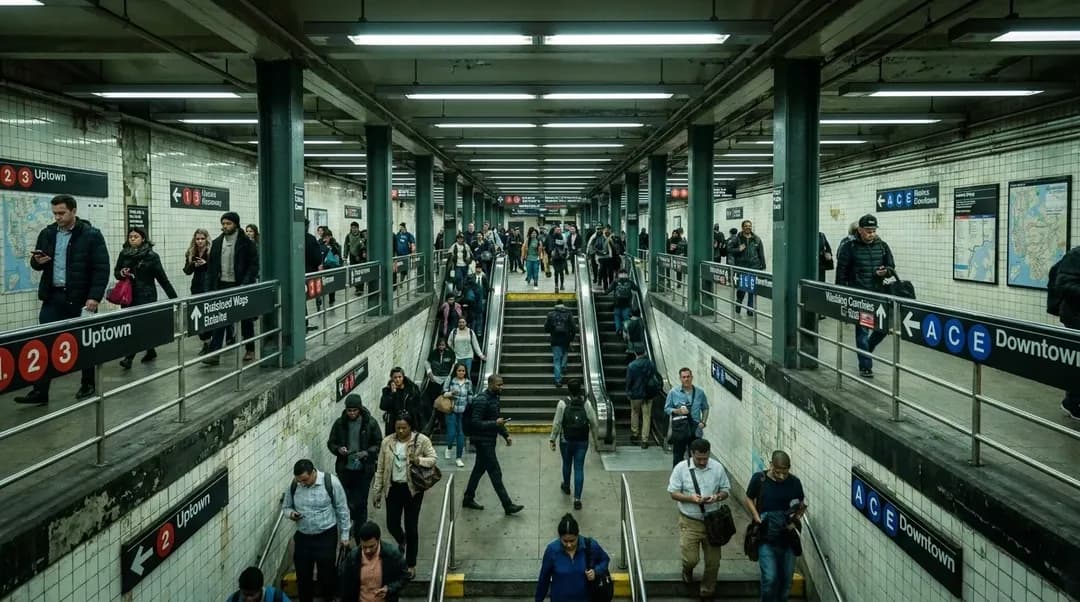
Why the Best NYC Plans Often Start With the Transfer You Want to Avoid
Understanding how locals use dreaded subway transfers to unlock faster routes, cheaper apartments, and neighborhoods that tourists skip reveals the real structure of the city.
Every New Yorker has a mental list of subway transfers they'd rather skip. Times Square feels like navigating an underground airport terminal. Union Square during evening rush means shouldering through crowds on narrow platforms. The L to the G at Metropolitan Avenue involves a street-level walk that adds unpredictable minutes. Yet the people who've lived here longest often build their entire routines around these exact pain points. They choose apartments near stations that require a transfer, plan evening meetups around multi-line hubs, and structure their weekends to take advantage of cross-borough connections that look inconvenient on a map. The difference isn't masochism—it's recognizing that the city's real geography doesn't match the simplified diagrams, and that the friction points everyone else avoids often sit at the center of the most useful networks.
Text Karpo for apartment searches that factor in real commute patterns, not just subway proximity.
The Transfer Math That Changes Apartment Searches
When you filter rental listings by commute time, most platforms calculate direct routes and penalize transfers heavily. A Reddit thread from 2021 captured the typical decision: commenters overwhelmingly chose a 35-minute no-transfer commute over a 20-minute route requiring a Times Square change, citing unpredictability and the mental load of waiting on two platforms instead of one. That logic makes sense for a single daily commute to a fixed office. But it breaks down when you map a full week of movement—evening classes in different boroughs, weekend plans that shift between Brooklyn and Queens, grocery runs that depend on which train is running local versus express.
Apartments near major transfer hubs often rent for less than equivalent units on express-only lines, even when total transit access is objectively better. A studio near the G train at Court Square connects to the E, M, and 7 within a short walk, covering three boroughs and both east-west and north-south routes. The rent discount compared to a nearby Astoria N/W stop can run several hundred dollars monthly, yet the Court Square location offers more flexibility for anyone whose life doesn't follow a single commute vector. The transfer stigma creates a pricing inefficiency that locals exploit deliberately, especially when they're planning for job changes, freelance schedules, or the reality that most New Yorkers switch employers every few years.
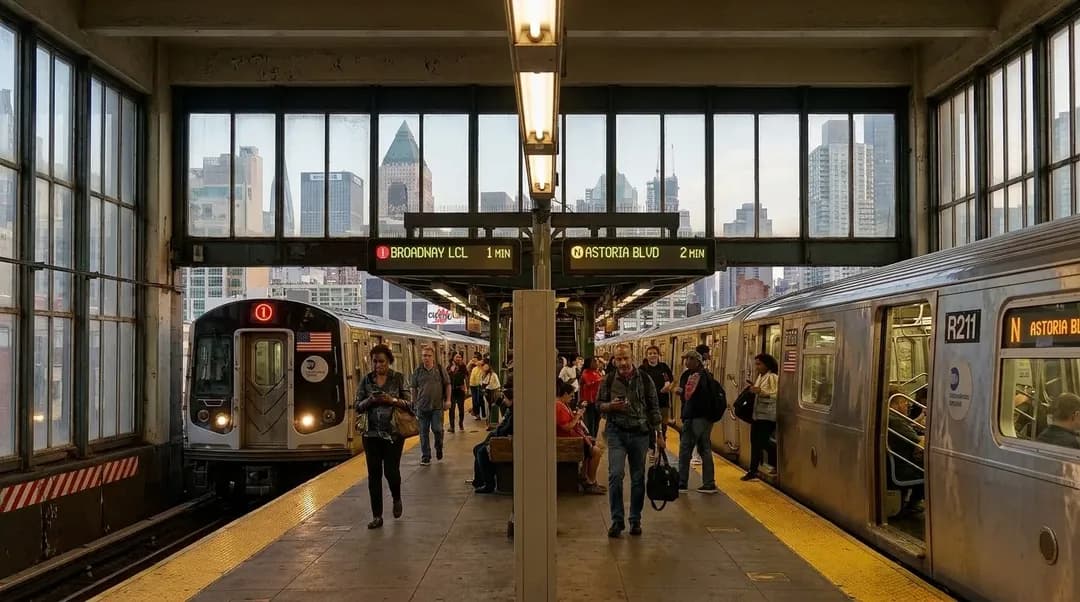
How Transfer Stations Shape Neighborhood Access
The city's planning framework treats transit accessibility as a binary—either a neighborhood has subway service or it doesn't. But lived experience reveals a more granular hierarchy. Neighborhoods served by a single line become isolated when that line experiences delays or weekend service changes. Areas near transfer points gain resilience: if one route is disrupted, you have immediate alternatives without backtracking. This distinction matters most outside Manhattan, where single-line neighborhoods can feel stranded during off-peak hours or construction seasons.
Transfer hubs also concentrate the amenities that make spontaneous plans possible. The blocks around Atlantic Terminal in Brooklyn or Jackson Heights-Roosevelt Avenue in Queens pack in late-night restaurants, 24-hour groceries, and services that stay open because foot traffic from multiple lines sustains them. When you live near a transfer station, your effective neighborhood expands to include all the commercial strips within a few stops on each connecting line. A Crown Heights resident near Franklin Avenue can reach Prospect Park, Downtown Brooklyn, and Bed-Stuy's Fulton Street corridor within ten minutes on different trains. That access pattern doesn't show up in typical neighborhood guides, which describe areas as if they exist in isolation rather than as nodes in a transfer-dependent network.
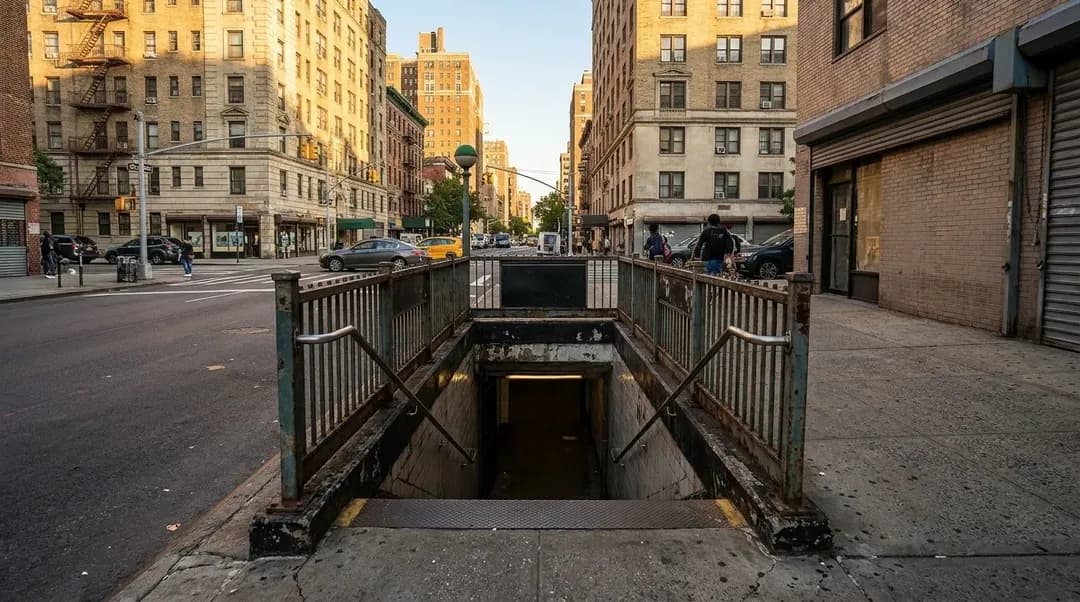
The Weather and Timing Variables No App Predicts
Transfer calculations change completely based on time of day and season. A summer evening transfer at 34th Street Herald Square involves air-conditioned corridors and reasonable crowds. The same transfer at 8:47 AM on a January Monday means packed platforms, wet floors from snow tracked in by thousands of commuters, and the likelihood that your connecting train is already sitting in the station as you're still navigating the passageway. Apps show scheduled transfer times of two or three minutes, but they can't account for the human density that turns a simple platform change into a slow-motion shuffle.
Experienced locals build buffer strategies around these variables. If your transfer requires changing levels or walking between distant platforms, you learn which times of day make it feasible and which turn it into a gamble. A 20-minute commute with a tight transfer becomes a 35-minute commute when you factor in the trains you'll miss and the realistic wait for the next one. This is why the Reddit consensus favoring longer no-transfer routes holds weight—not because transfers are inherently bad, but because the advertised transfer time rarely matches the experienced transfer time during the hours when most people actually travel. The locals who embrace transfer-heavy routes do so with eyes open, often adjusting their departure times by 15 minutes earlier than a direct route would require.
Building Plans Around the Transfers That Actually Work
Not all transfers carry equal friction. Same-platform cross-corridor changes like the 4/5/6 to the N/Q/R/W at Union Square or the A/C to the L at 14th Street-8th Avenue involve minimal walking and let you see your connecting train before committing to the platform. These transfers fail gracefully—if you miss one train, the next arrives within minutes on high-frequency lines. Compare that to transfers requiring a full exit and re-entry, like the L to the G at Metropolitan Avenue, where you're exposed to weather and street-crossing timing, or the 7 to the E/M at Court Square, which involves a covered but outdoor walkway that feels much longer in February wind.
The transfer patterns that locals build their lives around tend to share specific characteristics: multiple connecting lines rather than just two, so a delay on one doesn't strand you; frequent service on at least one of the lines, reducing wait anxiety; and physical infrastructure that keeps you moving rather than stuck in bottleneck corridors. When you're evaluating neighborhoods or planning regular routes, map the transfer quality rather than just counting the number of lines nearby. A station serving four trains with terrible transfer geometry delivers less practical mobility than a two-line station with a center platform where you can switch by walking ten feet. The OMNY fare system's free transfers within two hours between subway and bus also opens up hybrid routes that avoid the worst underground transfers entirely—taking a bus for two stops to reach a better subway line often beats fighting through a crowded station passageway.
Practical Notes
- Check transfer walking times during your actual commute hours, not midday when platforms are empty—the difference can be five to ten minutes
- Neighborhoods near transfer hubs often rent for less than single-line areas with equivalent Manhattan access, especially along the G train corridor
- Same-platform or cross-platform transfers fail more gracefully than those requiring level changes or outdoor segments
- OMNY's two-hour transfer window lets you combine bus and subway to avoid the most crowded station transfers
- Weekend service changes disproportionately affect single-line neighborhoods—transfer station proximity provides backup routes
- Apps can't predict human density factors that double transfer times during peak hours and bad weather
- Map your full week of movement, not just your primary commute, before deciding whether a transfer-heavy location works
The transfer you're avoiding might be the exact friction point that keeps a neighborhood affordable, a route reliable when your primary line goes down, or a commercial strip thriving because it serves multiple transit flows. Learning to read transfer quality rather than just transfer presence changes how you evaluate where to live and how to move through the city. The goal isn't to love transferring—it's to recognize when a transfer unlocks more options than it costs in time, and when the stigma around certain stations creates opportunities that straight-line thinking misses.
Tags: #nyc #nycsubway #nyctransit #newyorkcity #nycapartments #nyccommute #newyorklife #brooklynliving #queensnyc #nyctips #subwaytransfer #mta #nycmoving #cityplanning
Sources consulted: Navigating NYC Transit: Your 2026 Guide to Seamless Transfers and ... · How do NYC subway transfers work? - Park (ing) Day · If you had to pick: longer commute no transfer or shorter ... - Reddit · NYC Transit Guide - NYC Moov - New York City Transit · Manhattan Guide: Best Neighborhoods, Transit Tips, Parks, Dining ... · NYC Neighborhoods with the Best Access to Public Transit
All trademarks are the property of their respective owners.
Ask Karpo for more information.
Keep reading
- Mediterranean Food Near Me in Fort Greene: Miss Ada's Garden and Hummus
 Places To Eat Near Me in Chelsea: The Market Fills a Nabisco Factory
 Seafood Near Me in the East Village: The Mermaid Inn's Dollar Oysters