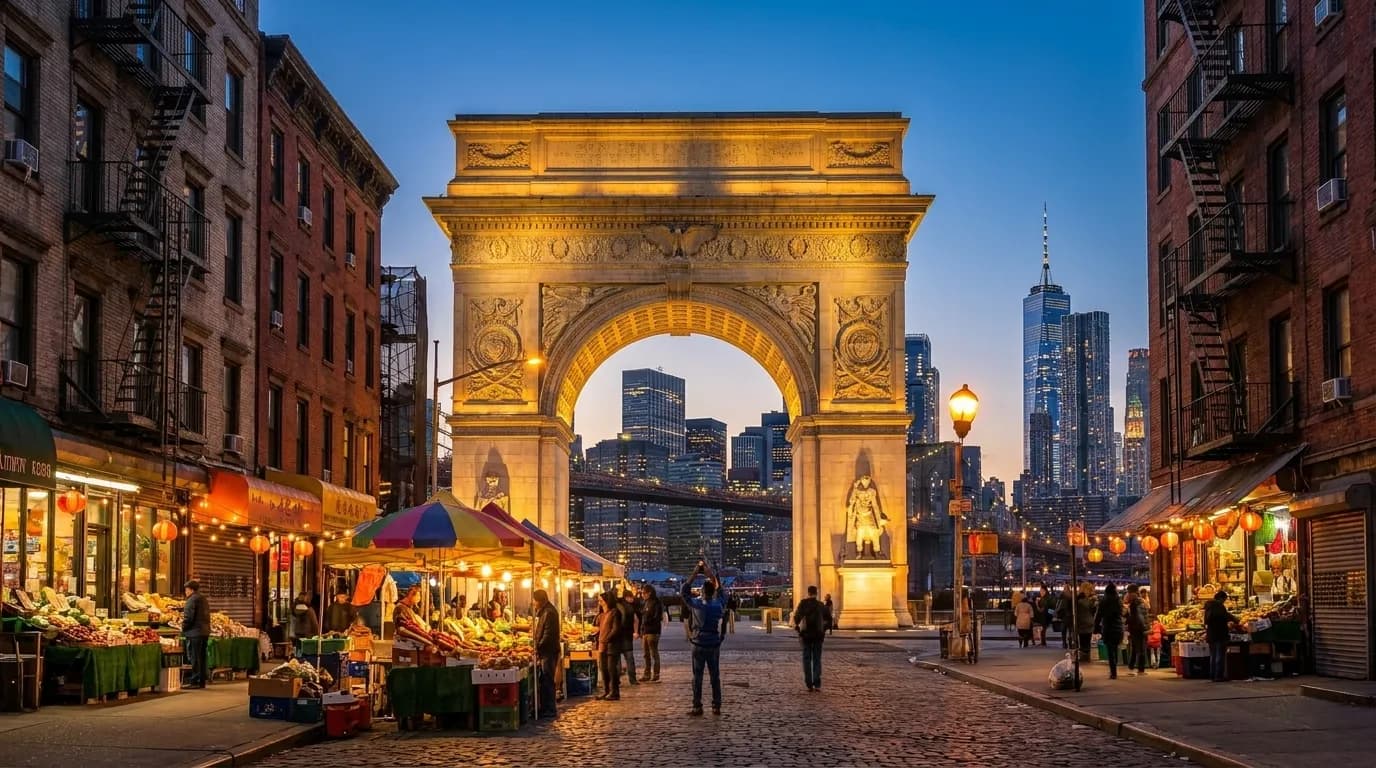
Harlem changes character after midnight. During the day, the neighborhood moves at a steady pace filled with commuters, families, and local businesses. At night, another layer appears—music spills from venues, restaurants stay busy, and streets reflect a mix of history and modern city life. What makes Harlem work for an unstructured culture night is that the neighborhood's density of legitimate cultural activity means you can pivot at any moment without losing momentum. You're not hunting for a single destination; you're navigating a district where soul food restaurants, corner bars with live sets, and community gathering spots exist within a few blocks of each other. The infrastructure is already there.
Text Karpo at (332) KARPO-NYC for real-time recommendations when you're already in Harlem and deciding where to go next.

The Geography Actually Supports Wandering
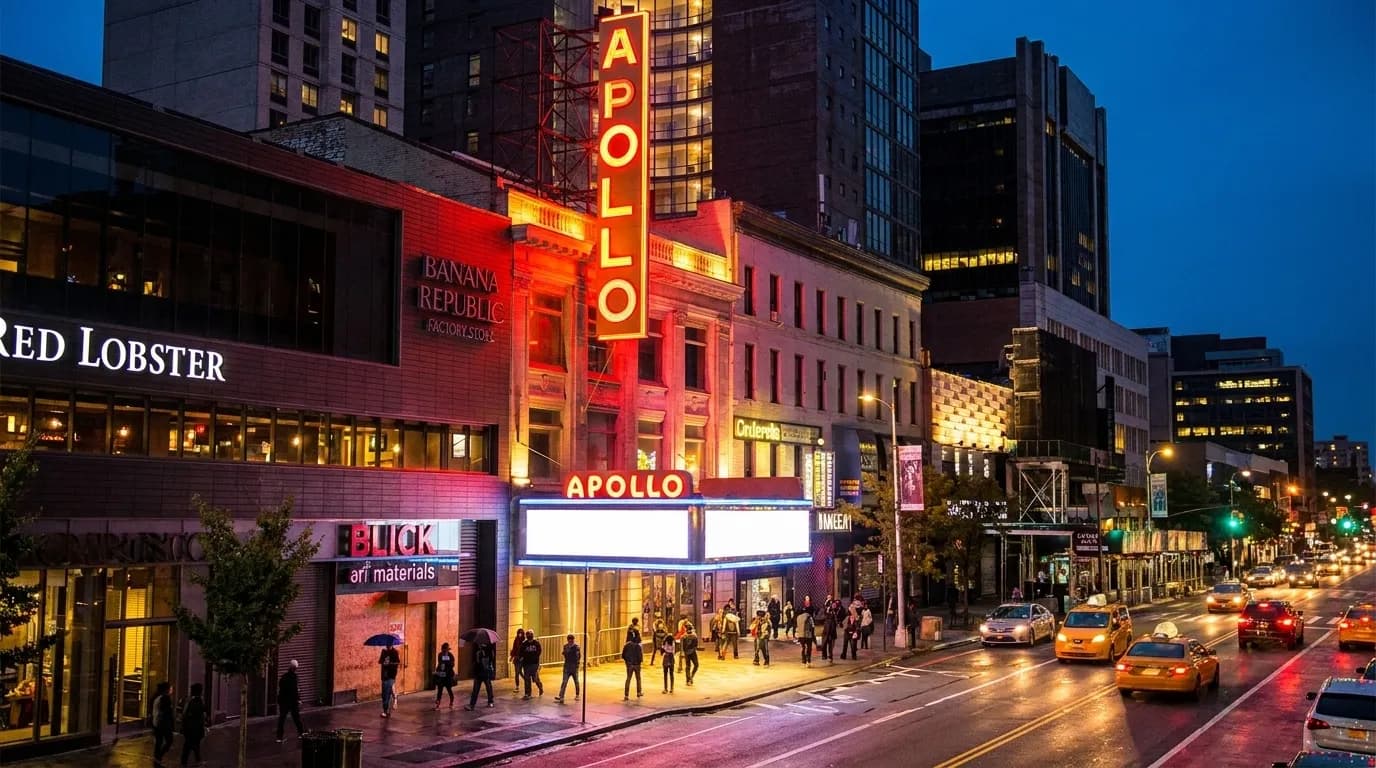
Harlem begins at 110th Street, where Central Park ends, and runs north through the 140s. It's not one neighborhood in any coherent sense—it's a collection of distinct communities including West Harlem, East Harlem, Central Harlem, Hamilton Heights, and Sugar Hill that share a name and history but feel genuinely different at street level. What they share is a depth of cultural infrastructure that makes spontaneous exploration viable. The Apollo Theater anchors 125th Street, but the real texture comes from the blocks radiating outward—Lenox Avenue, Malcolm X Boulevard, Frederick Douglass Boulevard—where smaller venues, restaurants, and bars operate without needing tourist foot traffic to survive. This means you can start on one corridor, follow a sound or a crowd, and end up somewhere completely unplanned without the evening falling apart.
The neighborhood's walkability matters here. Most cultural activity concentrates between 116th and 145th Streets, a distance you can cover on foot in under thirty minutes if you're moving with purpose. But the point of an unstructured night is that you're not moving with purpose—you're stopping when something catches your attention, backtracking when a venue looks full, or taking a side street because you heard a bass line. The compact geography means those detours don't cost you the rest of your evening. If a restaurant has a two-hour wait, another option is three blocks away. If a venue's cover charge feels steep, you can walk to a bar with a free jazz set instead of committing to an Uber across town.
Music Venues That Don't Require Advance Research
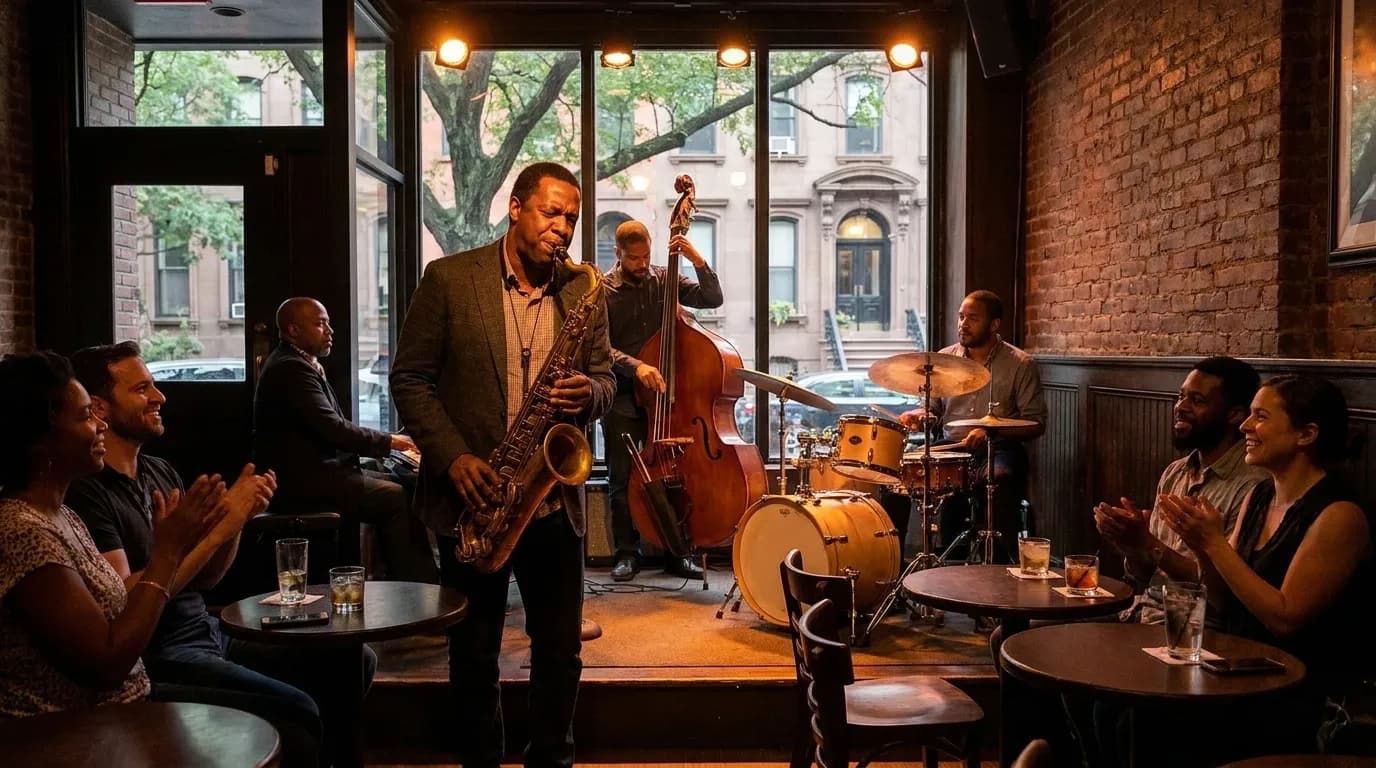
The Apollo Theater continues to anchor Harlem's music scene, but the neighborhood's real strength for spontaneous nights lies in the smaller venues and bars where live music happens without requiring tickets purchased weeks in advance. Music spills from corner bars throughout the neighborhood, particularly along Lenox Avenue and Frederick Douglass Boulevard. These aren't curated listening rooms—they're neighborhood spots where local musicians play sets, often without cover charges or with minimal door fees. The quality varies, but the accessibility is the point. You can walk in, order a drink, and decide within fifteen minutes whether you're staying or moving on.
Harlem has long been known as a cultural center in New York, with roots in the Harlem Renaissance and the birth of hip-hop. That legacy still shapes the neighborhood's present-day character, with institutions, performers, and entrepreneurs keeping traditions alive while pushing boundaries. What this means practically is that on any given night, you're likely to encounter live jazz, soul, gospel-influenced sets, or contemporary hip-hop without needing to know specific venue names in advance. The density of musical activity is high enough that you can let your ears guide you. If you hear something from the street, walk toward it. If a venue feels too crowded or the vibe isn't right, the next option is close. This only works because Harlem's music scene serves locals first—it's not dependent on planned tourism, so venues operate on neighborhood rhythms rather than event calendars.
Soul Food and Late-Night Eating Without Reservations
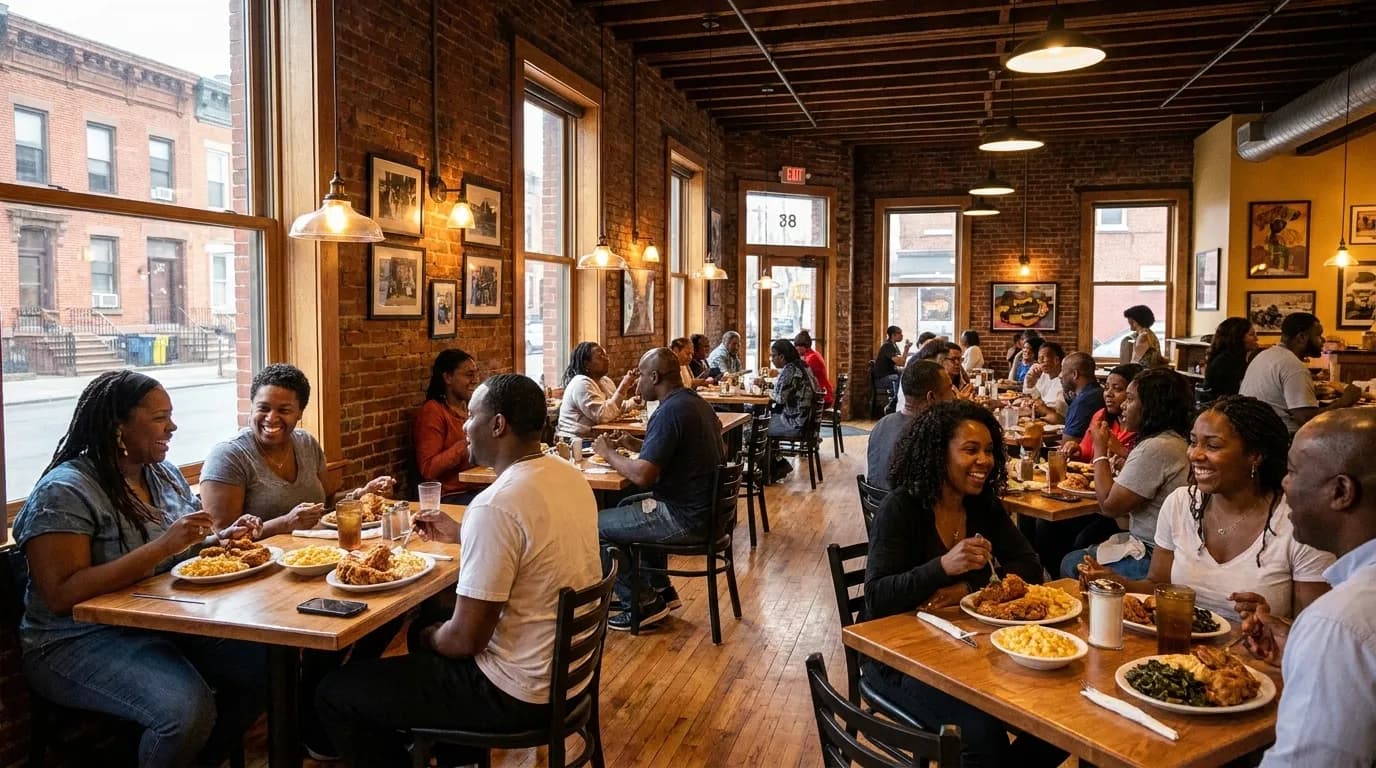
Harlem's soul food restaurants and late-night spots operate on a different schedule than much of Manhattan. Many stay busy well past midnight, and the neighborhood's food culture rewards walk-ins over reservations. Soul food restaurants remain central to the community's identity, serving fried chicken, collard greens, mac and cheese, and cornbread in portions that make dinner the anchor of your evening rather than a prelude to something else. The advantage for an unstructured night is that these restaurants don't require advance planning—you can decide to eat at 10 PM and find options that are still serving full menus.
East Harlem adds another layer, where the community's ability to preserve its history while embracing the future shows up in the food scene. People take pride in their heritage, supporting local restaurants and vendors that reflect the neighborhood's cultural mix. This means you're not limited to one cuisine or dining style. If soul food doesn't fit your mood, you can pivot to Caribbean spots, Latin American restaurants, or newer cafes and bars that have opened in recent years. The key is that most of these places don't operate on the reservation-required model that dominates downtown Manhattan. You can walk in, assess the wait, and make a decision on the spot. If one place is packed, another is nearby. The neighborhood's food density supports spontaneity in a way that requires genuine infrastructure—this isn't one or two notable restaurants surrounded by chains, it's block after block of locally-owned spots that stay open late and serve neighborhood crowds.
When Structured Events Actually Add Value
The city's annual Harlem Week returns in 2026, shutting down major corridors for sprawling outdoor street festivals, block parties, live concert stages, local food vendors, and more. Recognized as one of New York City's longest-running cultural festivals, this beloved multi-week event draws approximately 2 million attendees each year. If your unstructured culture night happens to coincide with Harlem Week, the event provides a framework without requiring advance planning—streets are closed, stages are set up, and you can move between performances and food vendors without needing to know the schedule. The scale of the event means you're not dependent on any single performance or vendor; you can wander and sample.
Beyond Harlem Week, the neighborhood anticipates the opening of the Urban Civil Rights Museum in 2026 and Casa Belongo in 2027, adding new cultural anchors to an already dense landscape. These institutions will likely operate on standard museum hours, which means they're better suited for daytime visits than spontaneous nighttime exploration. But their presence reinforces the broader point: Harlem's cultural infrastructure is deep enough that you don't need to plan around any single venue or event. If a museum is closed, live music is happening. If restaurants are full, bars are open. The neighborhood's strength for unstructured nights is that it offers multiple layers of cultural activity operating on different schedules, so you're never dependent on a single plan working out.
Practical Notes
- Start between 8 PM and 10 PM—earlier gives you more dining options, later puts you closer to peak music hours.
- Focus on the corridor between 116th and 145th Streets; most cultural activity concentrates here and distances are walkable.
- Bring cash for smaller venues and food spots; not all accept cards, and ATM access can be inconsistent late at night.
- Check MTA service alerts before heading uptown—weekend construction on the 2, 3, A, B, C, and D lines can affect travel times.
- If a venue or restaurant feels uncomfortably crowded, walk two or three blocks in any direction rather than waiting—density works in your favor.
- Dress for the weather and comfortable walking; spontaneous exploration breaks down quickly if you're cold or your shoes hurt.
- Use your phone to check if a venue has a cover charge or dress code before committing, but don't over-research—the point is to stay flexible.
Harlem works for unstructured culture nights because the neighborhood's infrastructure was built to serve locals, not tourists following itineraries. The density of music venues, soul food restaurants, and community gathering spots means you can pivot at any moment without the evening collapsing. You're not hunting for a single perfect experience—you're navigating a district where legitimate cultural activity happens on multiple blocks simultaneously. The best nights in Harlem come from trusting that the next option is close, that you can follow a sound or a crowd without needing to know where it leads, and that the neighborhood's depth will reward curiosity over planning.
Tags: #harlemculture #harlemmusic #soulfoodnyc #livemusichharlem #nycnightlife #harlemrenaissance #apollotheater #eastharlem #centralharlem #harlemweek #nycculture #uptownnyc #harlemfood #nyclocals
Sources consulted: Harlem Arts and Cultural Attractions - nyctourism.com · Walking Through Harlem's Cultural Legacy · Harlem: Where History, Culture, and a New Scene Meet · Harlem After Midnight: The Rhythm, Resilience, And Reality Of A ... · Harlem NYC Neighborhood Guide: Culture, Food, and History on Your Terms
All trademarks are the property of their respective owners.