 Mediterranean Food Near Me in Fort Greene: Miss Ada's Garden and Hummus
Neighborhood Guides
Why Greenpoint Still Works Better Than Williamsburg for a Half-Day Local Hang
One neighborhood north, Greenpoint delivers the walkable blocks, Polish bakery rhythm, and waterfront breathing room that Williamsburg traded for crowds—without needing a full day to feel the difference.
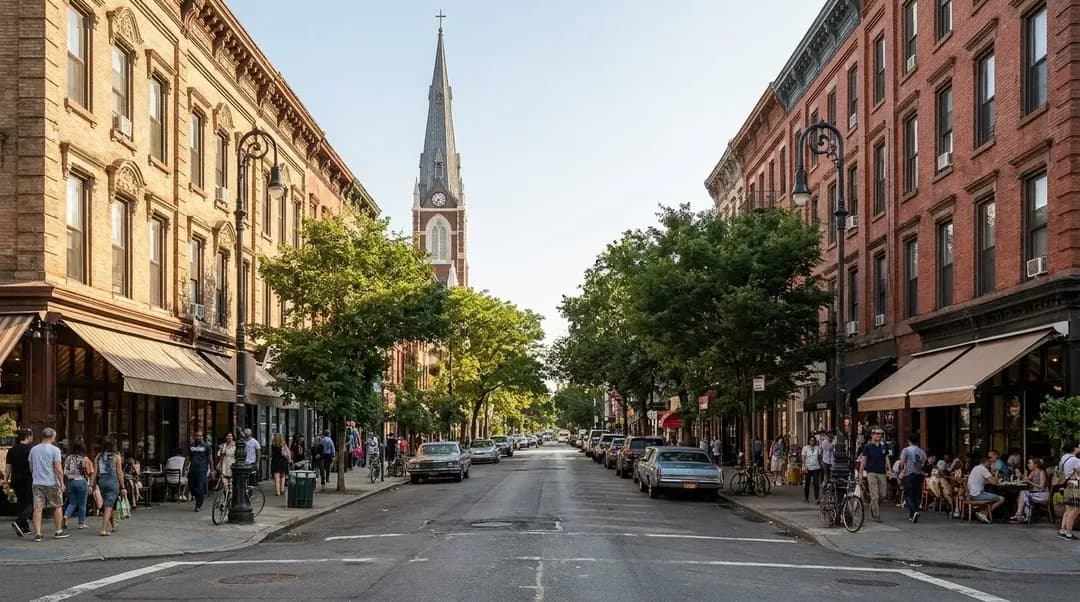
Williamsburg gets the headlines, the L train crowds, and the lines outside every brunch spot. Greenpoint, sitting directly north across McCarren Park, kept what made North Brooklyn appealing in the first place: tree-lined blocks you can actually walk without dodging strollers and tour groups, Polish bakeries that still smell like the neighborhood's century-old roots, and East River waterfront access without the condo-lobby gauntlet. For a half-day hang—four to six hours when you want to move through coffee, a meal, a park, and maybe a shop or bar without backtracking or waiting—Greenpoint's tighter commercial corridors and residential calm make the route easier to sequence. You're not fighting Williamsburg's scale or its weekend crush. You're working with a neighborhood that still operates at human speed, where the G train's Manhattan-access trade-off becomes an advantage: fewer bridge-and-tunnel day-trippers, more locals who live within ten blocks of where they're eating.
Text Karpo at (332) KARPO-NY to plan your next neighborhood move, whether you're scoping Greenpoint for a lease or just need a better Saturday route.
The G Train Trade-Off Filters the Crowd
Greenpoint's defining transit feature is also its crowd-control mechanism: the G train runs north-south through Brooklyn and Queens without touching Manhattan. According to multiple real-estate sources, this lack of direct Manhattan access keeps pricing lower—average sale prices in Greenpoint ran around $1,221 per square foot in recent years, compared to $1,416 in Williamsburg—and it also keeps the weekend tourist volume manageable. If you're coming from Manhattan, you transfer at Court Square or Hoyt-Schermerhorn; if you're already in Brooklyn, the G is your direct shot. That friction means the people you see on Manhattan Avenue on a Saturday afternoon are more likely to live within a few stops, not day-tripping from Midtown hotels.
The neighborhood does have the NYC Ferry stop at India Street and the East River Ferry at Greenpoint Avenue, both offering Manhattan skyline views and direct service to Wall Street, Midtown East, and Long Island City. But ferry ridership skews toward commuters and intentional visitors, not the casual foot traffic that floods Bedford Avenue. For a half-day hang, this transit profile works in your favor: you're sharing sidewalk space with people who know the block, not groups trying to find the Instagram mural. The G's limited reach becomes a feature, not a bug, when your goal is a relaxed four-hour loop without constant navigation around crowds.
Manhattan Avenue Gives You the Full Loop in Fewer Blocks
Greenpoint's commercial spine runs along Manhattan Avenue and Franklin Street, with the former carrying the neighborhood's Polish legacy and the latter hosting newer boutiques and cafés. Manhattan Avenue in particular delivers a compact, walkable sequence: you can start at a Polish bakery near Greenpoint Avenue, move north through coffee shops and vintage stores, hit McGolrick Park for a breather, then double back or cut east toward the waterfront—all within a half-mile stretch. The density is high enough to offer variety, but the scale is small enough that you're not burning an hour on transit between stops.
Williamsburg's Bedford Avenue, by contrast, stretches from the Williamsburg Bridge north past McCarren Park, with commercial nodes scattered across a much longer corridor. You'll find more brand-name retail and more polished restaurant buildouts, but the walking distances between distinct zones—South Williamsburg's Hasidic blocks, the Bedford L stop cluster, the McCarren Park edge—add up quickly. For a half-day hang, that sprawl forces choices: do you stay near the L and accept the crowds, or do you venture north and risk spending half your time in transit? Greenpoint's tighter geography eliminates that calculus. You pick a starting point on Manhattan Avenue, and everything else radiates from there without requiring a second subway ride or a long Citi Bike stretch.
The Residential Blocks Still Look Like Residential Blocks
One of Greenpoint's most cited advantages is its housing stock: modest rowhouses, prewar apartment buildings, and small multi-family homes still dominate most side streets, with fewer luxury high-rises interrupting the sightlines. Multiple sources describe the neighborhood as quieter and more neighborhood-feeling than Williamsburg, where glass towers and condo lobbies now define the waterfront and much of the Bedford corridor. That visual continuity matters for a half-day hang because it makes the walking portions feel less transactional. You're moving through blocks where people live, not through a series of retail and residential megaprojects.
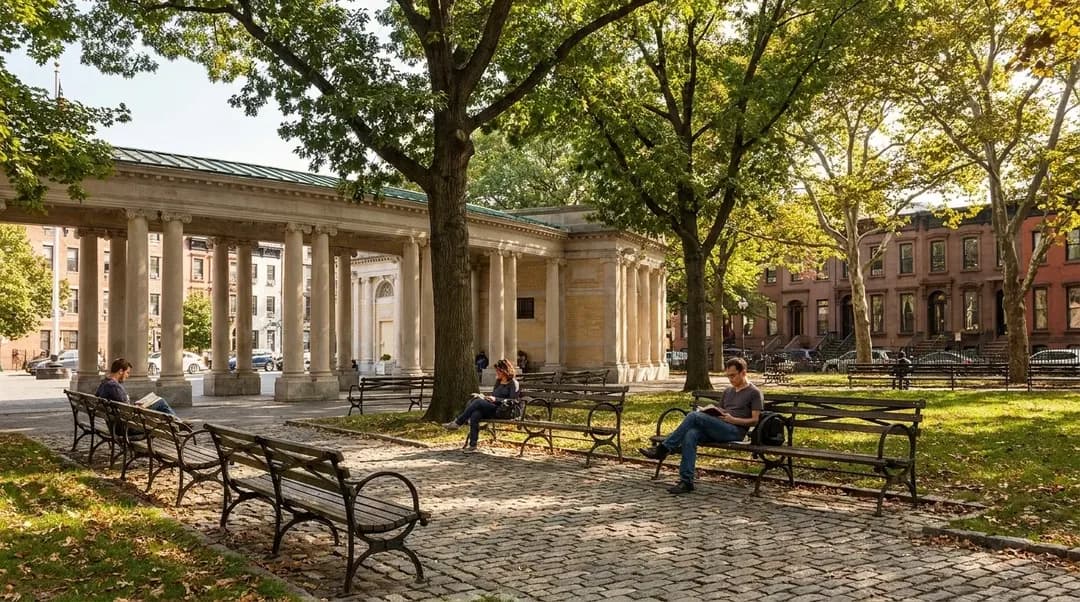
McGolrick Park, Greenpoint's central green space, anchors this residential character. It's smaller than McCarren Park but serves a similar function: a place to sit, read, or people-watch without the weekend sports-league density that McCarren attracts. The park's prewar rowhouse perimeter and mature trees give it a neighborhood-square feel, and it's rarely crowded enough that you can't find a bench. For a half-day route, McGolrick works as a midpoint reset—you've done coffee and a walk, you need twenty minutes to sit before the next meal or shop, and the park delivers that without requiring a long detour. Williamsburg's McCarren Park is larger and better for active use, but it's also a weekend destination in its own right, which means you're sharing space with soccer leagues, barbecue groups, and dog runs operating at capacity. Greenpoint's parks operate at a lower hum.
The Waterfront Payoff Without the Condo Gauntlet
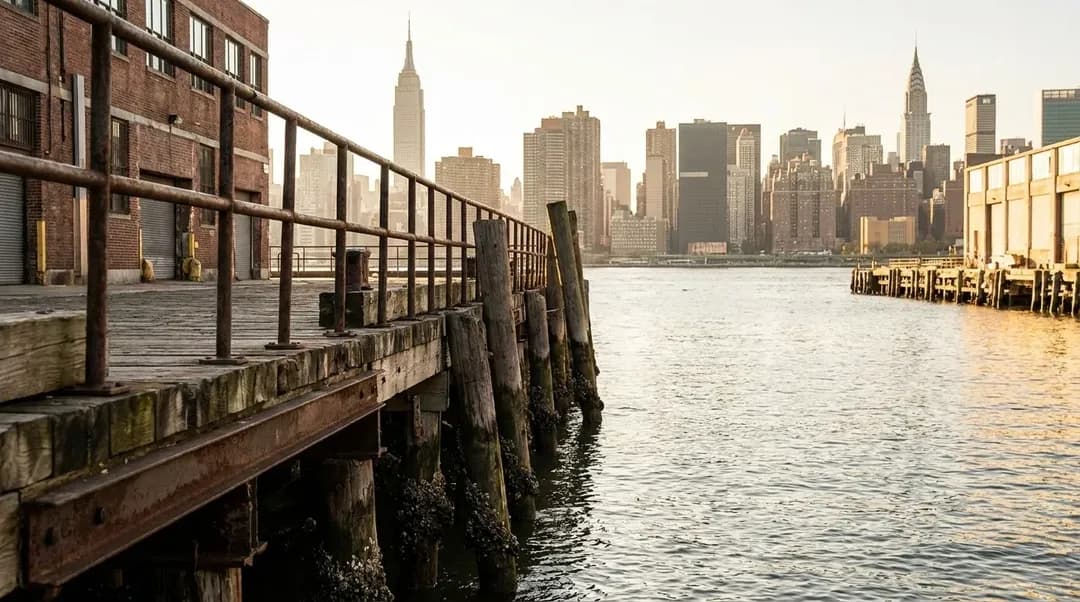
Greenpoint's East River waterfront offers the same Manhattan skyline views that Williamsburg's Domino Park and Grand Ferry Park deliver, but the access points feel less curated and less crowded. Greenpoint Avenue dead-ends at the water with open views toward Midtown, and the Greenpoint Terminal Market area (formerly an industrial zone, now mixed-use) provides another waterfront entry point without the manicured-park aesthetic. You're not walking through a luxury-condo lobby or navigating around wedding photo shoots to reach the river; you're just walking to the end of a street.
This matters for a half-day hang because the waterfront becomes a natural endpoint rather than a separate destination. You've done your Manhattan Avenue loop, you've hit a meal or a coffee, and now you walk fifteen minutes east to close the route with a river view before heading home. Williamsburg's waterfront parks are undeniably more polished—Domino Park's design and amenities are superior—but they're also busier, and the surrounding residential towers create a sense of enclosure that Greenpoint's lower-rise blocks avoid. If your goal is a quiet place to sit and look at the skyline for twenty minutes, Greenpoint's scrappier waterfront access points deliver without the weekend crowds. The trade-off is fewer benches and less infrastructure, but for a half-day hang, that trade-off often works in your favor.
Practical Notes
- G train to Greenpoint Avenue or Nassau Avenue puts you on Manhattan Avenue's commercial center; plan for one transfer if coming from Manhattan.
- Manhattan Avenue between Greenpoint Avenue and Norman Avenue covers most food, coffee, and shopping needs within a half-mile walk.
- McGolrick Park (bounded by Nassau Avenue, Driggs Avenue, Russell Street, and Monitor Street) works as a midpoint rest stop; rarely crowded on weekday afternoons.
- East River waterfront access at the end of Greenpoint Avenue or via India Street offers skyline views; expect minimal seating and no food vendors.
- Polish bakeries and delis cluster near Greenpoint Avenue on Manhattan Avenue; most open early and close by mid-afternoon on weekends.
- Franklin Street runs parallel to Manhattan Avenue one block west; newer boutiques and cafés, slightly quieter foot traffic.
- Check G train service alerts before heading out—weekend work is common, and shuttle buses add time to any transfer.
Greenpoint works for a half-day hang because it doesn't ask you to manage Williamsburg's scale, crowds, or decision fatigue. You get the North Brooklyn essentials—good coffee, solid food, waterfront access, walkable blocks—in a tighter, quieter package that respects your four-to-six-hour window. The G train's limited reach keeps the weekend tourist volume down, Manhattan Avenue's compact commercial strip eliminates long walks between stops, and the residential blocks still look and feel like a neighborhood rather than a luxury-development showcase. You're not fighting for brunch tables or navigating around influencer photo shoots. You're just walking, eating, and sitting by the river, which is what a half-day hang should be.
Tags: #greenpoint #williamsburg #northbrooklyn #brooklynneighborhoods #gtrain #manhattanavenue #mcgolrickpark #greenpointwaterfront #brooklynhangs #neighborhoodguides #brooklynlocals #greenpointbrooklyn #nycneighborhoods #brooklynlife
Sources consulted: Greenpoint Brooklyn Guide, and Why I Pick It Over Williamsburg · Greenpoint | UBIQ New York · Greenpoint Brooklyn Neighborhood Guide 2026 | DeFalco · Why does Greenpoint offer better value than Williamsburg? · Greenpoint Real Estate & Neighborhood Spotlight | Brooklyn, NYC — Ben ... · Why homebuyers are drawn to the 'small-town charm' of Greenpoint, Brooklyn
All trademarks are the property of their respective owners.
Ask Karpo for more information.
Keep reading
- Mediterranean Food Near Me in Fort Greene: Miss Ada's Garden and Hummus
 Places To Eat Near Me in Chelsea: The Market Fills a Nabisco Factory
 Seafood Near Me in the East Village: The Mermaid Inn's Dollar Oysters