 Mediterranean Food Near Me in Fort Greene: Miss Ada's Garden and Hummus
Neighborhood Guides
Why Fort Greene Still Beats Williamsburg for a Low-Pressure Culture Date
Fort Greene's walkable mix of historic brownstones, a 65,000-square-foot arts center, and Brooklyn's oldest park offers couples a quieter, more grounded alternative to Williamsburg's crowded waterfront scene.
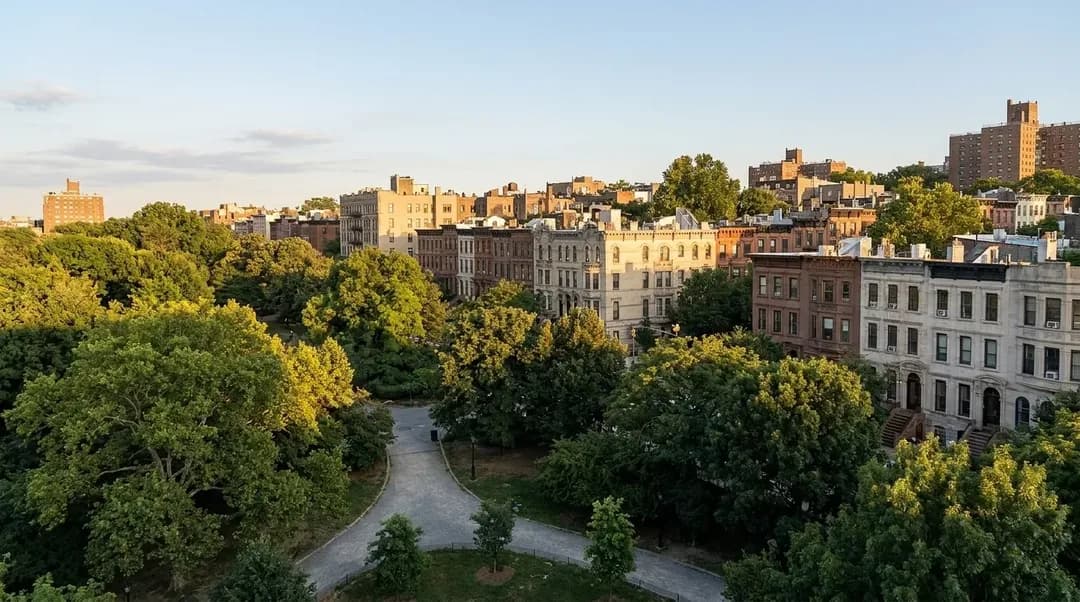
Williamsburg still pulls crowds to its waterfront and Bedford Avenue storefronts, but the neighborhood's appeal has shifted. With the Music Hall of Williamsburg closing after 2026 and wellness chains like Othership and Bathhouse redefining the local scene, the area feels more corporate than creative. Fort Greene, by contrast, has quietly consolidated its position as Brooklyn's most walkable cultural district. Centered on a park redesigned by Frederick Law Olmsted and Calvert Vaux in 1864, the neighborhood now anchors the L10 Arts and Cultural Center—a 65,000-square-foot collaboration among four major institutions—alongside independent bookstores, brownstone blocks, and a food scene that rewards slow exploration rather than Instagram documentation.
Text Karpo at (332) 334-3770 to map a Fort Greene itinerary that skips the tourist traps and lands you at the spots locals actually use for low-key dates.
The L10 Arts and Cultural Center gives Fort Greene institutional weight Williamsburg lost
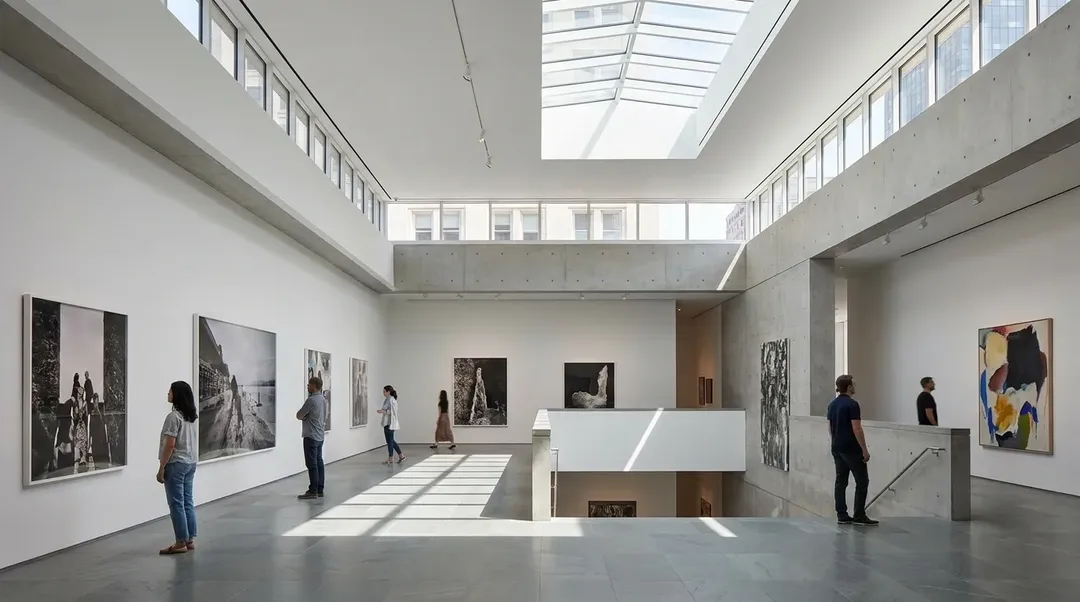
The L10 Arts and Cultural Center opened as a 65,000-square-foot hub uniting four major institutions in Fort Greene. Designed for collaboration and flexible programming, the center sets a new standard for inclusive cultural infrastructure in Brooklyn. This is not a pop-up gallery or a converted warehouse—it's a permanent anchor that signals Fort Greene's commitment to arts access and community engagement. For a culture date, that means you can plan around a rotating calendar of exhibitions, performances, and talks without worrying that the venue will rebrand or close by next season.
Williamsburg, meanwhile, has seen its cultural landscape fragment. The Music Hall of Williamsburg is officially closing after 2026, losing its lease after eighteen years as a neighborhood fixture. That closure reflects a broader shift: as rents climb and landlords prioritize higher-margin tenants, independent venues struggle to survive. Fort Greene's L10 model—purpose-built, multi-institutional, and community-focused—offers stability that Williamsburg's ad-hoc cultural scene can no longer guarantee. If you're planning a date around a specific event, Fort Greene's infrastructure means you can book tickets weeks in advance and trust the venue will still be there.
Fort Greene Park offers Olmsted design and elevation changes Williamsburg's waterfront can't match
Fort Greene Park is Brooklyn's oldest park, originally called Washington Park before being redesigned by Frederick Law Olmsted and Calvert Vaux in 1864. The park sits on elevated ground, offering topography that creates distinct zones—hilltop views, tree-lined paths, and low-lying lawns—within a compact footprint. That elevation change matters for a date: you can walk uphill to the Prison Ship Martyrs' Monument for a quiet overlook, then descend to the park's southern edge for a different vantage. The design rewards movement in a way that flat, waterfront parks do not.
Williamsburg's green spaces—McCarren Park and the East River waterfront—are larger but flatter, and they draw heavier crowds on weekends. Fort Greene Park's age has prompted ongoing maintenance work, including a capital improvement plan that has sparked debate over tree removal and walkway upgrades. But even with construction, the park remains functional and less congested than McCarren. For a low-pressure date, that means you can find a bench or a patch of lawn without competing for space, and the park's historic design gives you something to talk about beyond the weather.
Brownstone blocks and independent retail create a slower pace than Bedford Avenue
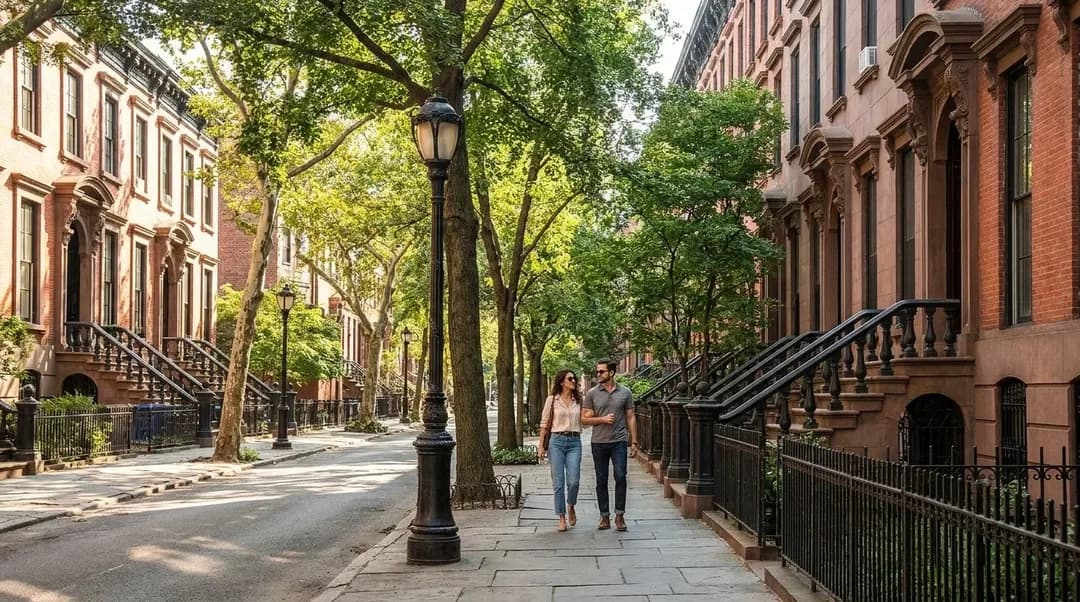
Fort Greene's residential streets are lined with mid-19th-century Italianate and Eastlake brownstones, most of which remain well-preserved. The neighborhood's architectural consistency creates a visual rhythm that encourages walking—each block feels distinct but coherent, and the low-rise scale keeps sightlines open. That walkability extends to the commercial corridor along DeKalb Avenue and Fulton Street, where independent bookstores, cafés, and small retailers operate without the density or noise of Williamsburg's Bedford Avenue strip.
Williamsburg's retail landscape has tilted toward chains and high-turnover storefronts. The arrival of wellness brands like Othership, Bathhouse, and the Culture of Bathe-ing festival reflects a new, productivity-obsessed bathing culture that feels more corporate than communal. Fort Greene's retail mix, by contrast, still skews independent and neighborhood-focused. For a date, that means you can browse a bookstore or stop for coffee without navigating crowds or feeling pressured to document the experience. The slower pace makes conversation easier and reduces the performance anxiety that often accompanies Williamsburg outings.
Transit access and geographic position make Fort Greene a practical hub for Brooklyn couples
Fort Greene sits at the intersection of multiple subway lines—the A, C, G, B, Q, R, 2, 3, 4, and 5 all stop within or near the neighborhood—giving it better transit connectivity than Williamsburg, which relies primarily on the L and G trains. That access matters if you or your date are coming from different parts of Brooklyn or Manhattan: Fort Greene functions as a central meeting point, while Williamsburg often requires a transfer or a longer walk from the subway. The neighborhood's proximity to Downtown Brooklyn also means you can extend a date into adjacent areas—Brooklyn Heights, Boerum Hill, or Prospect Heights—without backtracking.
Williamsburg's waterfront location creates a geographic bottleneck. If you're meeting someone from deeper Brooklyn or Queens, the L train becomes a single point of failure, and weekend service changes can add twenty minutes to a trip. Fort Greene's redundancy—multiple lines, multiple directions—reduces that friction. For a culture date that might involve a museum visit, a park walk, and dinner, Fort Greene's transit position lets you move fluidly without constantly checking train schedules or debating whether to call a rideshare.
Practical Notes
- Check L10 Arts and Cultural Center programming online before your visit; the four-institution model means events span visual arts, performance, and talks.
- Fort Greene Park's capital improvement work may affect certain walkways; enter from the south side near DeKalb Avenue for the most reliable access.
- Weekend afternoons in Fort Greene Park are busier but still quieter than McCarren; plan for early evening if you want maximum space.
- DeKalb Avenue between Flatbush and Vanderbilt offers the densest cluster of independent cafés and bookstores; budget 90 minutes to explore on foot.
- If you're meeting from different boroughs, use the Atlantic Avenue–Barclays Center hub as a reference point—it's a five-minute walk to Fort Greene's core.
- Williamsburg's L train runs express on some weekends; always check MTA alerts if you're comparing travel times between neighborhoods.
- Fort Greene's brownstone blocks are best appreciated on foot; avoid planning a driving route through residential streets, as parking is limited and metered.
Fort Greene's advantage over Williamsburg isn't about trendiness or nightlife—it's about infrastructure, walkability, and a cultural scene that prioritizes permanence over hype. The L10 Arts and Cultural Center, Olmsted-designed park, and preserved brownstone blocks create a neighborhood that rewards slow exploration and genuine conversation. Williamsburg still has its moments, but for a low-pressure culture date where you want to focus on each other rather than the crowd, Fort Greene delivers a more grounded experience. The neighborhood's transit access and geographic centrality make it easier to plan, and its independent retail mix keeps the outing feeling personal rather than performative.
Tags: #fortgreene #williamsburg #brooklyndate #culturaldate #fortgreenepark #l10artscenter #brooklynneighborhoods #nycculture #olmstedpark #brooklynbrownstones #lowpressuredate #brooklynguide #nyclocal
Sources consulted: Brooklyn's New Creative Beacon: The L10 Arts and Cultural Center · Fort Greene- Brooklyn's Historic African American District and now Top ... · Music Hall Of Williamsburg To Close After 2026 - Secret NYC · New York's Sauna Culture Has Gotten a Lot More Corporate · Ft. Greene vs Williamsburg : r/AskNYC - Reddit · Fort Greene, Brooklyn: The Ultimate Walkable Neighborhood Guide to ...
All trademarks are the property of their respective owners.
Ask Karpo for more information.
Keep reading
- Mediterranean Food Near Me in Fort Greene: Miss Ada's Garden and Hummus
 Places To Eat Near Me in Chelsea: The Market Fills a Nabisco Factory
 Seafood Near Me in the East Village: The Mermaid Inn's Dollar Oysters