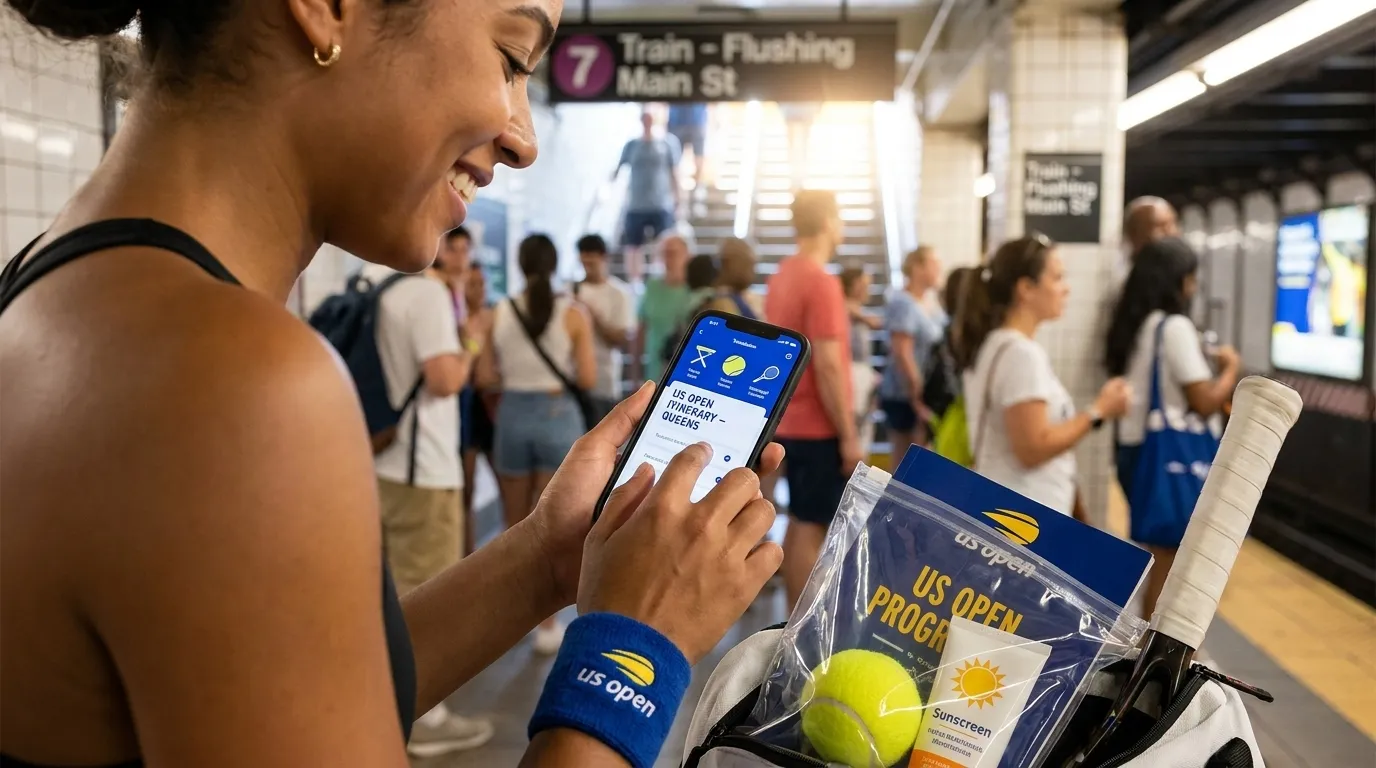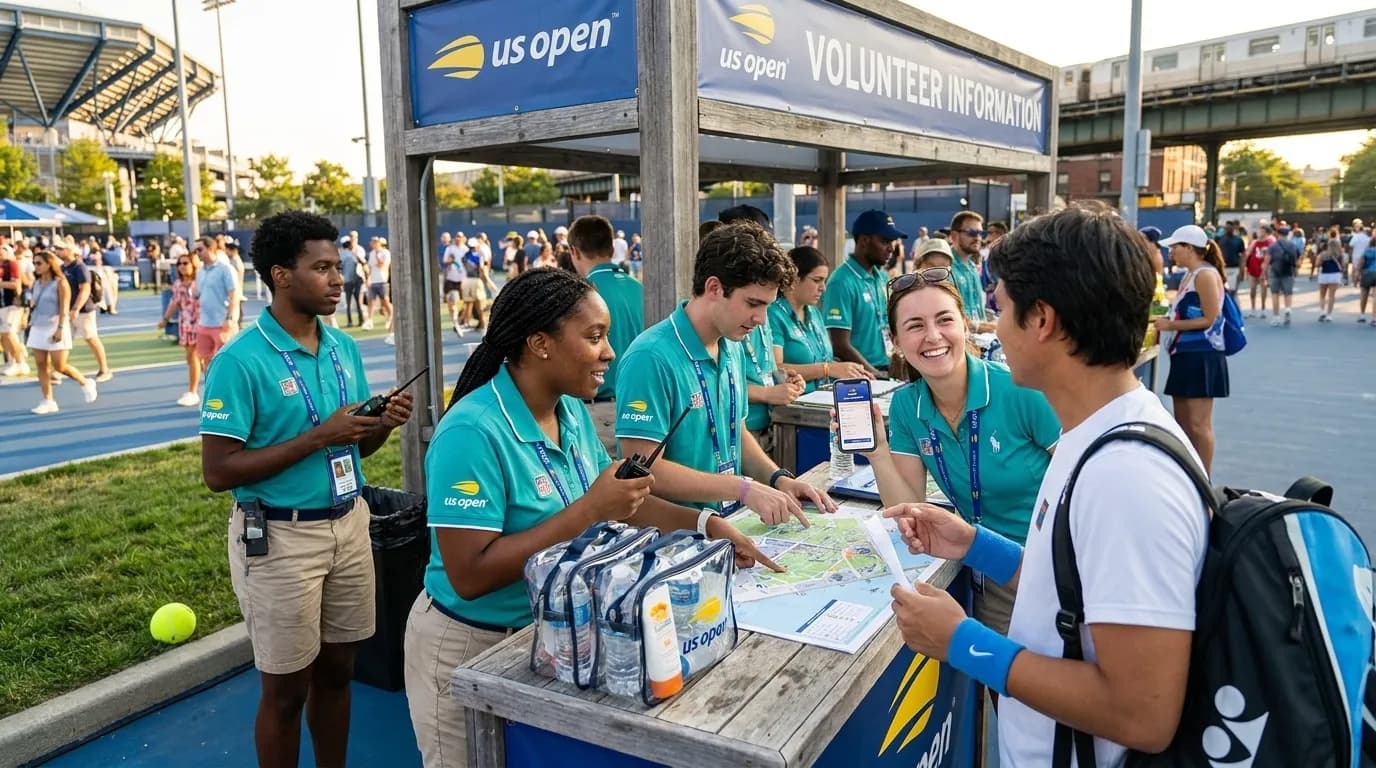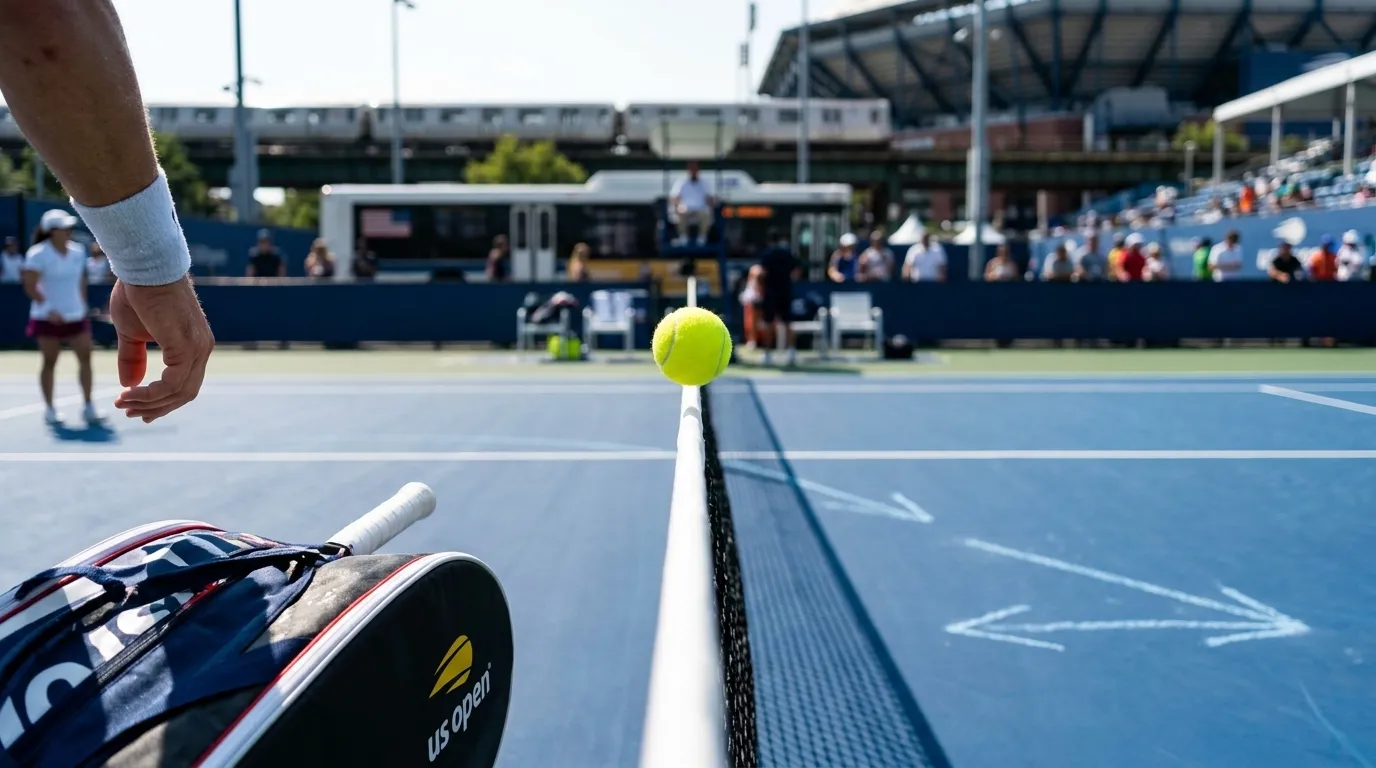
A drop shot at the US Open is easiest to understand before the ball is struck. On hard courts in New York, a short, soft ball can be a clever trap when the opponent is deep, stretched, or preparing for another drive. It can look careless when the hitter is off balance, too far behind the baseline, or slow to move after contact. The official 2026 US Open calendar runs from August 23 through September 13, with singles main-draw play scheduled to begin August 30, but daily conditions, session details, transportation, venue rules, and weather can change. Recheck the US Open schedule, A-Z guide, transportation directions, and prohibited-items information close to travel. During a match, judge the shot through four visible clues: the way the court is playing, where both players stand, how well the hitter hides the choice, and whether the hitter recovers for the next ball.
Text Karpo when a drop shot lands and we’ll explain why it worked on that hard court.

Why the Same Drop Shot Can Look Brilliant or Bad
A drop shot is a small-margin play. The ball must clear the net, slow quickly, and land short enough to make the opponent uncomfortable. Hard courts often provide a more predictable bounce than clay or grass, but predictability does not make the shot safe. If the ball sits up, a quick defender may arrive with time to angle, lob, or pass. If the hitter cuts it too fine, the ball may not reach the other side.
The shot works because it changes the rally’s question. After several deep, heavy balls, the defender may be braced behind the baseline and expecting pace. A drop shot forces a forward sprint, a controlled stop, and a delicate contact under pressure. The point does not have to end immediately. A good short ball can create a weak reply, open space for the next pass, or make the opponent hesitate before retreating too far in later rallies.
Surface Pace Is Only One Clue
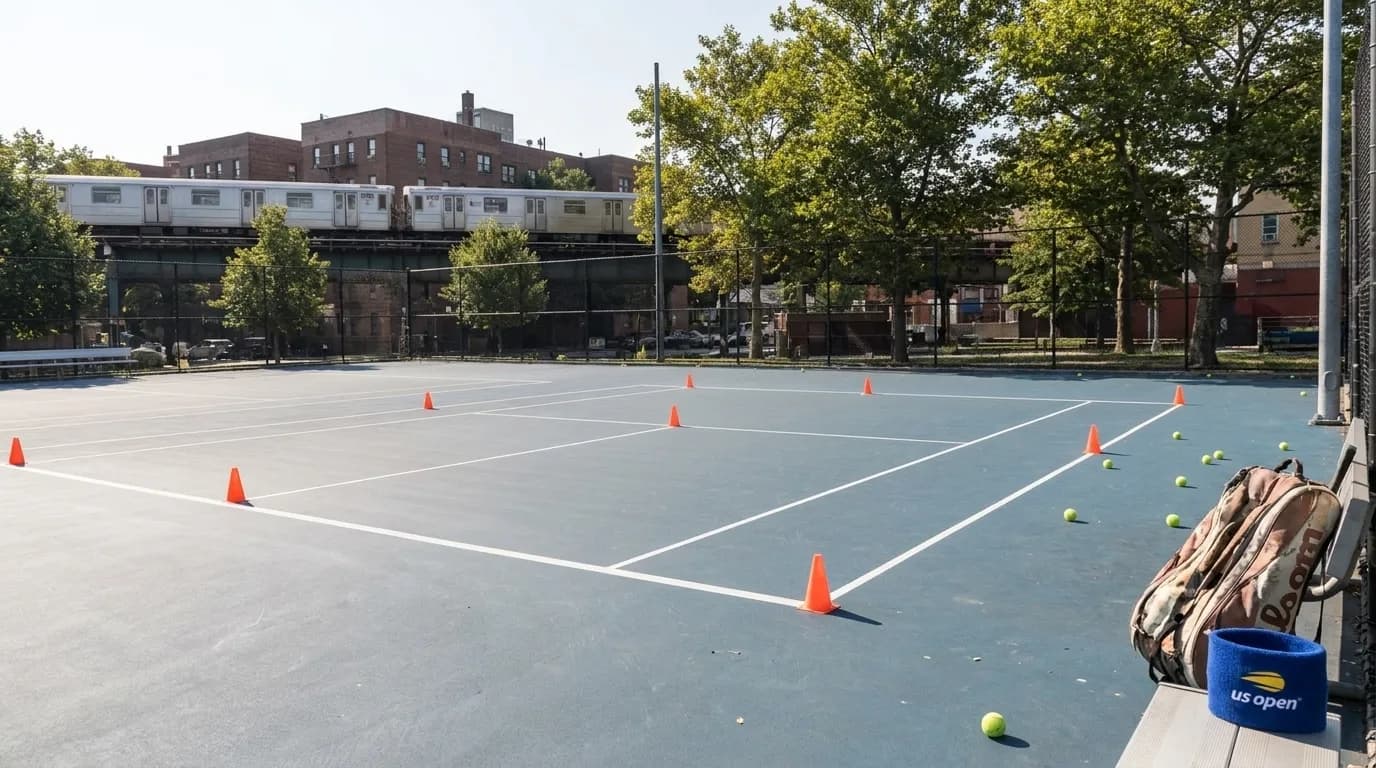
Fans often ask whether the court is fast or slow, but the better question is how the ball is behaving in that point. Are rally shots skidding through? Are balls jumping into comfortable strike zones? Are players winning by taking time away, or by forcing repeated recoveries? A drop shot in a quick-feeling exchange can be risky if the defender is already alert and balanced. A drop shot after a heavy, high-bouncing rally may be more useful because it asks the defender to change direction and height suddenly.
Weather, shade, wind, humidity, and ball wear may affect timing and feel in observable ways, but none of them guarantees a result. Avoid assuming one fixed court speed across every court, session, and hour. Instead, use evidence from the match. Have earlier short balls checked up, floated, or been punished? Are players arriving comfortably, or lunging late? Those answers matter more than a broad label attached to the surface.
Court Position Decides the Risk
The best drop shots usually begin with geography. If the defender is several steps behind the baseline, leaning wide, or recovering from a deep corner, the short court becomes inviting. The hitter has already created the sprint before the ball leaves the strings. If the defender is inside the baseline, the same shot may become a gift: a short run, an early contact point, and an easy angle into open space.
The hitter’s location matters just as much. From inside the baseline, a player can take the ball early, keep the motion compact, and make the short ball resemble another attacking shot until late. From far behind the baseline, the drop shot has farther to travel while still needing to land softly. That can succeed, but the margin is thinner because the defender has more time to read, run, and choose a reply.
A useful viewing habit is to freeze the court when the hitter starts the swing. Where is the opponent standing? Which way is their weight moving? How much open space exists in front? A drop shot is rarely an isolated trick. It is usually the final move in a sequence built by depth, angle, and pressure.
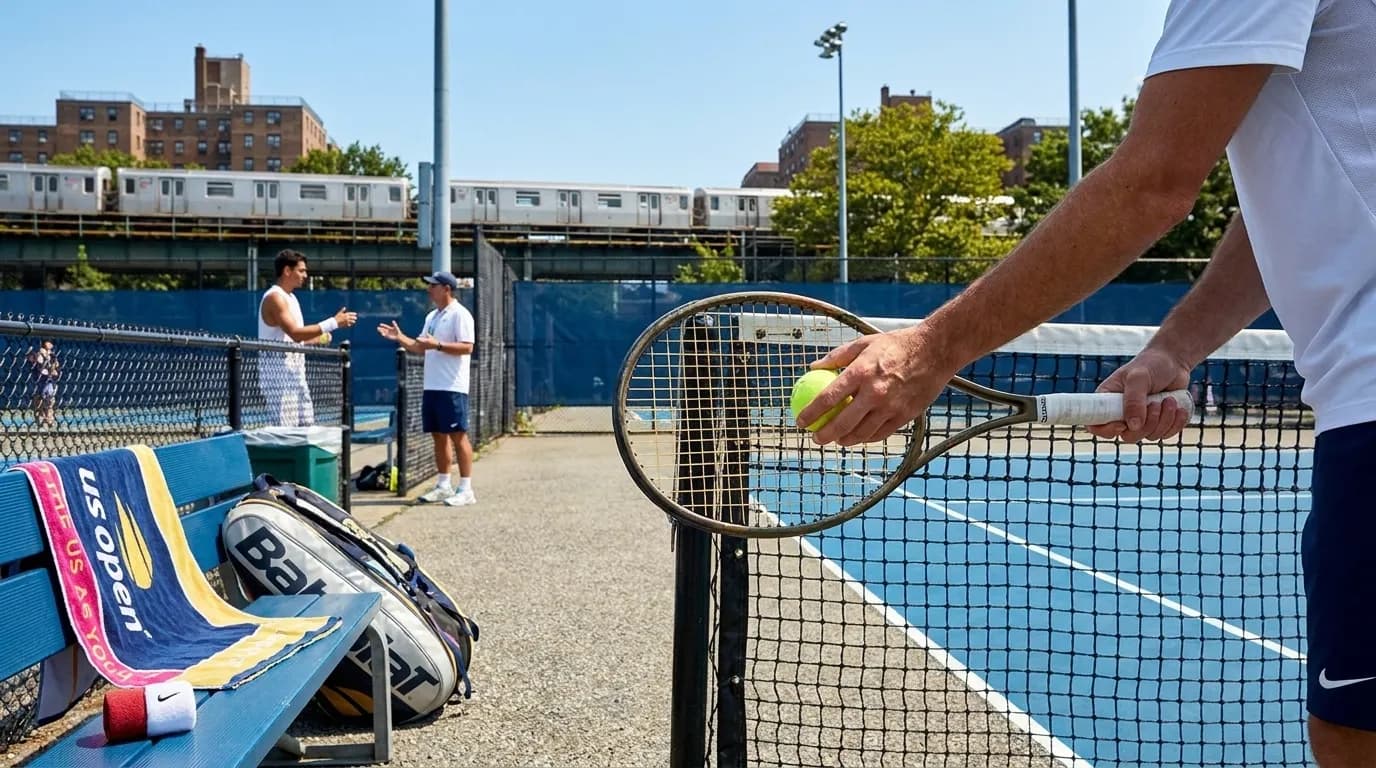
Disguise Starts Before the Touch
Disguise is not just a last-second flick. It is the ability to make a normal drive or slice remain believable long enough that the opponent’s first step is late or wrong. Watch the shoulders, preparation height, and approach to the ball. If the hitter’s body language matches a full shot, the defender may hold deeper. If the racquet face opens too early, the defender can start forward before contact.
The most convincing drop shots often come from positions where pace still feels possible: stepping into a forehand, shaping a backhand slice, or taking a shorter ball with time. That is why power and touch are connected. The threat of a deep strike keeps the opponent honest; the soft ball punishes that honest positioning.
Spin also shapes the disguise. Backspin can help the ball slow after the bounce, but obvious carving may reveal the plan. A flatter, softer touch can surprise, yet it may bounce higher if not controlled. There is no single best version. The right choice depends on contact point, opponent location, and the shot the hitter expects to play next.
Recovery Shows Whether It Was a Plan
A drop shot does not end at contact. Many points are decided by the next ball: a pass, lob, volley, or calm finish into open court. That makes recovery one of the clearest fan clues. After playing short, does the hitter move forward with balance? Do they close toward the likely reply? Do they split-step as the opponent reaches the ball? If so, the drop shot was probably part of a sequence. If the hitter watches from the baseline, they may be depending on perfection.
On a hard court, a defender who reaches the ball can still counter sharply. A soft reply can become a short angle. A desperate scoop can become a lob. Even a late stab can force the original hitter to play one more ball. Recovery protects the idea. Without it, a beautifully feathered shot can turn into a neutral or losing position.
Crowd reaction can be misleading here. A gasp-worthy drop shot may not be tactically complete. Look at the hitter’s feet immediately after contact. The point will often show whether the shot was a trap, an escape, or a spectacular touch that still required another decision.
How to Read the Misses
When a drop shot fails, the clue is often visible. The opponent may have been too close. The hitter may have been falling backward. The rally may not have pushed the defender deep enough. The disguise may have disappeared early. Or the hitter may have failed to cover the obvious reply.
Score and match context can also influence the choice, but fans should be cautious about turning one attempt into a full story. A single miss may be execution. Repeated misses from the same position may suggest the defender is reading the cue, or that the hitter has not earned enough space first. Ask what the drop shot was meant to change: end the point, pull the opponent forward, break rhythm, test movement, or set up a pass. If that answer is hard to see from the preceding rally, the shot may have been forced rather than constructed.
Practical Notes
- Before you go, verify the current event schedule on the official US Open site; the 2026 tournament calendar runs August 23 through September 13, with singles main-draw play scheduled to begin August 30.
- Check the official A-Z guide, transportation directions, and prohibited-items page close to travel, because venue rules, access details, service availability, weather impacts, and transit conditions can change.
- When a drop shot happens, locate the defender first: deep, wide, leaning, or already inside the court.
- Then judge the hitter’s balance. A drop shot from controlled forward movement is different from one played while retreating or stretching.
- Watch the recovery after contact. Moving forward, split-stepping, and covering the likely reply are signs the shot was part of a plan.
- Do not overreact to one highlight or one miss. Track the pattern across several points to see whether the short ball is opening the court or inviting punishment.
Tags: #USOpen2026 #Tennis #NewYork #Queens #FlushingMeadows #KarpoFinds #Karpo #DropShotTactics #USOpenHardCourts #TennisIQ
Sources consulted: usopen.org — Official reference · usopen.org — Official reference · usopen.org — Official reference · usopen.org — Official reference · itftennis.com — Official reference
All trademarks are the property of their respective owners.
Ask Karpo first
Ask Karpo to break down court position, disguise, and recovery patterns behind US Open drop-shot choices.