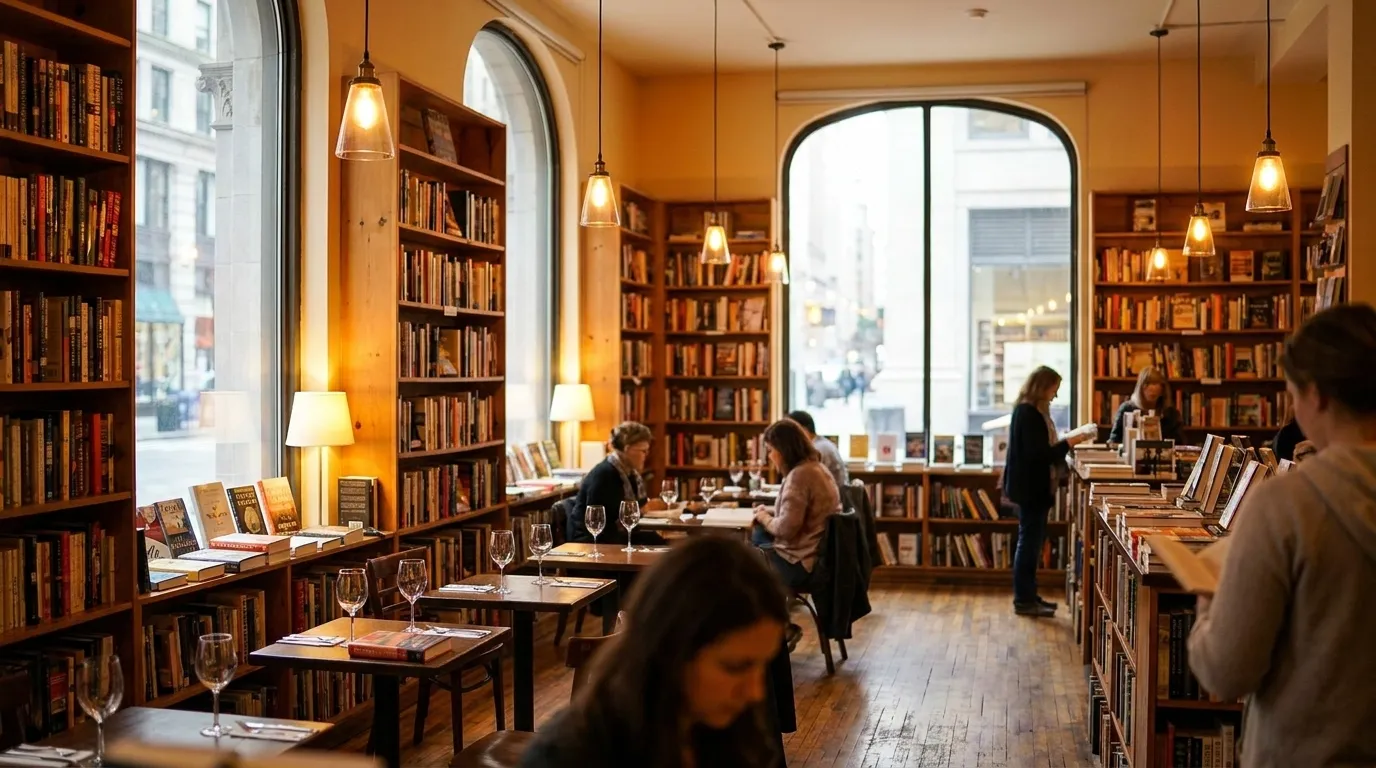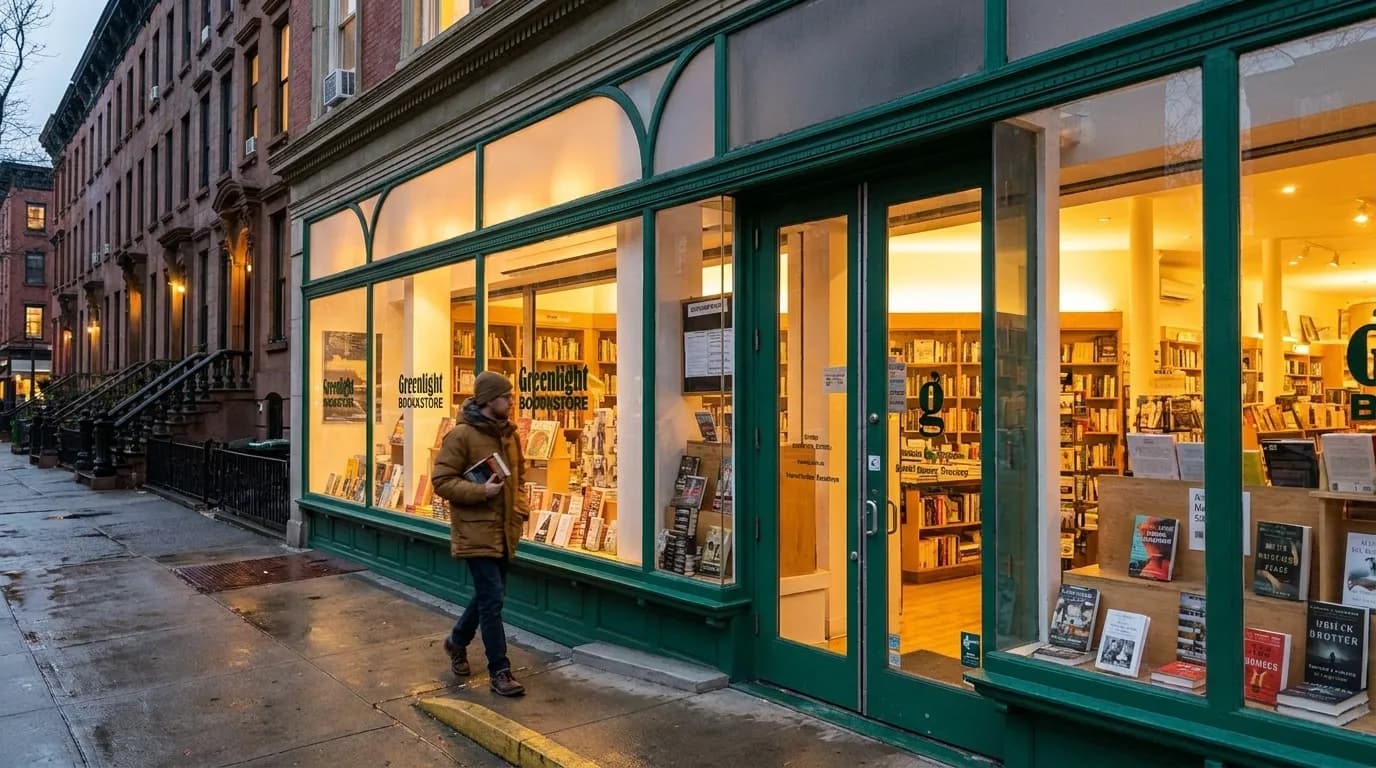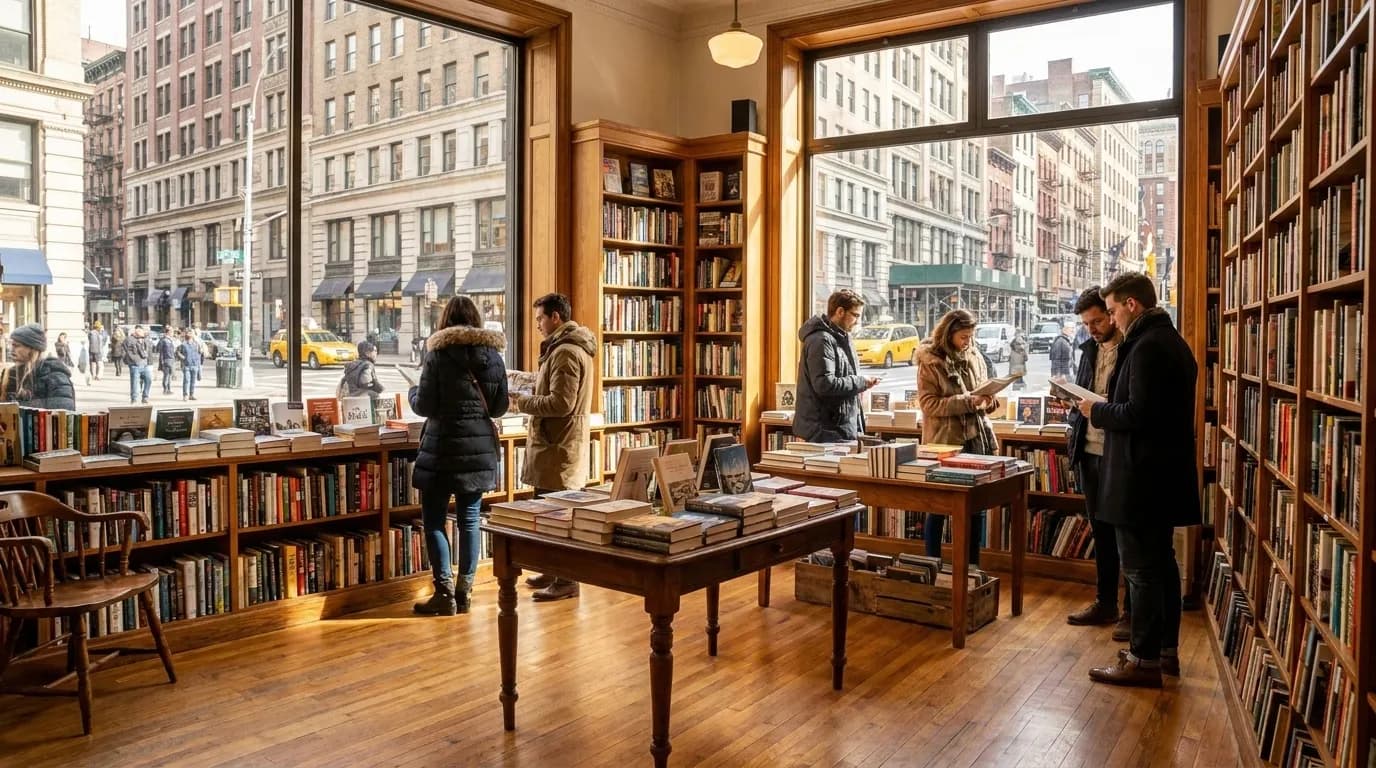
The cocktail-first date has dominated New York City's dating playbook for years, built on the premise that a well-mixed drink and ambient lighting smooth over initial awkwardness. But a growing number of locals are finding that strategy backfires more often than it succeeds. The bar date front-loads pressure—choosing a venue with the right vibe, navigating drink preferences, managing tab expectations—before you know whether basic conversational chemistry exists. Bookshops flip that sequence. They offer built-in conversation anchors, flexible exit timing, and immediate insight into how someone thinks, all without the two-drink minimum. This isn't about rejecting nightlife; it's about recognizing that bars optimize for a second-hour connection, while bookshops optimize for the first fifteen minutes. For a generation that values efficiency and authenticity in equal measure, that structural difference is reshaping how first dates get planned across all five boroughs.
Text Karpo to discover independent bookshops with late hours, in-house cafés, and the neighborhood density that makes follow-up plans seamless.

The Structural Advantage: Why Bookshops Reduce First-Date Friction
Cocktail bars, as one dating guide notes, work better than dinner because they allow shorter, less-pressurized time frames to establish chemistry. But bookshops take that logic further. There's no need to commit to a seat, no server checking in, and no ambient noise level that forces you to lean in before you're ready. You can browse separately for five minutes and regroup, creating natural conversation resets that bars don't offer. If the date isn't working, a bookshop visit can conclude in twenty minutes without the awkwardness of an unfinished drink. If it is working, you can extend into a nearby café or suggest a walk—options that feel organic rather than pre-planned. The environment also self-selects for people comfortable with slower-paced interaction, which filters out mismatches early.
The physical layout matters more than it seems. Bookshops encourage side-by-side browsing rather than face-to-face interrogation, which reduces the intensity that makes early conversation stilted. You're both looking at the same shelf, reacting to the same cover design, which creates a shared focal point. One guide on bookstore dates emphasizes that this setup reveals likes and dislikes naturally, without the forced Q&A rhythm that cocktail dates often devolve into. You learn whether someone gravitates toward fiction or nonfiction, whether they pick up bestsellers or dig for obscure titles, whether they read jacket copy carefully or make snap judgments. Those micro-observations communicate personality faster than any rehearsed answer to 'What do you do?' ever could.

How NYC's Bookstore-Bar Hybrids Are Solving the Timing Problem
The rise of bookstore bars in New York addresses the one weakness of the bookshop-first model: what happens when the browsing goes well and you want to extend the date without changing locations. Venues that combine retail book sections with in-house bars or cafés eliminate that transition friction. According to reporting on the trend, these hybrid spaces are gaining momentum specifically because people want to reduce screen time in favor of low-key drinks and conversation. The format works because it stages the date in two acts—browsing first to establish baseline compatibility, then drinks if that check passes—without requiring a second venue or the awkward 'Should we grab a drink?' negotiation.
This setup also solves the budget ambiguity that cocktail-first dates create. At a bar, there's always a silent negotiation about whether this is a two-drink date or a four-drink date, and who's paying. At a bookstore bar, the expectation resets: you're there for the books first, and a drink is optional. That framing reduces financial pressure and makes the interaction feel less transactional. It also allows for a cleaner exit if needed—'I'm going to grab this book and head out' is easier to deliver than 'I'm not ordering another round.' For locals managing tight budgets and tighter schedules, that flexibility is worth more than any cocktail menu.
What to Do When You're Actually There: A Structure That Works
The biggest mistake people make with bookshop dates is treating them like bar dates that happen to be in a bookstore. You can't just stand in one spot and talk; the format requires movement. Start with a loose plan: agree to browse separately for ten minutes, then regroup to show each other one find. That structure gives both people breathing room and creates a natural conversation starter. If you're at a larger store with multiple floors or sections, suggest splitting up by genre and reconvening—it's low-stakes, and the reunion moment tells you immediately whether the energy is still there.
When you do regroup, focus on what the other person picked up, not on performing your own taste. Ask why they chose that particular book, whether they've read the author before, what drew them to the cover. These questions work because they're specific and non-judgmental, and they reveal how someone processes information and makes decisions. If the conversation flows, move toward a café area if the store has one, or suggest a nearby coffee spot if it doesn't. If it's stalling, you can always default to 'I'm going to keep browsing for a bit'—a socially acceptable exit that doesn't require explanation. The key is to treat the bookshop as a decision-making environment, not a destination. You're there to figure out whether a second date makes sense, and the setting gives you the data to decide quickly.
When to Choose a Cocktail Bar Instead (and How to Know)
Bookshop-first dates work best when you're meeting someone for the first time or after minimal messaging, when the goal is rapid compatibility screening. They're less effective if you've already established conversational rhythm over text or a phone call and want a setting that supports deeper, uninterrupted dialogue. In those cases, a cocktail bar still has advantages: the seating is designed for sustained conversation, the lighting and sound levels are calibrated for intimacy, and the ritual of ordering and sipping creates natural pauses that help regulate pacing. As one guide points out, cocktail bars remain better than dinner for first meetings because they allow shorter time frames, but they assume you've already cleared the basic 'Can we talk for an hour?' threshold.
The decision also depends on timing and logistics. Bookshops generally close earlier than bars, so if you're coordinating a post-work date that starts at 8 PM, your options narrow. Weekend afternoons favor bookshops; weeknight evenings favor bars. Weather matters too—bookshops offer climate-controlled browsing, but if it's a beautiful evening and you'd rather be outside, a bar with a patio or a walk-and-talk date makes more sense. The broader point is that bookshop-first dates aren't a universal replacement; they're a better default for the specific scenario where you need to assess chemistry quickly, in a low-pressure environment, without committing to a long sit-down. If you're past that stage, or if the logistics don't align, a well-chosen cocktail bar still delivers.
Practical Notes
- Choose bookshops with café areas or nearby coffee spots to extend the date if browsing goes well—hybrid bookstore-bars eliminate the venue transition entirely.
- Suggest browsing separately for 10-15 minutes before regrouping; this reduces initial pressure and creates a natural conversation restart point.
- Pick one book or section to show your date rather than trying to cover the whole store—specificity drives better conversation than aimless wandering.
- Confirm the bookshop's closing time before suggesting it as a meeting spot; many independent stores close by 8 or 9 PM on weeknights.
- If the date isn't working, use 'I'm going to keep browsing' as a low-conflict exit that doesn't require elaborate explanation.
- Avoid stores that are too small or too crowded—you need enough space to move around without constant shoulder-bumping, but not so much that you lose each other.
- Frame the date as 'Let's check out [bookshop name]' rather than 'Let's go book shopping'—the former sounds like an activity, the latter sounds like a commitment.
The shift from cocktail-first to bookshop-first dates isn't about rejecting nightlife or romanticizing print culture. It's a practical response to the inefficiencies of the traditional first-date format. Bars optimize for the wrong variable—they're built for people who already know they enjoy each other's company, not for people trying to figure that out in the first place. Bookshops front-load the compatibility check, reveal personality through behavior rather than Q&A, and offer flexible exit timing that reduces risk on both sides. For New Yorkers navigating a dating landscape that demands efficiency and authenticity, that structural advantage is hard to ignore.
Tags: #nycdating #bookstoredate #firstdateideas #nycbookshops #datinginnyc #bookstorebar #nycnightlife #lowpressuredates #brooklyndates #manhattandating #datenight #nyclocals #independentbookstores #datingadvice
Sources consulted: First Date Ideas in NYC for Every Budget | Humphrey · How To Arrange The Best Bookstore Date - Bumble · Read and Drink at NYC's Most Fantastic Bookstore Bars · The Cocktail Bar Date: Why It Works Better Than Dinner for First ... · Book Bars Gain Momentum Around New York - Eater NY
All trademarks are the property of their respective owners.