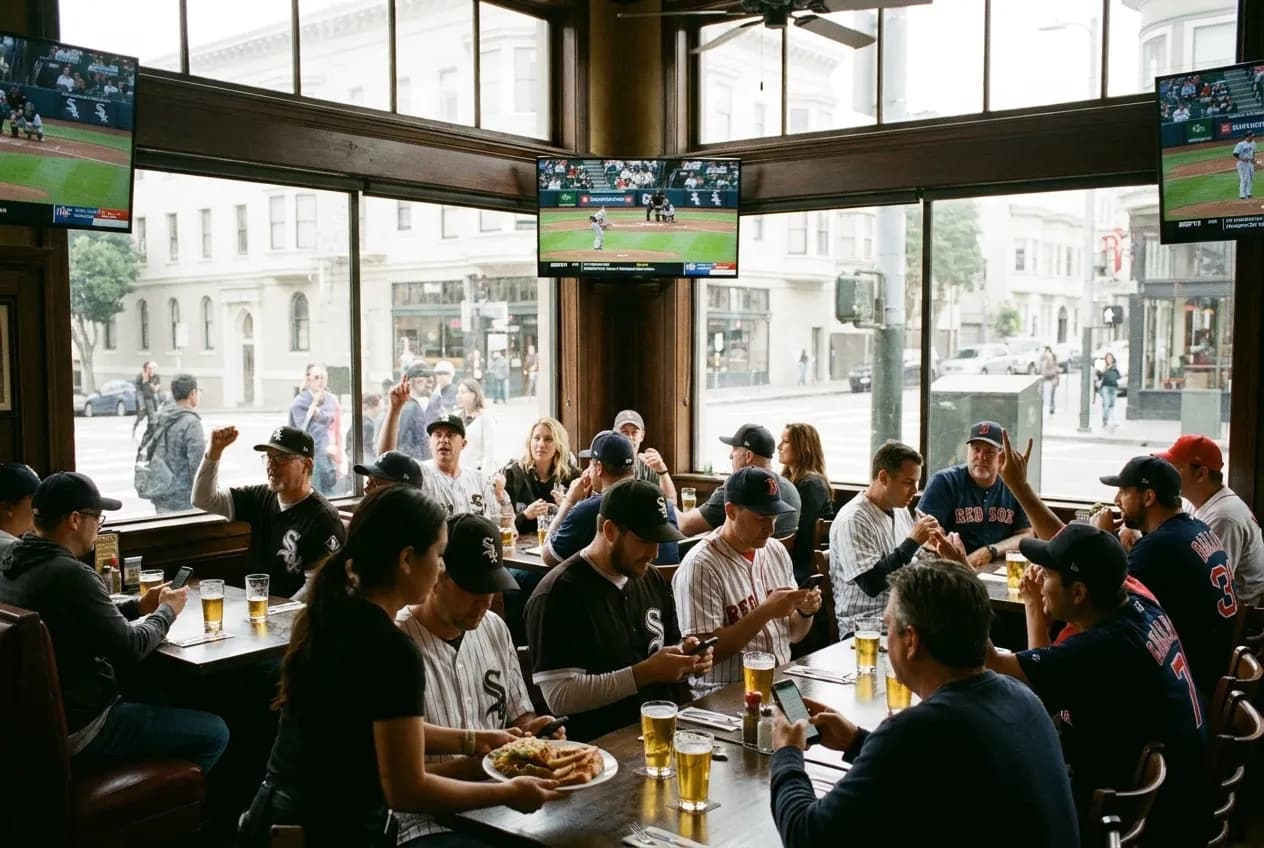
When the white sox vs red sox matchup lights up the schedule, Chicago transplants scattered across San Francisco face a familiar challenge: finding a venue that treats American League Central baseball as more than background noise. Unlike evening Giants games that dominate every screen in the city, weekday afternoon first-pitch contests from the Midwest often compete with lunch service, soccer replays, and the unpredictable priorities of bar managers who may not recognize the weight of a divisional rivalry. The search for community around these games involves more than locating a screen—it requires understanding which establishments prioritize MLB.TV subscriptions, how early to claim tables for a small friend group, and whether the nostalgic pull of hearing familiar play-by-play will cost you a food minimum or flexible seating.
Text Karpo which team you're rooting for, your SF neighborhood, and whether you need a table for two or six. We'll send three sports bars confirming White Sox vs Red Sox broadcast with arrival-time tips, plus one backup streaming-friendly cafe if bars are at capacity.

Broadcast Confirmation and the MLB.TV Lottery
Not every sports bar in San Francisco maintains an active MLB.TV package, and among those that do, not all grant audio control to out-of-market games during lunch hours. Bars near Financial District corridors may prioritize business news channels until evening, while neighborhood taverns in the Richmond or Mission might rotate screens based on whoever asks first or the size of the arriving party. The distinction matters for Chicago transplants hoping to watch a 1:10 p.m. Central time first pitch—what registers as 11:10 a.m. locally—since kitchens may still be prepping and managers reluctant to commit sound systems before the lunch rush clarifies.
Calling ahead the morning of the game provides leverage but no guarantee. Ask specifically whether the bar carries MLB.TV or relies on cable packages that may black out certain feeds, and inquire if audio can be routed to your section if multiple games air simultaneously. Some establishments will note your request and flag a screen, especially if you mention arriving with three or four people willing to order food. Others operate first-come policies that make advance promises impossible, turning arrival time into the decisive variable for fans who want more than a muted corner screen.
Arrival Time Strategy for Afternoon First Pitch
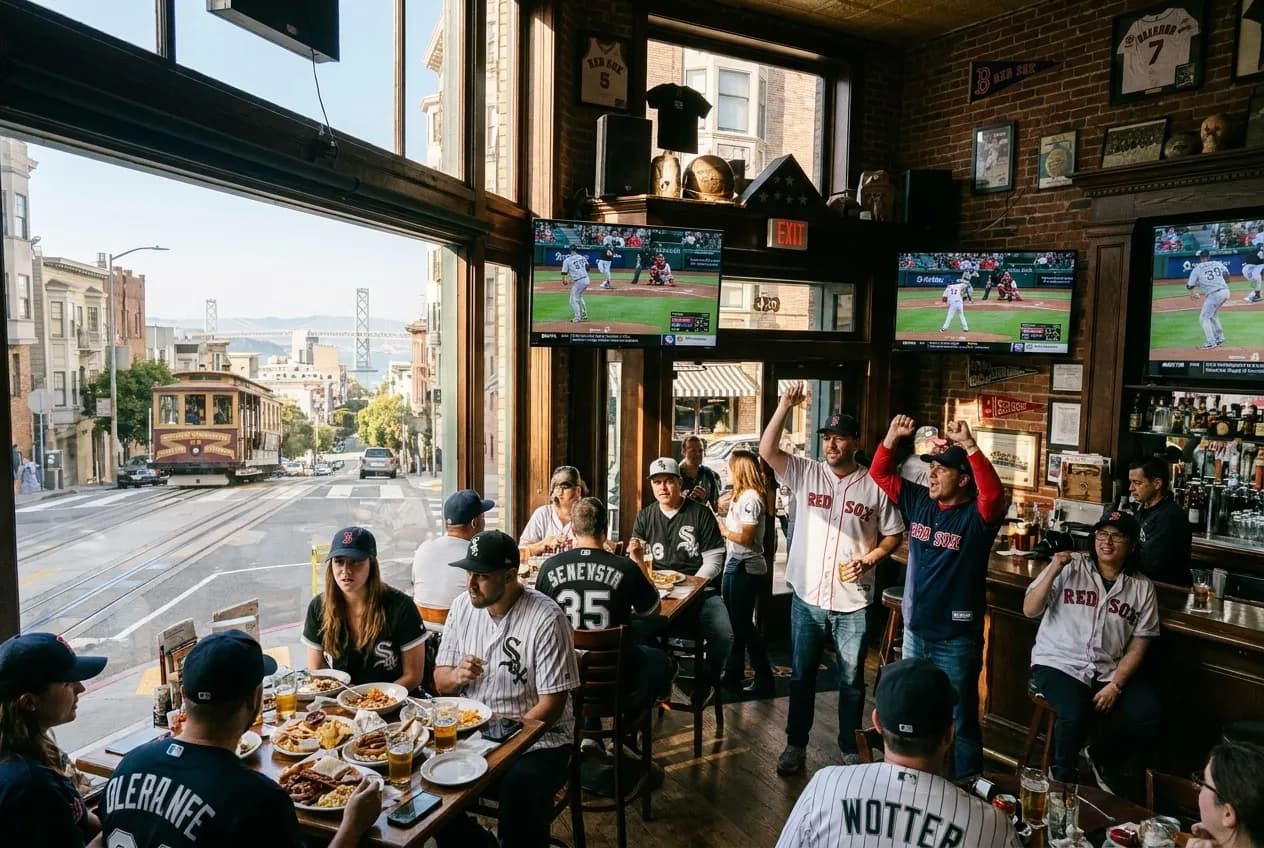
Weekday afternoon games occupy an awkward slot in San Francisco's sports-bar economy. Arriving thirty minutes before first pitch often means encountering a nearly empty room, which grants screen selection but may also signal to staff that your group doesn't justify audio priority once the lunch crowd swells. Conversely, arriving right at game time can mean walking into a venue already committed to a different broadcast or filled with regulars whose preferences the bartender knows by heart. The calculus shifts depending on whether the bar draws a destination crowd or serves a neighborhood walk-in clientele.
For beginner sports-bar navigators, the middle path involves arriving twenty minutes early, ordering immediately, and asking politely about audio once you've established you're staying for multiple innings. Bars with booth seating or back rooms sometimes accommodate small groups more readily than those with open layouts where sound travels across the entire space. If the venue seems hesitant, mentioning that your group plans to stay through the seventh inning—and will likely order another round—can shift the conversation, though it also sets an expectation you'll need to meet.
Food Minimums and the Economics of Occupying Tables
Few San Francisco sports bars post explicit food minimums, but the unwritten expectation during meal hours is that tables order accordingly. A four-top nursing a single appetizer through nine innings will draw side-eye from servers managing turnover, especially in neighborhoods where weekend brunch crowds subsidize weekday operations. For Chicago transplants accustomed to Midwestern sports bars where lingering is standard, the Bay Area's higher rent pressures and tighter margins create a different rhythm. Ordering a round of entrees early signals you understand the exchange, even if your group stretches a second beer through late innings.
Some venues explicitly frame watch parties around food-and-drink packages, particularly for marquee matchups or playoff scenarios, though regular-season AL Central games rarely trigger such structures. Still, asking about minimums when you call to confirm the broadcast prevents awkward conversations mid-game. Bars that cater to transplant communities—whether through ownership ties or accumulated reputation—may relax these expectations for loyal groups, but first-time visitors should budget for a full meal per person to avoid friction.
Navigating Ownership and Crowd Allegiances
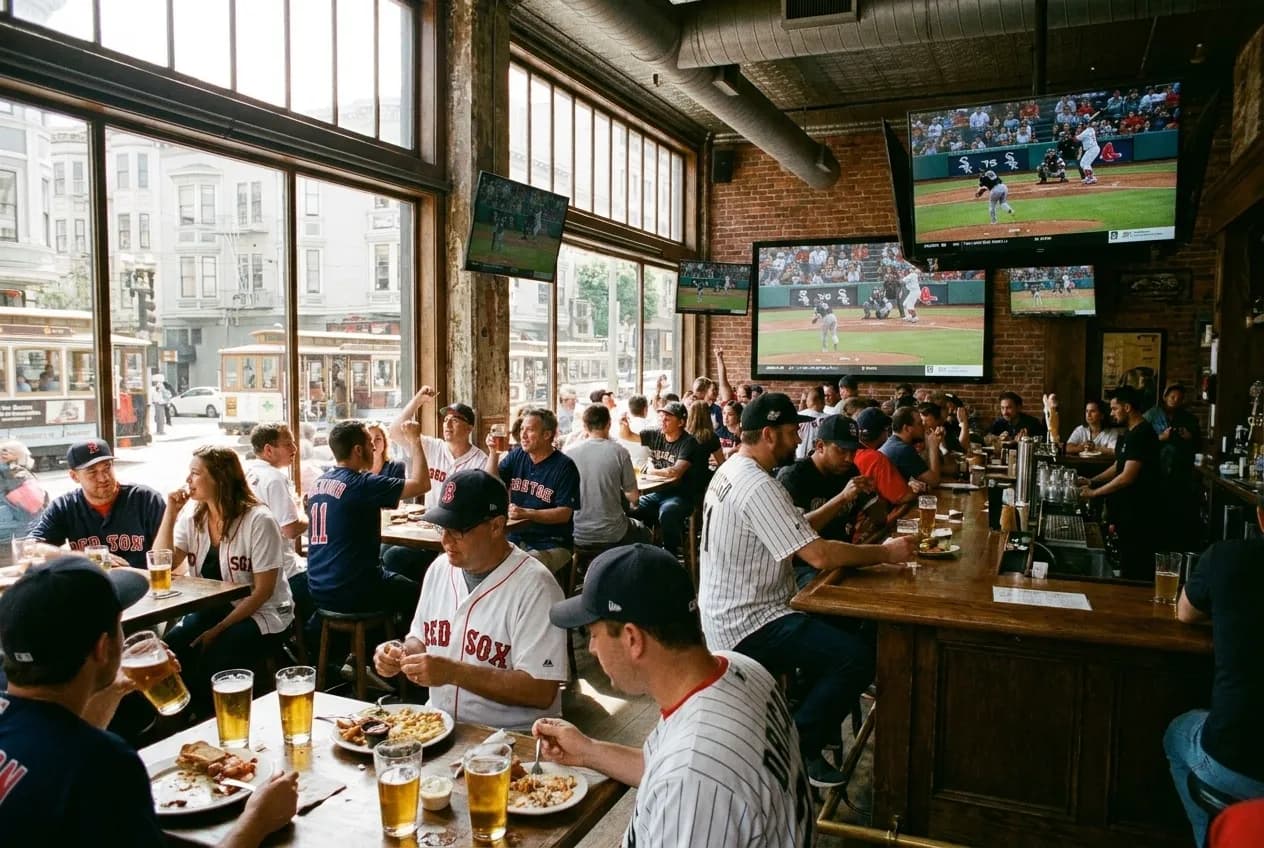
Bar ownership shapes broadcast decisions more than many fans realize. A proprietor with Chicago roots may prioritize White Sox games even during slow shifts, while a venue owned by Boston transplants might favor Red Sox coverage when the teams meet. These allegiances aren't always advertised but emerge through conversation with bartenders or by noticing which jerseys hang on walls. For someone seeking community around a specific team, identifying these affiliations beforehand—through social media, neighborhood forums, or word-of-mouth—saves the disappointment of arriving to find your opponent's fans have claimed the room.
Crowd size introduces another variable. A bar that happily accommodates four White Sox fans on a quiet Tuesday may struggle to balance audio when a dozen Red Sox supporters arrive unannounced. Venues with multiple rooms or distinct bar areas can partition allegiances, but single-space taverns often default to whichever group arrived first or makes the most noise. This dynamic favors regulars who've built rapport with staff, underscoring the value of repeat visits over one-off attempts to claim territory.
Transportation and Neighborhood Fit for Weekday Games
San Francisco's public transit system, operated by SFMTA, connects neighborhoods through Muni lines that make reaching sports bars feasible without driving, though weekday schedules and transfer times require planning. A bar in the Marina may offer better sightlines and seating, but reaching it from the Mission via the 49 bus during late morning means accounting for potential delays that could cost you your preferred table. Conversely, a neighborhood tavern within walking distance of your workplace trades destination appeal for convenience, letting you slip out during lunch without the transit calculus.
The fit between venue and companion group also matters. A small friend group seeking nostalgic conversation around the game will chafe in a loud, open-plan bar where audio barely carries, while a quieter neighborhood spot may lack the energy that makes watch parties feel communal. Testing a few options across different game days helps calibrate expectations—some fans discover they prefer the reliable screen access of a low-key tavern over the crowded uncertainty of a popular destination, even if the latter offers better wings and more fellow transplants.
Tags: #WhiteSoxwatchparties #RedSoxfansSanFrancisco #MLBTVsportsbars #Chicagotransplants #weekdaybaseballgames #ALCentralviewing #sportsbaretiquette #SanFranciscoMuni #afternoonfirstpitch #baseballfancommunity
Sources consulted: Source 1: sf.gov · Source 2: sfmta.com · Source 3: sfpl.org · Source 4: sf.gov
All trademarks are the property of their respective owners.
Ask Karpo first
Ask Karpo to turn this San Francisco idea into a current plan for your date, budget, companion, transit preference, and energy level. Karpo can narrow the route and flag what to verify before you go.