 Mediterranean Food Near Me in Fort Greene: Miss Ada's Garden and Hummus
Neighborhood Guides
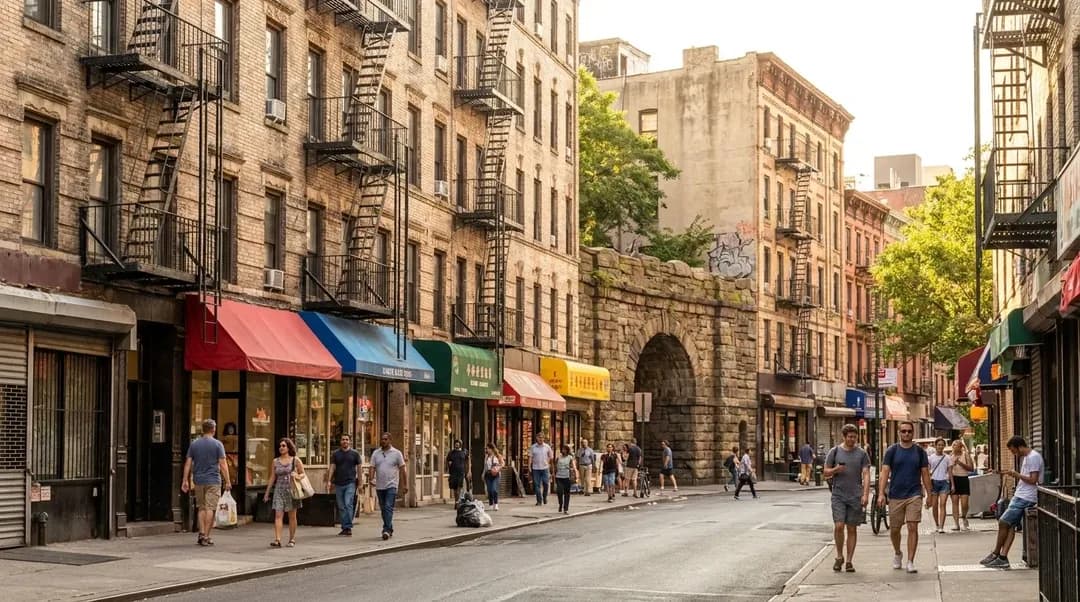
Where to Take a Friend Who Wants Something Local But Not Another Restaurant Roundup
When your visiting friend asks for the real NYC but groans at the thought of another food crawl, these neighborhood experiences offer culture, conversation, and zero Yelp fatigue.
Your friend lands at JFK with a simple request: show me the real New York, but please, no more curated dining lists. They've scrolled through enough "best pasta" roundups to last a lifetime, and frankly, so have you. The challenge isn't finding good experiences in this city—it's finding ones that feel like actual life here rather than a performance of it. What they're really asking for is texture: the rhythm of a neighborhood on a Tuesday afternoon, the shops where you'd actually spend your own Saturday, the walks that don't require a reservation or a two-hour wait. This requires a different framework than the usual visitor itinerary. Instead of optimizing for Instagram moments or checking boxes, you're building an afternoon around motion, conversation, and the small observations that make a place feel lived-in rather than simply visited.
Text Karpo at (332) CURIOUS to get a custom neighborhood route based on your friend's actual interests and the weather forecast for your visit day.
Build the Day Around a Neighborhood Walk With Built-In Stops
The most reliable non-restaurant move is structuring time around a neighborhood that rewards walking without demanding it. The Lower East Side between Essex and Clinton offers this naturally: you can browse Dimes Deli's magazine rack, duck into Artists & Fleas when energy dips, and end up at Economy Candy without ever feeling like you're executing a plan. The rhythm matters more than the destinations. You're looking for a route where stopping feels optional but appealing, where your friend can say "let's go in here" without derailing anything. Avoid neighborhoods that require constant decision-making or where every block demands a reaction. Williamsburg's Bedford Avenue stretch works for this reason—the density of small shops, the bench seating outside Rough Trade, the predictable flow toward the waterfront all create natural pauses without forcing them.
Weather changes the equation significantly. If it's above 78 degrees, any walk longer than thirty minutes needs water access and shade options, which makes Prospect Park's Long Meadow or the Hudson River Greenway between Christopher and 14th Street more practical than Bushwick's industrial blocks. Rain eliminates most outdoor routes entirely, but covered options exist: the Essex Market renovation provides enough variety and seating to fill ninety minutes, and the shops along Mott Street in Nolita have awnings close enough together that you can move between them without getting soaked. The goal is to avoid the binary choice between "tough it out" and "abandon the plan." Check the hourly forecast that morning and have a backup route that uses the same subway line but trades open streets for covered stretches.
Choose Shops That Reward Browsing Without Requiring Purchases
The best non-restaurant stops are shops where lingering feels normal and leaving empty-handed doesn't feel rude. Bookstores anchor this category naturally: McNally Jackson in Soho, Book Culture on Columbus, or Greenlight in Fort Greene all expect people to spend forty minutes without buying anything. The key is choosing places with seating and enough space that you're not blocking merchandise. Avoid tiny boutiques where the owner makes eye contact every twelve seconds—that's not relaxing for anyone. Record shops work similarly if your friend has any interest: Rough Trade in Williamsburg and A1 Records in the East Village both have listening stations and enough floor space that you can split up and reconvene without coordination.
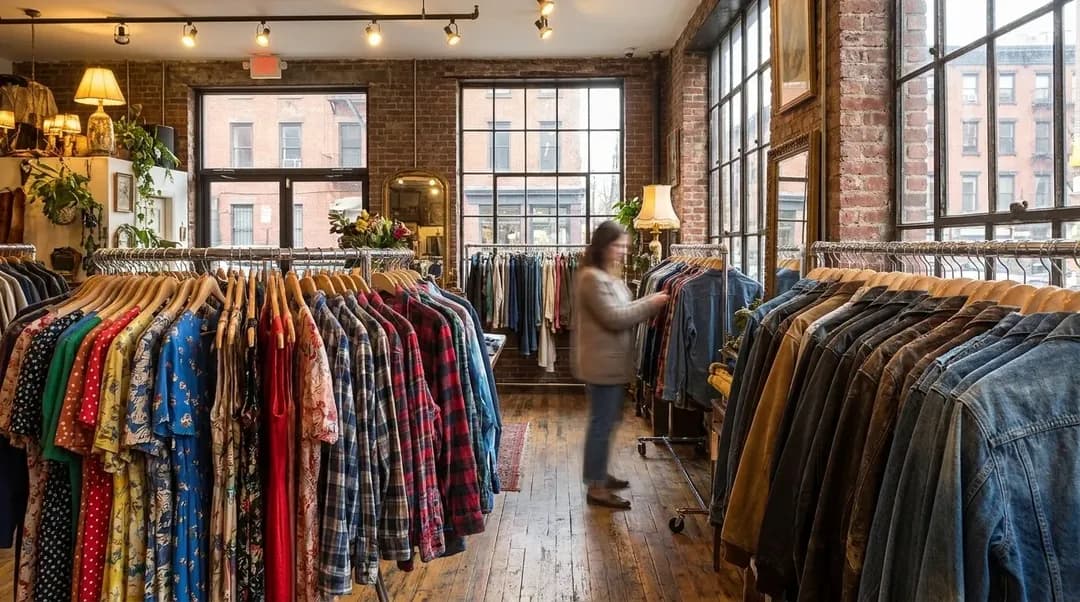
Vintage and thrift stores provide the same benefit with more variability in quality. L Train Vintage and Buffalo Exchange both have dressing rooms and enough inventory that trying things on becomes an activity rather than a transaction. The advantage here is time flexibility: if your friend finds something, great; if not, you've still filled thirty minutes in a way that feels participatory. Avoid stores with aggressive staff or time limits on dressing rooms. The practical test: would you go here alone on a random weekday? If the answer is no, your friend will sense that you're performing "local" rather than living it. The best shops are ones you'd actually visit, which means they need to match your real interests rather than some imagined version of what makes a neighborhood authentic.
Use Transit as Part of the Experience Rather Than a Gap to Fill
Most guides treat subway rides as dead time between real activities, but if your friend doesn't live here, the train itself provides texture. Taking the 7 from Manhattan to Queens offers more sensory variety than another walk through the West Village: the aboveground stretch past Hunters Point, the shift in language and dress as you move east, the food smells at Junction Boulevard. The trick is framing this correctly. Don't announce "we're taking the train to see the train"—that's tourism. Instead, build a route where the destination justifies itself and the journey adds value. Going to Flushing for the Queens Botanical Garden or the Ganesh Temple makes sense on its own; the 7 train just makes it better.
The same logic applies to the Staten Island Ferry, though you need to manage expectations carefully. The twenty-five-minute ride offers legitimate skyline views and costs nothing, but the Staten Island terminal has minimal food options and the return wait can hit thirty minutes on weekends. This works if you frame it as a specific choice—"want to see the harbor without paying for a cruise?"—but fails if you oversell it as a hidden gem. Go mid-afternoon on a weekday when crowds are lighter and the return ferry runs every thirty minutes. The ferry also solves the weather problem: if it's raining or cold, the indoor seating provides the same views without exposure. Bring coffee from Manhattan because the onboard concession is grim. The key is treating transit as infrastructure that occasionally provides bonus value rather than as an attraction that requires justification.
End With Something Participatory That Doesn't Require Skill
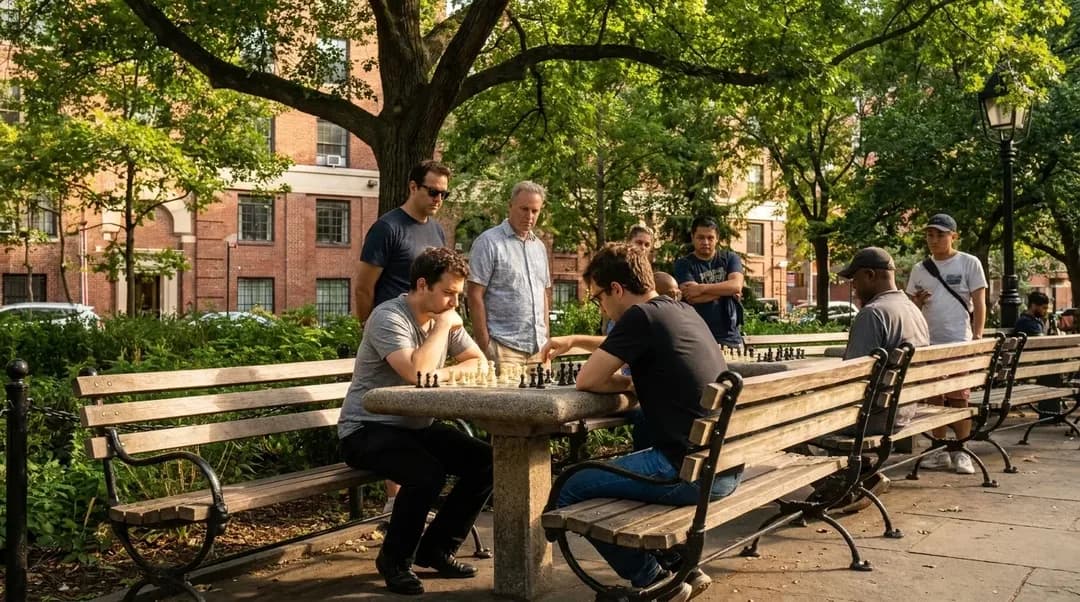
After several hours of walking and browsing, energy usually dips, and this is when most people default back to restaurants because sitting feels necessary. The better move is finding an activity that provides rest while keeping hands busy. The Brooklyn Strategist in Carroll Gardens offers open board game sessions most afternoons—you can walk in, grab a table, and play anything on their shelves without a reservation. This works because it's structured enough to prevent awkward silences but flexible enough that you can leave whenever energy returns. Similarly, the chess tables in Washington Square Park cost nothing and require no skill if you're willing to watch rather than play. The regulars are used to spectators, and the games move fast enough that you're not committing to an hour of standing.
If your friend has any craft inclination, pottery painting at Color Me Mine in the Upper West Side or Fire Island Ferries' Manhattan location provides a similar benefit: you're sitting, you're making something, and conversation happens naturally around the activity rather than requiring constant maintenance. The practical consideration here is timing—most of these places close by 7 or 8 PM, so you need to arrive by 5 to avoid feeling rushed. Avoid activities that require instruction or have performance pressure. The goal is low-stakes participation, not skill demonstration. This also solves the dinner problem organically: after two or three hours of activity, your friend will actually be hungry rather than eating because it's 7 PM and that's what people do. You can grab something quick near wherever you end up, which feels more spontaneous than a reservation made three days ago.
Practical Notes
- Check subway service alerts the morning of your plan—weekend construction can eliminate entire routes and your backup needs to use different lines
- Bring a portable phone charger; most non-restaurant activities drain batteries faster than sitting at tables, and a dead phone kills spontaneity
- Plan your route so the furthest point from home comes mid-day, not at the end—tired friends get cranky when the return trip takes 45 minutes
- Have one indoor backup for every outdoor plan; weather changes fast and standing in rain debating options ruins momentum
- Avoid neighborhoods where you've never spent personal time—your friend will sense performative choices within ten minutes
- Build in a genuine break around hour three; sitting on a park bench for fifteen minutes prevents the energy crash that derails afternoons
- Keep cash for places like chess tables, street vendors, and small shops that don't take cards—fumbling with Venmo kills the flow
The difference between showing someone the city and actually spending time together comes down to whether you're executing an itinerary or responding to the day as it unfolds. Your friend doesn't need to see everything or hit the "right" spots—they need to feel like they're moving through the city with you rather than being guided through it. That means building enough structure to avoid decision paralysis but enough flexibility to follow interesting detours. It means choosing activities where conversation happens naturally rather than forcing it across a restaurant table. Most importantly, it means treating your friend like someone who lives here temporarily rather than a visitor passing through. The best days end with your friend saying "I could see living here," not "I'm glad I saw that." That shift happens when the experience feels participatory rather than observational, when the city becomes a place you're both inhabiting rather than a backdrop you're showing off.
Tags: #nyclocal #neighborhoodguide #nycwithfriends #nonrestaurantnyc #nycwalks #brooklynexploring #lowermanhattan #queensnyc #localexperience #nycneighborhoods #citywalking #nycculture
Sources consulted: 18 Best Places to Take Out-of-Towners in NYC · 10 Restaurants To Take Tourists To That Won't Make You Hate Yourself · New York City Like a Local: 90+ Local Picks & Food Tours · NYC Neighborhood Guide: Explore Like a Local — Food, Transit & Parks · NYC Like a Local: Neighborhood Guide to Hidden Gems, Food & Transit · Where To Get A Low-Key Dinner With A Friend - New York - The Infatuation
All trademarks are the property of their respective owners.
Ask Karpo for more information.
Keep reading
- Mediterranean Food Near Me in Fort Greene: Miss Ada's Garden and Hummus
 Places To Eat Near Me in Chelsea: The Market Fills a Nabisco Factory
 Seafood Near Me in the East Village: The Mermaid Inn's Dollar Oysters