 Mediterranean Food Near Me in Fort Greene: Miss Ada's Garden and Hummus
Neighborhood Guides
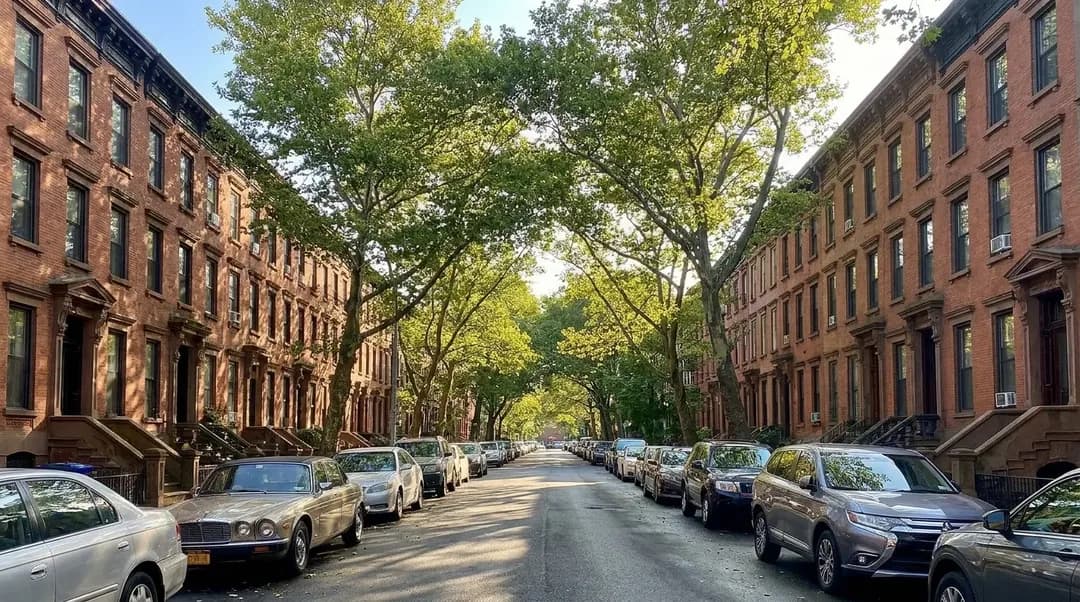
Where to Spend Four Hours in Cobble Hill and Carroll Gardens Without Booking Anything Major
These two brownstone neighborhoods deliver a full afternoon of cafés, shops, and tree-lined streets that never require a reservation, timed ticket, or advance plan.
Cobble Hill and Carroll Gardens sit side by side in northwest Brooklyn, separated more by name than geography. Together they form a forty-block stretch of brownstones, independent shops, and family-run restaurants that feel closer to a small town than a borough of eight million. The appeal is simple: you can walk out your door—or step off the F or G train—and fill four hours without a single reservation, ticket window, or queue. Court Street runs north-south as the main commercial spine, while Smith Street and Columbia Street offer quieter retail corridors. The neighborhoods reward slow movement and spontaneous decisions, which makes them ideal for a weekday afternoon off, a lazy Saturday, or the gap between brunch and dinner plans elsewhere.
Text Karpo at (332) 334-2527 to ask about other Brooklyn neighborhoods that work on zero notice.
Start on Court Street in Cobble Hill
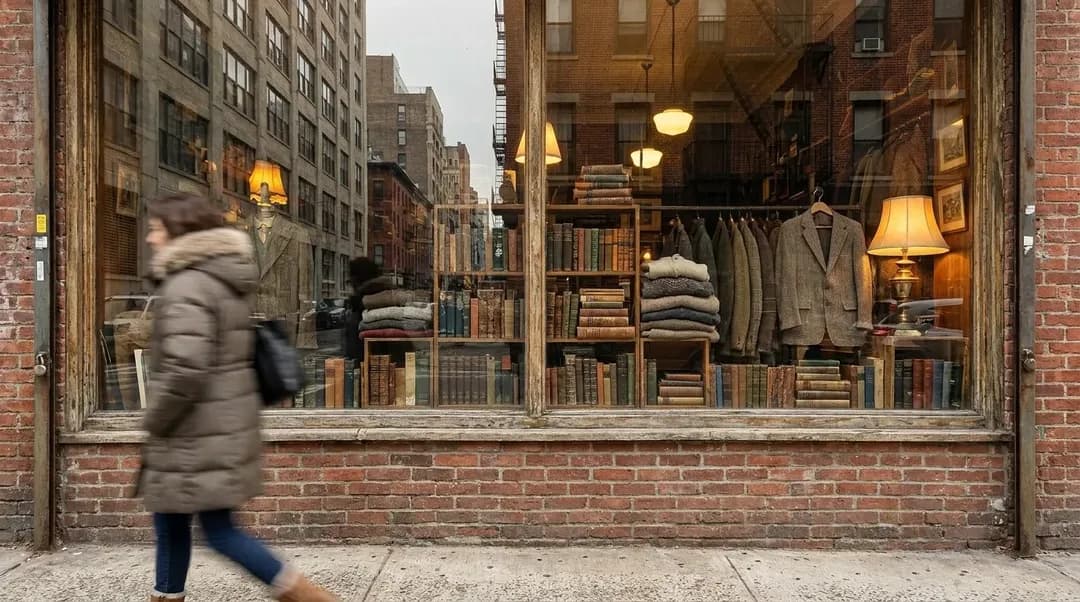
Court Street between Atlantic Avenue and Kane Street concentrates the neighborhood's retail energy. Vintage clothing shops, bookstores, and design-forward boutiques line the sidewalk, and most open by eleven on weekdays, ten on weekends. The street is wide enough that foot traffic never feels crowded, even on Saturday afternoons. If you arrive earlier, independent cafés cluster near the Bergen Street intersection and serve espresso and pastries without the line discipline required in Williamsburg or the Lower East Side. The rhythm here is unhurried—staff know regulars by name, and nobody glares if you linger over a cortado.
Cobble Hill Park, a single tree-filled block bounded by Congress, Verandah Place, Clinton, and Court, offers a midpoint rest if you need one. Benches face a central lawn where neighborhood kids play pickup soccer and dogs sniff each other under London plane trees. The park is small enough that you won't lose an hour, but it provides a useful reset if you've been on your feet since leaving the subway. From here, walk south on Court or one block west on Clinton to enter Carroll Gardens proper. The transition is subtle—architecture stays consistent, but the commercial density thins and front gardens grow deeper.
Move South Into Carroll Gardens
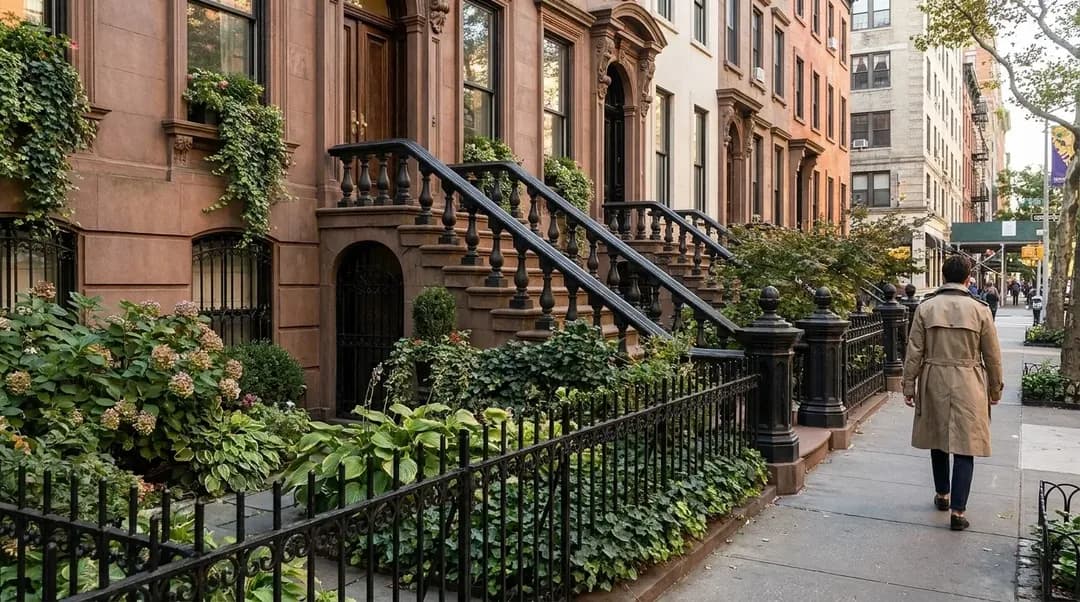
Carroll Gardens earned its name from the unusually deep front yards that separate brownstones from the sidewalk, a nineteenth-century design quirk that survives today. The effect is most visible on Carroll Street and President Street between Smith and Hoyt, where hedges, wrought iron, and seasonal plantings create a buffer between private and public space. If you're walking in spring or early summer, the gardens justify a slow lap around the residential blocks. In winter or during rain, Smith Street between Union and Carroll offers covered awnings and a denser concentration of storefronts.
Smith Street functions as Carroll Gardens' main retail corridor. Bakeries, wine shops, and small-format grocers occupy ground-floor spaces, many of them family-run operations that predate the neighborhood's gentrification. You'll find Italian butchers next to natural wine bars, old-school barbers beside design boutiques—the mix reflects decades of turnover without complete erasure. If you want a snack or early dinner, the street offers everything from pizza by the slice to sit-down trattorias. Most spots operate on a walk-in basis; even the busier restaurants rarely fill before six on weeknights. Weekends see more foot traffic, but waits top out around twenty minutes.
Columbia Street and the Waterfront Edge
Columbia Street runs parallel to Smith, one long block west, and marks the neighborhood's transition toward the Columbia Street Waterfront District. The retail here is sparser—auto repair shops, small grocers, and the occasional café—but the street offers a quieter alternative if Smith feels too crowded or if you want a longer uninterrupted walk. The Brooklyn-Queens Expressway cuts between Columbia and the waterfront, so you won't reach the water itself without crossing under the highway via pedestrian underpasses near Kane or Degraw. Those underpasses deposit you at Brooklyn Bridge Park's southern sections, but that detour adds thirty minutes and shifts the outing's center of gravity.
If you skip the waterfront and stay inland, Columbia Street connects back to Court via any east-west cross street. The grid is simple: north-south avenues (Court, Clinton, Henry, Hicks) intersect east-west streets (Atlantic, Pacific, Amity, Congress, Warren, Baltic, Kane, Degraw, Sackett, Union, President, Carroll). You can't get lost, and most blocks take three minutes to walk. This makes it easy to zigzag between commercial strips and residential streets, adjusting your route based on energy level, weather, or whether you want more shops or more architecture. Four hours gives you enough time to cover both neighborhoods end to end, with breaks for coffee, a bookstore browse, and a sit-down snack.
Practical Decisions and Contingencies
Weather changes the outing's texture but not its feasibility. Rain sends you indoors more often—bookstores, vintage shops, and cafés provide natural intervals—but the tree canopy on residential streets offers some cover, and awnings on Court and Smith keep sidewalks passable. Summer heat makes morning or late-afternoon starts more comfortable; the neighborhoods lack air-conditioned malls or large museums, so plan hydration stops. Winter shortens daylight but also thins crowds, and the brownstones look especially photogenic under snow or low winter sun.
Transit access is straightforward. The F and G trains stop at Bergen Street (Court Street station) on the edge of Cobble Hill, and the F continues to Carroll Street in the heart of Carroll Gardens. Both stations sit on the same line, so you can start at one and finish at the other if you want a linear route instead of a loop. The neighborhoods also connect easily to Brooklyn Heights (north), Boerum Hill (east), and Red Hook (southwest), so you can extend the outing or link it to another errand. If you're coming from Manhattan, the F train from West Fourth Street takes about fifteen minutes to Bergen; from other Brooklyn neighborhoods, the G provides north-south access without transferring. Street parking exists but requires patience on weekends; if you're driving, budget extra time or plan to park once and walk the rest.
Practical Notes
- F and G trains stop at Bergen Street (Cobble Hill) and Carroll Street (Carroll Gardens); both stations are staffed and elevator-accessible.
- Most independent shops open by eleven on weekdays, ten on weekends; cafés open earlier, around seven or eight.
- Court Street and Smith Street carry the densest retail; Clinton and Columbia offer quieter alternatives for walking between the two.
- Cobble Hill Park provides a single-block green space with benches and a small playground; Carroll Park (on Carroll Street near Smith) is slightly larger.
- Rain shifts the outing indoors—bookstores, vintage shops, and cafés cluster on Court and Smith—but covered awnings keep sidewalks walkable.
- Weekday afternoons see lighter foot traffic than weekends; Saturday between noon and four is the busiest window.
- Restrooms are available in cafés and restaurants; ask staff if you're not ordering a full meal.
Four hours in Cobble Hill and Carroll Gardens proves that a good afternoon doesn't require advance planning, sold-out tickets, or a fixed itinerary. The neighborhoods reward aimless movement—turn down a side street because the light looks good, duck into a shop because the window display caught your eye, sit on a park bench because your feet hurt. That flexibility is the point. You're not racing to hit landmarks or justify the cost of admission. You're walking through two neighborhoods that still function as neighborhoods, where the rhythm is set by locals running errands, not tourists checking boxes.
Tags: #cobblehill #carrollgardens #brooklynneighborhoods #courtstreet #smithstreet #bococa #brooklynwalks #nyclocal #neighborhoodguide #brooklynbrownstones #nycafternoon #walkablenyc
Sources consulted: Cobble Hill & Carroll Gardens Neighborhood Guide · Cobble Hill & Carroll Gardens - The Shopkeepers · Cobble Hill - Visit Brooklyn · What To Do in Cobble Hill, Brooklyn - wit & whimsy · Cobble Hill: NYC Neighborhood Guide - The Wanderbug · BoCoCa Neighborhood Guide: Boerum Hill, Cobble Hill & Carroll Gardens
All trademarks are the property of their respective owners.
Ask Karpo for more information.
Keep reading
- Mediterranean Food Near Me in Fort Greene: Miss Ada's Garden and Hummus
 Places To Eat Near Me in Chelsea: The Market Fills a Nabisco Factory
 Seafood Near Me in the East Village: The Mermaid Inn's Dollar Oysters