Flushing is a Chinese and Korean neighbourhood and everybody knows it, which is why the Vietnamese counters there operate almost invisibly. They are tucked into the basement food courts and the side streets off Main Street, they are outnumbered fifty to one, and they survive by being good enough that people go looking. That is a useful selection pressure. The pho in Flushing is not the most famous in the city and on a cold afternoon it is the best argument for the trip out on the 7.
Food court stalls in Flushing change hands often and are almost never listed anywhere findable, which makes a wasted trip a real possibility. Tell Karpo you are heading out and it will tell you what is actually operating this week.
Go downstairs
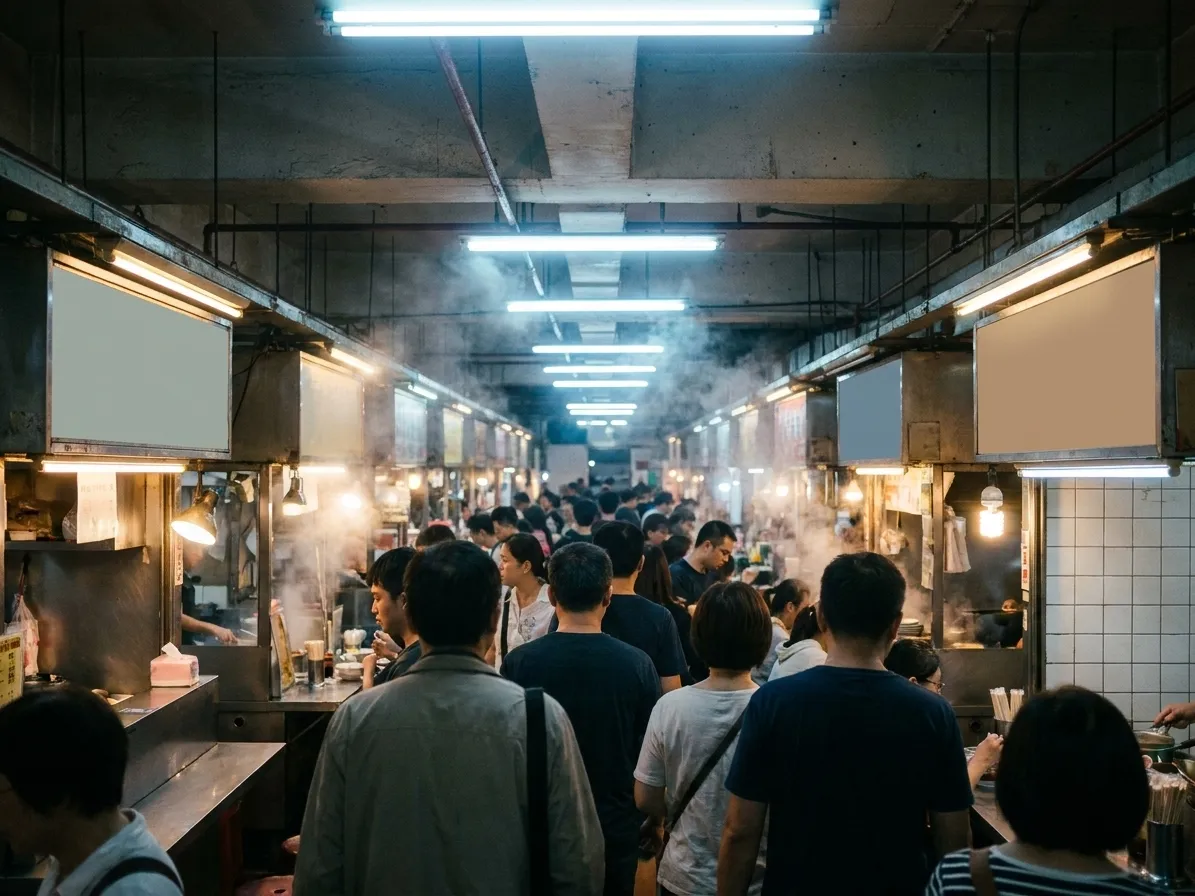
The mistake is to walk Main Street at street level looking for a restaurant with a Vietnamese sign. The interesting food in Flushing is largely in the basement and first-floor food courts near the 7 terminus - warrens of individual stalls, each doing one regional thing, sharing a seating area in the middle.
Walk the whole loop of a food court before ordering anything. This is the local convention and everybody does it. The Vietnamese counter will usually be a single unit with a photograph menu and a large stockpot behind it, sandwiched between a Sichuan noodle stall and a hand-pulled lamian counter.
What a good bowl looks like here
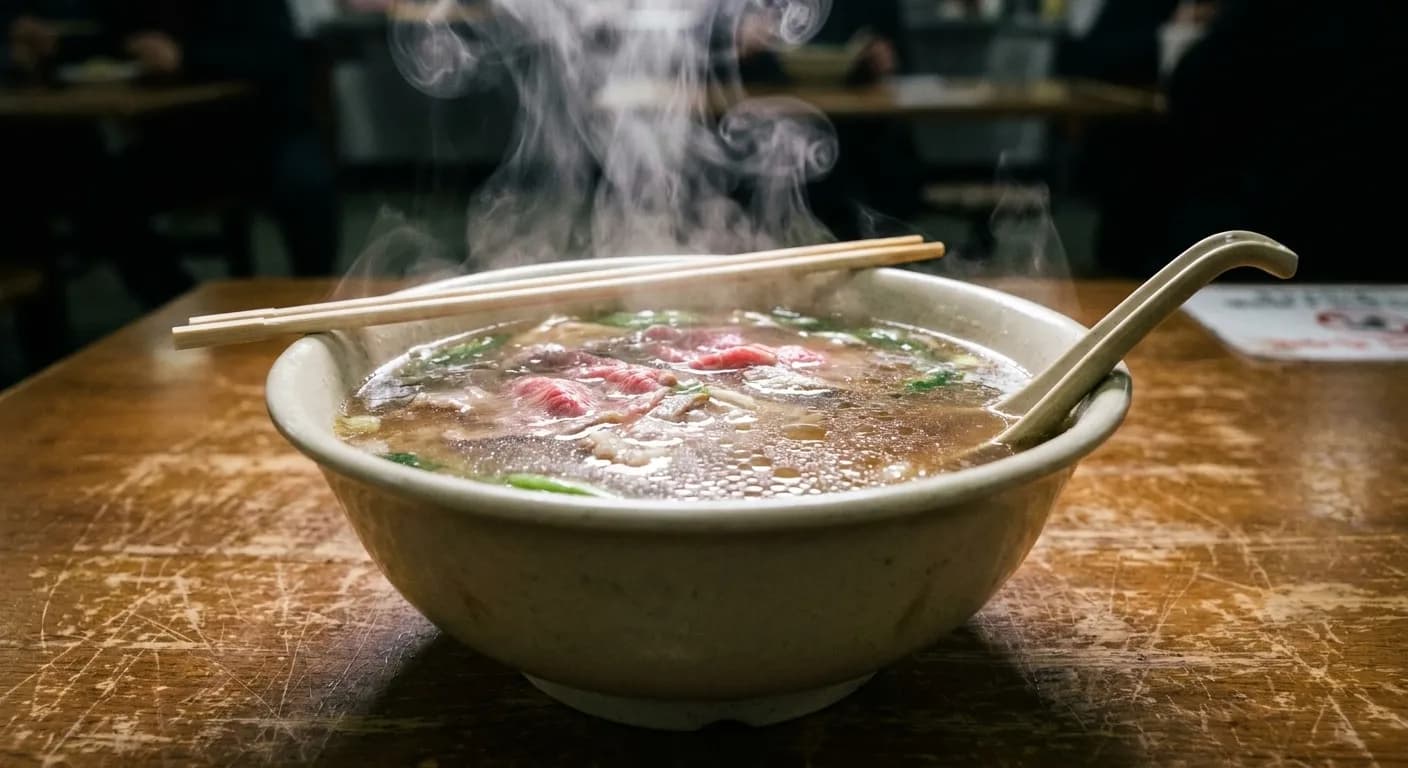
The broth should be clear enough to see the noodles through and should smell of beef and charred onion rather than of spice. A layer of fat on the surface is correct and desirable. Rare steak is added raw and cooks in the bowl in front of you, so it should still be pink when the bowl lands - if it is uniformly grey it went in too early.
Taste the broth before you touch the hoisin or sriracha. This is worth insisting on because the sauces are on the table and the habit is automatic, and a Flushing counter that has survived on a food court aisle is usually making a broth that deserves to be tasted on its own first.
The herb plate is not a garnish
Southern-style service brings a side plate of Thai basil, bean sprouts, lime and sliced chilli. It is meant to be used, in stages, over the course of the bowl rather than dumped in at the start. Sprouts go in early so they soften slightly, basil is torn in as you go, lime goes on at the halfway point when the broth has started to feel heavy.
Emptying the whole plate into the bowl immediately drops the temperature and turns the broth cloudy. This sounds fussy and it genuinely changes the last third of the bowl, which is where most people stop enjoying pho.
What else to order while you are there
Bun bo Hue is the dish to look for if a counter offers it - a spicier, lemongrass-and-shrimp-paste beef soup with thicker round noodles, from central Vietnam, and considerably more assertive than pho. It is on fewer menus and it is usually the better bowl when it is there.
Goi cuon fresh rolls are a good hedge if you are with people who do not want soup. And because it is a food court, the correct move is to split up: one person queues for pho, another gets something from a stall three doors down, and you eat both at the same table. Nobody minds.
Timing the trip
Weekday late morning through early afternoon is the calm window. Weekend lunch in the Flushing food courts is genuinely crowded to the point where finding a seat takes longer than the queue does, and the shared tables mean you will be sitting with strangers, which is normal and fine but worth expecting.
Most stalls open around ten and close somewhere between eight and nine. This is not an evening destination and the last hour is when things start running out. Autumn is the right season for it - a bowl of pho in a windowless basement food court is a considerably better proposition in October than in July.
Getting there and paying
The 7 runs to Flushing-Main Street and the food courts are within two or three minutes' walk of the station exit. The LIRR from Penn Station to Flushing-Main Street takes about twenty minutes and costs more but is a considerably calmer ride if you are going at a peak hour.
Bring cash. Many food court stalls take cards now but a meaningful number still do not, and the ones that do sometimes have a minimum higher than a bowl of soup. Bowls run roughly twelve to sixteen dollars, which is a few dollars under the Manhattan equivalent for a better bowl.
The case for going in autumn specifically
Flushing is a year-round destination but the pho argument is seasonal in a way worth stating. These food courts are windowless, warm and loud, and eating a bowl of hot soup in one on a grey October afternoon is a genuinely different experience from doing it in August, when the whole building is fighting its own air conditioning.
It also lines up with the trip. Flushing Meadows Corona Park is a ten-minute walk from Main Street and is at its best in autumn, which makes a bowl at noon and an hour in the park afterwards a complete and very cheap day out from Manhattan.
Tags: #Pho #Flushing #Queens #NewYorkCity #NYCFood #VietnameseFood #FoodCourt #MainStreetFlushing #NoodleSoup #NYCNeighborhoods
All trademarks are the property of their respective owners.
Ask Karpo first
Flushing hides its best bowls one floor below street level. Ask Karpo which counters are running this week and what else is worth eating at the same table.