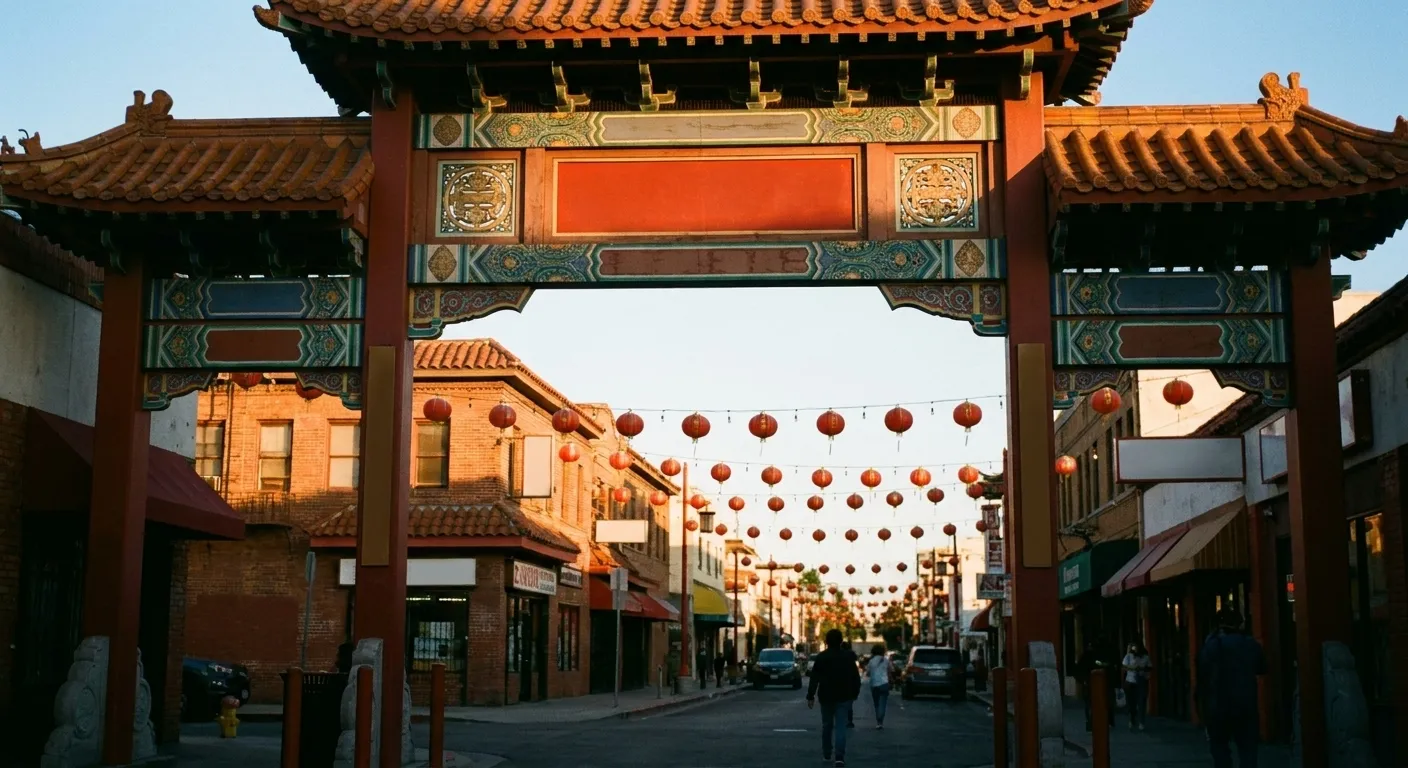
Los Angeles Chinatown is not where most people look for Vietnamese food and it is where the city's oldest pho is. The reason is a specific piece of history: a large share of the refugees who arrived here from Vietnam in the late 1970s were ethnic Chinese, and Chinatown was where they could find community, cheap commercial rent and suppliers. The restaurants they opened have been running for forty years, several are still family-held, and the cooking carries a Cantonese inflection that the Orange County version does not.
Chinatown's hours are erratic and several of the older rooms close in the afternoon and reopen for dinner, which is not reliably posted anywhere. Tell Karpo when you are heading over and it will tell you what is actually open.
Why it tastes different here
Chinese-Vietnamese cooking carries habits from both traditions, and in a bowl of pho it shows up in small ways: a broth that leans slightly more toward rock sugar and slightly less toward fish sauce, a wider use of yellow noodles alongside the flat rice ones, and menus that put pho next to wonton noodle soup and roast duck without anybody finding it strange.
This is not a diluted version of anything. It is a third tradition with its own history, and the restaurants doing it here have had four decades to settle into it. Judging it against a Westminster benchmark misses what is actually on the table.
The geography, which is small
The relevant area is compact: Broadway and Hill through the historic core, the plazas off them, and the blocks running north toward Chinatown's edge. Everything worth eating is within a ten-minute walk, which makes this the rare Los Angeles food neighbourhood you can cover on foot.
It has also changed considerably in the last decade - galleries, bars and newer restaurants have moved in alongside the old rooms. Both layers are there and the older layer is on the less obvious frontages, generally with a plainer sign and a menu behind glass by the door.
What a good bowl looks like
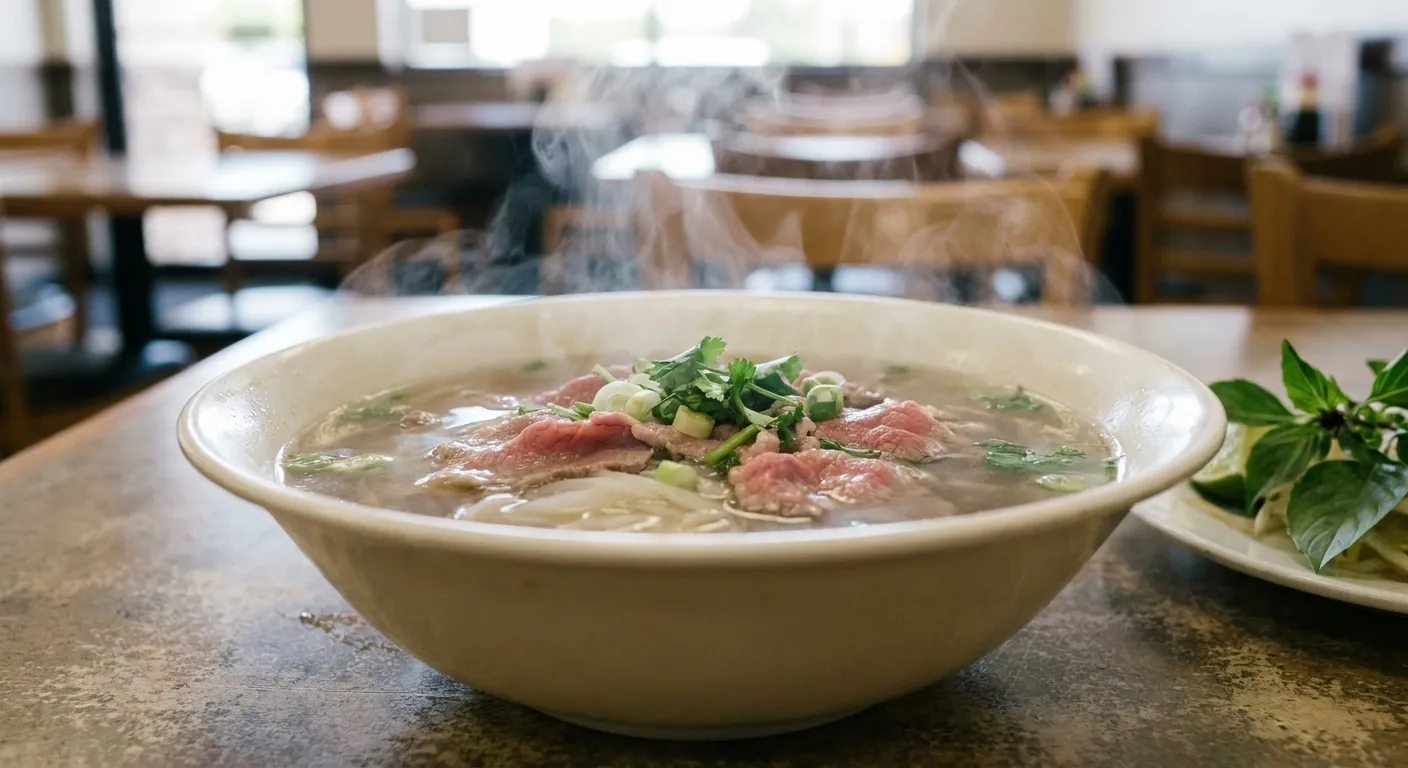
The broth should be clear enough to see the noodles through it, with a layer of fat on the surface, smelling of beef and charred onion rather than of spice. Rare steak goes in raw and cooks in the bowl, so it should still be pink when it lands - uniformly grey means it went in too early.
Taste it before adding anything. The condiments are on the table and the reflex is automatic, but a kitchen that has been simmering the same stock for forty years has earned one clean spoonful before you reach for the hoisin.
Use the herb plate in stages
Southern-style service brings basil, bean sprouts, lime and chilli on the side. The plate is meant to be used gradually rather than emptied in at the start - sprouts early so they soften slightly, basil torn in as you go, lime at the halfway point when the broth starts feeling heavy.
Dumping the lot in at once drops the temperature and clouds the broth, which is why the last third of a lot of people's pho is less enjoyable than the first. It costs nothing to do it the other way.
What else to order in the same room
This is the specific advantage of Chinatown over a dedicated pho house: the menus are broader. Wonton noodle soup, roast duck and char siu over rice, and Cantonese greens with garlic frequently sit on the same page as the pho.
For two people the good order is one pho to share the broth, one plate of roast meat over rice, and a green vegetable. That is a better meal than two bowls of soup and it uses the kitchen for what it actually does. Banh mi is available from separate counters nearby rather than in the sit-down rooms.
The autumn argument
Pho is a cold-weather dish everywhere except in the places that invented it, and Los Angeles finally gets weather for it around now. The stretch from October through February is when a bowl of hot beef soup stops being a slightly odd choice at midday and becomes the obviously correct one.
It also coincides with Chinatown being at its most pleasant to walk around - the light is lower, the plazas are not baking, and the ten-minute walk between the older rooms and the newer bars is a genuinely nice thing to do rather than something to endure.
Getting there and parking
Metro serves Chinatown directly and it is one of the few Los Angeles food neighbourhoods where transit is the straightforwardly easier option - the station is a short walk from everything mentioned here. From downtown it is two stops or a twenty-minute walk.
If driving, the plaza lots are cheap by central Los Angeles standards and several restaurants validate. Street parking exists and is metered. Bowls run twelve to sixteen dollars, which is a few dollars under the Westside equivalent for what is generally a better bowl.
How the neighbourhood has changed
It would be dishonest to describe Chinatown as a purely historic neighbourhood at this point. Galleries, bars and newer restaurants have moved into the plazas over the last fifteen years, rents have risen, and several long-running family businesses have closed - which is the same pressure that has reshaped every older commercial district in this city.
The practical consequence for eating is that the two layers sit side by side and are easy to tell apart. The older rooms have plainer frontages, menus posted behind glass by the door, and hours that break in the afternoon. Both layers are worth your time; only one of them has been making that broth since the eighties.
Tags: #Pho #ChinatownLA #LosAngeles #LAFood #VietnameseFood #DowntownLA #NoodleSoup #LANeighborhoods #LAEats #Broadway
All trademarks are the property of their respective owners.
Ask Karpo first
The oldest pho in the city is a ten-minute walk from Union Station and half the people downtown have never had it. Ask Karpo which rooms are open and what else is worth ordering alongside the bowl.