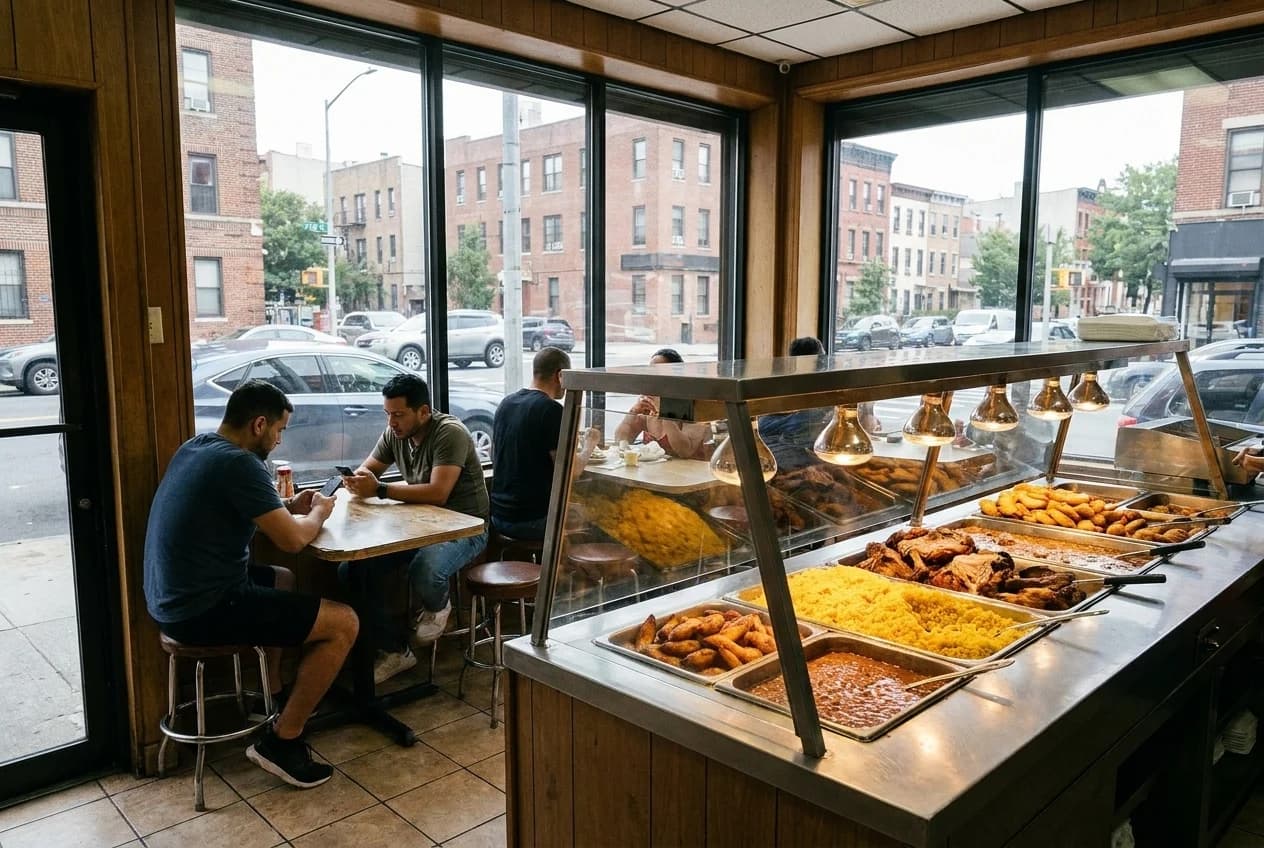
Nobody would send you to Washington Heights for Cuban food, and strictly speaking they would be right. The neighbourhood above 155th Street is overwhelmingly Dominican, and the signs, the music and the counters all say so. But vaca frita has quietly migrated onto the specials boards up there, because the technique - boil, shred, fry hard, finish with lime - belongs to a broader Caribbean kitchen than the label suggests. It is up there most days. It is almost never on the printed menu.
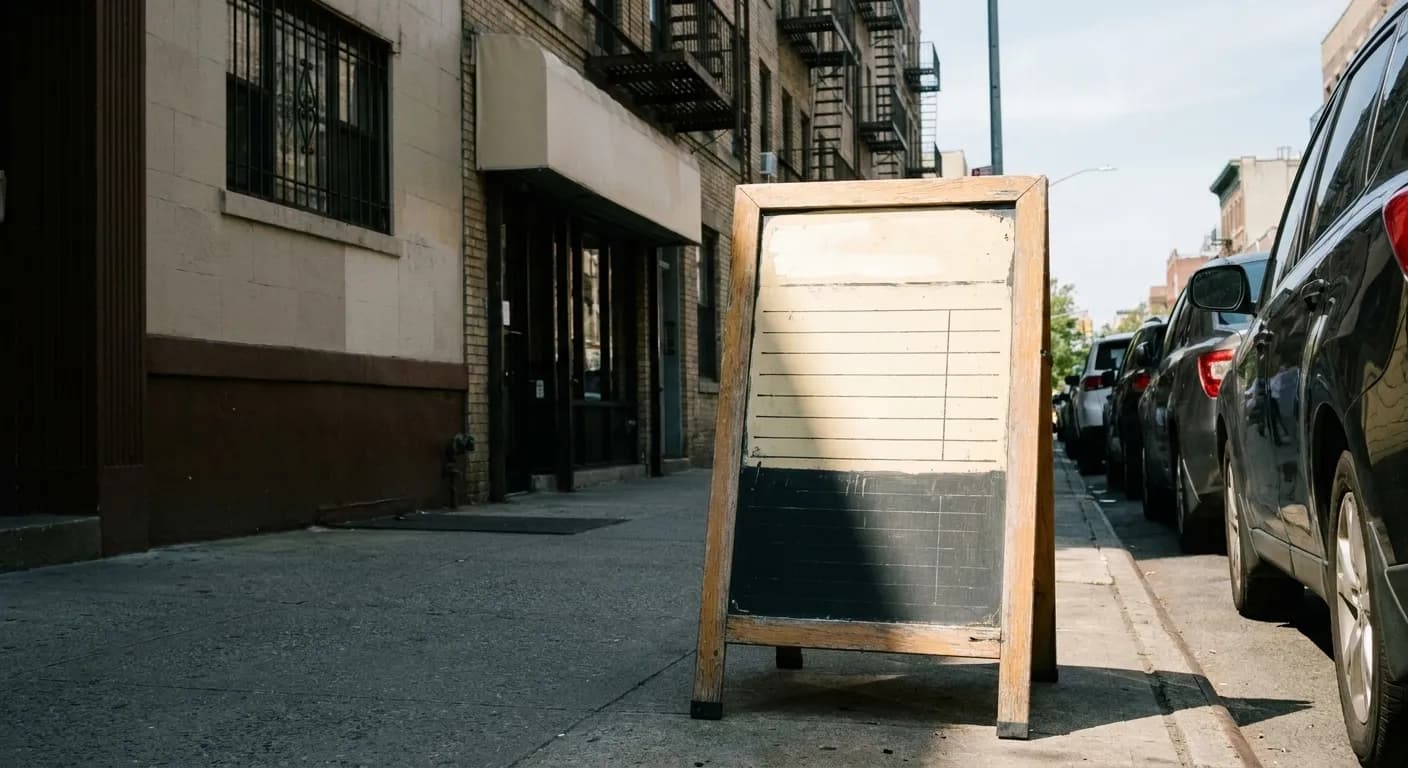
Specials boards change daily and are written in marker on paper taped inside the glass, which means the internet has no idea what is on them. Tell Karpo which blocks you are walking and it will narrow the search to the counters that are actually running a plate today rather than the ones that had it last Tuesday.
Read the board, not the awning
The restaurants along Broadway, St Nicholas and Amsterdam in the 170s and 180s mostly present as Dominican, and the awnings will say so. What matters is the sheet of paper taped inside the window listing four to six daily specials, usually handwritten, usually only in Spanish. Vaca frita appears on that sheet, sometimes as vaca frita and sometimes as carne ripiada or res ripiada, which is the same idea under a Dominican name.
If the sheet is not in the window it will be on a whiteboard behind the counter or recited at you when you ask what the specials are. Asking is normal and expected. The printed laminated menu is for the standing items - mofongo, pernil, chicharrón de pollo - and the interesting cooking is on the paper.
Go between noon and two
This is not a dish that survives a steam table, and the counters that do it well cook it to order or in small batches through the lunch rush. Arrive at half past noon and you are eating it out of a hot pan. Arrive at four and either it is gone or it has been sitting, and sitting turns the crisp edges soft, which removes the entire point.
Weekdays are better than weekends for this specifically. Weekend service uptown skews toward the big shared plates and the roasts, and the fast pan dishes get less attention. If you can only go on a Saturday, go early rather than late.
The name changes depending on whose kitchen it is
This trips people up more than it should. The Cuban name is vaca frita, literally fried cow. The Dominican kitchens uptown that cook essentially the same thing more often write carne ripiada or res ripiada - shredded meat - and a few write ropa vieja, which is a related but genuinely different dish: ropa vieja is stewed in tomato and stays soft, while vaca frita is fried dry and goes crisp.
If the board says ropa vieja and you want the crisp one, ask whether it is fried at the end. The answer is usually a straight yes or no and nobody finds the question strange. Ordering ropa vieja expecting vaca frita is the single most common way people conclude the neighbourhood does not do the dish well.
What you should be looking at
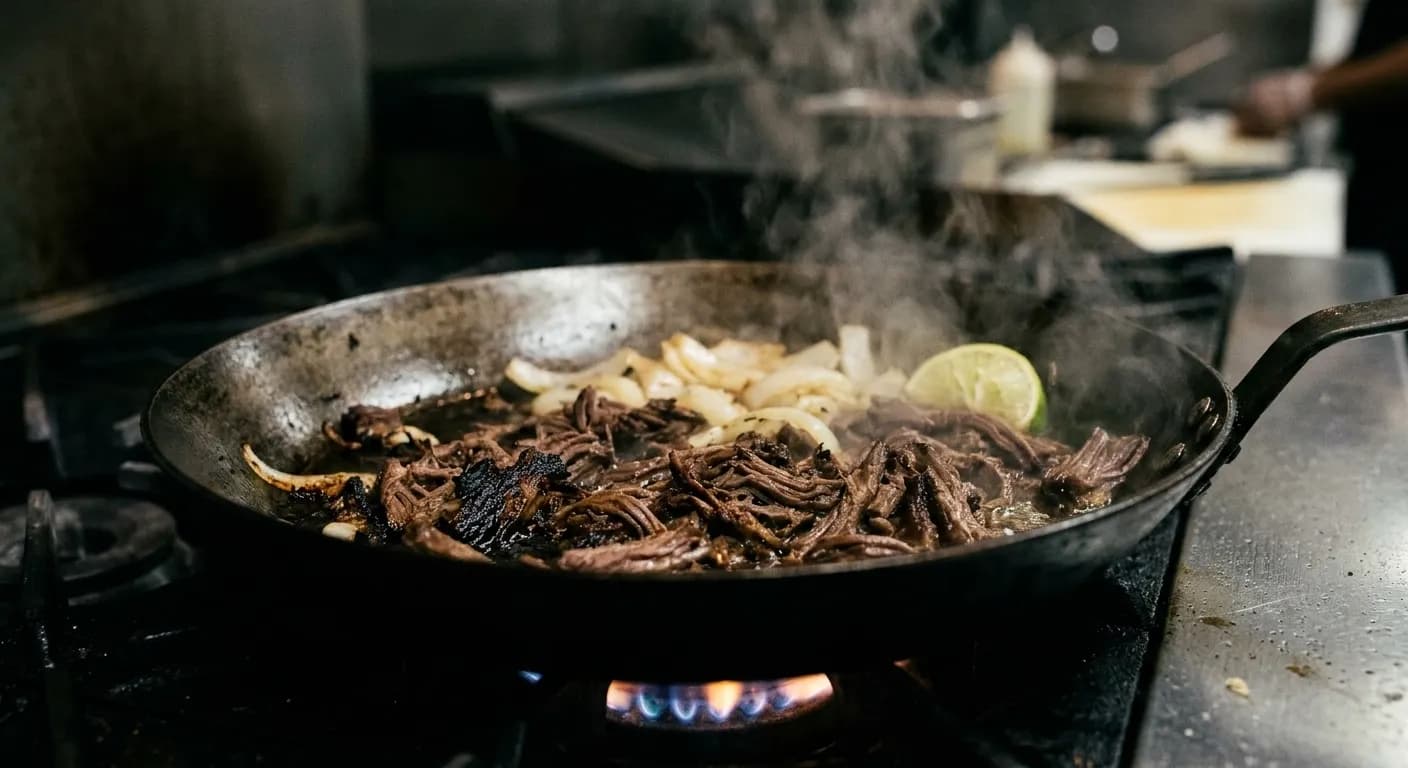
A correct plate looks messy. The beef should be in loose dark strands with visibly burnt edges, not in a neat glossy mound, and there should be raw white onion collapsed on top from the heat rather than cooked into the meat. A wedge of lime comes on the side and is not optional - it goes on at the table while the plate is still steaming.
The tell for a bad one is uniformity. If every strand is the same colour and the whole thing has a sauce sheen, it was stewed and then reheated rather than fried hard in a dry pan. It will taste fine and it is not the dish you came for.
The sides tell you where you are
In a Cuban kitchen vaca frita arrives with black beans, white rice and sweet plantains. Uptown it will more often come with habichuelas guisadas - stewed red beans, thicker and more seasoned than the Cuban black bean soup - plus rice and tostones, which are the flat savoury green plantains rather than the sweet ones.
Neither pairing is wrong and the second is arguably better with the lime. But it is a useful diagnostic: if the beans are red and stewed, you are eating a Dominican kitchen's take, and you should adjust expectations about the rest of the menu accordingly rather than judging it against a Miami reference.
How the blocks are organised
The 181st Street corridor is the busiest and has the most options within a short walk, though it is also where prices have moved most. The stretch of Broadway between about 165th and 175th is quieter, cheaper and where the small counters with four tables sit. Above 190th toward Fort Tryon the density drops off sharply and you are better off walking back down than pushing north.
One practical note: many of these places are cash-preferred even when they take cards, and several of the smallest have a minimum. There are ATMs on every other corner up there for exactly this reason.
If it is not on today
It will not always be there, and the honest answer when it is not is to eat what is. Chicharrón de pollo - small fried chunks of bone-in chicken with lime - occupies a similar place on the palate and is on almost every board every day. Pernil, if the shoulder came out that morning, is the better meal outright.
The other option is to cross the river. Union City and West New York in New Jersey have the metro area's deepest Cuban concentration and vaca frita as a fixed menu item rather than a special, about forty minutes from uptown by bus through the tunnel. That is a trip rather than a detour, but it is the reliable version.
Tags: #VacaFrita #WashingtonHeights #NewYorkCity #NYCFood #UptownManhattan #CubanFood #DominicanFood #LunchSpecials #NYCNeighborhoods #EatUptown
All trademarks are the property of their respective owners.
Ask Karpo first
Uptown eating runs on information that never makes it online - what came out of the kitchen this morning and what is written on the paper in the window. Ask Karpo what is worth walking to on the blocks you are on, and at what hour it will still be good.