 Sugar Factory Halloween Candy Shop: Ocean Drive Treats
Hidden Gems & Odd Finds
Where to Find the Best Places to Eat in Miami Right Now
Miami's dining map shifts faster than most cities, and the best tables aren't always where the guides say they are.
You're standing on a sidewalk in Coconut Grove at seven-thirty on a Thursday, and the place you drove twenty minutes to reach has a handwritten sign taped to the door: private event, reopens tomorrow. This happens more in Miami than in most cities, partly because the restaurant economy here moves in quick pivots—pop-ups become permanent, permanent closes for renovations that stretch four months, and the chef everyone talked about last spring is now running a counter in a completely different neighborhood. The usual approach—saving a list from a blog post or following an Instagram account—leaves you with outdated information the moment you need it most.
Karpo checks what's actually open tonight, finds tables in neighborhoods you hadn't considered, and builds you a route that accounts for causeway backups and afternoon storms. Text it before you commit to a reservation.
The dining map nobody prints anymore
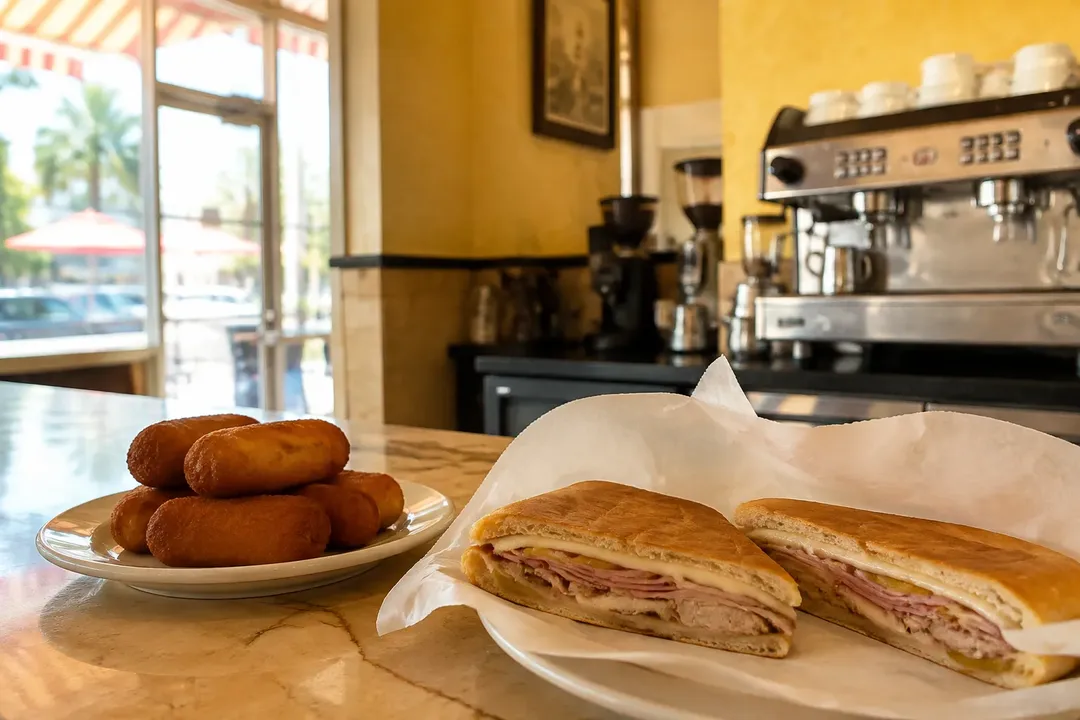
The real challenge isn't finding good food. Miami has that in abundance, from the Cuban bakeries on Calle Ocho that have been frying croquetas since the 1970s to the Haitian griot stands in Little Haiti and the Japanese omakase counters that opened quietly in Brickell and filled every seat within a week. The challenge is knowing which places to eat are actually serving tonight, which ones take walk-ins after eight, and which neighborhoods are reachable without sitting in causeway traffic for forty minutes. A restaurant can be exceptional and still wrong for your evening if it's on the far side of a drawbridge that lifts every thirty minutes or if parking within three blocks is impossible after six.
This is not a ranked list. Those go stale the day they publish, and they rarely account for the small variables that determine whether a dinner works—whether the kitchen closes early on Mondays, whether the back patio floods when it rains, whether the rideshare pickup point is around the corner or requires walking four blocks in humidity that makes your shirt cling. What follows is a framework for making decisions in real time, using Miami's actual geography and the specific frictions that shape how people move through the city after dark.
Two ways to think about the evening
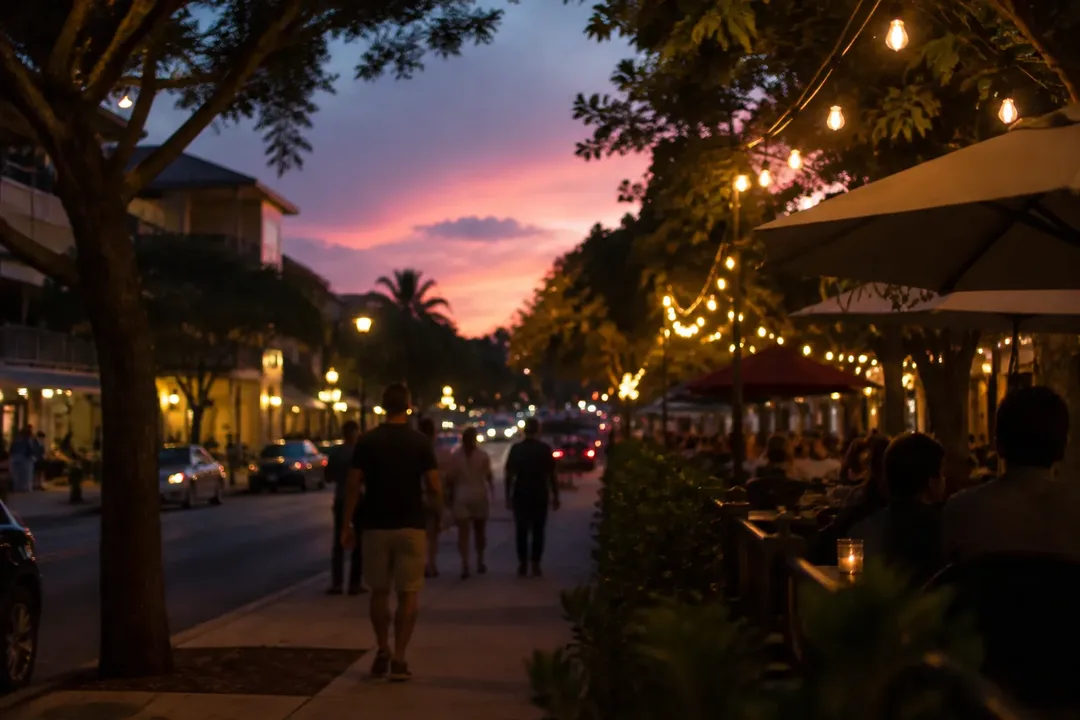
One approach is to pick a neighborhood and let the meal anchor everything else. Coconut Grove, for instance, has a density of places to eat within a ten-minute walk: the wood-fired grill spots on Grand Avenue, the seafood counters near the marina, the wine bars tucked into the side streets off Main Highway. You park once—either in the public garage on McFarlane or in one of the smaller surface lots near CocoWalk—and the rest of the night unfolds on foot. The advantage here is flexibility. If the first place has a long wait, check nearby options you can reach on foot. The afternoon rain that breaks around five doesn't derail your plan because you're already under an awning or inside a second option.
The other approach is to choose the restaurant first and build the route around it. This makes sense when you're aiming for a specific style—maybe the Peruvian cevicheria in Doral that only seats sixteen people, or the Haitian restaurant on Northeast Second Avenue where the griot is worth the drive but the parking is a negotiation with side-street meters and Spanish-language signs about street cleaning. This method requires more planning. You need to know when the kitchen stops seating, whether they take reservations or operate on a first-come basis, and what the backup is if you arrive and the wait is longer than you're willing to give it.
Both strategies fail if you don't account for Miami's infrastructure. The MacArthur Causeway at six-thirty on a weekday is a parking lot. The Rickenbacker Causeway on a Sunday afternoon is worse. If your plan depends on crossing water, you need to add thirty minutes to your estimate and have a second target on the same side of the bay. Rideshare timing is similarly unpredictable—the app might say seven minutes, but if you're in Wynwood after a gallery opening or near the arena after an event, that estimate doubles. The best places to eat in Miami are the ones you can actually reach without turning the approach into the hardest part of the night.
What you're trading for the meal
A sit-down dinner in Miami costs more than it did three years ago, and the jump is steeper than in most cities. A plate that was eighteen dollars in 2021 is twenty-four now, and the glass of wine that came with it has gone from nine to thirteen. This isn't price-gouging; it's rent, labor, and the cost of getting produce to a peninsula where almost everything arrives by truck. The restaurants that held their pricing through the pandemic are mostly gone. The ones that survived did it by raising checks and hoping the clientele could absorb it.
But cost isn't only the number on the bill. It's also the hour you spend looking for parking in Coral Gables because the lot you thought was public turns out to be resident-only after six. It's the twenty-dollar rideshare each way because you didn't want to deal with parking at all. It's the table you couldn't get because you didn't realize the place stopped seating at nine on weeknights, so you end up at a backup that's fine but not what you drove across town for. These hidden costs add up faster than the menu prices, and they're harder to predict because they depend on timing, weather, and whether you're trying to park near a Heat game or a cruise ship turnaround day.
The trade-off that matters most is time. Miami's layout punishes spontaneity. A place that looks fifteen minutes away on the map becomes thirty-five once you account for the bridge, the turn lane that doesn't exist where you expect it, and the street that's one-way in the opposite direction. If you're eating out twice a week, that's an extra hour and a half of windshield time over the course of a month. The best strategy is to pick places to eat where the approach is simple—direct routes, clear parking, neighborhoods where three or four solid options sit within a two-block radius. That doesn't mean avoiding the outer neighborhoods; it means knowing which trips are worth the logistics and which nights call for staying close.
What to confirm before you go
Start with hours, not reviews. A restaurant's Instagram might show a full dining room from last Saturday, but that doesn't tell you whether they're open tonight or whether the kitchen closes at nine instead of ten on weekdays. Call if the website isn't clear, or check the most recent Google reviews for mentions of unexpected closures or shortened schedules. This is especially true for smaller operations—the family-run Nicaraguan place on Southwest Eighth Street or the Filipino counter in a Westchester strip mall. These spots often shift hours based on staffing or supply, and they don't always update their online listings in real time.
Next, think about weather. If the forecast shows storms between five and seven, any plan that depends on outdoor seating or walking between spots needs a backup. The rain in Miami is quick and heavy, and it floods intersections faster than you expect. A patio that's perfect at six-thirty can be six inches underwater by seven. The same is true for parking—some surface lots turn into ponds, and the street parking along Biscayne Boulevard or in parts of Little Havana becomes unusable until the water drains. Have a second target in mind, preferably one with indoor seating and covered parking or a garage nearby.
Finally, verify what the neighborhood looks like at the time you'll be there. A block that's quiet at lunch can be impassable at dinner because of an event you didn't know about—a gallery walk in Wynwood, a festival setup in Little Havana, a concert letting out near Bayfront Park. These things aren't always announced widely, and they change the parking and traffic patterns in ways that make a simple dinner into a logistical puzzle. If you're unfamiliar with the area, spend two minutes looking at recent check-ins or local news to see if anything's happening that night. The best places to eat are the ones you can walk into without spending half an hour finding a spot to leave the car.
Practical notes
- Coconut Grove and Coral Gables have the highest density of walk-between options; park once and stay on foot.
- Bridge timing matters—add thirty minutes if you're crossing to or from the Beach after five on weekdays.
- Most kitchens stop seating earlier than their posted close time; call ahead if you're arriving after nine.
- Afternoon storms between May and October flood low-lying parking areas; check the lot surface before you commit.
- Rideshare pickup waits double near the arena, Wynwood, and Brickell on event nights.
- Meters in Coral Gables and parts of the Grove are enforced until ten PM; read the signs carefully.
Tags: #karpo #miami #miamirestaurants #coconutgrove #placestoeat #coralgables #miamifood #miamidining #brickell #littlehavana #wynwood #miamibeach #diningmiami #miamilocal #realtalk
Sources consulted: City of Miami · Miami-Dade County
All trademarks are the property of their respective owners.
Ask Karpo first
Text Karpo to confirm what's actually open tonight and get a route that avoids current bridge traffic and storm flooding. It checks live kitchen hours, finds walk-in availability in neighborhoods you might not have considered, and gives you a backup plan if the first spot is packed or closed. Ask it for parking options near your target or the closest rideshare pickup point that isn't a long walk.
Ask Karpo for more information.
Keep reading
- Sugar Factory Halloween Candy Shop: Ocean Drive Treats
 Kilwins Halloween Candy Shop: Coconut Grove Fresh Fudge
 Peterbrooke Halloween Candy Shop: Coral Gables Gift Boxes