 Mediterranean Food Near Me in Fort Greene: Miss Ada's Garden and Hummus
Neighborhood Guides
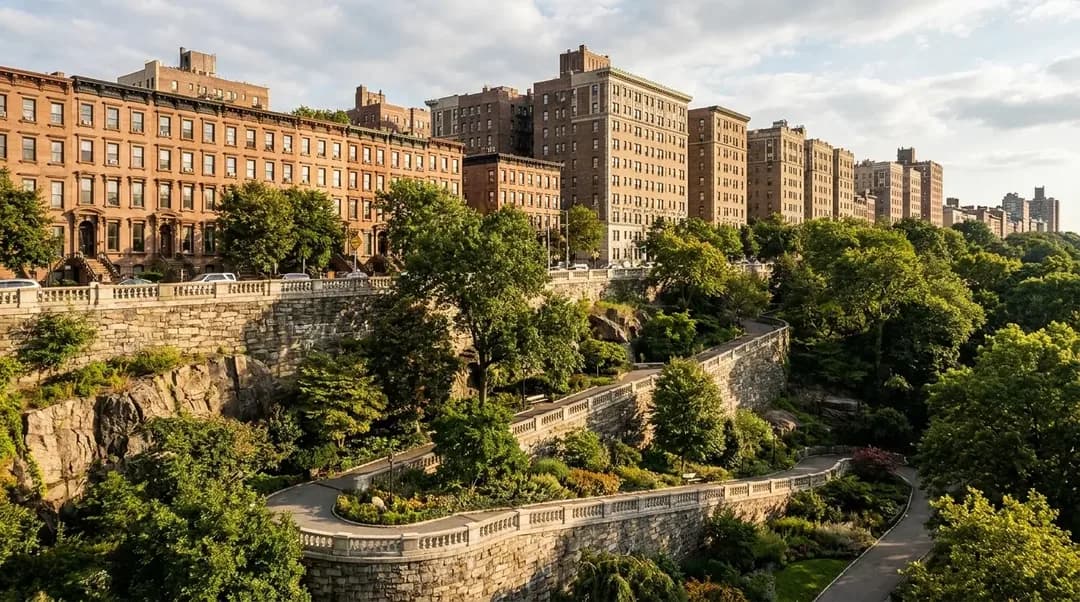
Where to Build a Low-Effort Saturday in Morningside Heights That Doesn't Feel Student-Only
Between Morningside Park's thirteen-block hillside and Riverside Park's waterfront paths, this narrow Manhattan strip offers locals a quieter weekend rhythm that doesn't revolve around campus calendars or undergraduate schedules.
Morningside Heights occupies a narrow stretch of Manhattan between 110th and 125th Streets, with Morningside Park forming its eastern boundary and the Hudson River via Riverside Park on its west. Columbia University anchors the neighborhood economically and culturally, but the area doesn't feel like a college town in the restrictive sense. The thirteen-block strip blends dramatic landscaping with community park amenities, pre-war buildings with ceiling heights exceeding eleven feet, and green spaces that serve young families and long-term residents as much as students passing through. If you're looking for a Saturday that skips the undergraduate crush but still delivers walkable variety, this stretch rewards minimal planning with maximum return on effort.
Text Karpo at (332) 334-2042 for weekend routing help across any Manhattan neighborhood, from Morningside Heights to Washington Heights and beyond.
Start at Morningside Park's hillside before the midday crowd
Morningside Park is one of only eleven New York City designated Scenic Landmarks, a narrow strip that stretches thirteen blocks through Harlem and Morningside Heights. Built on a steep incline, the park blends dramatic landscaping with community amenities: multiple playgrounds nestle at the bottom of its cliff-like hillside, and visitors pause along paths that climb the grade. The topography creates natural separation between activity zones, so even when families fill the lower playgrounds, the upper paths stay relatively quiet. Arriving before 11 a.m. on Saturday gives you the hillside trails without competing for sight lines or benches.
The park's eastern edge runs along Morningside Avenue, while its western boundary meets Manhattan Avenue and Morningside Drive. If you're coming from below 110th Street, the 1 train to 110th Street–Cathedral Parkway puts you at the southern entrance; from the east, the 2 or 3 to 110th Street–Central Park North requires a short walk west. The steep grade means you'll want to decide whether you're climbing or descending—starting at the top near 123rd Street and working downhill is the lower-effort choice. The Morningside Field House operates on seasonal schedules, with program availability affected by Parks' afterschool and summer camps; programs rotate January–March, April–June, July–September, and October–December, so don't assume indoor access without checking current hours first.
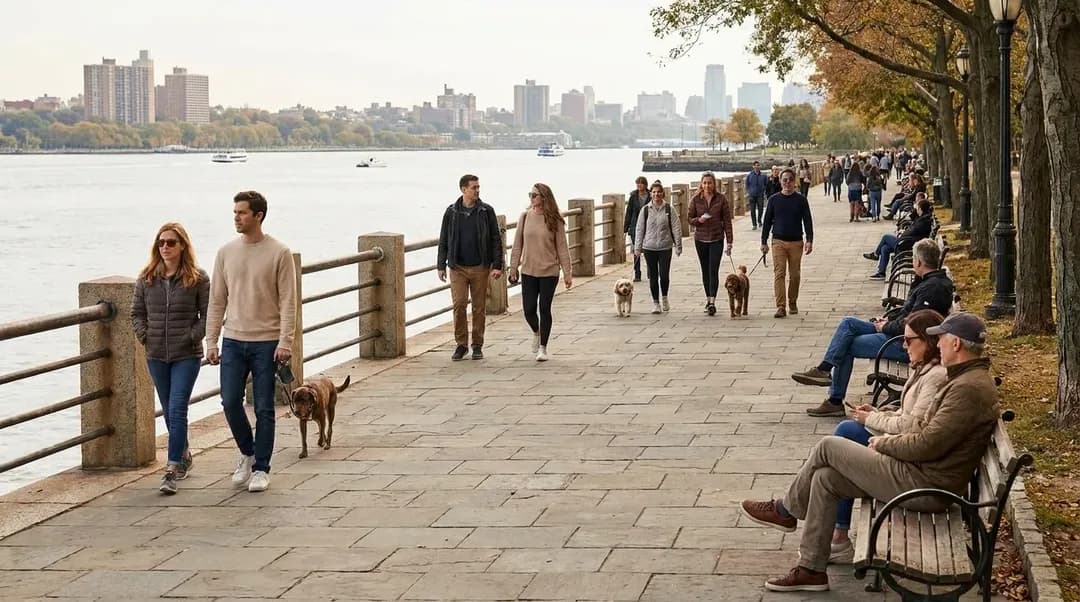
Move west to Riverside Park's waterfront without doubling back
Once you've covered Morningside Park's length, the logical next move is west toward Riverside Park rather than retracing your steps. The neighborhood's narrow footprint—bounded by two major green spaces—makes this a straightforward lateral shift. Walk west along any cross street between 110th and 125th; Riverside Drive marks the park's edge. Riverside Park offers a different texture: flatter paths, Hudson River views, and a longer north-south corridor that extends well beyond Morningside Heights' boundaries. The waterfront location brings more wind, which matters if you're planning this route in shoulder seasons.
Riverside Park doesn't have the dramatic topography of Morningside Park, but it compensates with length and sight lines. You can walk north along the promenade toward the 125th Street corridor or south toward the 110th edge, depending on how much distance you want. The park serves young families and long-term residents; you'll see strollers, dog walkers, and runners rather than campus groups. If you're building a low-effort Saturday, this is where you add mileage without adding complexity—the paths are well-marked, and you won't need to navigate steep grades or choose between multiple trail options. The Hudson River backdrop provides visual interest without requiring you to plan around specific landmarks or timed access.
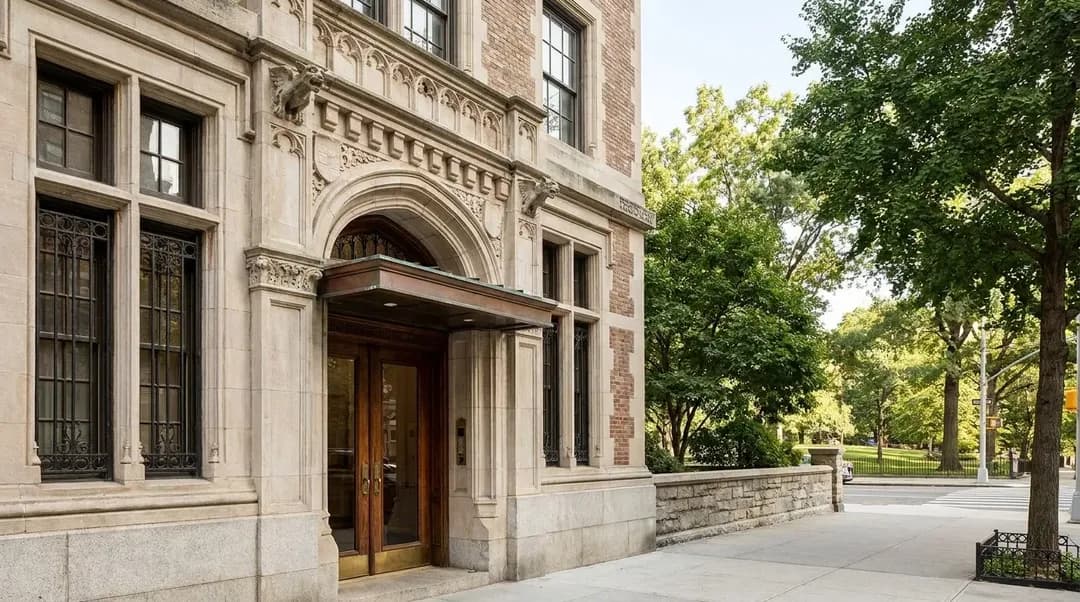
Use pre-war architecture as a routing anchor between parks
Morningside Heights' architectural landscape is defined by impressive pre-war buildings, many offering classic Manhattan charm. These structures—some designed by architects like Ernest Flagg—feature ceiling heights exceeding eleven feet, spacious floor plans, and large windows. Walking between the two parks, you'll pass residential blocks that don't cater exclusively to students; young families and professionals occupy buildings that predate the neighborhood's current academic density. The architecture provides a visual through-line that distinguishes Morningside Heights from newer developments farther downtown.
If you're interested in the built environment, the stretch along Morningside Drive between 110th and 123rd Streets showcases this pre-war character most clearly. Buildings here occupy entire city block fronts, surrounded by landscaped gardens and offering direct park views of both Morningside Park and Central Park to the south. You don't need to tour interiors or schedule access—simply walking these blocks gives you a sense of the neighborhood's residential scale. This isn't a detour; it's the connective tissue between your two park visits, and it clarifies why locals stay in Morningside Heights beyond their student years. The pre-war stock offers space and light that newer buildings rarely match at comparable price points.
Plan around seasonal program schedules and weather contingencies
The Morningside Field House operates on rotating schedules that shift every three to four months, with program availability further affected by Parks' afterschool and summer camps. If you're counting on indoor recreation as a backup, check current hours before you commit to the route—programs rotate January–March, April–June, July–September, and October–December, and media labs follow their own six- to twelve-week schedules depending on class type. Building hours vary by day, so don't assume weekend access mirrors weekday availability. This level of scheduling complexity means indoor contingencies require advance research rather than spontaneous pivots.
Weather plays a larger role in Morningside Heights than in denser Manhattan neighborhoods because the route depends on two parks separated by a narrow residential corridor. If rain or wind disrupts your plans, the neighborhood doesn't offer the same density of indoor alternatives you'd find in Midtown or the Village. The Cathedral Church of St. John the Divine's grounds provide some weather protection and are open to the public, but they're not a full substitute for park time. Columbia University's campus is also accessible, though it skews heavily toward student activity during the academic year. The smarter approach: check the forecast before you leave, and if conditions look marginal, shift your Saturday to a neighborhood with more indoor density. Morningside Heights rewards good weather; it doesn't compensate well for bad.
Practical Notes
- The 1 train to 110th Street–Cathedral Parkway or the 2/3 to 110th Street–Central Park North provide southern access; the 1 to 125th Street serves the northern end.
- Morningside Park's steep grade favors starting at the top near 123rd Street and descending south if you want the lowest-effort route.
- Riverside Park's waterfront location brings more wind—layer accordingly in spring and fall.
- Morningside Field House hours and program availability rotate quarterly; verify current schedules before counting on indoor access.
- Pre-war buildings along Morningside Drive between 110th and 123rd Streets offer the clearest architectural contrast to student-focused housing.
- The neighborhood's narrow footprint means limited indoor backup options if weather turns—plan accordingly or choose a denser area.
- Parking availability improves as you learn which blocks turn over faster; locals report finding spots quickly once familiar with the grid.
Morningside Heights delivers a low-effort Saturday when you lean into its two-park structure and accept the neighborhood's narrow footprint as a feature rather than a limitation. The route between Morningside Park's hillside and Riverside Park's waterfront gives you visual variety, manageable distances, and a residential texture that doesn't revolve around undergraduate schedules. The pre-war architecture clarifies why young locals stay beyond their student years, and the green space density rewards minimal planning with maximum return. Just check the weather and field house schedules before you commit—this neighborhood doesn't compensate well for contingencies.
Tags: #morningsideheights #morningsidepark #riversidepark #manhattanneighborhoods #nycparks #prewararchitecture #upperwestside #harlemneighbors #columbiaarea #nyclocals #weekendinnyc #manhattanwalks
All trademarks are the property of their respective owners.
Ask Karpo for more information.
Keep reading
- Mediterranean Food Near Me in Fort Greene: Miss Ada's Garden and Hummus
 Places To Eat Near Me in Chelsea: The Market Fills a Nabisco Factory
 Seafood Near Me in the East Village: The Mermaid Inn's Dollar Oysters