 Mediterranean Food Near Me in Fort Greene: Miss Ada's Garden and Hummus
Neighborhood Guides
Where Locals Actually Meet When They Say Somewhere Easy in Lower Manhattan
When New Yorkers text 'meet somewhere easy downtown,' they're not talking about tourist plazas—here's the real shortlist of neutral-ground spots that work for everyone below Canal.
Ask any New Yorker who lives below 14th Street where to meet 'somewhere easy,' and you'll trigger an instant mental calculation: subway access, not a scene, won't require a reservation, and definitely not a place where your friend will stand confused among tour groups. Lower Manhattan's version of 'easy' is its own dialect—it means spots where multiple train lines converge, where you can pivot to dinner or drinks without committing upfront, and where the vibe stays low-key enough that showing up in work clothes or weekend casual both work. These aren't the places that show up in visitor guides. They're the default coordinates locals text when plans are loose, timing is uncertain, or the group spans different parts of the city. Understanding this shorthand means knowing which corners, cafés, and public spaces actually function as neutral ground when everyone's coming from different directions.
Text Karpo at (332) KARPO-NY to get real-time suggestions for meet-up spots based on where your group is actually coming from today.
Why 'Easy' Means Transit Math, Not Ambiance
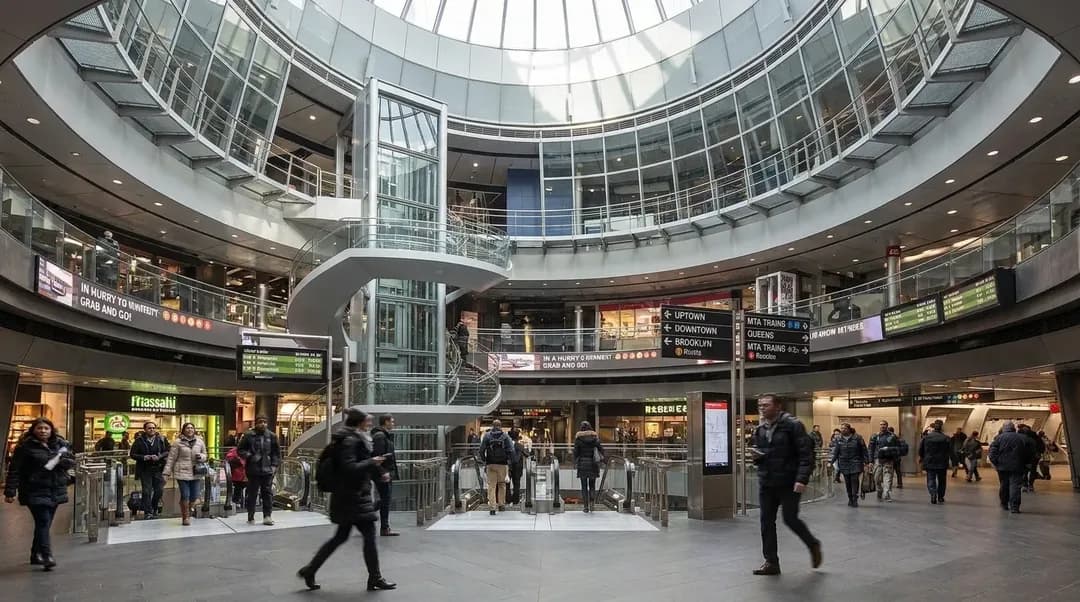
The phrase 'somewhere easy' in Lower Manhattan is fundamentally about subway geometry. When locals suggest it, they're proposing spots near stations where multiple lines intersect—places like Fulton Center, where the 2, 3, 4, 5, A, C, J, and Z all converge, or City Hall, where the 4, 5, and 6 meet the R and W. The calculation isn't about charm or Instagram potential; it's about minimizing the chance that someone coming from Astoria and someone coming from Park Slope both have to transfer twice. This practicality shapes the entire vocabulary of downtown meet-ups. A 'good' spot means your friend from Brooklyn can take one train, your colleague from Midtown doesn't need to consult a map, and if someone's running late, they're not texting panicked questions about which exit to use.
This transit-first thinking also explains why certain intersections become default coordinates even when there's nothing particularly special about them. The northeast corner of Broadway and Chambers, for example, functions as a perpetual meeting point not because of any landmark but because it's visible from the 1, 2, 3, A, and C exits and offers clear sightlines in all directions. Similarly, the plaza outside the Oculus at Fulton Street works despite being touristy because it's genuinely hard to miss and connects to PATH trains for anyone coming from New Jersey. When you're coordinating three or four people with different schedules, architectural interest takes a back seat to the question of whether everyone can get there without adding fifteen minutes to their commute.
The Actual Spots Locals Default To
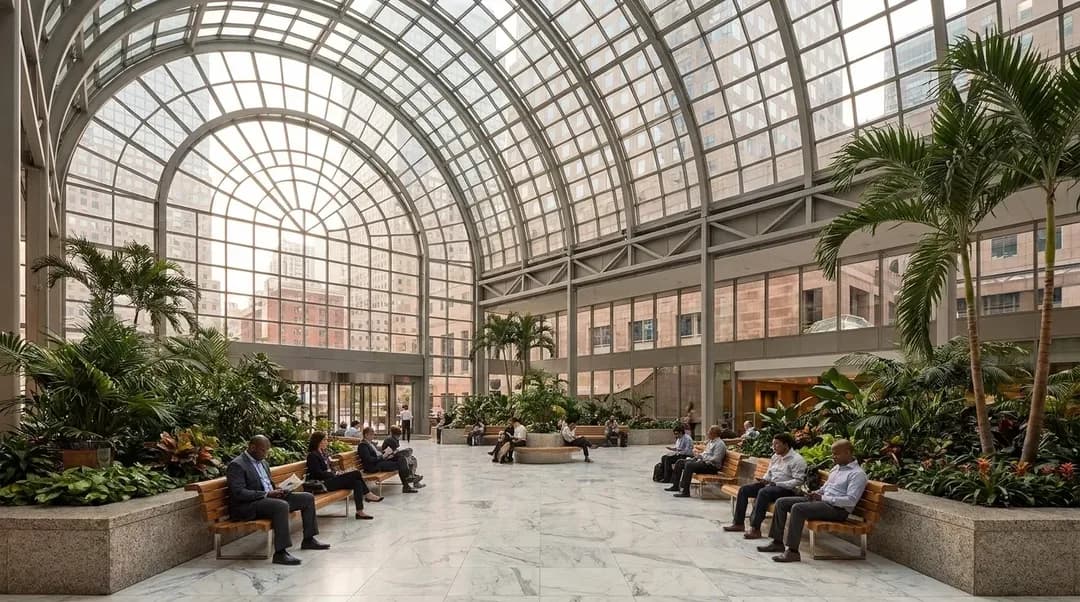
Brookfield Place, at the western edge of the Financial District, operates as one of Lower Manhattan's most reliable neutral zones. The indoor winter garden provides weather protection, multiple entrances mean you can arrive from the 1, R, W, or 4 trains without confusion, and the space is large enough that finding each other doesn't require precise coordinates. The setup works equally well for a quick coffee catch-up or as a staging area before walking to dinner in Battery Park City. Because it's primarily an office-worker hub rather than a tourist destination, the crowds thin out predictably after 7 PM on weekdays and stay manageable on weekends. The key advantage is flexibility—if your group decides to grab food, there are options inside, but if someone suggests walking to the waterfront or heading toward Tribeca, you're already positioned correctly.
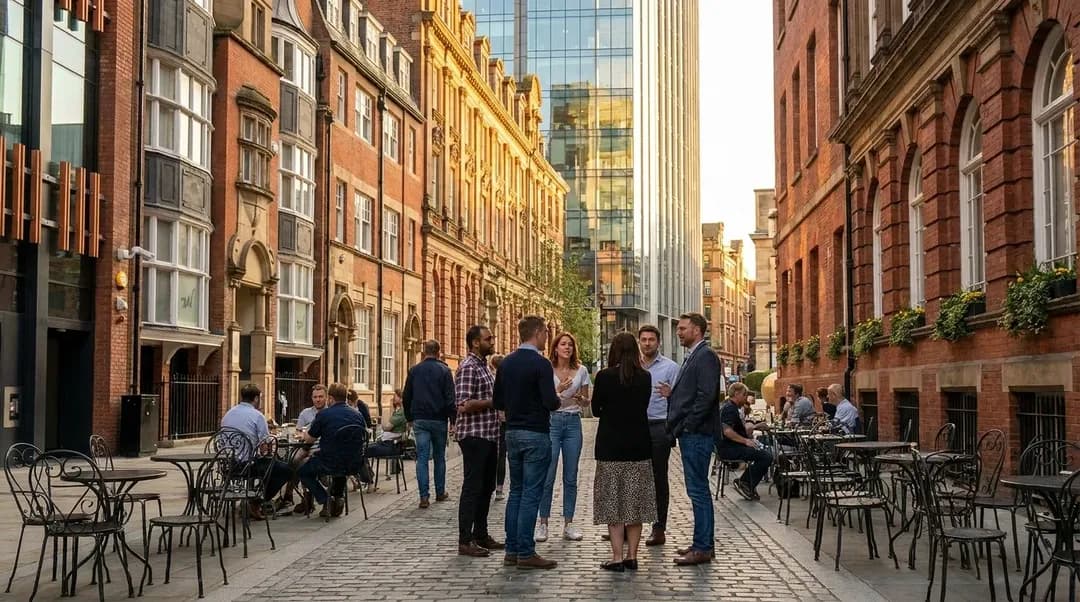
Stone Street, despite its cobblestones and outdoor seating that attract plenty of visitors during summer, remains a local default because it solves the 'what if we want to eat' problem without requiring advance planning. The cluster of bars and restaurants means groups can meet outside Ulysses or Adrienne's Pizza Bar, assess the situation, and either grab a table or keep walking toward the Seaport without anyone feeling like the plan failed. The 2 and 3 trains at Wall Street put you two blocks away, and the layout—a pedestrian-only stretch—means you're not trying to spot someone across six lanes of traffic. Locals know to suggest meeting at the Hanover Square end rather than the Pearl Street entrance because it's less congested and offers a clearer landmark. The understanding is that Stone Street works for casual drinks but isn't where you'd bring someone for a quiet conversation—it's a starting point, not a destination.
When Weather and Timing Change the Equation
Cold or rainy weather immediately shifts the 'somewhere easy' calculation toward indoor spaces with generous loitering policies. The ground floor of the Westfield Oculus becomes more appealing despite its tourist traffic because it's climate-controlled and offers enough seating that camping out for ten minutes while waiting for a late friend doesn't feel awkward. Locals know the Apple Store side tends to be less crowded than the main concourse, and the presence of Eataly on the lower level provides a backup plan if the group decides to eat. The trade-off is noise—the acoustics in the Oculus make conversation difficult during rush hour—but when it's 28 degrees outside and sleeting, the shelter math wins. The practical move is to text a more specific landmark within the space ('by the Eataly escalators' or 'near the PATH entrance') rather than just saying 'the Oculus,' which is too vague to be useful.
Summer evenings flip the logic entirely. Battery Park becomes viable because the waterfront breeze makes it comfortable, and the open space means you can spot someone from a distance. The area near the SeaGlass Carousel works as a meeting point because it's distinctive enough to describe over text and far enough from the ferry terminals that you're not swimming through cruise-ship crowds. Locals typically suggest meeting on the benches facing the water rather than near the memorials, which feel too solemn for casual hangouts. The 1 train to South Ferry or the 4 and 5 to Bowling Green both work, though the walk from Bowling Green is more pleasant. The implicit understanding is that Battery Park is for early evening meet-ups—after 8 PM, most groups migrate north toward bars in the Financial District or Tribeca because the park empties out and starts feeling isolated.
How to Decode and Suggest Your Own 'Easy' Spots
When someone proposes meeting 'somewhere easy,' the appropriate response is to name a specific corner or entrance rather than a general area. Saying 'City Hall Park' is too vague; saying 'the north side of City Hall Park near the fountain, by the Broadway entrance' gives everyone a workable target. The same principle applies when you're the one suggesting a spot—specificity reduces the back-and-forth texting and prevents the scenario where two people are standing fifty feet apart, both insisting they're 'at the park.' Locals also build in contingency language: 'Let's meet outside Brookfield Place, but if it's packed, we can walk to the benches by the marina.' This acknowledges that Lower Manhattan's public spaces can shift from empty to crowded within an hour depending on office schedules and weather.
The other skill is reading whether 'easy' actually means 'quick' or 'flexible.' If someone suggests meeting at 6:15 PM on a weekday, they're probably looking for a spot where they can arrive, say hello, and move on to the next thing—that calls for something near their office or subway line. If the plan is open-ended ('let's meet around 7 and figure it out'), that's when you want a spot with options nearby: cafés, bars, or parks where the group can recalibrate. Locals develop a mental map of which intersections offer this kind of flexibility. The area around Fulton and Nassau, for example, provides quick access to coffee shops, the South Street Seaport, and multiple subway lines, making it a strong choice when the group's plans are still forming. The goal isn't to pick the coolest spot—it's to pick the spot that won't require anyone to apologize for their choice later.
Practical Notes
- Check real-time subway status before suggesting a meet-up spot—if the 4 and 5 are running local, Fulton Center becomes less 'easy' for people coming from uptown.
- Avoid suggesting outdoor spots in Lower Manhattan between 12–2 PM on weekdays; office lunch crowds make sidewalks and plazas nearly impassable.
- If meeting near the Oculus, specify which level—ground floor, mezzanine, or PATH level—to prevent confusion in the multi-story space.
- Battery Park works best for meet-ups before 8 PM; after that, the area empties quickly and feels less welcoming for casual hangouts.
- Stone Street gets loud after 6 PM on Thursdays and Fridays; if your group wants to talk, suggest meeting at the Hanover Square end and walking elsewhere.
- Brookfield Place's winter garden closes for private events occasionally; have a backup corner (like the Vesey Street entrance) in mind.
- When texting coordinates, use cross-streets and cardinal directions ('northeast corner of Broadway and Chambers') rather than landmarks that might be unfamiliar.
The real skill behind 'somewhere easy' isn't memorizing a list of spots—it's understanding the logic that makes a place work for last-minute coordination. Lower Manhattan's geography rewards locals who think in terms of subway transfers, weather contingencies, and sightlines rather than aesthetics or reputation. The best meet-up spots are the ones you can describe in a single text, reach without consulting a map, and leave without regret if the group decides to move on. That practicality is what separates a tourist meeting point from a local one: it's not about discovering something hidden, it's about choosing something that won't waste anyone's time. Once you internalize that calculus, you stop needing to ask where to meet—you already know which corner will work.
Tags: #lowermanhattan #financialdistrict #batteryparkcity #nyclocals #downtownnyc #tribeca #newyorkcommute #nycsubway #brookfieldplace #stonestreet #fultoncenter #nycmeetups #manhattanlife #newyorktransit
All trademarks are the property of their respective owners.
Ask Karpo for more information.
Keep reading
- Mediterranean Food Near Me in Fort Greene: Miss Ada's Garden and Hummus
 Places To Eat Near Me in Chelsea: The Market Fills a Nabisco Factory
 Seafood Near Me in the East Village: The Mermaid Inn's Dollar Oysters