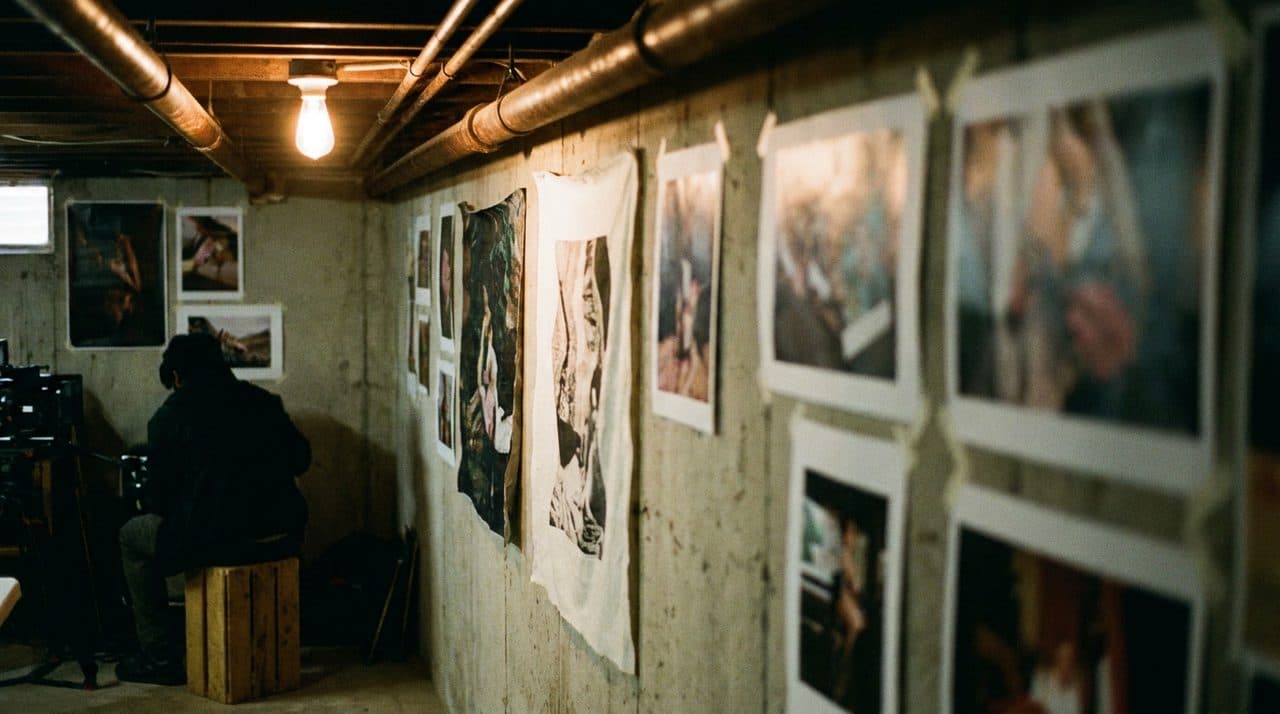
You slip through an unmarked door on a quiet Williamsburg block between the waterfront and the BQE, descend a narrow staircase that smells faintly of old newsprint and leather, and find yourself in what might be the city's most obsessive shrine to basketball's forgotten margins. This isn't Knicks mythology or Jordan nostalgia—it's a basement devoted entirely to the American Basketball Association's psychedelic seven-year run, streetball legends who never made SportsCenter, and the kind of hoop culture that thrived in playgrounds and rec centers long before anyone thought to monetize it.
The Entry Ritual Feels Like Crossing Into Someone's Private Archive
The door doesn't announce itself. You're looking for a recessed entrance near a bodega, the kind of threshold that could easily be a storage closet or electrical access. Inside, the stairwell is narrow enough that your shoulders nearly brush both walls. At the bottom, a small anteroom lined with milk crates full of VHS tapes serves as the threshold. The tapes are labeled in faded ballpoint—"Rucker '89," "Venice Beach run 7/4/93," "AND1 raw cuts pre-edit." You can hear the hum of a dehumidifier working overtime to protect decades of paper and fabric from the basement damp. The air tastes slightly metallic, the way old magnetic tape and aging cardboard always do.
Red-White-Blue Basketballs Hang From Exposed Ceiling Joists Like Forgotten Ornaments
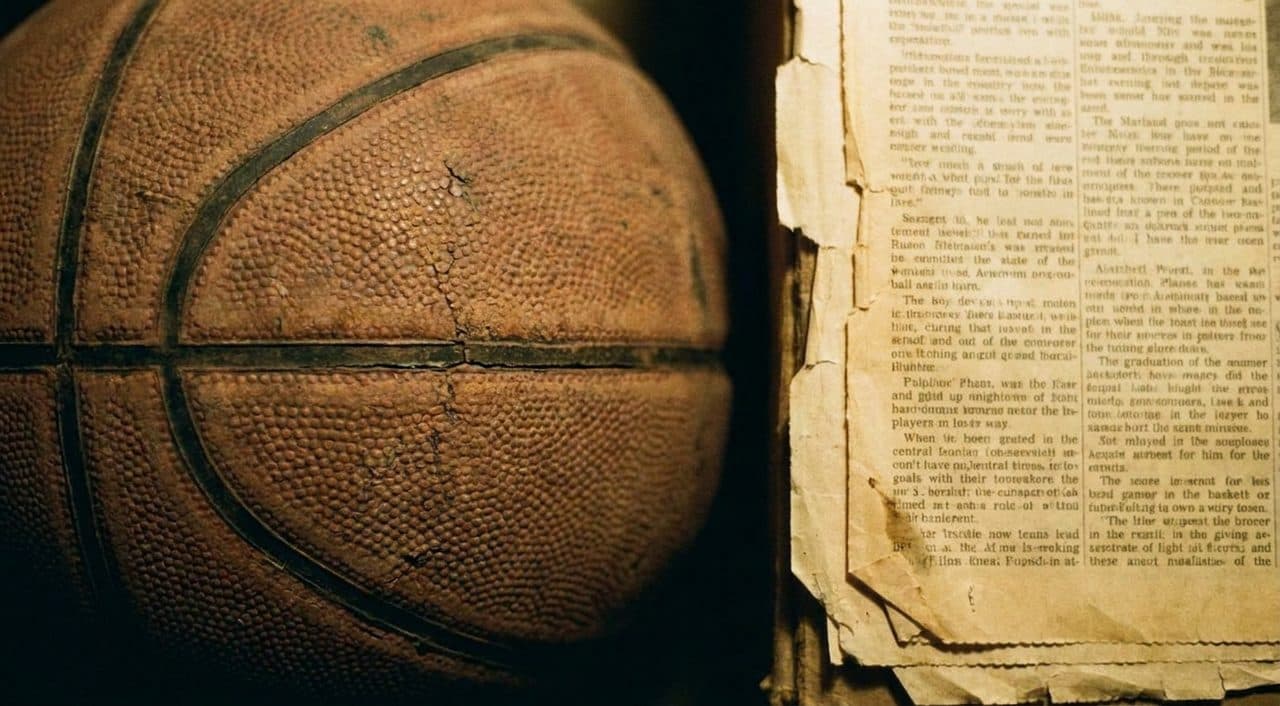
The main room sprawls wider than you'd expect from street level, low-ceilinged and dense with artifacts. ABA basketballs—those iconic tricolor spheres—dangle on fishing line at varying heights, some autographed, some scuffed bald from actual play. The walls are floor-to-ceiling: game programs from the Indiana Pacers' ABA championship runs, Virginia Squires ticket stubs, a framed Spirits of St. Louis jersey that looks like it survived a house fire. One corner holds a grid of Polaroids showing pickup games at now-demolished courts across Brooklyn and Queens, each photo captioned with a location and year. The light comes from mismatched floor lamps and a few clip-on spots, casting everything in warm amber that makes the whole space feel like a time capsule opened after decades sealed.
Handmade Hoop Art Covers Every Surface Not Already Claimed By Memorabilia
Between the official artifacts, you find the folk art: paintings of Julius Erving mid-flight rendered on plywood, a sculpture made entirely of deflated basketballs stitched together, a quilt depicting the 1976 ABA-NBA merger as a kind of apocalypse scene with team logos raining from the sky. Someone built a scale model of the old Rucker Park court using toothpicks and cardboard, complete with tiny spectators. The handmade pieces aren't precious or gallery-polished—they're obsessive, the kind of work people do late at night because they can't stop thinking about a crossover they saw twenty years ago. You spot a series of ink drawings on manila envelopes, each one capturing a different streetball move with anatomical precision, labeled with nicknames: "The Destroyer," "Pee Wee," "Helicopter." None of these names mean anything to casual fans, which is exactly the point.
VHS Mixtapes Document Games That Were Never Meant To Be Preserved
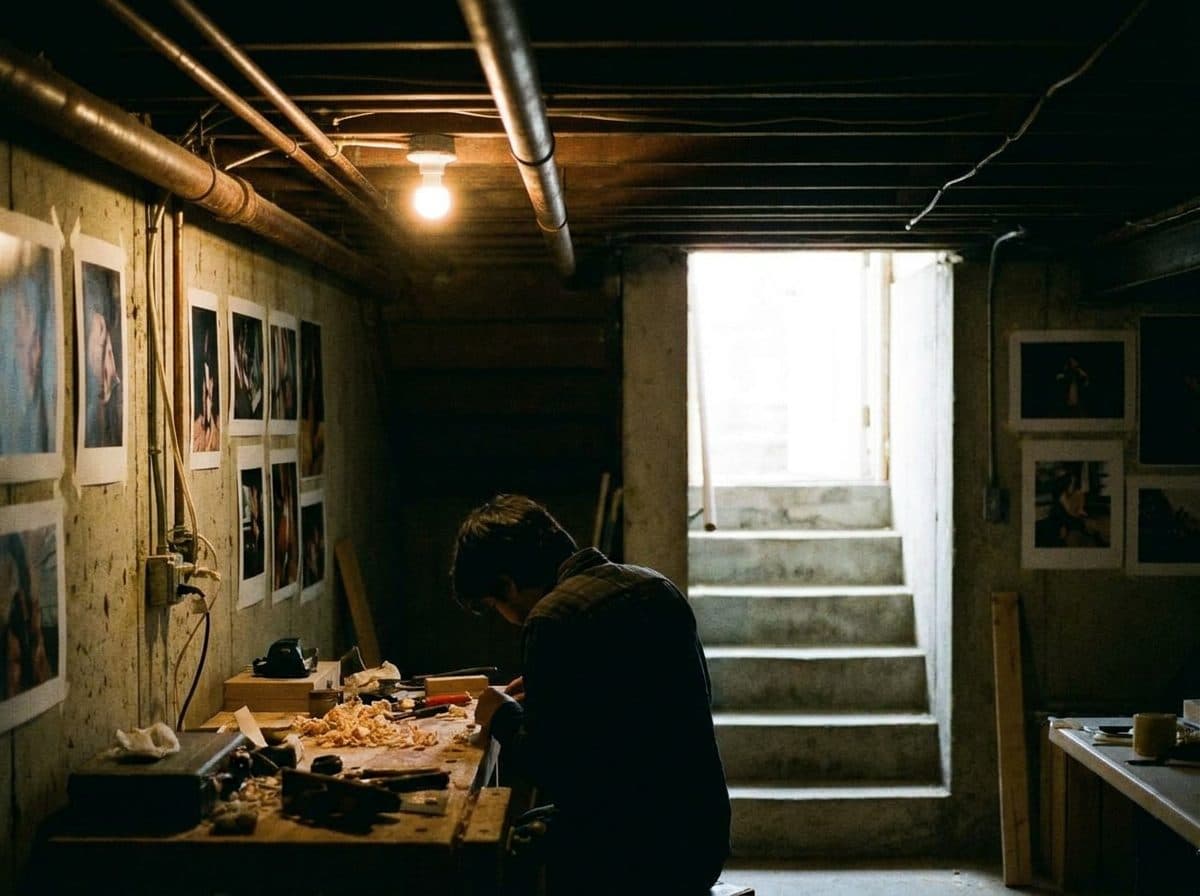
A battered TV-VCR combo sits on a rolling cart, and you're encouraged to pick a tape and watch. The footage is raw: handheld cameras, auto-focus hunting, wind noise over the built-in mic. You see summer league games where the score is kept on a chalkboard, where players wear mismatched socks and the best move of the night happens while the camera's pointed at the ground. There's something hypnotic about the lack of production value—no slow-motion, no commentary, just the squeak of sneakers and the metallic rattle of chain nets. Some tapes include handwritten context on the label: who was there, what was at stake, why this particular Tuesday in July mattered. The collection spans decades, a parallel history of basketball that happened in parks and gyms while the NBA sold tickets uptown.
The Crowd That Gathers Here Speaks In Deep References And Obscure Stats
You won't find tourists. The people who make their way down those stairs tend to arrive with specific questions or stories to trade. Someone's talking about the time they saw Fly Williams drop fifty at a Harlem rec center. Another person is flipping through a binder of box scores from semi-pro leagues that folded before the internet existed. The vibe is library-quiet punctuated by sudden bursts of debate—whether a certain player could've made it in the NBA if he'd stayed healthy, which ABA team had the best uniforms, how the three-point line changed everything. On game nights when the Knicks or any other team draws crowds to Williamsburg bars, a few people peel off and end up here instead, preferring the company of ghosts and what-ifs to the roar of a live broadcast.
Practical Notes: Finding The Entrance And What To Expect
The space keeps irregular hours, typically open late mornings through early evening on weekends and select weeknights, though it's wise to check current availability before making the trip. You'll find it in the industrial stretch of Williamsburg closer to the waterfront, reachable via the L train and a ten-minute walk. There's no admission fee, but donations help maintain the collection and keep the dehumidifier running. The basement isn't ADA accessible—those stairs are the only way in and out. Cell service is spotty underground, which somehow adds to the atmosphere of disconnection. If you're coming before or after a game at Madison Square Garden, factor in travel time but know that this detour offers a completely different kind of basketball reverence than anything you'll find in Midtown.
Tags: #TheOddEdit #WilliamsburgNYC #BasketballHistory #ABAMemories #StreetballLegends #NYCHiddenGems #BasketballCulture #VintageBasketball #SportsEphemera #UndergroundNYC #BasketballShrine #BrooklynBasketball #HoopHistory #ForgottenLegends #NYCSports
Sources consulted: atlasobscura.com · timeout.com · nytimes.com
All trademarks are the property of their respective owners.


