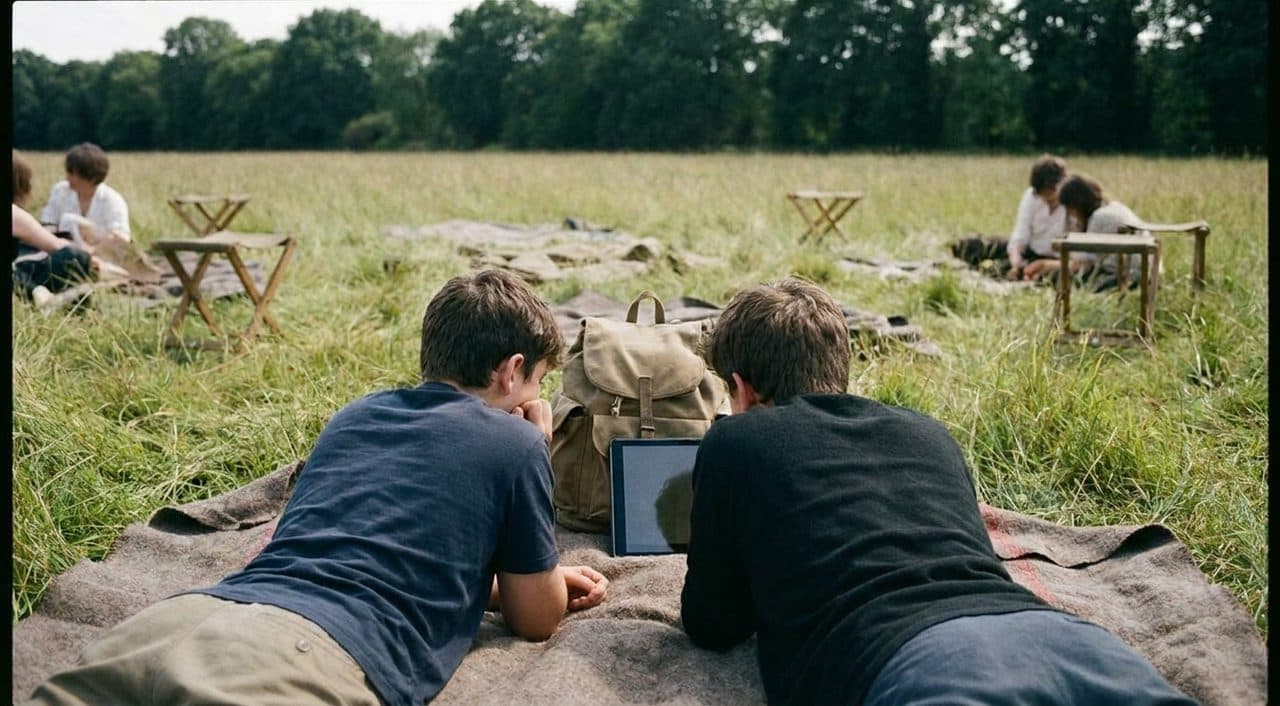
You won't find Roland-Garros on any jumbo screen in Central Park, but that hasn't stopped tennis obsessives from turning grassy slopes and boathouse benches into makeshift viewing lounges every spring. When the French Open rolls around in 2026, expect the same ritual: laptop propped on a picnic blanket, phone hotspot glowing, strangers leaning in to catch Nadal's heir apparent slide into a crosscourt forehand while joggers wonder why everyone's staring at a thirteen-inch screen.
Sheep Meadow at First Light, Before the Crowds Claim Territory
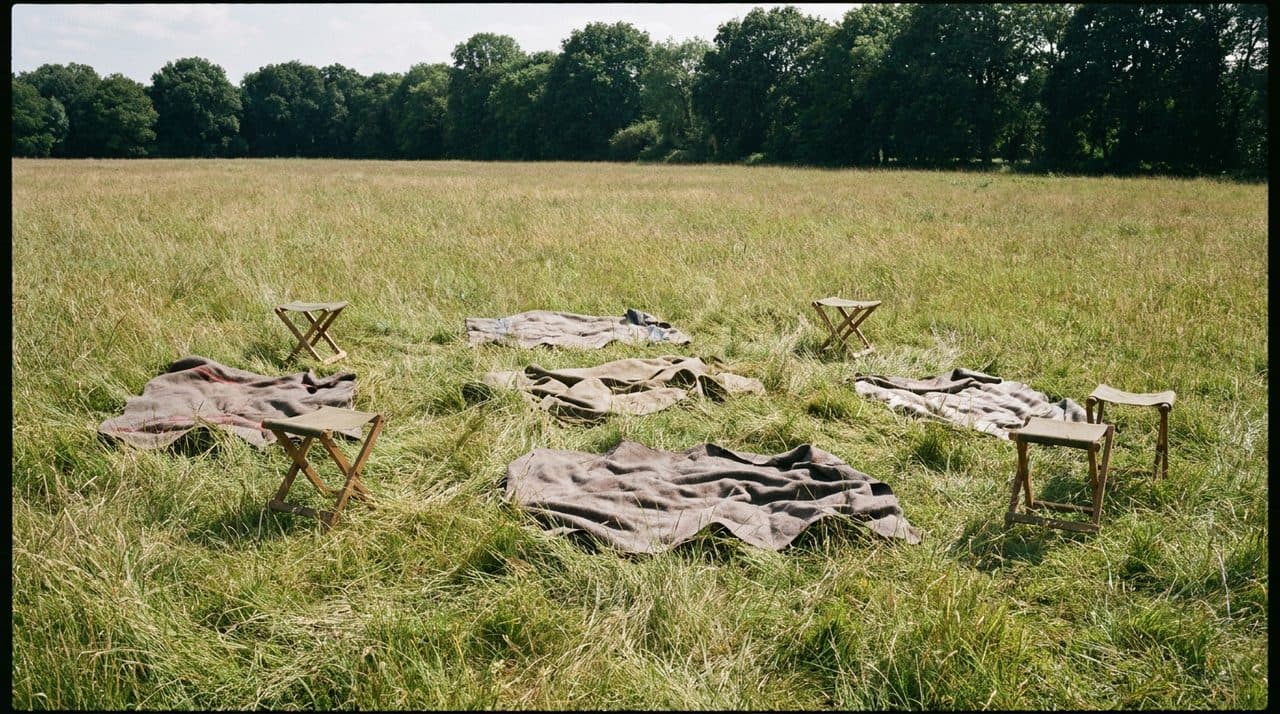
The fifteen-acre lawn opens early, and the serious fans arrive with the dog walkers—around seven on weekday mornings when Paris is already deep into afternoon play. You'll recognize them by the external battery packs and the way they angle their screens away from glare. The grass still holds dew, cold enough to seep through cotton blankets, and the air smells like wet earth and distant coffee carts. By nine the meadow fills with sunbathers who have no idea Swiatek just broke serve, but that early window belongs to the clay-court faithful. Bring a backup charger. The park has no outlets, and matches from Roland-Garros stretch long, especially when someone forces a fifth set. One regular sets up near the southwestern corner every year, same faded Lacoste cap, same thermos of something that smells like chicory, always willing to share his stream if your connection drops.
Loeb Boathouse Benches Where Retirees Narrate Every Unforced Error

The wooden benches flanking the boathouse terrace face the water, but during French Open fortnight they face inward, toward phones and tablets balanced on laps or propped against railings. The crowd skews older here—former club players who remember when clay meant something in American tennis, who'll tell you about Courier's backhand if you make eye contact. They arrive mid-morning, after the breakfast rush clears, and stay through lunch, ordering nothing but refills while the waitstaff pretends not to notice. The benches catch shade from the surrounding trees, which matters when you're staring at a screen for three hours. Someone always brings a portable speaker, volume low enough to avoid park enforcement but loud enough that you catch the French commentary's rising inflection on break points. The vibe turns communal fast—strangers debating whether that ball clipped the line, sharing charging cables, groaning in unison when a match-point volley sails wide.
Conservatory Garden's Iron Chairs and the Bluetooth Headphone Conspiracy
Up at 105th Street, the formal gardens offer wrought-iron seating that feels almost European, which seems fitting for watching a tournament in Paris. The North Garden stays quietest, tucked behind hedges that block wind and muffle street noise. You'll find solo viewers here, the kind who want commentary piped directly into their ears, no communal experience required. But something strange happens around the quarterfinals every year: people start offering to split their audio. One earbud each, strangers sitting close enough to smell each other's sunscreen, connected by a thin white wire and a shared investment in whether this tiebreak goes the distance. The fountain in the center garden provides ambient sound that somehow makes the tennis feel more real, water splashing in rhythm with the ball machine consistency of baseline rallies. Peacocks from the nearby zoo occasionally wander through, their calls cutting through tense moments with absurd timing.
Belvedere Castle Overlook Where Cell Signal Turns Matches Into Slideshows
The castle's upper terrace offers views across Turtle Pond and the Delacorte Theater, but the stone walls play hell with wireless connections. Still, people climb the stairs during French Open weeks, hoping elevation equals better reception. It doesn't. Matches buffer and freeze, live scores update in jerky intervals, and everyone ends up refreshing their browsers in superstitious patterns like it might help. What keeps people coming back is the breeze—it's the coolest spot in the park during late May heat—and the way disappointment becomes collective entertainment. When someone's stream finally loads, they announce it like a town crier, and suddenly six people crowd around a single screen, watching in silence until the connection dies again and everyone groans. The castle closes at dusk, which means you'll miss evening matches unless they're tape-delayed, but the golden hour light on the pond almost compensates.
Strawberry Fields Benches Where Lennon Fans Tolerate Tennis Interlopers
The memorial area usually attracts Beatles pilgrims and acoustic guitarists, but the curved benches near the Imagine mosaic offer surprising sightlines if you position yourself correctly—back to the path, screen angled just so. The tennis crowd here stays small and respectful, aware they're guests in someone else's sacred space. Volume stays muted or headphone-only. The atmosphere runs contemplative, which suits the slower pace of clay-court tennis better than you'd expect. Between points you hear birdsong and distant traffic, the occasional tour guide explaining the mosaic's symbolism to visitors who crouch for photos. Late-afternoon matches work best here, when the sun filters through the elms and the tourist flow ebbs. You'll share the space with regulars who've been coming since the seventies, who remember when this corner felt dangerous after dark, who now nod approvingly at anyone watching tennis instead of staring at social media.
The Mall's Elm Cathedral When You Need Backup Plans for Rain Delays
The tree canopy along the quarter-mile walkway creates natural shelter during spring drizzle, which matters because Roland-Garros plays through weather that would stop Wimbledon cold. When rain suspends play, the tennis watchers don't leave—they migrate to the covered sections of the Mall, clustering under the thickest branches, waiting for updates on their phones. The delay becomes its own event: debating whether the court will drain in time, sharing predictions about who benefits from the break, watching groundscrew coverage like it's compelling television. Street performers keep working through light rain, their music mixing with the ambient noise of a few hundred people collectively killing time. When play resumes, you hear it before you see it—a ripple of attention, screens lighting up in sequence, everyone returning to their private viewing stations. The elm canopy blocks enough sky that you forget you're watching a tournament happening four thousand miles away until a passing cyclist asks the score and you realize you've been holding your breath through an entire game.
Practical Notes
The park opens at six, closes at one in the morning, though realistically you want daylight hours for screen visibility. Subway access via multiple lines depending on which section you're targeting—B and C trains for the western edge, the 6 for the east side, N and R for the south. No permits required for casual blanket setups, but groups larger than twenty technically need permission. Bathrooms cluster near major attractions—the boathouse, Belvedere Castle, the North Meadow—though lines grow long on warm weekends. Most cell carriers hold up fine except in dense tree cover. Bring your own food and water; vendor prices inside the park run higher than street level, and French Open morning sessions mean you'll be there through lunch. Check the tournament schedule the night before so you know which matches overlap with your available window. Courts in Paris run roughly six hours ahead of New York, which means finals start around nine Eastern—prime park time.
Tags: #CentralPark #FrenchOpen #RolandGarros #TennisInNYC #SheepMeadow #LoebBoathouse #NYCParks #ClayCourtTennis #FreeNYC #PublicViewing #TennisLife #ManhattanOutdoors #ParisInNewYork #GrandSlamTennis #CityTennis
Sources consulted: timeout.com · ny.curbed.com · nycgovparks.org
All trademarks are the property of their respective owners.