The Ferry Smells Like Sunscreen and Optimism
You board the orange-hulled boat at the Battery Maritime Building and the crowd's already sorting itself—yellow jerseys clustered near the bow, red-and-white scarves draped over shoulders near the stern. The seven-minute crossing to Governors Island costs you nothing but a weekend morning, and by the time Lower Manhattan's glass towers slide past your shoulder, someone's opened a cooler of homemade empanadas that smell like cumin and butter. The game doesn't start for hours, but the ritual's already begun.
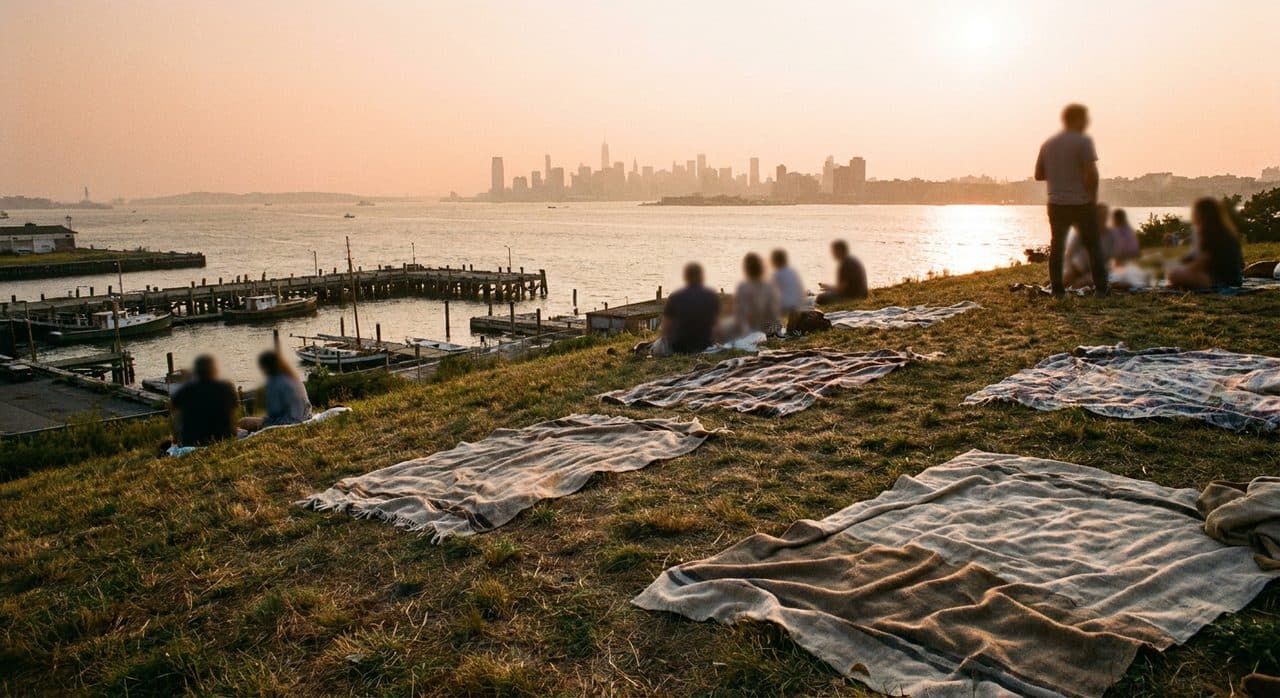
Governors Island sits in New York Harbor like a 172-acre lawn party that somehow escaped the city's grip. On match days when diaspora crowds converge, the grassy stretches near the northern shore become impromptu viewing zones where borrowed projectors flicker against bedsheets and Bluetooth speakers battle for dominance. You won't find this setup advertised anywhere—it assembles itself through group chats and cousin networks, the kind of intelligence that moves faster than any events calendar.
Staking Territory Before the Anthem

You'll want to arrive on an early ferry, the kind that departs while coffee shops are still pulling their first shots. The prime real estate sits along Liggett Terrace and the sloping lawns that face back toward Brooklyn's industrial waterfront. Families claim patches with blankets that look like they've survived a dozen beach seasons, anchoring corners with coolers and folding chairs that smell faintly of basement storage. By mid-morning the air carries competing soundtracks—vallenato from one cluster, Amman hip-hop from another, kids shrieking in the universal language of tag.
The light here does something particular around late morning when the sun climbs high enough to turn the harbor into hammered silver. You'll see someone's uncle testing a projector against a white tarp strung between two pop-up tents, adjusting angles while a small audience of nephews offers contradictory advice. The screen won't be cinema-quality, but when the match starts and a hundred voices rise in unison, you won't be thinking about pixel count.
The Potluck Economy of Match Day
Nobody's selling anything here, which makes the whole operation feel like a neighborhood block party that floated offshore. You'll notice the coolers first—not the flimsy styrofoam kind but the serious family-reunion models that require two people to carry. Inside: foil-wrapped parcels that steam when unwrapped, Tupperware containers of rice studded with peas and carrots, thermoses of coffee so strong it could strip paint. Someone always brings too much and starts offering plates to strangers who become friends by halftime.
The etiquette's unspoken but clear. You contribute what you can—store-bought cookies count, so does a sleeve of plastic cups or a bag of ice. The guy who brings the generator usually gets first dibs on shade. Watch how the older women organize the food table that materializes on a collapsible camping setup, creating order from chaos with the efficiency of people who've fed crowds before. By kickoff there's usually a dessert section that includes at least three types of cake and a tray of baklava that vanishes in minutes.
Where Brooklyn Watches Back
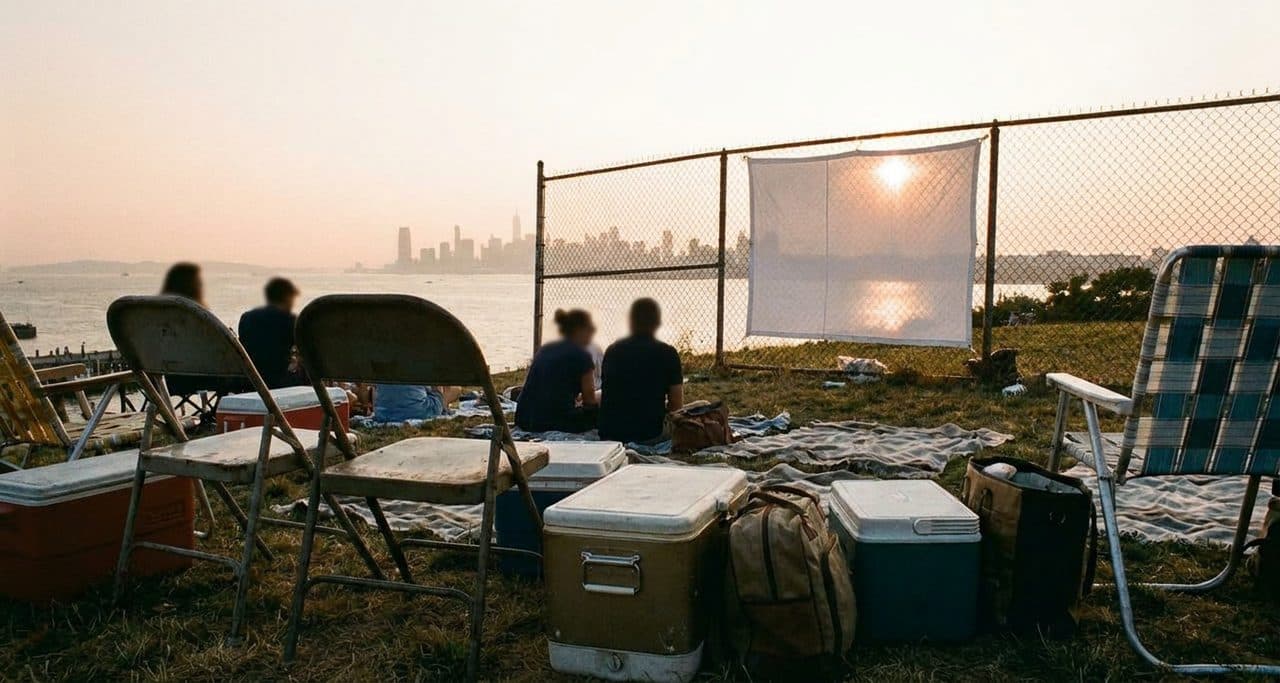
The view toward Red Hook and Brooklyn's industrial waterfront gives you a skyline that's all cranes and warehouses rather than skyscrapers, the working harbor that tourists skip. You can trace the container ships moving toward Sunset Park, watch the Statue of Liberty catch light from an angle that makes her look smaller and somehow more human. During the match this backdrop becomes incidental—you're watching the screen—but during halftime everyone turns to face the water like it's intermission at a theater with the world's most expensive set design.
The breeze off the harbor does real work here, cutting through humidity that would be unbearable on pavement. You'll feel it strongest when play pauses, when the collective attention breaks and people stand to stretch, walking to the edge of the lawn where the ground drops toward the promenade. Some folks bring kites for the kids, and between halves you'll see diamond shapes climbing against the sky while their handlers barely watch, eyes still tracking conversations about substitutions and missed chances.
The Sound System Democracy
Every setup brings its own speaker, which should create chaos but somehow resolves into negotiated harmony. The group with the biggest screen usually wins audio rights by default, but there's always a secondary broadcast in Spanish running from someone's phone hotspot, and a third cluster streaming with Arabic commentary. You'll hear the goals ripple across the lawn in waves—first the roar from one section, then the echo from another a few seconds delayed, then the collective groan or celebration that transcends language.
The technical setup looks precarious—extension cords snaking across grass, power strips daisy-chained in ways that would horrify electricians, phone batteries dying by the second half. But someone always has a backup charger, and the person whose projector overheats knows a guy who brought a spare. This infrastructure runs on goodwill and the shared understanding that everyone wants this to work. When a goal goes in and the image freezes for five seconds of buffering, the crowd fills the gap with noise that needs no streaming.
When the Final Whistle Releases You
The island empties slower than it fills. After the match ends, people linger in that post-game daze, replaying moments while packing up chairs and shaking out blankets. Kids chase each other through the dispersing crowd, high on sugar and the permission to run wild. You'll see pickup games forming on adjacent patches of grass, teenagers recreating goals with backpacks for goalposts, arguing about offsides calls in multiple languages.
The ferry line snakes longer now, everyone heading back at once, but nobody seems to mind. You're standing next to people who were strangers three hours ago and now you're debating referee decisions like old friends. Someone's still got half a tray of kibbeh they're distributing to anyone within reach. The ride back to Manhattan feels faster, the skyline coming at you like a promise, and you can still hear fragments of match commentary from phones playing highlights.
Practical Notes
The ferry to Governors Island runs on weekends from late spring through early fall, departing from Lower Manhattan. Service is free and runs frequently during peak hours. Bring your own food, seating, and shade—the island has limited vendors and you'll want supplies for several hours. Restrooms are available near the ferry landing. Check weather before committing; there's minimal shelter if conditions turn. The island closes at dusk, so plan your departure around the last ferry. Public transit to the Manhattan terminal is straightforward via multiple subway lines to Whitehall or Bowling Green.
Tags: #GovernorsIsland #NYCWaterfront #FreeNYC #MatchDayNYC #DiasporaSoccer #NewYorkHarbor #ColombiaVsJordan #FerryViews #PotluckCulture #BrooklynWaterfront #IslandLife #NYCHiddenGems #SoccerCulture #HarborViews #CommunityGathering
Sources consulted: timeout.com · ny.curbed.com · nycgovparks.org
All trademarks are the property of their respective owners.