There is a version of you that eats a sad desk salad today, and a version that walks ten minutes, hands over roughly twenty dollars, and eats fish that would cost triple after dark. Sushi lunch is downtown San Francisco's best-kept open secret: the same chefs, the same fish deliveries, priced for the noon crowd instead of the date-night one.
The catch is that the good counters reward planning — the best boxes sell out before your second meeting ends. Here's where the weekday sets are actually worth leaving the desk for, concentrated around FiDi and SoMa, plus the playbook for beating the sell-outs.
Why Lunch Is the Smart Way to Eat Sushi
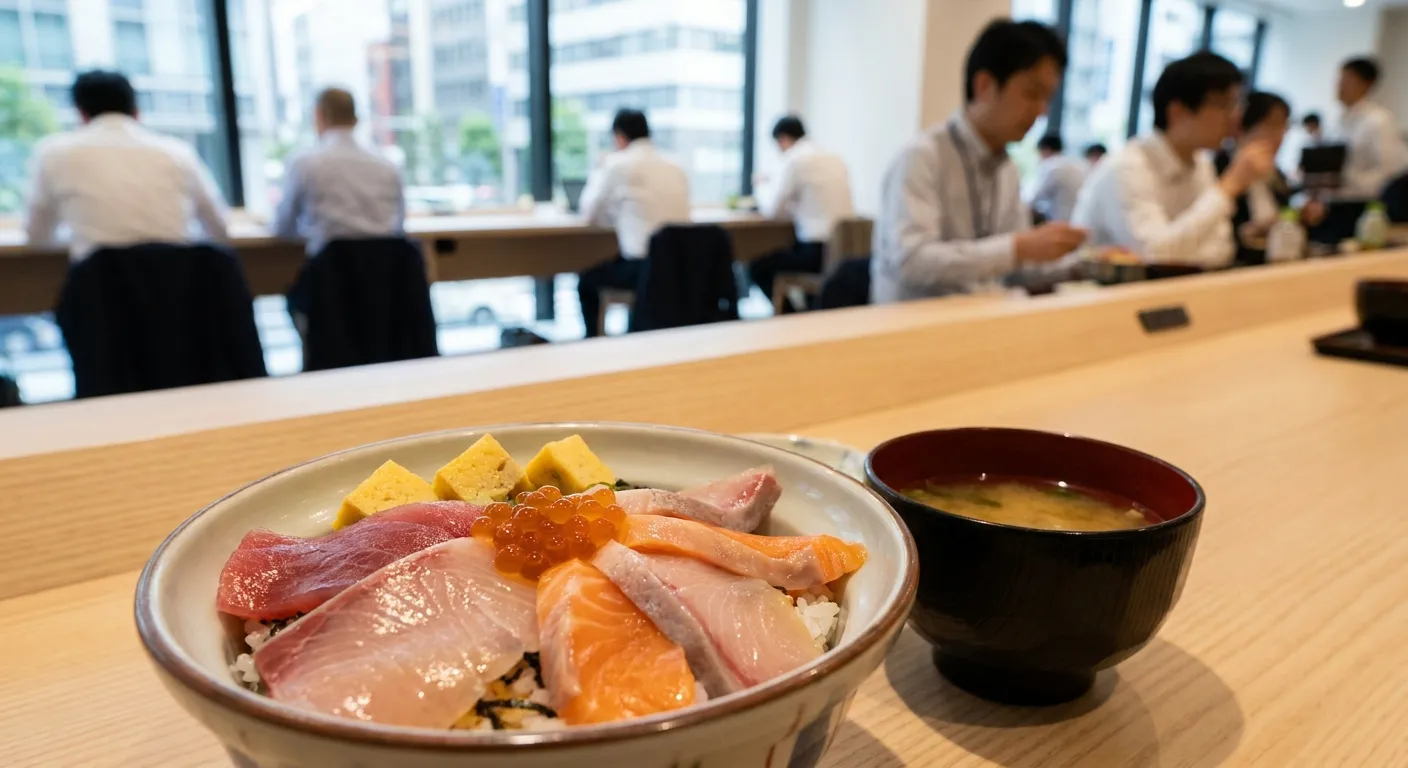
Lunch-set economics work in your favor for a simple reason: sushi counters buy fish for the whole day, and daytime formats — chirashi bowls, nigiri sets, bamboo boxes — let the kitchen serve premium cuts without dinner's ceremony or dinner's markup. Chirashi is the format to know: sliced fish scattered over a bowl of seasoned rice, it delivers the widest tour of the fish case for the fewest dollars, and it eats fast enough for a real lunch hour.
Downtown's lunch culture makes this work better than anywhere else in the city. The FiDi and SoMa pack tens of thousands of hungry office workers into a few square miles, which means counters can commit to high-volume, high-turnover lunch service — fish never sits, cases restock constantly, and the whole system rewards showing up on a Tuesday at 11:45 instead of a Saturday at 8.
Aji Kiji: The FiDi Counter That Sells Out by 12:30
Aji Kiji on Kearny Street is the reigning champion of downtown sushi lunch, and the line knows it. The counter — run by a chef with Michelin-starred sushi experience — packs bamboo boxes of nigiri, chirashi, and maki that range from about seventeen dollars up into the seventies for the full omakase box of ten nigiri, a maki, and pickles. It opened on Fillmore in 2024, drew instant daily lines, and relocated downtown where it now sells out most days by 12:30. It runs Tuesday through Saturday from late morning; go near opening or accept defeat gracefully.
Ebiko: The Seventeen-Dollar Omakase Set
Ebiko at First and Mission is built for the SoMa office sprint: a constantly restocked display case of glistening chutoro, salmon, tuna, and tamago over rice, where the most expensive thing — a seven-piece daily omakase set — runs around seventeen dollars. There's no theater, just startlingly good fish moving fast. If you want to sit down with the same food, its North Beach location has seating and thinner crowds.
Dining Yamamoto: Chirashi Worth Pre-Ordering
Dining Yamamoto on 11th Street is SoMa's premium play: chirashi boxes and nigiri sets assembled with sit-down-restaurant care, including a kaisen chirashi donburi layered with vibrant fish, scallops, and uni. It's open for lunch and dinner and takes online orders — which, for anyone whose lunch window is calendar-controlled, is the difference between eating well and eating vending-machine almonds.
The Old Reliables: Yo Yo's and Sanraku
Not every lunch needs to be a chase. Yo Yo's on Pacific Avenue, at the FiDi's Jackson Square edge, is a beloved Japanese takeout counter slinging chicken teriyaki, udon, and pre-made sushi for under fifteen dollars — bring cash and expect a line of regulars who've been coming for years. Up the hill on Sutter Street, Sanraku has been serving Lower Nob Hill since 1989 and opens at 11:30 daily; its bento boxes bundle sushi alongside teriyaki and tempura for the days your lunch group can't agree on anything.
The Design District Detour: Live Sushi Bar
If your office sits toward Showplace Square or Potrero Hill, Live Sushi Bar on 17th Street runs weekday lunch service from 11:30 to 2:00, with a menu known for pristine presentation and live specialties like scallop and uni for the days lunch deserves an upgrade. It's a proper sit-down room, so budget a real hour rather than a sprint.
The Desk-Escape Playbook
A good sushi lunch rotation is a system, not a scavenger hunt. Build yours around one sell-out counter for the days you can leave early, one pre-order spot for calendar-jammed days, and one reliable walk-up for everything else. A few rules keep it running:
- Go at opening, not at noon. The best boxes at Aji Kiji are usually gone by 12:30.
- Order online where you can — Dining Yamamoto takes pre-orders that turn lunch into a pickup errand.
- Default to chirashi when deciding fatigue hits: maximum fish variety, one bowl, no negotiation.
- Keep a backup within two blocks. Sell-outs are a feature of good sushi lunch, not a bug.
- Carry some cash for the old-school counters like Yo Yo's.
Sushi Lunch FAQs
Is lunch sushi lower quality than dinner sushi?
At the good counters, no — it's the same fish delivery working a different day-part. Lunch formats simplify the labor (boxes and bowls instead of piece-by-piece service), which is where the savings come from. Quality drops only at places treating lunch as a leftovers program, and none of the spots above do.
Do I need a reservation for sushi lunch downtown?
Mostly no — the FiDi and SoMa lunch scene runs on counters, cases, and takeout lines rather than bookings. The real constraint is inventory, not seating: arrive early or pre-order online where offered. Sit-down rooms like Sanraku and Live Sushi Bar are the exceptions where calling ahead for a group is worth it.
What exactly is chirashi and why does everyone recommend it for lunch?
Chirashi means "scattered" — assorted sliced fish arranged over a bowl of seasoned sushi rice. It's the best value format at most counters because it showcases many cuts without piece-by-piece pricing, it travels back to the office better than delicate nigiri, and it eats quickly with just chopsticks and soy. Ask Karpo before you head out, and it'll tell you which counter near your office still has boxes left.