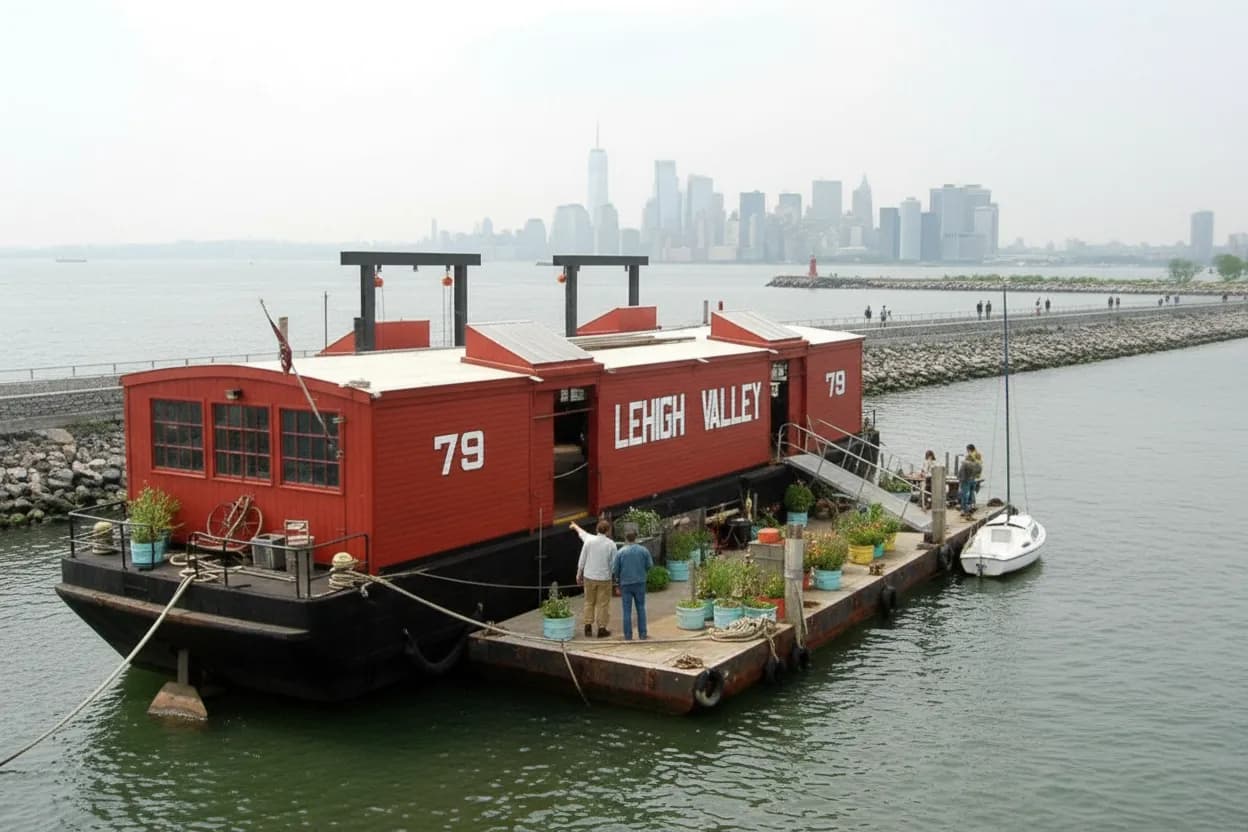
The Waterfront Museum is not a conventional museum you drift through room by room. It is a 1914 Lehigh Valley Railroad lighter moored at Pier 44 in Red Hook, with harbor wind, dock movement, artifacts, and a story that starts before you step inside. As of July 23, 2026, the museum lists public open hours most Thursdays from 4 to 8 p.m. and Saturdays from 1 to 5 p.m., with free tours when the barge is docked and no exception is posted. For families, the payoff is attention: kids who fade in static galleries often reset when the venue itself moves, creaks, and explains why New York depended on water.
Want a kid-friendly harbor-history stop without guessing around Red Hook transit and barge hours? Text Karpo before you leave, and ask for the latest Waterfront Museum go-or-skip check.
Waterfront Museum Works When the Room Itself Can Hold Attention
The best reason to choose the Waterfront Museum with a child is not that it is large. It is the opposite: the experience is compact, tactile, and unusual enough to keep a short attention span from scattering. The official visit page describes original living quarters, longshoremen’s tools, port gongs and bells, and a gravity-driven ball machine that children tend to notice. That mix gives caregivers several pivots before restlessness turns into a full exit.
Treat it as a harbor story with boundaries, not an all-day museum plan. A child can look at the barge, hear why cargo once moved across New York Harbor by lighter, then step back outside toward the water before the novelty wears thin. The museum’s own framing connects maritime heritage, railroad cargo movement, and Red Hook waterfront access. That is enough content for a focused stop, especially if you arrive with snack timing and weather already handled.
Check the Waterfront Museum Calendar Before Promising the Barge
The museum posts regular public hours, but the calendar matters more than habit. On July 23, 2026, the site showed Thursday open hours from 4 to 8 p.m. and noted a closure for Saturday, July 25, 2026, plus additional August closures. That means a family planning around a weekend afternoon cannot rely on the usual Saturday pattern. Make the calendar your first stop before telling a child they are going aboard.
This is also where the outing becomes manageable instead of disappointing. If the barge is closed, delayed, rented, or hosting a program that changes access, Red Hook is not a quick pivot from most subway lines. Verify the exact date, open-hours event listing, and any closure notice the morning you go. If you cannot confirm public access, shift the plan to Valentino Pier views, a neighborhood walk, or another indoor Brooklyn stop.
Red Hook Transit Is the Main Waterfront Museum Tradeoff
The museum’s biggest friction is not inside the barge; it is getting to Red Hook with enough energy left for the visit. MTA’s B61 route serves Red Hook via Van Brunt Street and Columbia Street, with stops near Coffey Street and Beard Street depending on direction. That makes the bus useful, but arrival reliability and detours can matter. Build in a buffer, especially with children who read waiting time as the whole trip.
NYC Ferry can make the trip feel like part of the exhibit if schedules line up. The South Brooklyn route lists Red Hook/Atlantic Basin as a landing, with real-time schedule tools available by app, text, or call. The catch is distance and timing: the ferry may be delightful on a breezy clear day, but it is not automatic door-to-door service. Check landing times both ways, then decide whether ferry plus walk beats bus plus shorter exposure.
Pier 44 and Valentino Pier Turn Waiting Into Part of the Visit
The museum’s Pier 44 setting helps families absorb delays better than a sidewalk queue. The museum says the Pier 44 park and garden are open daily to the public from sunrise to 9 p.m., with Statue of Liberty views. Nearby Valentino Pier, listed by NYC Parks on Ferris Street between Coffey and Van Dyke streets, adds fishing, kayak and canoe launch facilities, and a visible harbor edge tied to Red Hook’s shipping past.
Use the waterfront as a pacing tool, not filler. Arrive early enough to let a child watch boats, read the wind, and settle before stepping aboard. After the tour, the pier gives everyone a decompression zone before the return bus or ferry. The failure mode is weather: open water can feel colder, brighter, or windier than inland Brooklyn. Bring layers, sun protection, and a rain plan even when the forecast looks harmless.
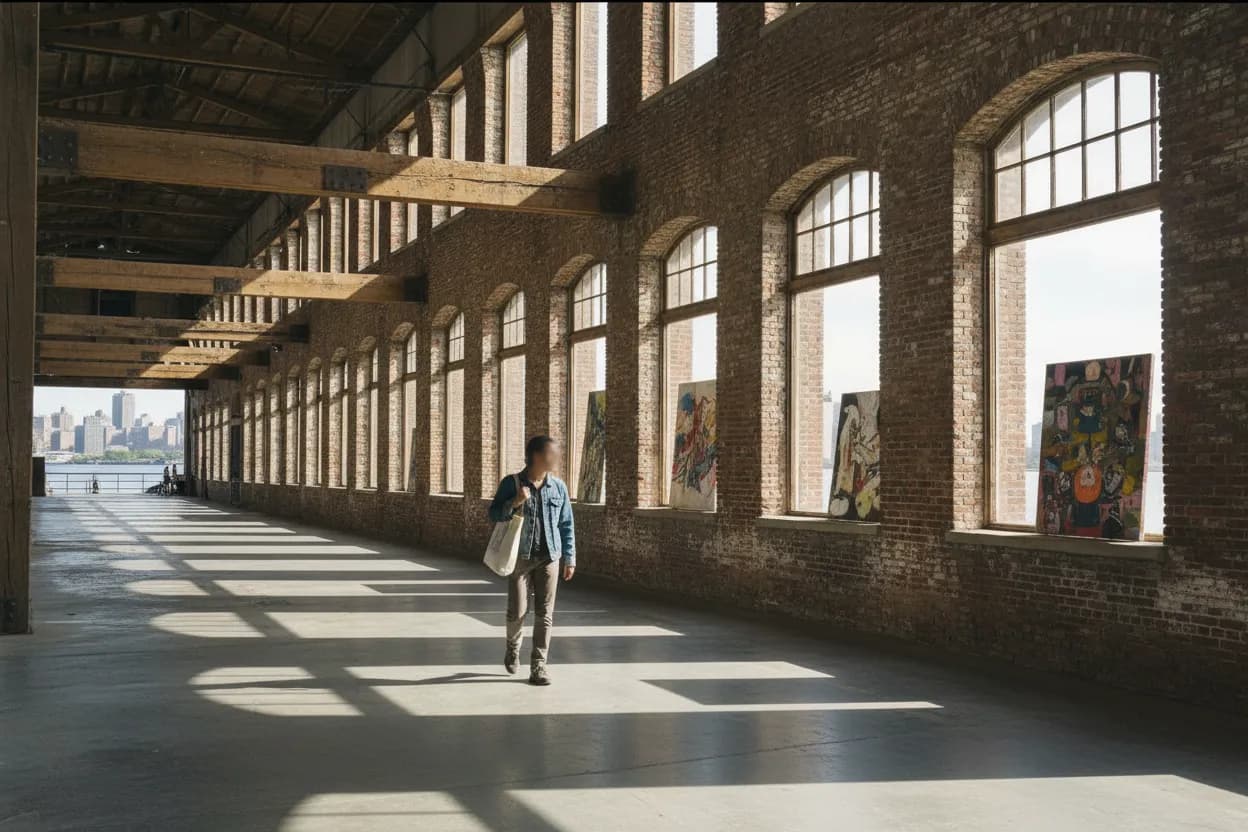
Inside the Waterfront Museum, Keep the Tour Short and Specific
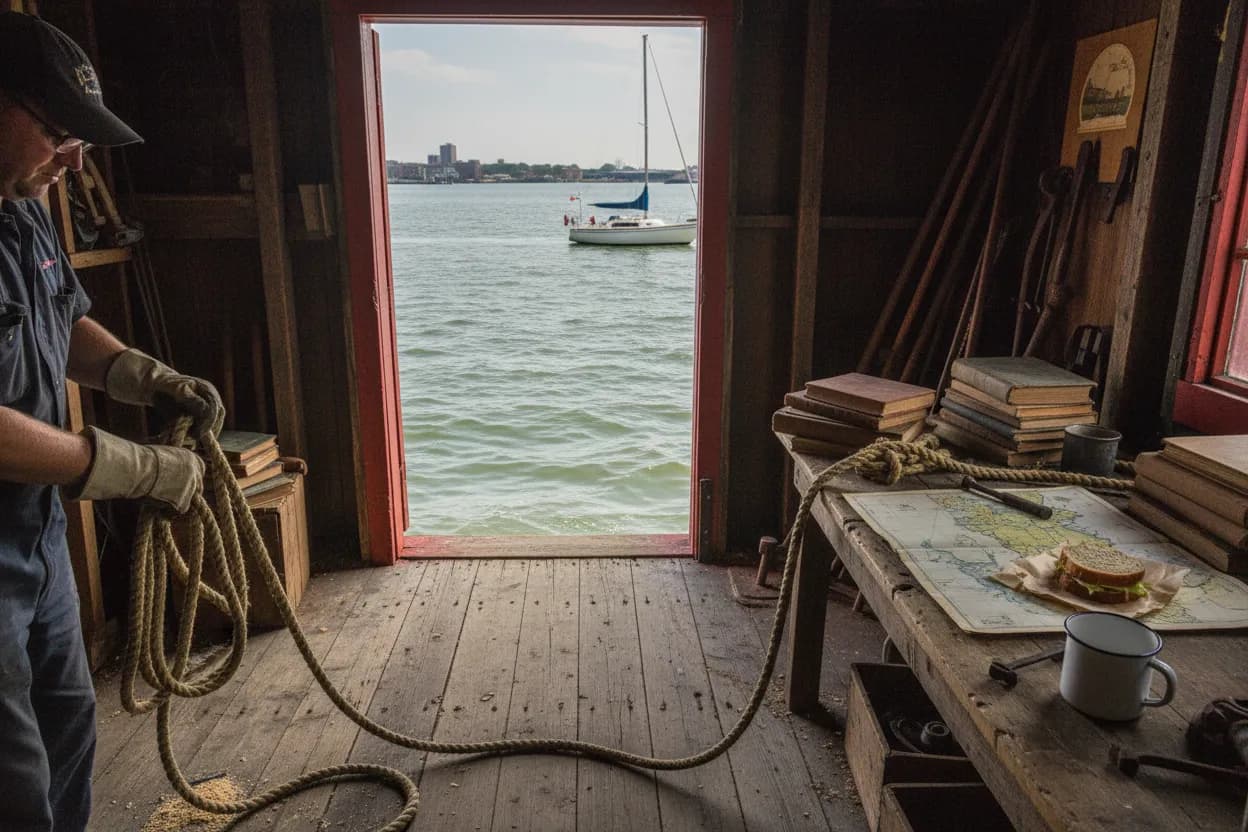
The barge rewards specific looking. Instead of asking a child to absorb every date, give them three missions: find a tool, listen for a bell or gong story, and notice how a floating museum feels different from a building. The official site ties the collection to New York Harbor’s lighterage era from 1860 to 1986, when barges transferred cargo between ships and railyards. That concrete job description is easier for children than abstract maritime nostalgia.
The ball machine is useful, but do not make it the whole promise. If it is unavailable, crowded, or less compelling than expected, the visit still has the living quarters, cargo history, and the fact of being inside a restored railroad barge. Caregivers should be ready to leave while the mood is still good. A successful stop may be thirty to sixty minutes, especially for younger children or anyone sensitive to close quarters.
Waterfront Museum Access Needs a Realistic Family Check
Because this is a historic floating venue, accessibility should be verified directly before you go. Do not assume the boarding experience, interior circulation, stroller handling, seating, restrooms, or weather exposure will match a land-based museum. Families using wheelchairs, mobility aids, or strollers should contact the museum or check current visit guidance before committing. If access details are unclear, treat that uncertainty as a planning fact, not as something to solve on the dock.
For children who need containment, the barge can be both helpful and challenging. The compact footprint limits wandering, but water, gangways, artifacts, and dock edges require close supervision. This is not a place to let a child sprint ahead while adults read labels. Assign one caregiver to movement and one to questions if you are visiting with more than one child. If your group needs wide aisles, predictable seating, or quick restroom certainty, verify before leaving home.
Make the Waterfront Museum Decision on the Morning of the Trip
The final go decision should combine four facts: open calendar, transit timing, weather, and the child’s current bandwidth. If the museum is open, the bus or ferry connection is clean, and the waterfront weather is mild, the outing has a strong chance of working. If two of those fail, do not force it. Red Hook’s charm does not erase the cost of a long return with a tired child after a missed tour window.
On July 23, 2026, the practical guidance is simple: confirm the Waterfront Museum’s calendar first, then check MTA or NYC Ferry real-time information, then look at wind and rain rather than temperature alone. Save the address and route before you enter low-service pockets near the waterfront. If any changing detail cannot be confirmed, make that the deciding factor. The barge is memorable because it moves; your plan should stay flexible too.
Tags: #WaterfrontMuseum #RedHook #BrooklynKids #NYCWithKids #HarborHistory #HiddenGemsNYC #FamilyTravelNYC #NYCFerry #BrooklynMuseums #WeekendNYC #KidFriendlyNYC #AskKarpo #BeforeYouGo #KarpoNYC
Sources consulted: Source 1: waterfrontmuseum.org · Source 2: waterfrontmuseum.org · Source 3: waterfrontmuseum.org · Source 4: ferry.nyc · Source 5: bustime.mta.info · Source 6: www2.nycgovparks.org
All trademarks are the property of their respective owners.
Ask Karpo first
Tell Karpo your date, group size, budget, and starting neighborhood. We’ll check current access, timing, transit, and the cleanest plan for Waterfront Museum before you head out.